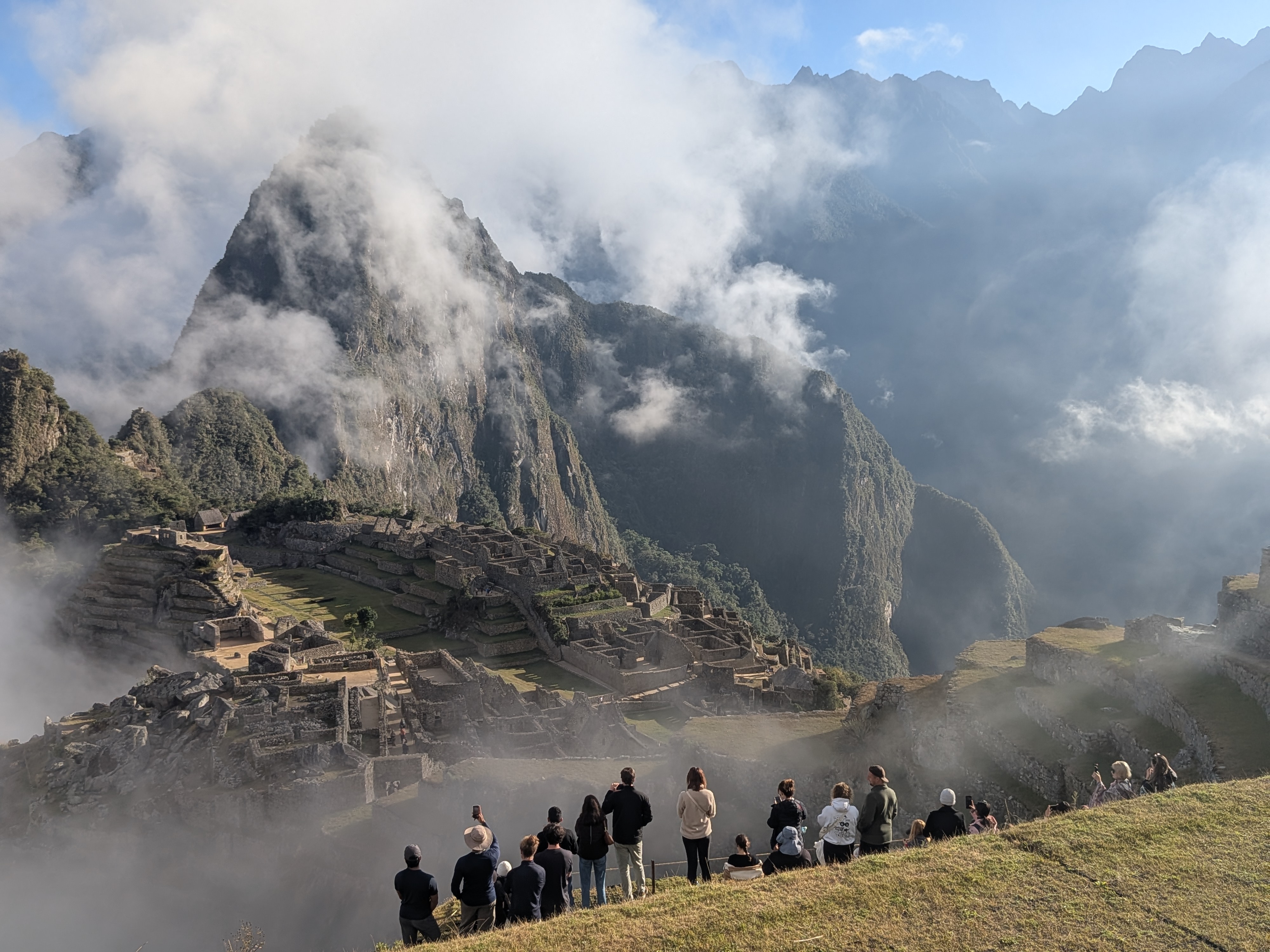
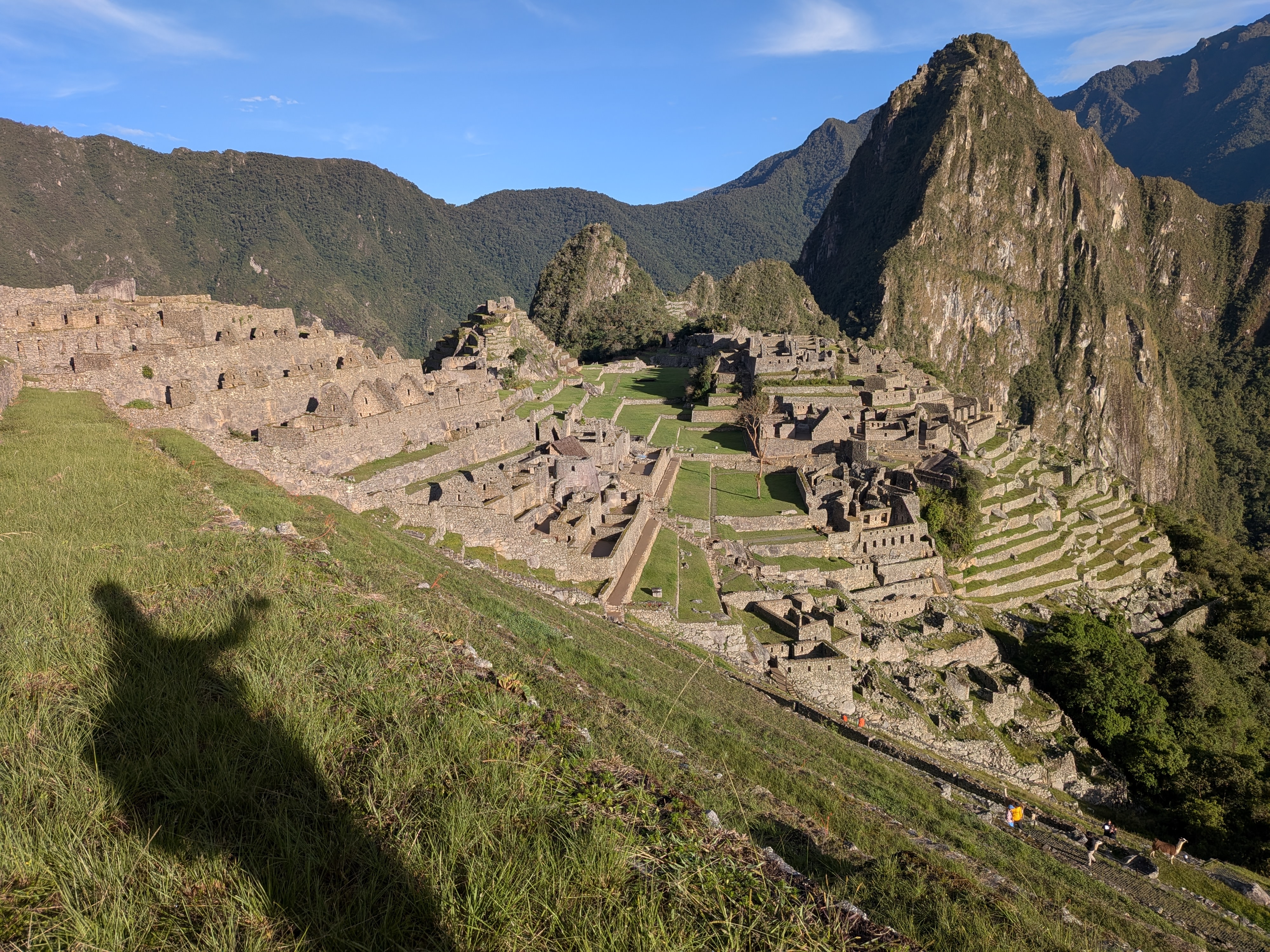
We have hiked to the summit of this peak, Through hanging clouds, early in the morning Just to see what the rising sun does seek, And the sights that we wait to see forming. The mist will cling to the top of the mountains, Fighting against the heat of this near star, But as the day progresses, what remains Is wisps dancing in the air for afar. Below is revealed the greatest sight, A town hidden from civilization Which, at one time, reached the greatest of height, But now hides in history’s rotation. The only way we know how it begun, To speak of memories with the day’s sun.
I can see down into all the valleys From my perch on the edge of the mountains High within the clouds up in the Andes. Like ants, the people practice their routines, Going about in their typical ways, Not even aware of my eyes above, Watching them as they bundle through their days. Have they been able to find what they love? Are they stuck in their eternal circle, Living each day like they have lived before? Do they even know that their life is dull, Not seeking out something with more allure? Does my position give me perspective That is different from the way they live?
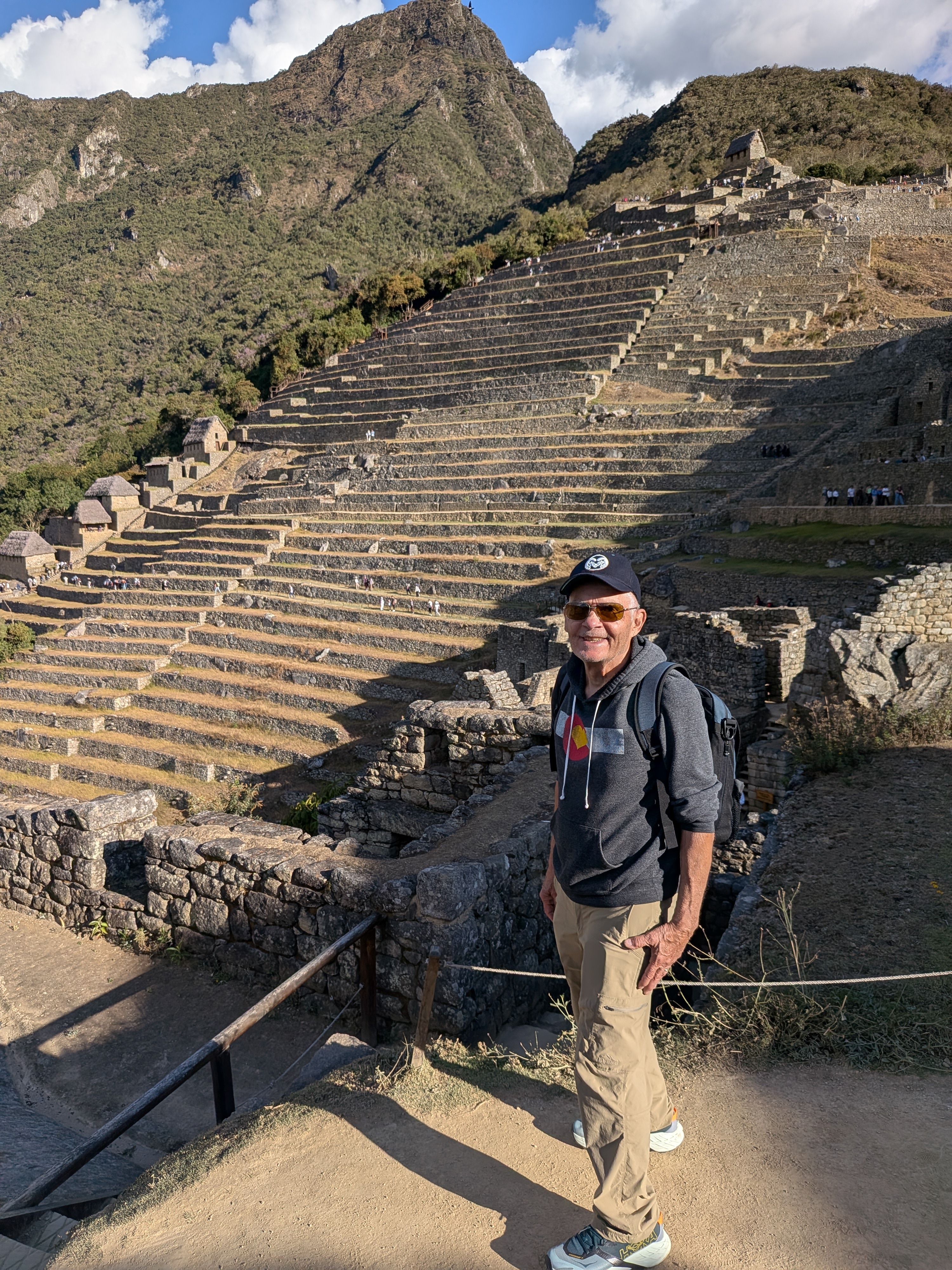
This is the second time that I have been to Machu Picchu this year. During the first time I was there, I was standing on one of the terraces and a tour guide was trying to take a picture of a son with his elderly parent. He was asking for both of them to crouch down so he could take a great picture of them with the fame old city in the background. The older of the two crouched down, but then lost his balance and almost fell over the edge of the terrace before his son was able to catch him and settle him down. It was a scary moment that even brought the employees of the sight out from their hidden corners to make sure everything was okay. It was this moment that made me wonder if taking my dad, who is 86, out here to see the wonders of this amazing cultures heritage sight. There were many questions that I needed to ask myself about making sure this trip worked for him. Would he be able to enjoy the wonders of Machu Picchu? Could he handle the rough terrain that he will have traverse though in order to enjoy the sight? How should I schedule the time that he is out here so he can enjoy it while not feeling worn out?
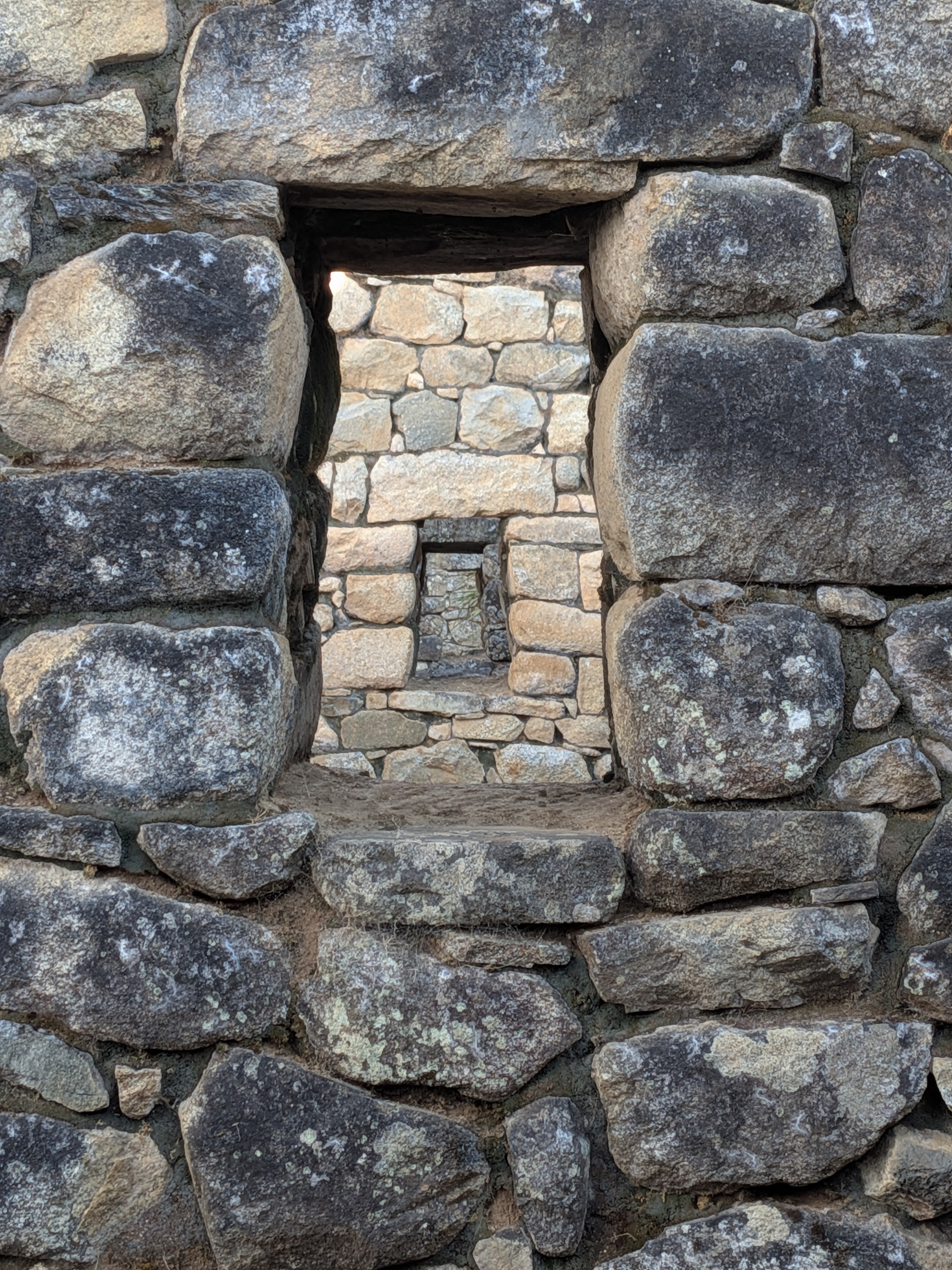
First off, would my dad enjoy the wonders of Machu Picchu? And that was easy to answer. Of course, he would. I still have not met an individual that would not enjoy this historic sight. There is a reason that so many people have added a day at Machu Picchu to their bucket list, because there is not another place like it in the world. It is not just the amazing views, or the spiritual feeling that this places holds within its haunted stones, but it is the amazing story that is told by the buildings and the history of this place, especially when talking about the precise that it was constructed. There is another wonder around each corner, and it is easy to be caught up in the magic of the place. Of course my dad would love this place.
A bigger question was: Could he handle the rough terrain that he will have traverse though in order to enjoy the sight? Let me start off by saying that my dad did great though we had to take it slow, and there were a lot of breaks along the way. The tickets have a specific entry time to Machu Picchu, but there is an hour grace period to work in. If you are planning on taking it slowly, it would be best to get there as soon as the time opens up because the place allows for four hours to go through your chosen circuit. I would also suggest using the bathroom before you enter the sight. There are no bathrooms in Machu Picchu, but there is a pay toilet outside of it, and it costs two soles (a little over 50 cents) to use, so make sure you bring some change with you.
Now with all of that being said, there are some other points I would like to make if you are considering making this decision. First off, my dad is in pretty good shape for an 86 year old man, and he started walking on a regular basis six months before he came because he knew it was going to push him some. He also lives in Denver, Colorado, so altitude is not always a problem for him. Machu Picchu is almost 8,000 feet above sea level, so being so high up is something that should be taken into consideration.
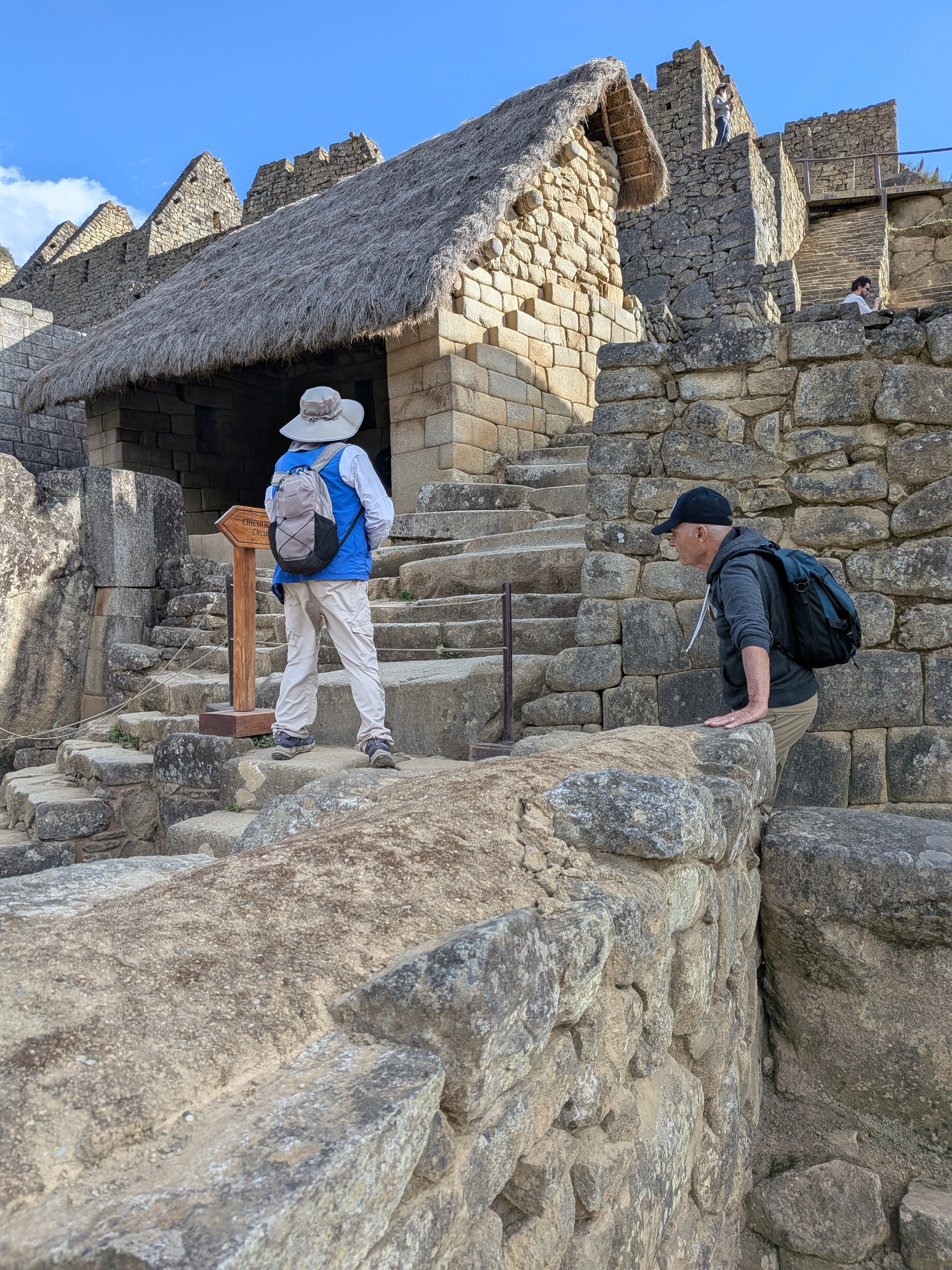
Also, just because my dad did well, other elderly people we came across on the trail did not fair as well. We saw many people struggle on the paths, and hiking up the uneven stairs that are found in the ruins. Most of them had to get help getting up and down the hilly terrain, and almost all of them were fumbling around with hiking poles while doing it. I am not saying that hiking poles are a bad idea, but it looked like they were being used for the first time by most of these people. If you want to know if hiking poles are going to help or not, the person should get out and walk around with them for a few months before ever coming to Machu Picchu. This way, they will know the height that is comfortable for them, and they will know how they can help them through the difficult terrain.
How should I schedule the time that he is out here so he can enjoy it while not feeling worn out? I will admit that I did not do the best job of this. There are a lot of things to consider when getting out to Aguas Calientes, the town that is the gateway to this amazing sight. First, you cannot drive out to Aguas Calientes; you have to take a train. This is a four hour train ride from Cusco, and a two hour train ride from Ollantaytambo. There are plenty of places to spend the night in the town, and it might be best to plan for two nights to stay there with two of the days used to go to Machu Picchu so you can have enough recovery time. I thought it would be best that we should go up on the day of the train ride, and that was a little too much to do in one day for my dad. It would have been better to spread it out a bit.
I would also recommend an afternoon visit and a morning visit, especially on the day you are leaving if you are staying in Ollantaytambo that night. It might seem to be a bit much to get up, hike through Machu Picchu then catch a train, but if you are going up to see the sunrise, and then heading back down, you will only be at the sight for an hour or two, and the train station is not far from any of the hotels with most of the hotels willing to help you get to their hotel when you arrive, and back when you are ready to head on.
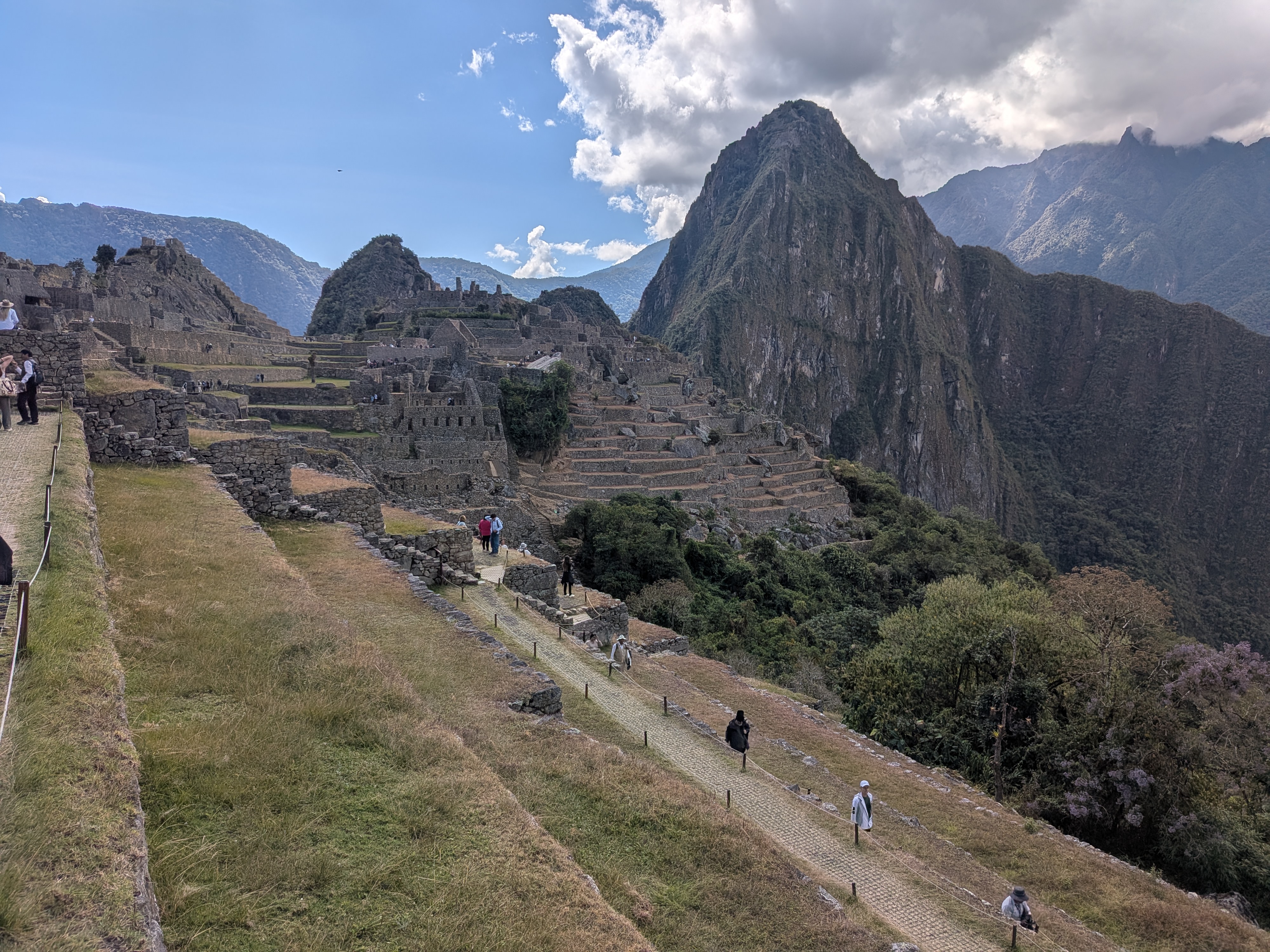
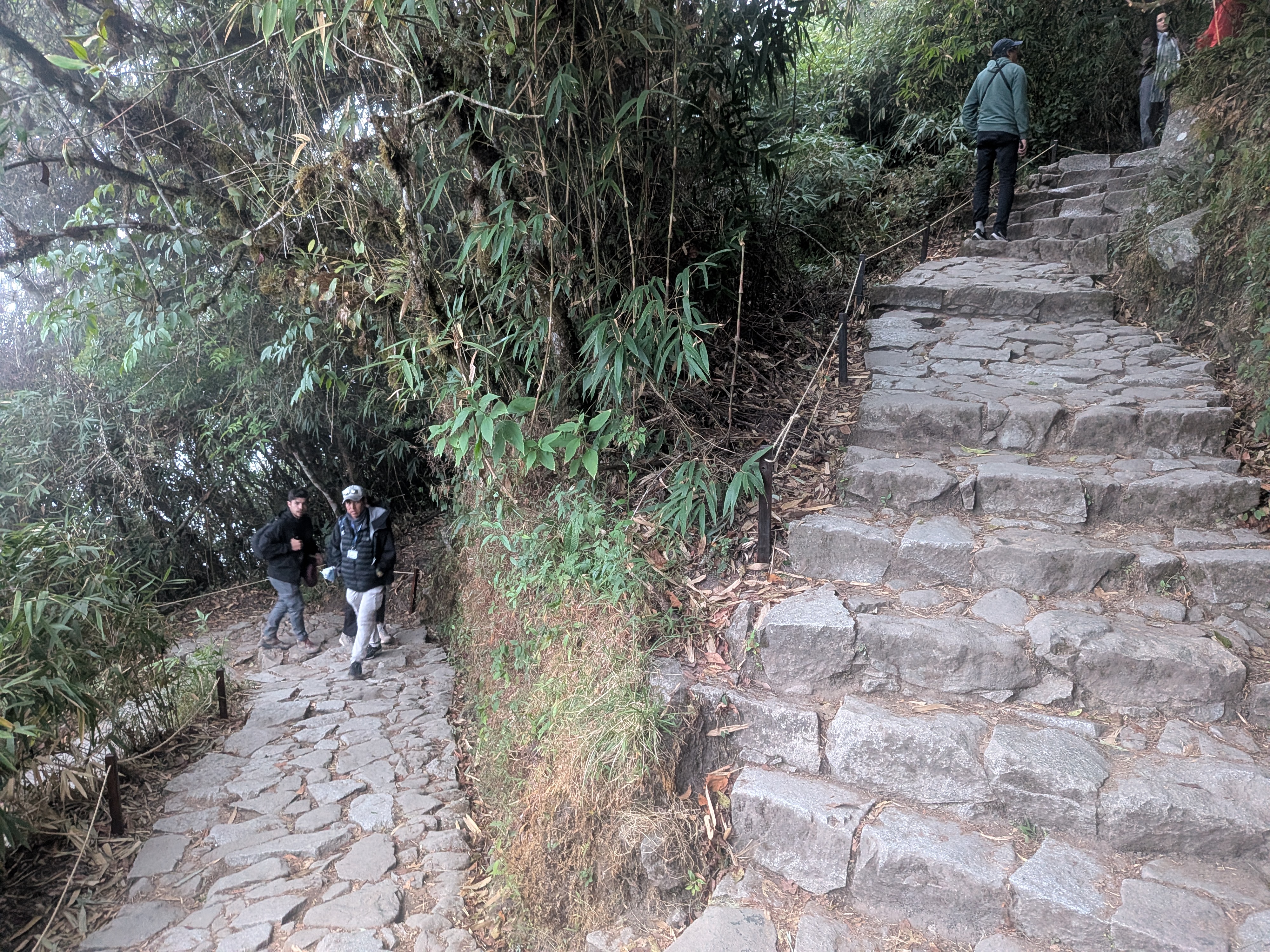
There are three different circuits that take you around Machu Picchu and you can only go in one direction on them. They all offer amazing views, but the most spectacular views come from Circuit One. This is the shortest of the hikes, but at the same time, it is up and can take a lot out of many people. It is possible to do, but just make sure you take plenty of breaks along the way. Also know that the steps are the original steps and can be difficult to navigate on the best of days. These steps are at all of the circuits though. The steps are also not uniform so it takes big steps sometimes to go up or down, and that is something that should be considered when coming to Machu Picchu.
Circuit Two and Three go more around the inside of Machu Picchu, and are best experienced with a guide. These can be found at both outside of Machu Picchu, and down in Aguas Calientes. If they are hired in town before the bus rides, they are great in navigating how to get on and off the bus and where to go for the trip. The can also help in making it around the more difficult parts of the hike while taking pictures for you at the same time. The other two circuits can also be difficult, but there are short cuts around some of the more difficult parts, but it also takes away from the overall experience, so this something else that should be kept in mind.
In the words of my dad, Machu Picchu is a magical place, and there is a reason that it is on many people’s bucket list. It is not for everybody though, and great consideration should be taken if thinking about taking an elderly person there. But if they are adventurous and are still mobile, with good planning, they can tap into that magic that is found there. It is also great to watch them as they start to experience that magic with you.
Until next time, enjoy getting out there and seeing what the world has to offer.
The Sacred Valley is the biggest draw for many people who come to visit Peru, mainly because of the attraction to its crown jewel, Machu Picchu. But there are many more things to see while visiting that lie along the path of Peru’s famous Peru Rail that travels from Cusco to Aguas Calientes, the small town where people stay before visiting Machu Picchu. But taking the train is not the only way to get between the two sights; there is also the option of hiring a driver that can take you all the way to Ollantaytambo. You can even arrange to have them stop at a couple of the smaller sights along the way to get more out of your Sacred Valley experience. Two of the easier stops along the way are Maras and Moray, and can make a travel day a great just by taking the time to go off the beaten path a bit.
First of all, know that it is off the beaten path. To get to these sights, you take skinny mountain roads that have not been paved, and drive through the back alleys of small towns hidden in the Andes. You could rent a car to make the drive, but it is not an easy drive. It would end up be a very stressful experience, and it would be much more relaxing to just hire a driver to take you the whole way. This way you can sit back and enjoy the scenery of the valley below you unfold in all its majesty.
If you are traveling from Cusco to Ollantaytambo, the first stop along the way would be Maras. Maras is a actually a small town in the mountains of the Sacred Valley, and it is not the real reason that people come to this area. The main attraction is the salt flats that can be found there. If you do come here, know that the Cusco Tourist Ticket does not include this location, so you will have to pay an extra twenty soles per person if you wish to visit. It is still an interesting place to see, and though the drive on the small mountain roads can be slow due to traffic, you can get some nice views along the way to make the drive worth it. The terraces out there have been around since the Incas, and are still in use today as a way to collect quality salt that is used all over the world.
The salt comes from an underground spring and is collected in an intricate system that allows the water to flow through various quadrants where the lips of each section collect the best of the salt. The water is slowly drained when enough salt is collected and a common salt is scraped together to be distributed to various stores in the region. It is a process that has been repeated for centuries, and you can come here and watch the slow process being done very similar to the way it was done before the Spanish ever made it out to this region.
Only a half an hour drive away is another sight that I think is even more exciting than Maras. This is the ringed terraces of Moray. There are three different locations where these were created by the Incas, and they are not only a marvel in architecture but also agriculture. The Incas built this sight as a way to experiment with their crops. They formed these co-centric terraces in the ground so that there would be different micro-environments that they could plant various crops in. It allowed for different levels of temperature to exist in a small area so they could see which plants would grow best. The plan worked so well that there is a fifteen degree difference between the top level and the lowest one. They even brought in different kinds of soil from the region to see how the plants would grow here.
The marvel of engineering goes even beyond the terrace to the various way that they could travel up and down them as they added rock staircases into the walls to allow for easy vertical maneuvring. Recent rains have caused some damage to the location, but for the most part, it is still intact, and an amazing place to see.
People come out to the Sacred Valley all of the time to see the wonders of Machu Picchu, but there are many other treasures held within the valley. If you have enough time out here, you should try to see as many of them as possible, and Maras and Moray are two easy additions to the trip.
Machu Picchu is one of the most popular sights in the world because of its beauty and the magical things that happen when visiting. Traveling there takes some planning though, and when that starts happening there are many questions that come up about how to get the most out of the experience. When doing the research on Machu Picchu, one of the biggest questions that come up is about the circuits. There are three circuits where you can schedule specific times to walk through them, and each one has their own specific appeal, so which ones would be right for you?
Circuit 1
At one kilometer, circuit one is the shortest trail, but it is also the one that has the most elevation gain. It is basically a one-kilometer hike on the backside of the ruins up stairs most of the way. Some of the stairs are made out of wood with standardized step sizes, but there are the old rocky uneven Inca steps the rest of the way. It is a little bit of a workout on the way up, and you do go back the same way you came, so there is always the struggle of finding enough space to navigate the steps.
It does take you up to the highest ridge in Machu Picchu, and offers the iconic views that everybody thinks of when thinking of Machu Picchu. There is not a lot of history to the hike up, so I do not believe a guide is necessary for this circuit. Most people just take it so they can get that iconic view of the sight in person. There are a couple of offshoots to the circuit that you can add if you wish to make the hike a little more exciting such as going up the path past the ruins to the top of the mountain path that was first used to get into the sight. It is worth the views, but that is really the only thing that makes this circuit worth it. If you are taking this circuit, I would recommend to get it as early in the morning that you can because this is when the least amount of people will be on the path. It also allows you to be up there during the sunrise which is one of the most magical times of the day at Machu Picchu. When I went, we were a part of the 6:00 group, and the whole sight was blanketed in a cloud. I thought it was going to be a complete bust, but the sun came up and slowly burned away the clouds, making for a dramatic reveal of Machu Picchu that I will never forget. This was also during the end of July when the sun is powerful enough to break up the clouds. If you are planning on going during the rainy season, December through February, the clouds might be too thick, and I have heard that they sometimes stick around all day.
Circuit 2
Circuit 2 starts at the same place as Circuit 1, but it heads into the sight quickly instead of skirting around just outside of the spectacular views of the sight. It still goes up the terraces to some amazing spots with great views, and it is worth getting there early so you can look over Machu Picchu before all of the other tourists arrive and start to fill it in. The pictures are not as dramatic as they are when you are looking down at Machu Picchu from the perch on Circuit 1, but there are still plenty of spots that have great views.
The circuit is basically a big circle that will eventually take you down into the sight, taking a bigger loop around the central part of the sight than Circuit 3 will. There are a few important places that Circuit 2 will take you to that are interesting, but sometimes you will not know about their significance, so if you are only able to get tickets to this circuit, hiring a guide would be suggested because they will be able to explain to you more of what you are seeing, and they will also point out things that you might have missed if you did not have one.
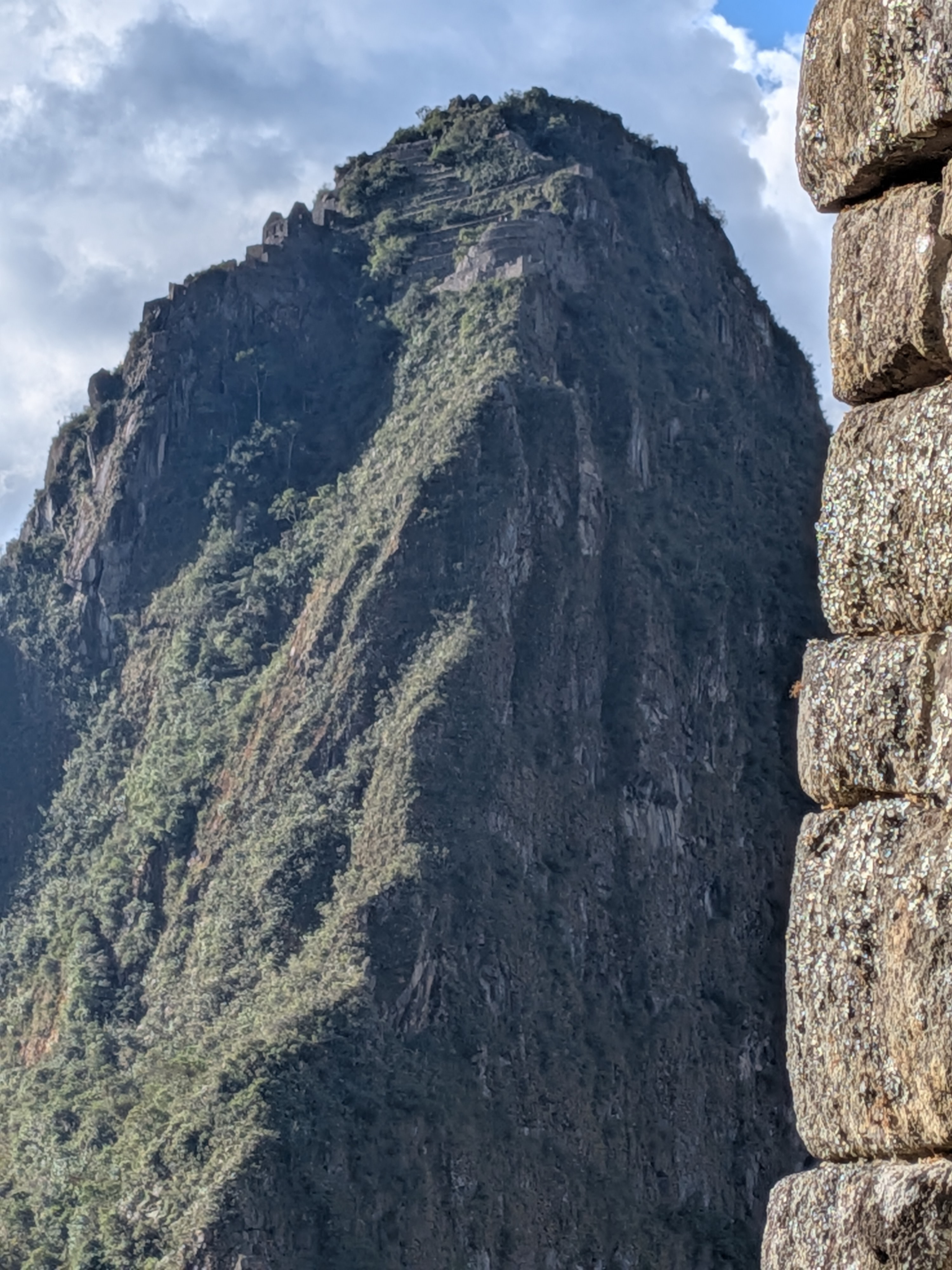
There is an extension that you can add on to Circuit 2 that is for the more serious hikers. It takes hikers up Huayna Picchu (also spelled Wayna Picchu). This is the pointy mountain that is usually pictured when people look at Machu Picchu. Most of those pictures do not reveal some more structures that are on top of this mountain that people can hike up to. The hike itself takes one to two hours to complete and it is not for the more casual hiker. It does take people straight up the mountain over some rougher terrain, but the views from up there are seldom seem by people coming out to Machu Picchu, and it might be something you would want to consider if you are in good shape.
Circuit 3
Circuit 3 has its own entrance into the sight, and it is the one that I enjoy the most. It takes visitors out to the terraces just like the other two hikes, but this is the one that will eventually take you into the heart of Machu Picchu. The circuit is a lot of up and down that takes people over the original steps of Machu Picchu, some of them easier to traverse than others, but all of them can be handled by most people. Just know that you will need to exert yourself some if you do take this route.
This is also the route that has the most history and stories to tell. I would highly recommend getting a guide during this section because they will really make it come to life, and most of them know how and where to take the perfect picture of you in the majesty of Machu Picchu. You can find many of the guides waiting outside of the entrance to Circuit 3 or down at the bus stop in Aguas Calientes, but make sure you ask how much they will cost before you hire one. I would also recommend that you talk with them for a bit to see how well they speak the language that you would like your tour in. All of the guides are multi-lingual, but sometimes an accent or pronunciation of certain can make some of them hard to follow, and you would like to know that before you are already on the trail with them.
Circuit 3 does offer some views, but none of them as amazing as the ones that you will see in Circuit 1 or 2. This is why I would suggest that you schedule at least two different tours. I would start off with Circuit 3 with a guide who will give you the background knowledge that you need so you can take one of the other circuits on your own and know enough about what you are seeing and why you are enjoying it. I would also spread the circuits over two days, one in the afternoon and one in the morning. This way you can see what Machu Picchu has to offer during the different times of the day. If you plan it right, you can minimize the time you have to spend in Aguas Calientes because out of all of the towns you can stay in the Sacred Valley, this is the one that is the least interesting. It is more exciting to take that twenty minute bus ride up to Machu Picchu and see the real attraction of the area.
Machu Picchu is an amazing sight, and it can easily be seen why it is on people’s bucket lists. If you are going to scratch it off your list, make the most of it by choosing the circuit that is best for you. Until next time, keep adding to that bucket list, but make sure you are crossing off things on it as well.
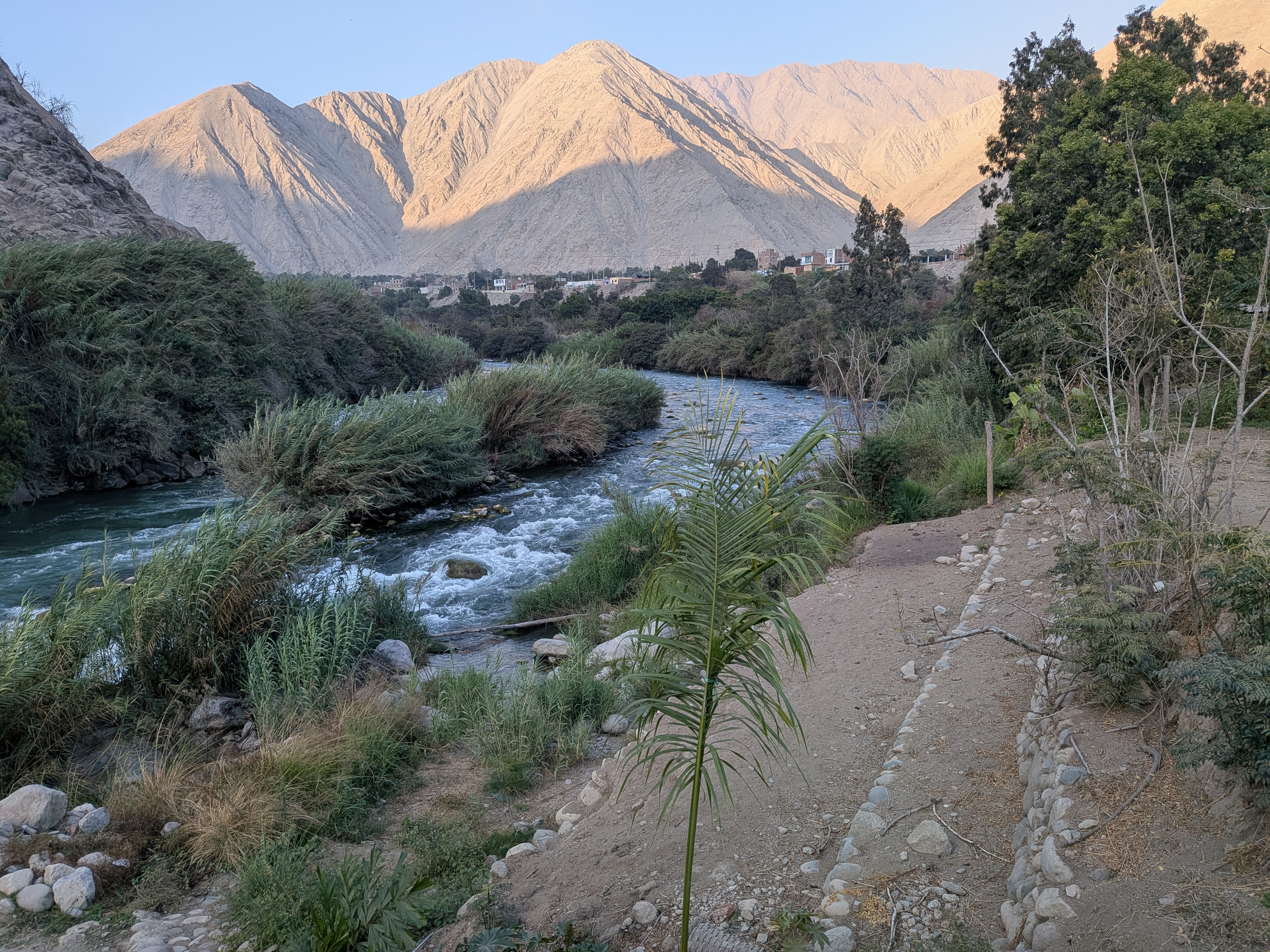
I recently asked one of my students where people traveled to in Peru. He rolled his eyes, looked at me, and instantly said Cusco. I realized my mistake, and asked for clarification; where did Peruvians go to for their getaways. He talk about many spots along the coast, and then mentioned one spot not far in the Andes where Peruvians went in the Andes mountains not far away from the coast where some went to play on the river or around the surrounding mountains. There are ruins, and playgrounds set up for both children and adults. It is not well known by people outside of Peru, but it is a great getaway for those that live in Lima. I got to learn about all it had to offer as I took my students out on an experiential education trip to this region of the Andes Mountains.
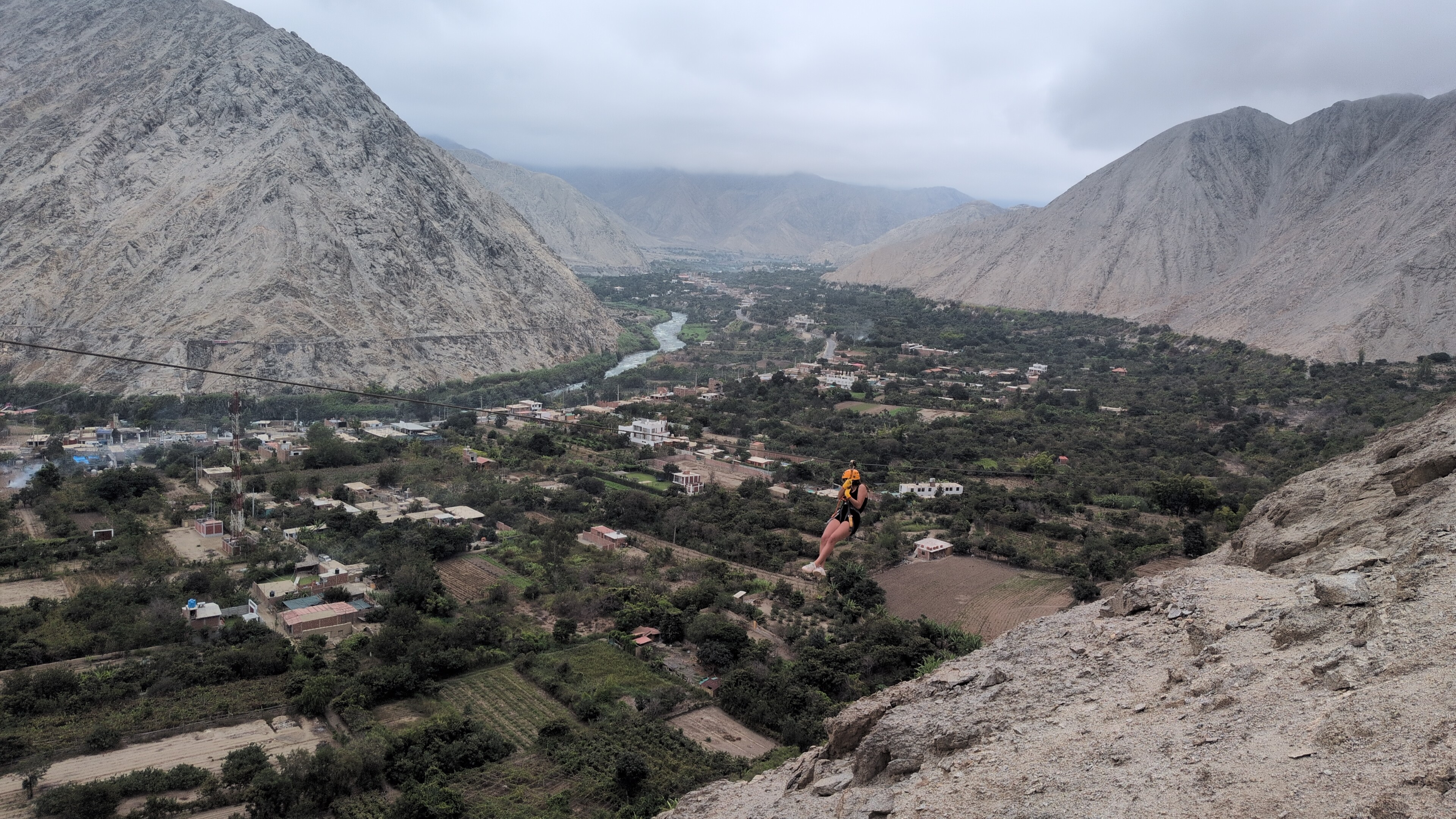
There are many things to do in this valley, and a bunch of vans to take you up and down the main road that follows the river to take you to these activities. The travel only takes fifteen minutes at most from the furthest away hotel, and some of the hotels even have some of these activities available on their grounds. All of the activities are great outdoor experiences throughout the year because even in the coldest months, it is still warm enough to enjoy these activities.
The biggest problem with the whole area though is the river. There is always water in a very dry climate, and this creates the perfect conditions for mosquitoes. They are all over the place, and they are hungry. If you come to this part of Peru, remember to bring your bug spray because you will want it to keep these critters away. I had not sprayed any on me when I first arrived, and I had my one bottle hidden in the bottom of my suitcase. I thought I would be okay, but the bugs just saw fresh meat and they were all over my legs within seconds. There are still welts all over my body from those first few moments that I arrived, and I am sending out that warning to anyone that comes.
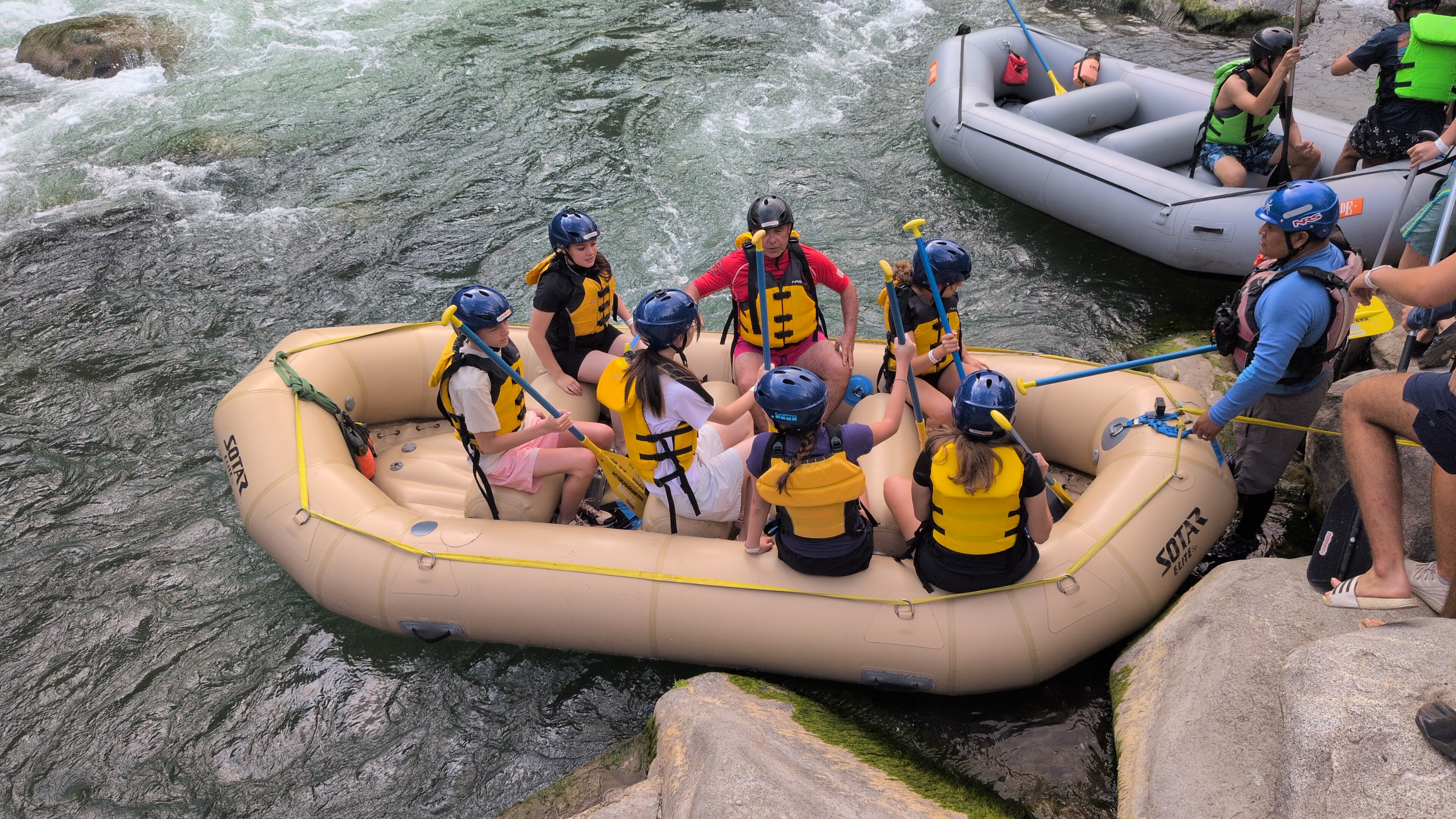
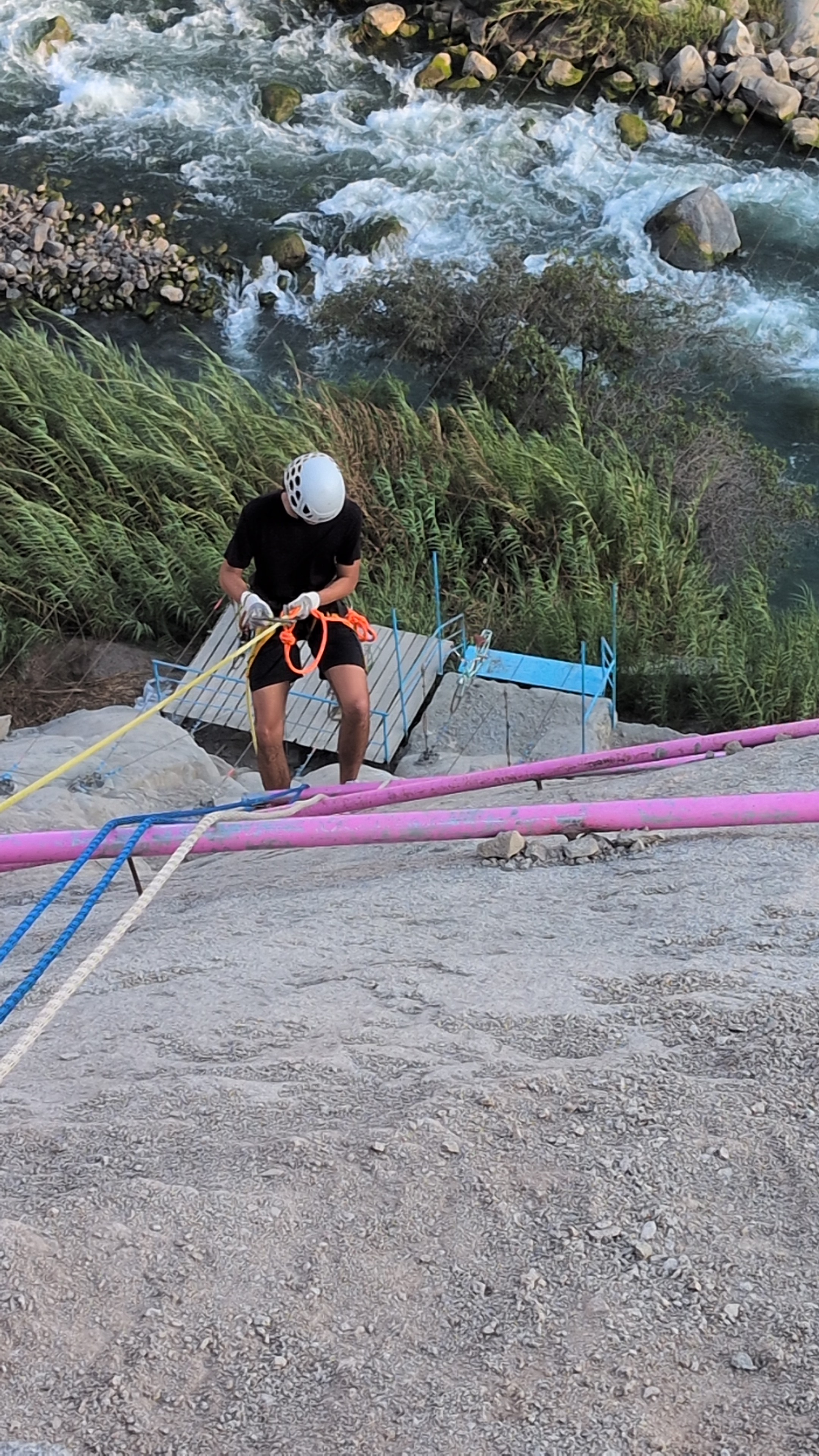
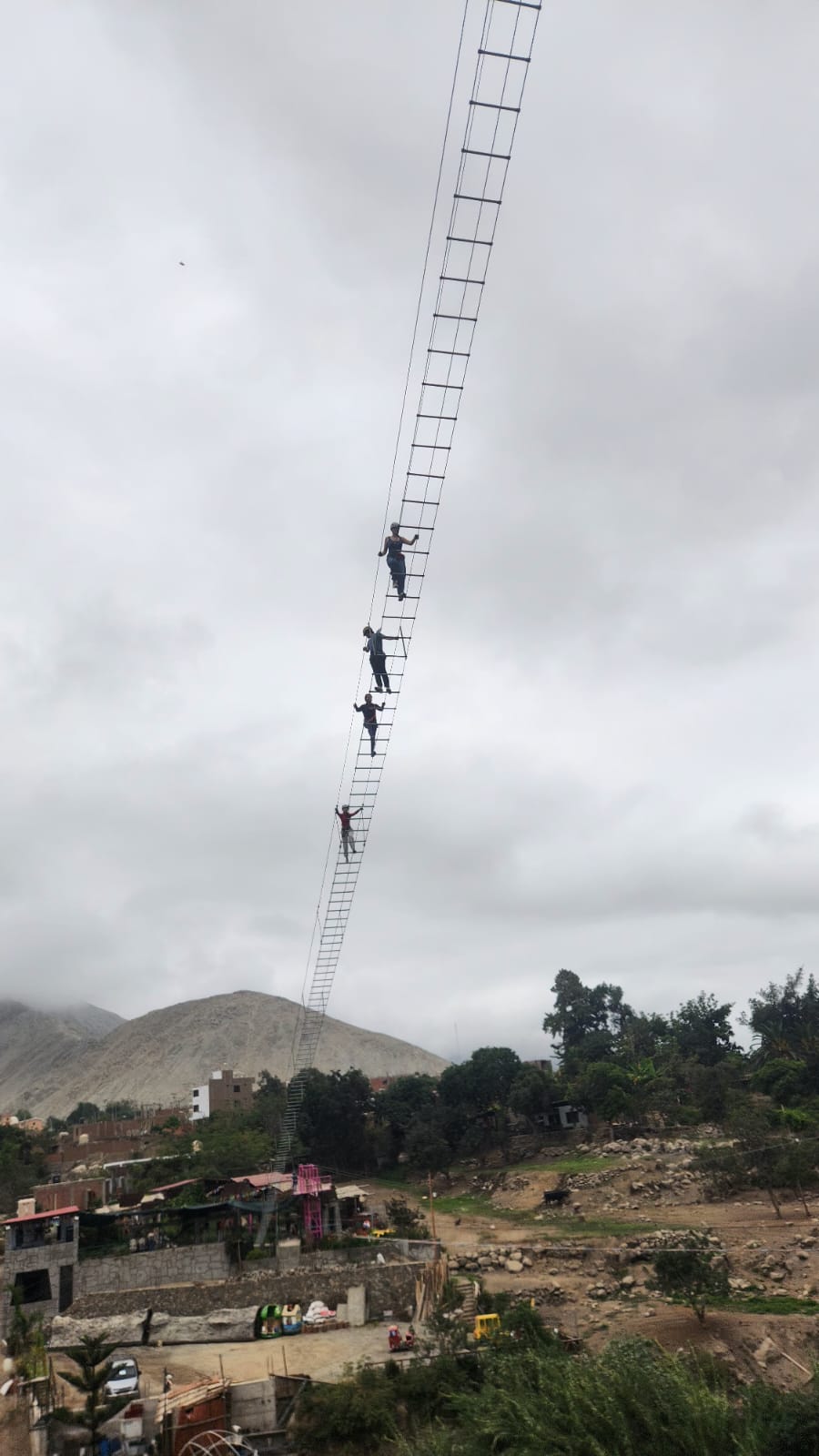
Do not let the bugs discourage you from coming. As soon as you lather yourself in the bug spray, the activities are a joy. There is rock climbing, high ropes courses, zip-lining, kayaking, rafting, bird-watching, camping, ruin exploration, and just taking a stroll along the river. Each of the activities take about an hour or two to accomplish which makes for the perfect trip experience where you take on a challenge in the morning, head back to the hotel for some downtime, and then heading back out for a completely different experience in the afternoon. It makes for the perfect balance of fun and relaxation so you can come back from the trip feeling refreshed and yet having experienced something that you can hold in your memories.
It is definitely not the first place you should choose if you are coming out to Peru. Go to the Sacred Valley if this is your first trip out here. But for those who live in Lima, and have done all of the big things that Peru has to offer, and are looking for something new and exciting, Lunahuana is a great place to consider. It will give you a unique experience out in this country that you might not have thought to have in the first place.
So what if our shit covers the island? Who are you to say we are animals? We did not ask you to invade our sand With your strict demands and obnoxious rules. We find comfort with the way that we live, Free from the judgment delivered by man. We were not the ones who were asked to give To contribute to economy’s plan; We were just looking for rocks to hop on Away from the watchful eyes of people, So we like to strut on these rocks with brawn, Claiming these crags have become our steeple. We only ask that you stay far away From this island outside Paracas Bay.
You can already feel a nip in the air. The autumn equinox has already come and gone, but people are not ready to believe that the weather is going to turn and they will have to retreat to the safety of their homes. Luckily, in the southern hemisphere, there is a week that is held with reverence that allows for that one last fling to enjoy the weather that is usually enjoyed during the summer months, Semana Santa, or as it is known in the English speaking world, Holy Week. In Peru, this week is treated as a national holiday, and everybody has the long weekend off to enjoy with their family and friends.
This combination of weather, vacation, and attitude creates a pilgrimage to the beach towns along the Pacific coast as people try to squeeze in those last moments of summer. It is not so much about the Holy Week as it about enjoying what the last vestiges that the warmer weather has to offer. It reminds me of Labor Day weekend in the United States as everybody leaves the big cities to find those places on the coast or in the mountains where they can find time to relax and pretend that winter is not so far around the corner.
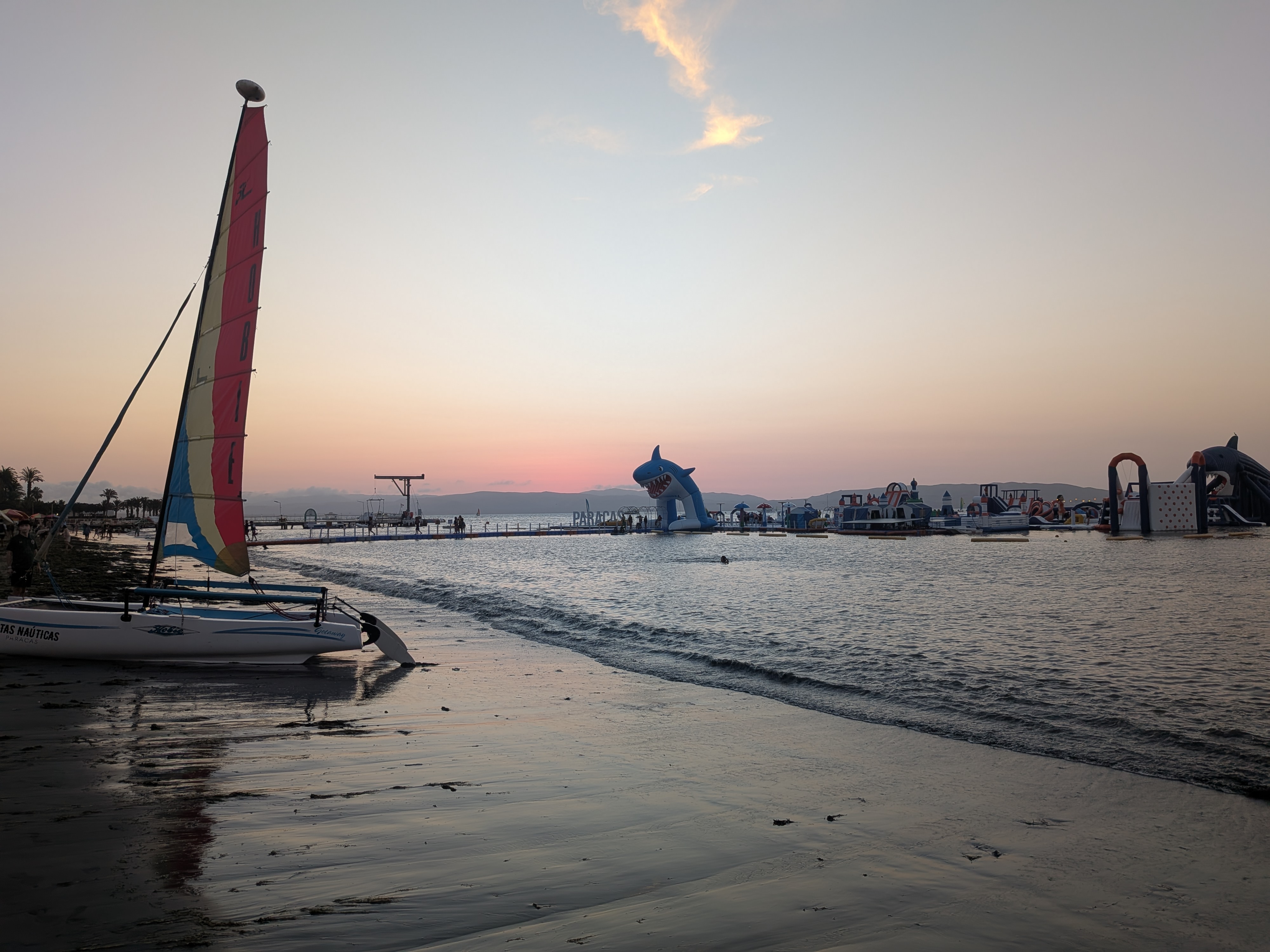
I should have expected this from one of the beach towns that was closest to Lima, the big city where I live. But I was not thinking of this when I booked my weekend getaway. I was thinking more about a beach that I could relax on, a place not far from my where I could unwind for a bit, and a place that had a little bit of culture and cuisine that I could say that I had experienced something new by going here in the first place. And I do have to say that I did experience something new by coming down here, but I came down during the wrong weekend because everybody else had the same idea that I did, and came down to Paracas as well. It created crowded beaches, and restaurants, and the whole vibe was a big party that everybody was there to get their last moments of fun.
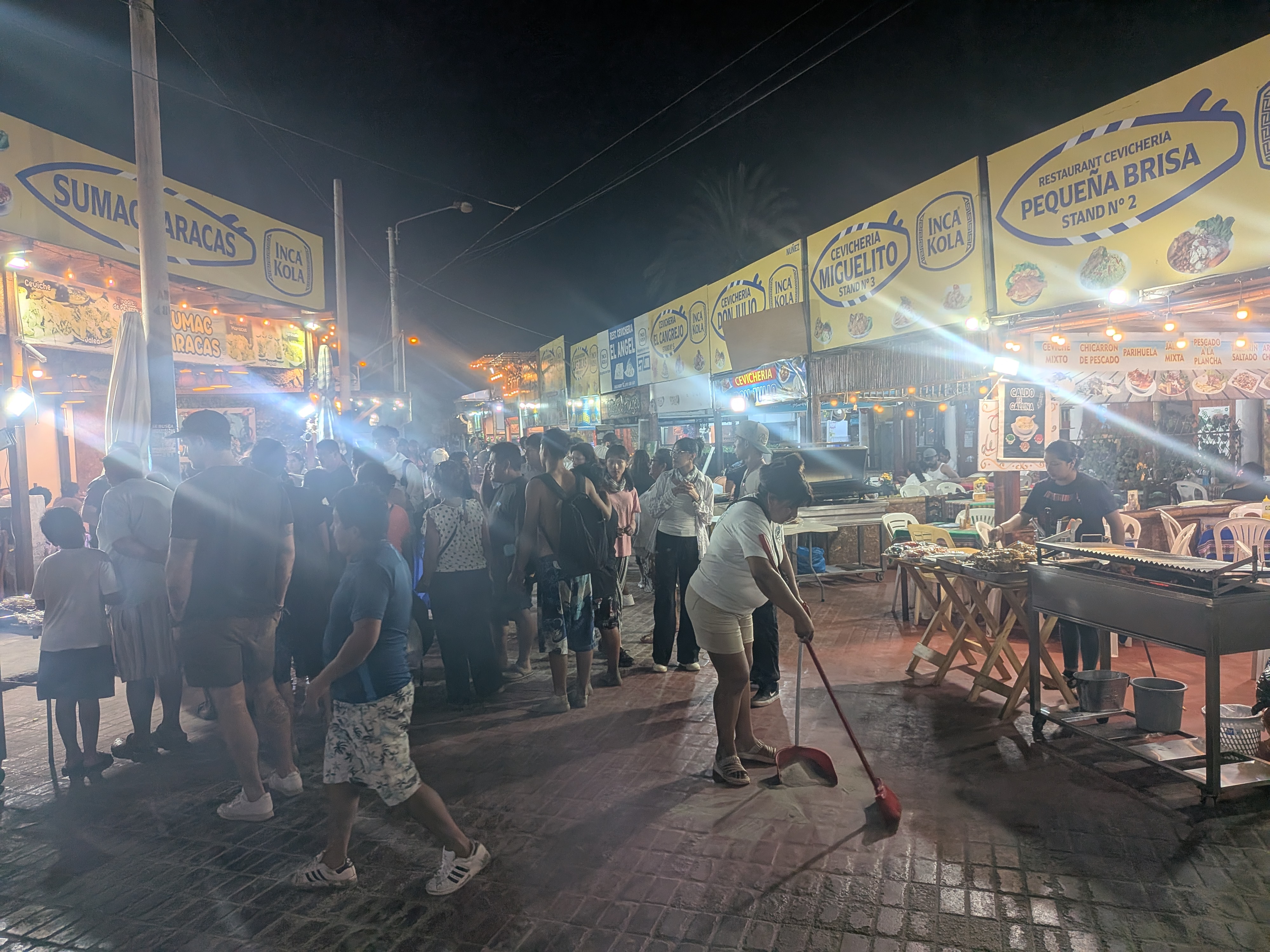
Despite the crowds, we were still able to find the charm of this city. It was not in the places where we expecting; instead, it was in the back streets further away from the beaches. It was here that you were able to get away from the DJs and large concerts going on to mark the end of the season. Instead, we saw the things that make Peru a great place to be. There was a street food section where the flavors of the grill could be smelled wafting over the brick walkways. Each little booth was run by a different family and they had a small selection of seating next to the spot where they cooked your food. You could find anticuchos (grilled cow’s heart), picarones (fried sweet potato rings), and chicken or pork tamales. It was the perfect place to grab a local cerveza, and grab a bite to eat.
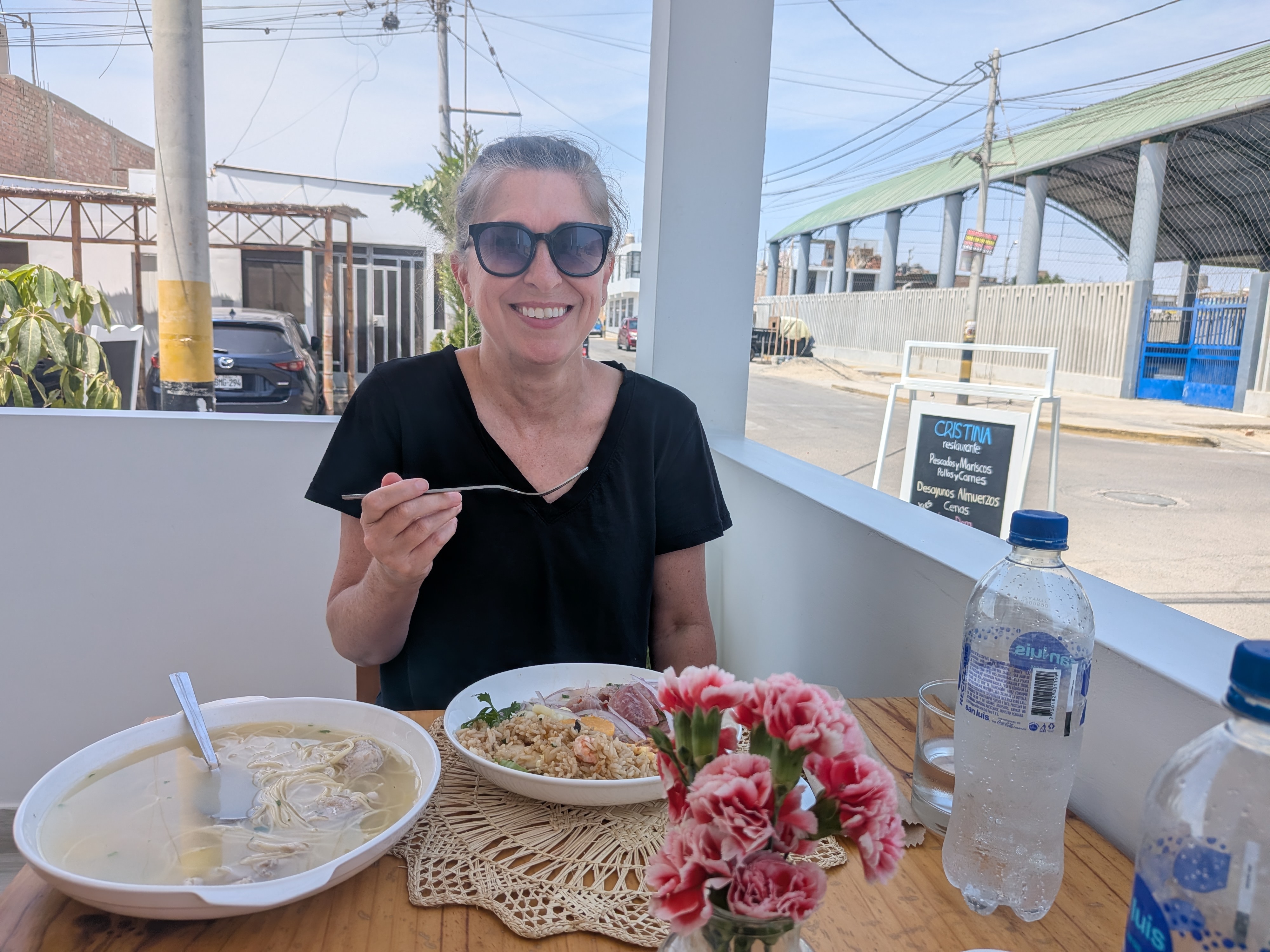
That is not to say that you could not find the better restaurants that carried the cuisine that Peru is famous for. There are many of those as well, but you will definitely want to get away from the main drag to find them. There are many restaurants right on the beach, but each of those has quick easy meals because they know they will garner the attention of the tourists that have come to visit. When you head in a bit, you can find the fresh ceviche, Peruvian soups, and chaufa that will make the trip memorable. The best one we found was called Christina’s and it was a fine minute walk in-land from the beach, but was well worth the walk to get the better meal.
The bars along the beach are great to get a pisco sour, especially during happy hour when they are two for one, but it is still a crazy mash of people and does not offer the relaxation that we were looking for. I am sure that Paracas has those quiet weekends that we would have enjoyed the experience a little more, but for Semana Santa, it is a time to party. It is a loud, raucous time that it great for many people, but this is not a part of my life anymore. I will come back some day when it is not as crazy, and hopefully then, I can find the weekend that I am looking for. Maybe at a time when it is not the end of summer, and I am not a part of a group of people who feel like that they have to get in those last moments of the season before it is gone for another six months. Instead, I can just enjoy the time that I find myself there, and understand that all times are great in Peru, no matter what season it is.
Paracas is not one of the top destinations for people visiting Peru and who only have a week or two, but for those who spend time in the country, they find a way to make it down to this beach town. The town itself does not boast anything special that you could not find in any beach resort anywhere in the world. There are numerous restaurants, and sandy beaches, but it is when you get out of the town and look at the sights a little distant from the shores that you discover what Paracas really has to offer.
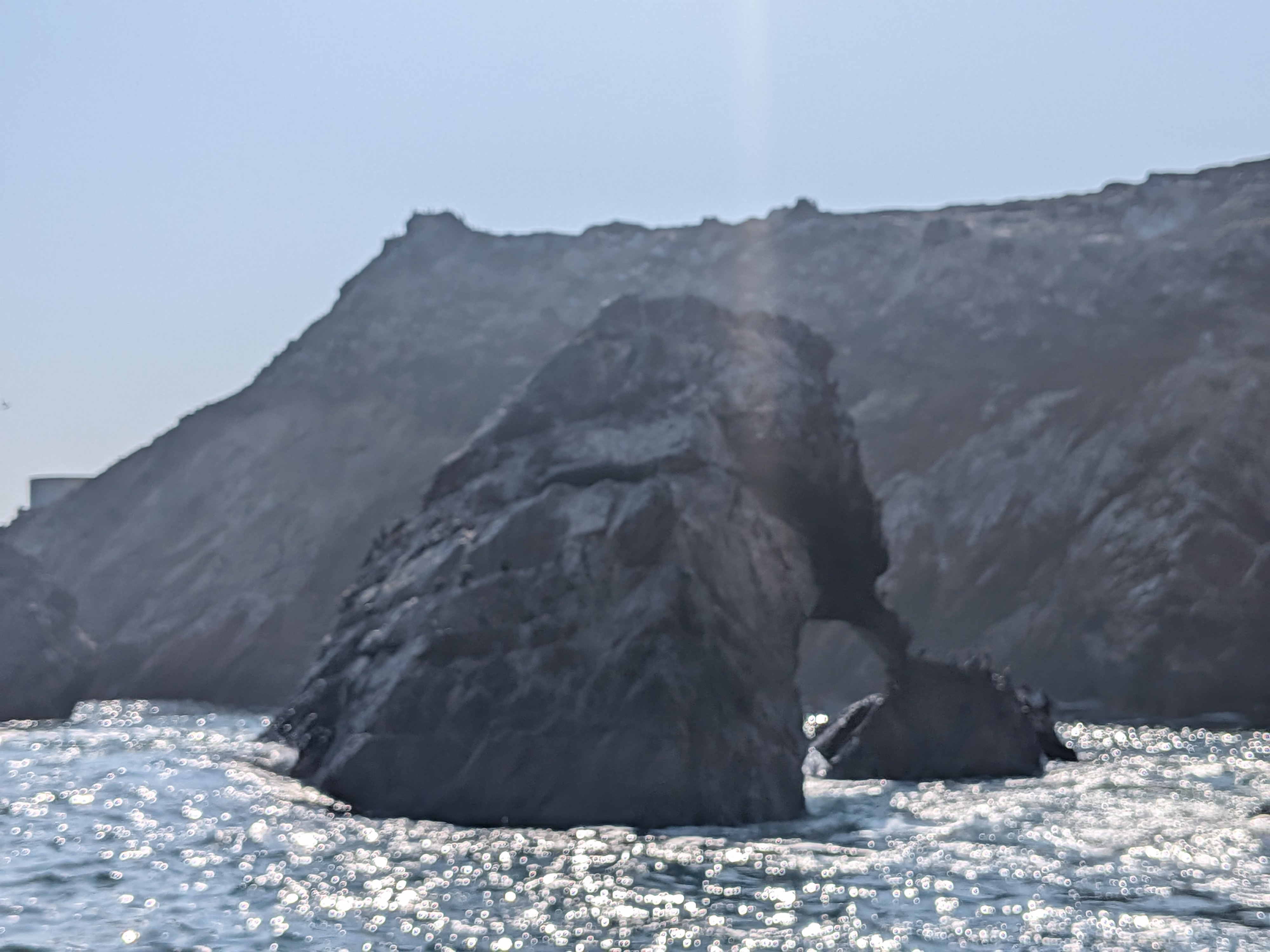
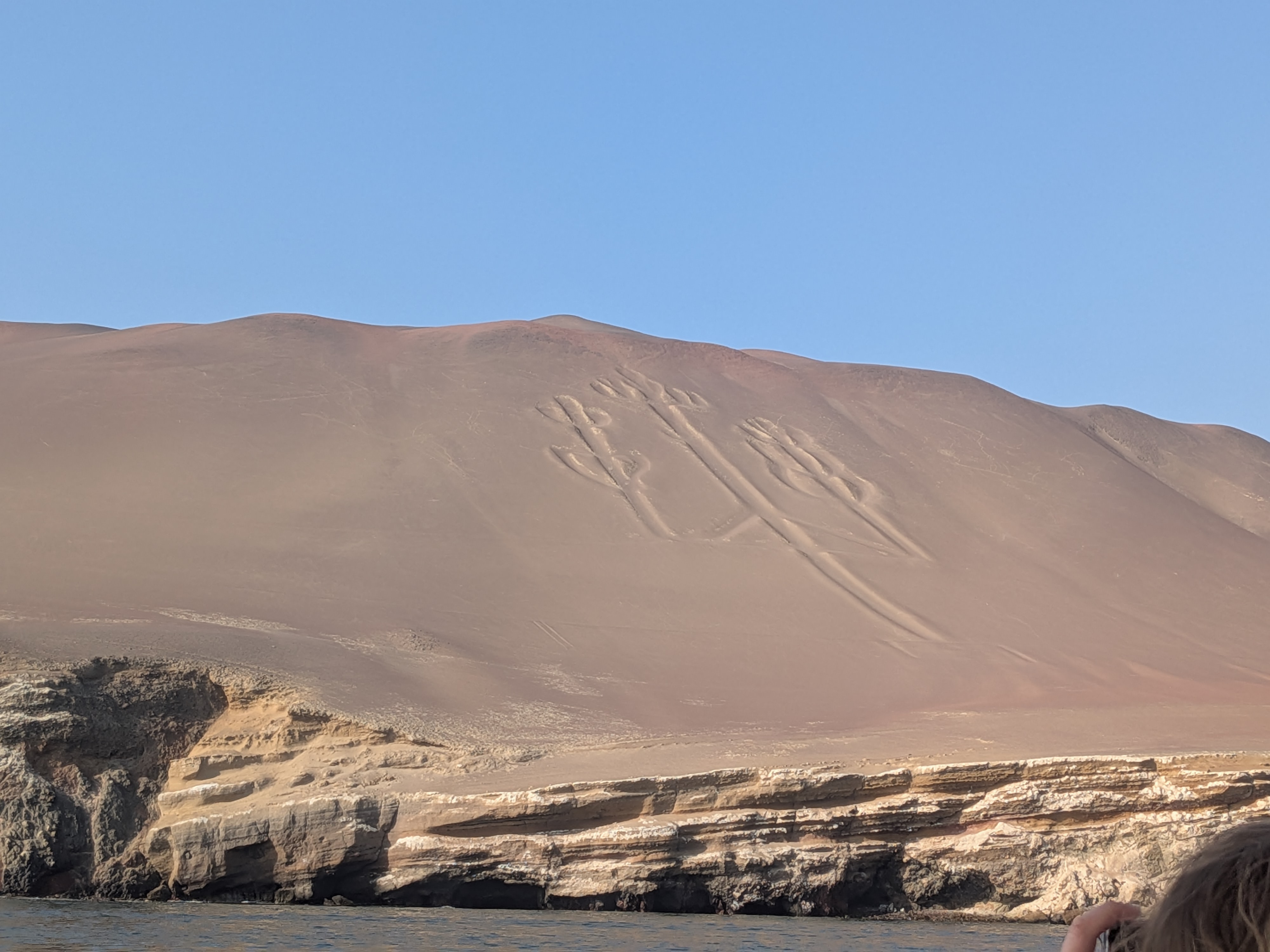
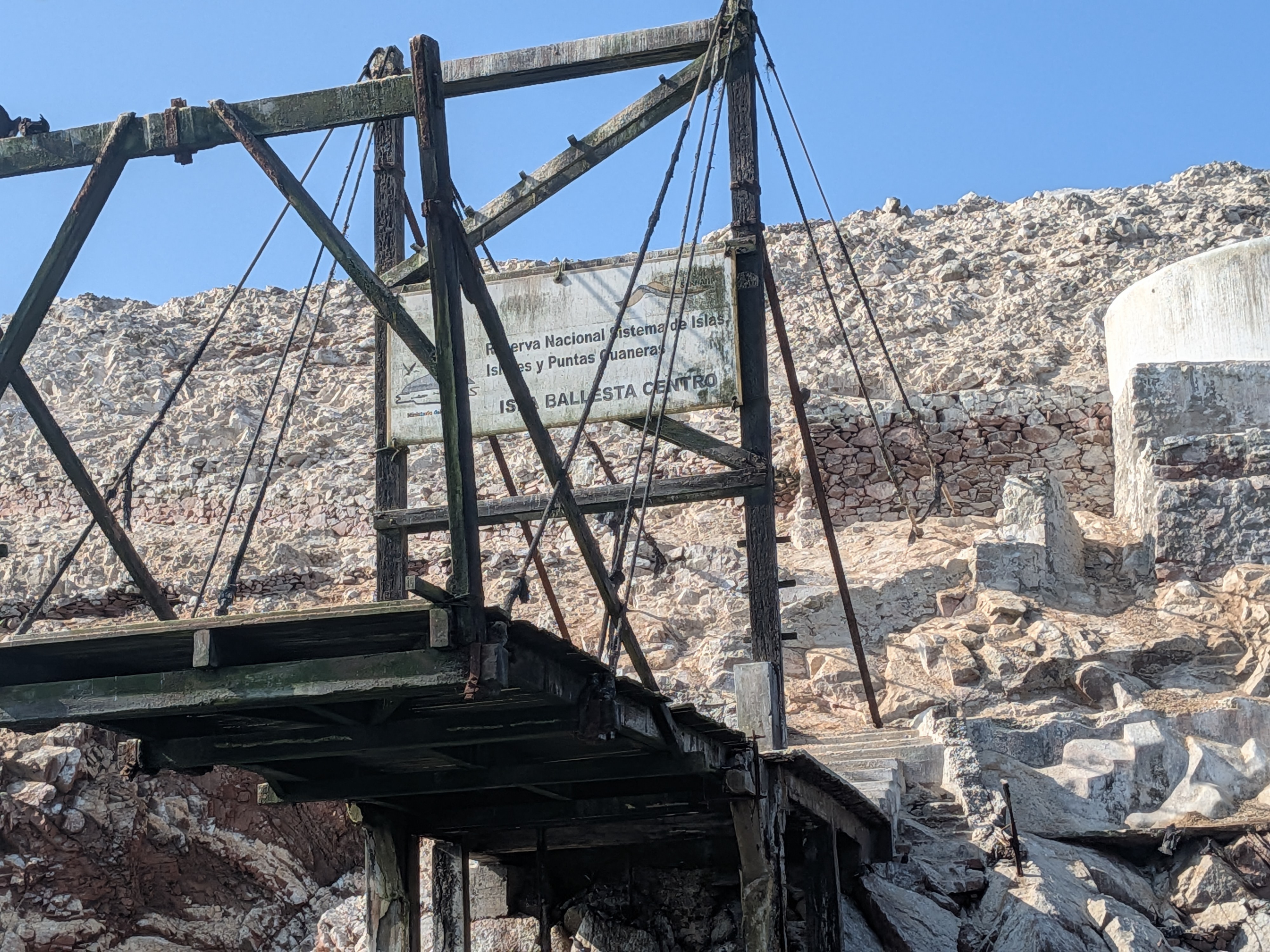
One of the things that many people do is to take a boat trip out to the Ballestas Islands, a group of two jagged outcropping that was once used to harvest guano and brought to Peru many riches. It has since been taken over by the government and kept as a nature reserve that you can take a two-hour boat ride out there to see the various animals that now overrun the islands. It is often called the poor man’s Galapagos, and though the islands are rich with animals, you cannot see the diversity that Darwin discovered that made the other island chain as famous as it is today. Still for only twenty U.S. dollars, you can enjoy a nice morning traveling around the islands and watching the birds, crabs and sea lions that call it home. It will also take you along the coast of Peru where you can witness one of its more famous Nazca lines, strange traces in the earth all along Peru that were left behind by an earlier civilization and nobody knows much about except they are cool to look at.
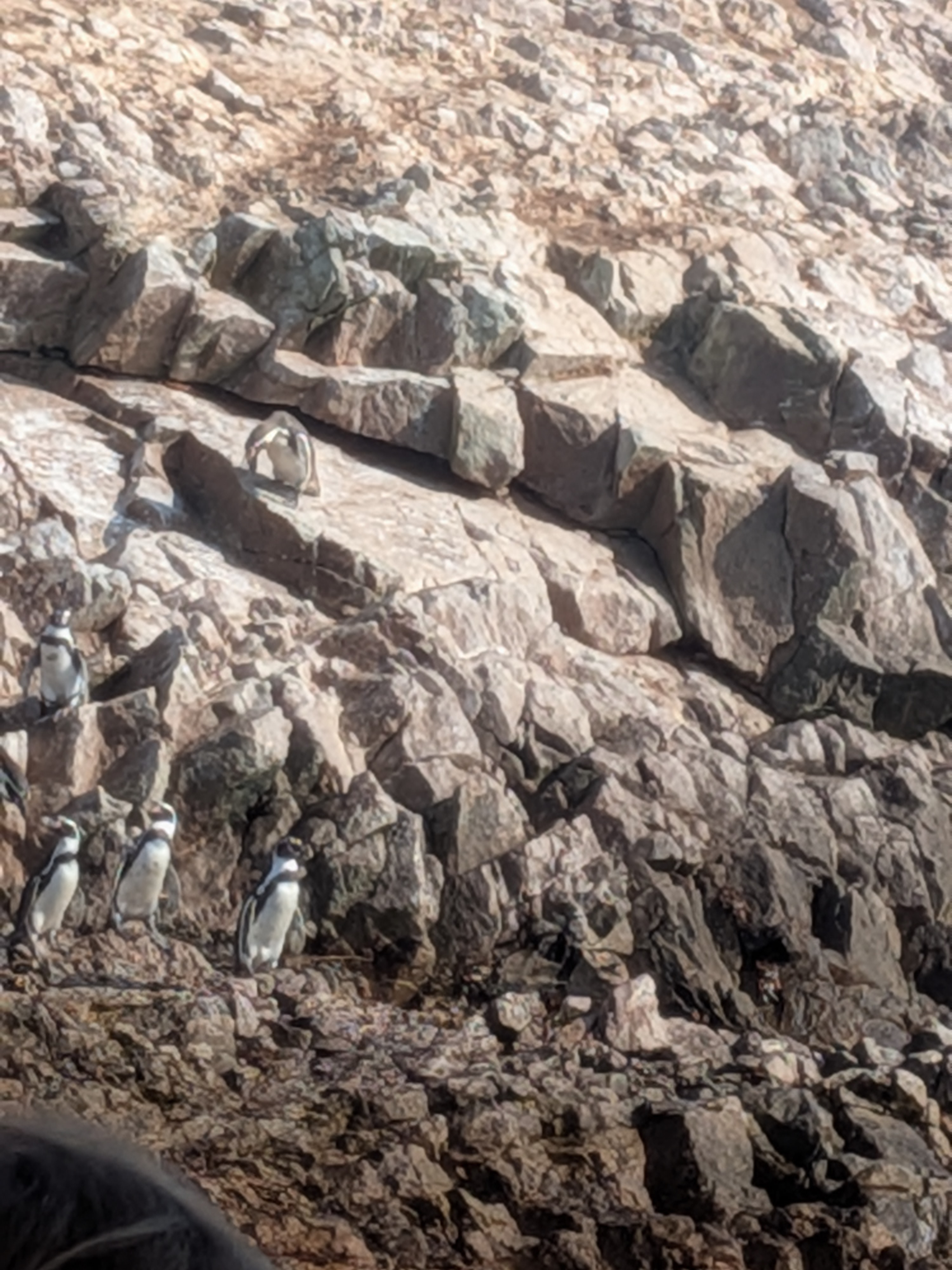
The islands itself is best visited in the months of December through March because that is when the wildlife is out their in abundance. It is the perfect place to look for penguins as they jumps their way over the rocky cliffs and jump into the water to go for a swim.
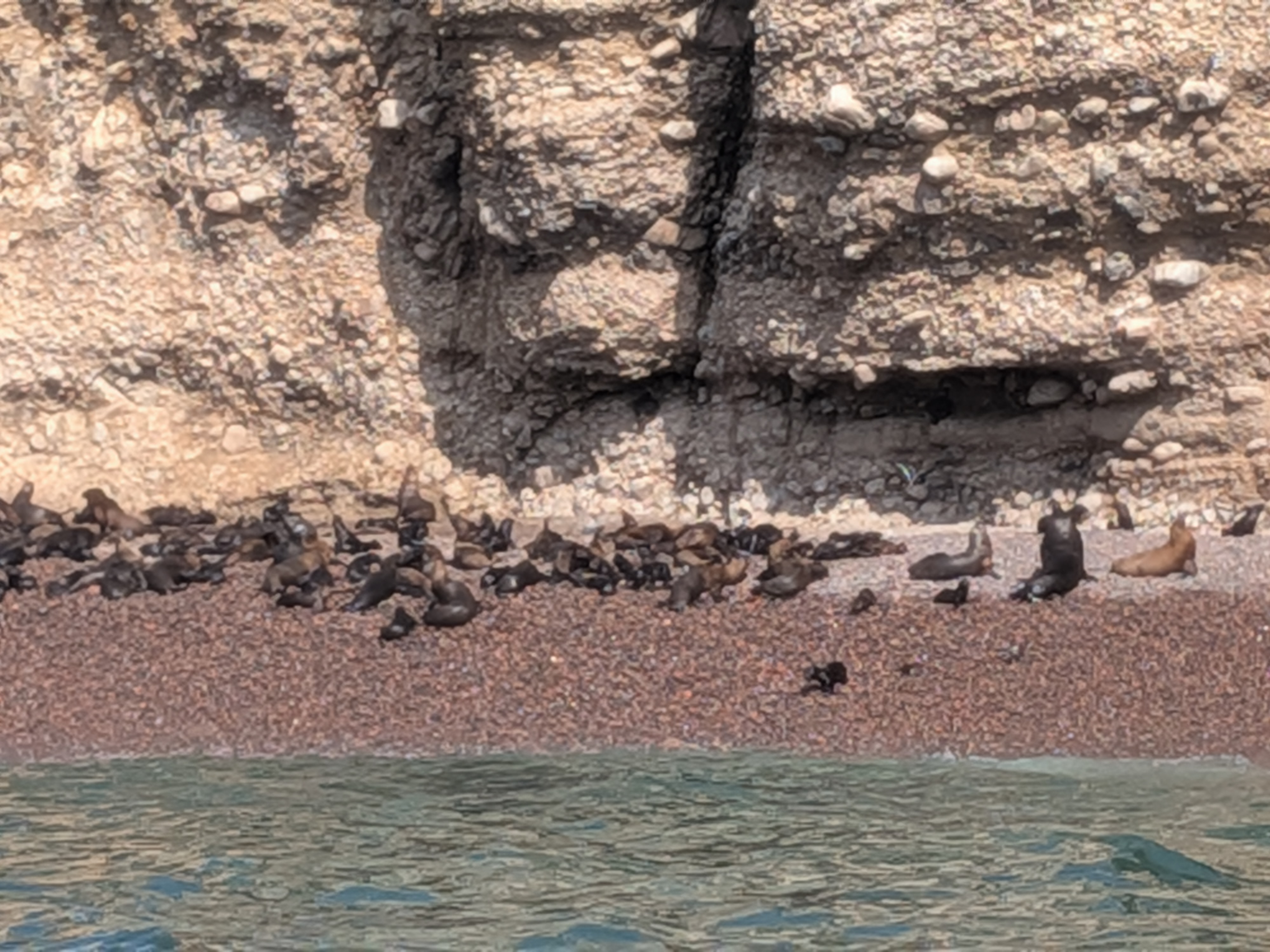
It is also the time of the year when the sea lion are out there engaging in their mating rituals. They will move off to warmer waters soon afterwards, but at the end of March, they are engaged in raising their newly born children and relaxing on the beaches that are a part of this island.
It is not always the perfect nature reserve though. There are still the remnants of a time when humans controlled the islands. Most of these ruins have been left behind, but the Peruvian government has built up a couple of the buildings so a couple of people couple work there to make sure that they could conserve the area of this preserve and make sure nobody came along to destroy the delicate balance of nature that is left behind.
Though many people who make their way out to Peru will never witness this little piece of paradise, it is a nice spot to go to for those who are willing to spend a little more time out in the area. It is easily the biggest highlight on a trip to Paracas and one you should consider if your path takes you our here during the months of December through March.
I’m sorry about the lateness of this post. Usually I am sharing with you the biggest posts of the year right around New Year’s Day, but because I was traveling through Patagonia at that time, I wasn’t able to sit down and sort through all of the data until now. 2025 was a crazy year for most of us for various reasons, and this was no different for me. I had taken a new job in Peru in July, so I spent a lot of the time getting all of my stuff together and moving it halfway around the world in Jordan. During that time, I was able to travel to many places such as Egypt, London, around Jordan one last time and a couple of trips back to the United States, but most of my time was spent moving all of our stuff and our puppy to Peru. Because of the visa requirements, I was not able to leave Peru once we arrived, but this was not a bad thing because the time I did have off was spent traveling through this amazing country. I hope you enjoy this look back of last year, and here is to more opportunities to see the world this year.
2025 was the last year that I spent in Jordan, and before we left, we started to have visitors. I was able to make the Jordan Loop, (Petra, the Dead Sea, and Jerash) one last time. It was a month before I left, and it was like my farewell tour of the area. I do consider myself lucky that I was able to make this trip that one last time, and do it with such good friends. It allowed me to create great memories of Jordan before I left it forever.
Egypt featured heavily in the posts for 2025, showing up four times in the top 10. The first time was a poem that I had written while out there, thinking about what it would be like to be a mummy so many years after you had been rediscovered by archaeologists. It was great to see them, but it was also gave me a sense of dread of what it would be like to have your body on display in a museum so people could come by and view you.
My first post of the year was also one of your favorites. I spent a lot of time in the States this year, and I had spent some of that time with my family during the holidays. It is easily the best way to spend this time of year, and it always makes for great memories, but at the same time, there comes that moment when you have to pack everything up, and return to the life that you live. It is the reason that January is always a quiet month for most people, but it was still nice to have this to hold on to during that quiet month.
I made a big move this year, coming from Jordan halfway around the world to land in Peru. Because it was my first year there, I needed to stay in Peru for my visa. It is not a bad place to be stuck in as there are a lot of things to see. We were holding off on the big one, Machu Picchu, because we knew we would have visitors and we would see that eventually, so we went off to other locations. Our first big trip was to Arequipa, and it is a place in Peru that is not talked about enough. The monastery is a great place to visit if you are in Arequipa, and a lot of people enjoyed the post.
A return to Egypt with another poem about my time in Cairo. I really enjoyed this unexpected trip last year as what I thought would be another experience in a Muslim country turned out to be a cultural education about one of the oldest places in the world. The thing that struck me the most about the place was the way that the people embraced both aspects of their past. There was a huge pride in both their connection to Islam and the Egyptian kings of centuries past. At times, it seemed as if these cultures were at odds with each other, but there was a marriage between the two that allowed them to exist in perfect harmony in this part of the world.
For many people, 2025 was a tough year. The world seemed to be imploding, and as I left one of the parts of the world where that struggle could really be felt, I wanted to take some time to reflect on my time there. I started to take one picture a day during my lat 100 days in Jordan as I went about my routine and posting that picture to Facebook. I was not trying to be political or get people motivated to think a certain way; I was just documenting the mundane. I received a lot of feedback from doing this as it gave people a reprieve from the crazy they were seeing on social media. This little experiment resinated with you as well, and oddly enough, it became a simple way to bring a little happiness to people’s lives during a time when they needed it.
I had gotten back into one of my favorite hobbies, board games, during the 2020 pandemic. It was a great way to have fun with the few people that I had contact with at that time. It turned into something that stuck with me beyond that strange time in the world. As I explored this hobby more, I have gone to a couple board game cafes, but never the one that was right down the street from where my dad lives. Over the summer of 2025, I met a few of my friends down there to finish off our Dungeons and Dragons campaign that we were unable to finish due to me having to leave Jordan early. I am glad that I had finally gone into this place. It has opened the door to look for more of these little places around the world as a way to enjoy a couple hours of downtime during my travels. It was also nice to give Enchanted Grounds a little plug to keep them busy for future years.
As I started to explore the board game hobby more, I started to review the games that I picked up along the way. I have only done one or two reviews a year, but they always seem to be very popular, and people continue to come back to them as they decided on the board games for their collections as well. This year I reviewed one of my favorite solo board games, Onirim. Many people must have been just as curious about this game as I was when I first came across it because it was one of the posts that was visited, and is still visited, the most last year. I still stick with my initial assessment that the game is fun, but the free app is a better way to enjoy the game.
Usually when I think of Egypt, I think of the ancient culture with its pantheon of deities, or the modern people with their position in the Middle East. What I tend to forget about is the fact that Egypt plays a prominent part in the Bible. Jesus and his family spent a lot of time in this part of the world, and even some of the more important saints, such as Saint George, have part of their stories told in Cairo. There is a little corner of the city where these Christianity stories come to life, Coptic Cairo. It added a deeper level of nuance to a part of the world that already held a lot of depth, and it is one of the places on this trip that really stuck with me.
Egypt has been putting a lot of energy and resources in order to get this museum open, and as of October 2024, it was 90 percent of the way there. I was able to visit it shortly after the opening in February of 2025, and the place is easily the best museum that I have ever been in. The collection of antiquities that can be found in this place is overwhelming, but I was lucky enough to have a guide to take me to the things that I really should be seeing. I must have stuck with a lot of you as well because it was the biggest post of mine last year.
Thank you for going through this walk down recent memory lane, and joining me on all my voyages throughout the year. I hope to see you more often in 2026, and look forward to sharing with you all that this crazy world has to offer.