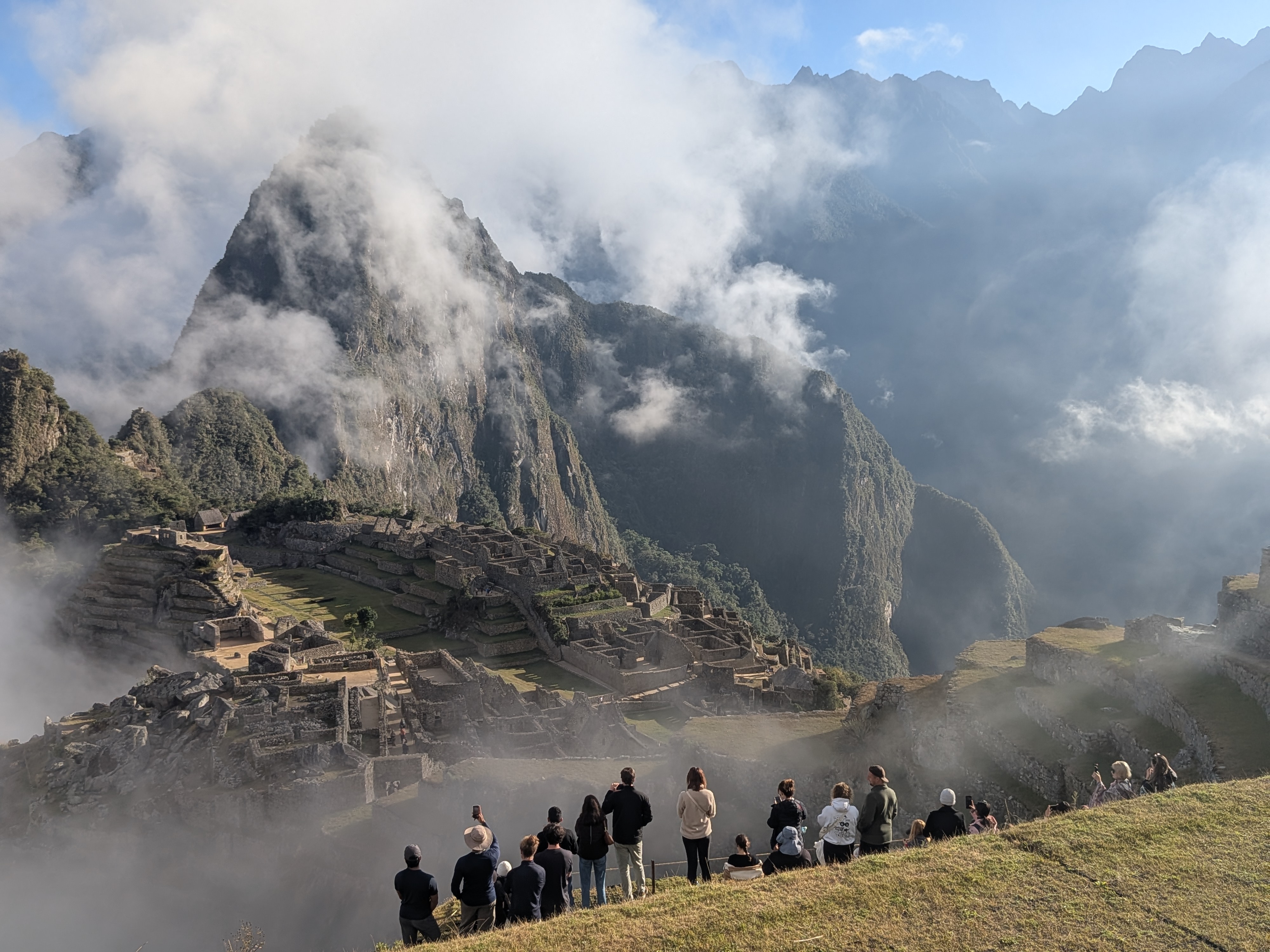
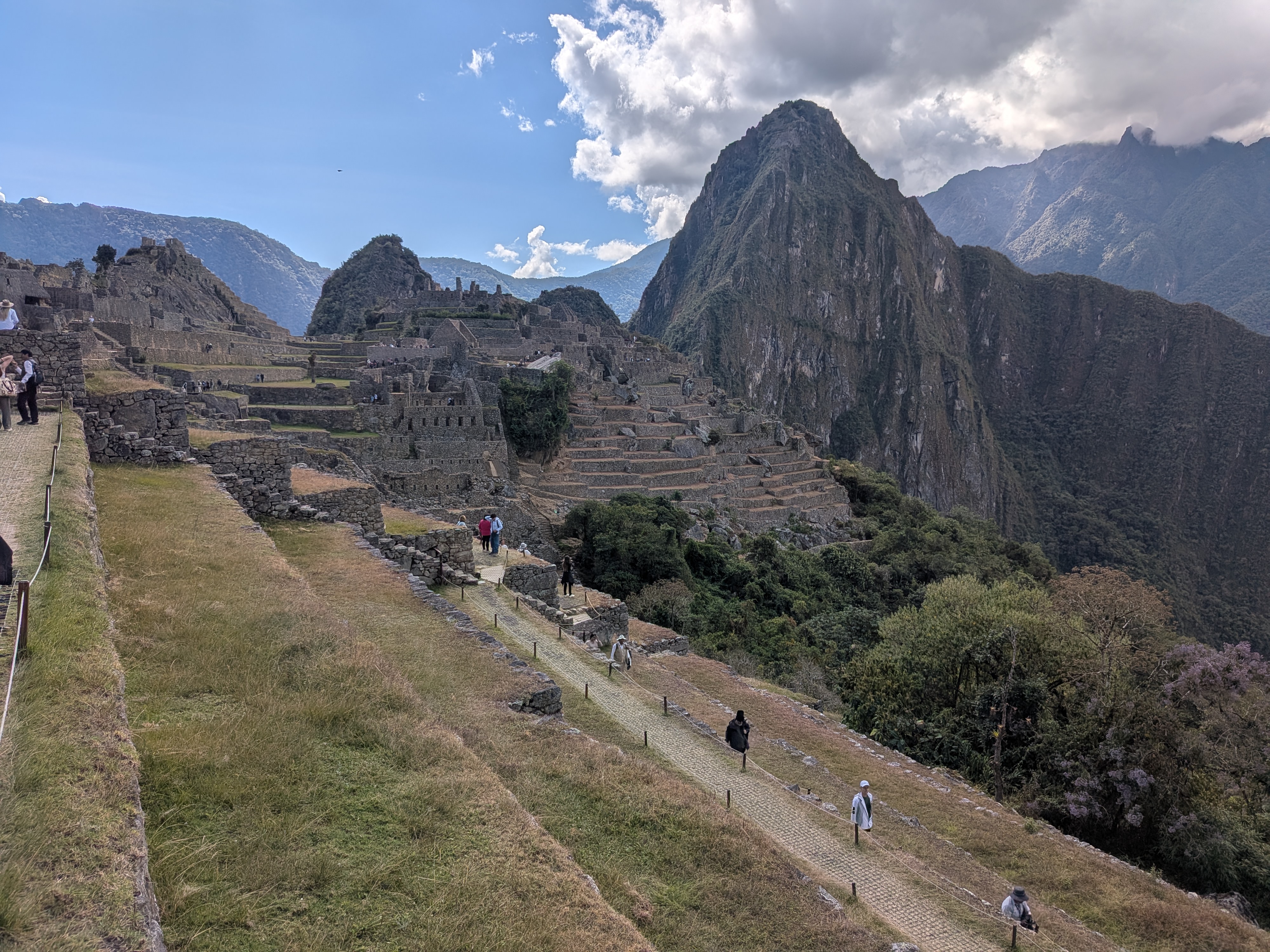
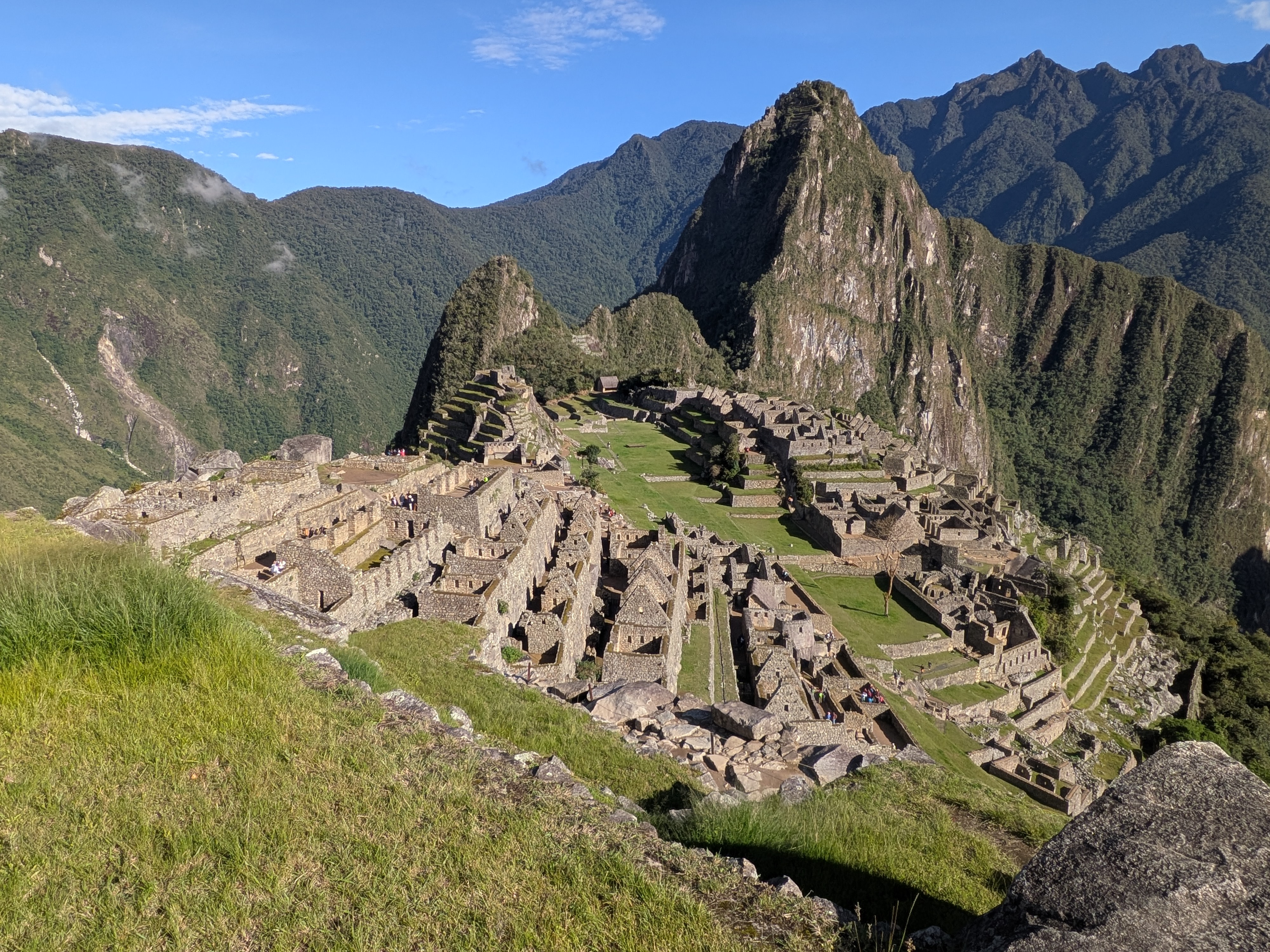
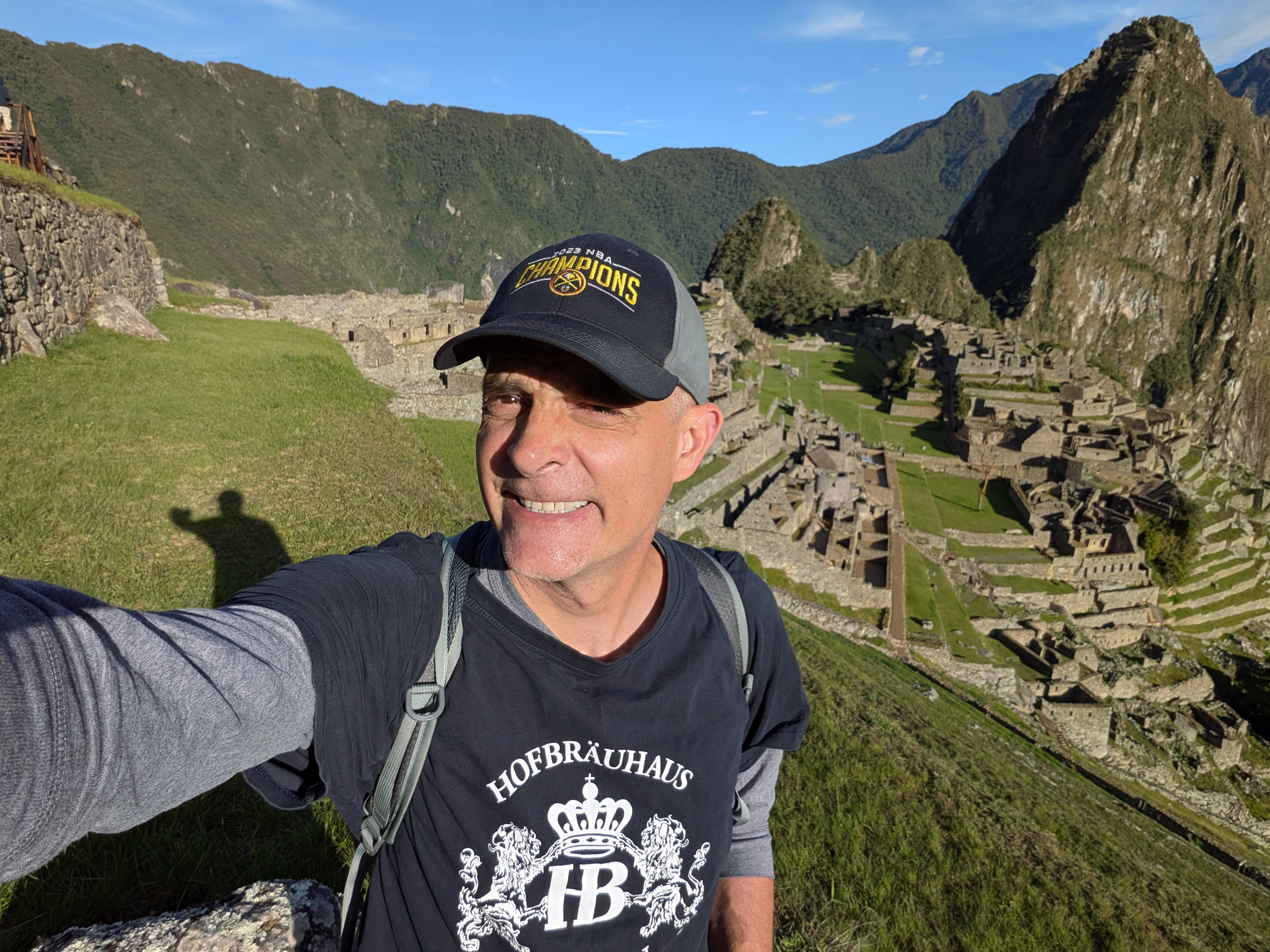
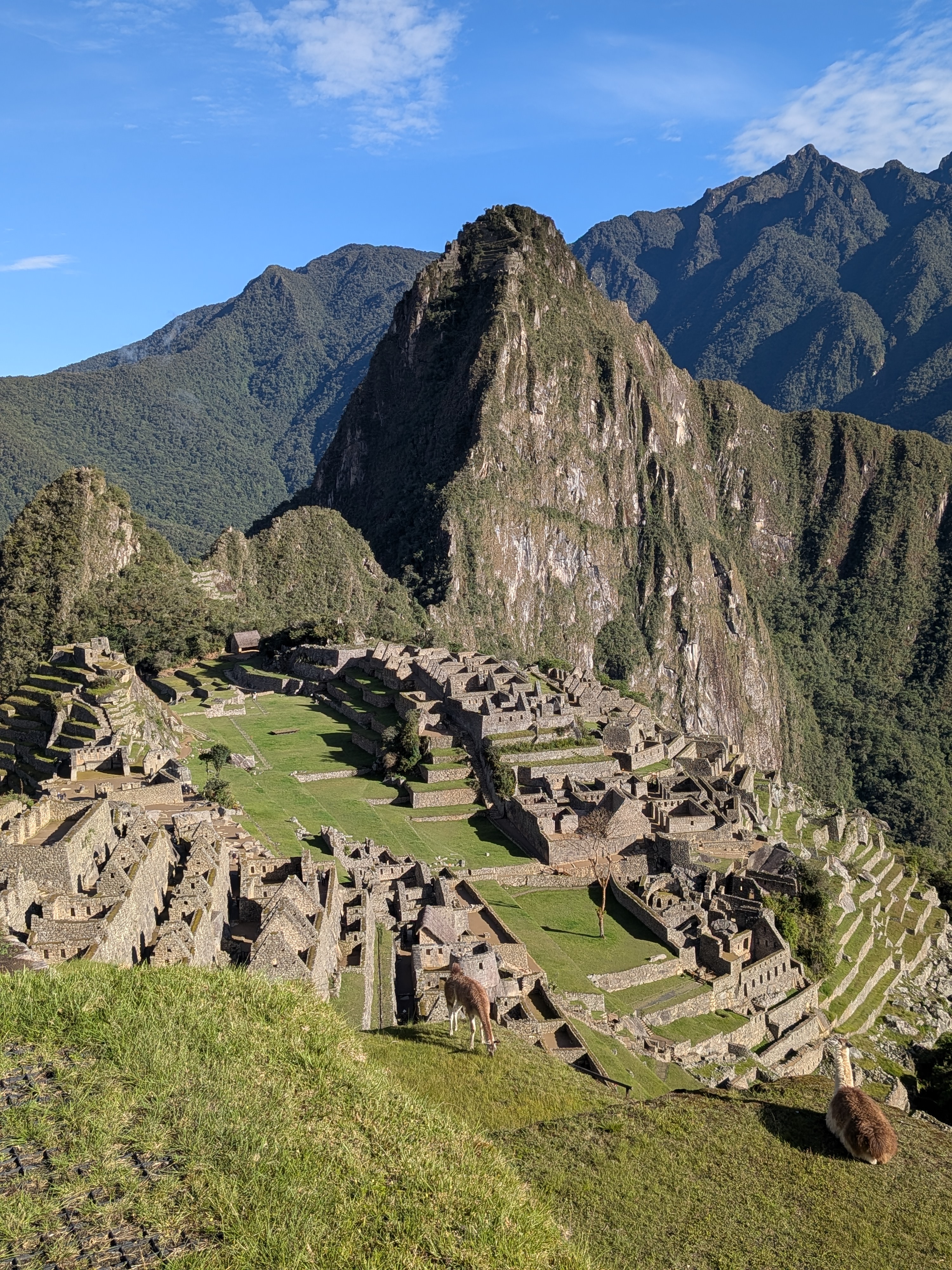
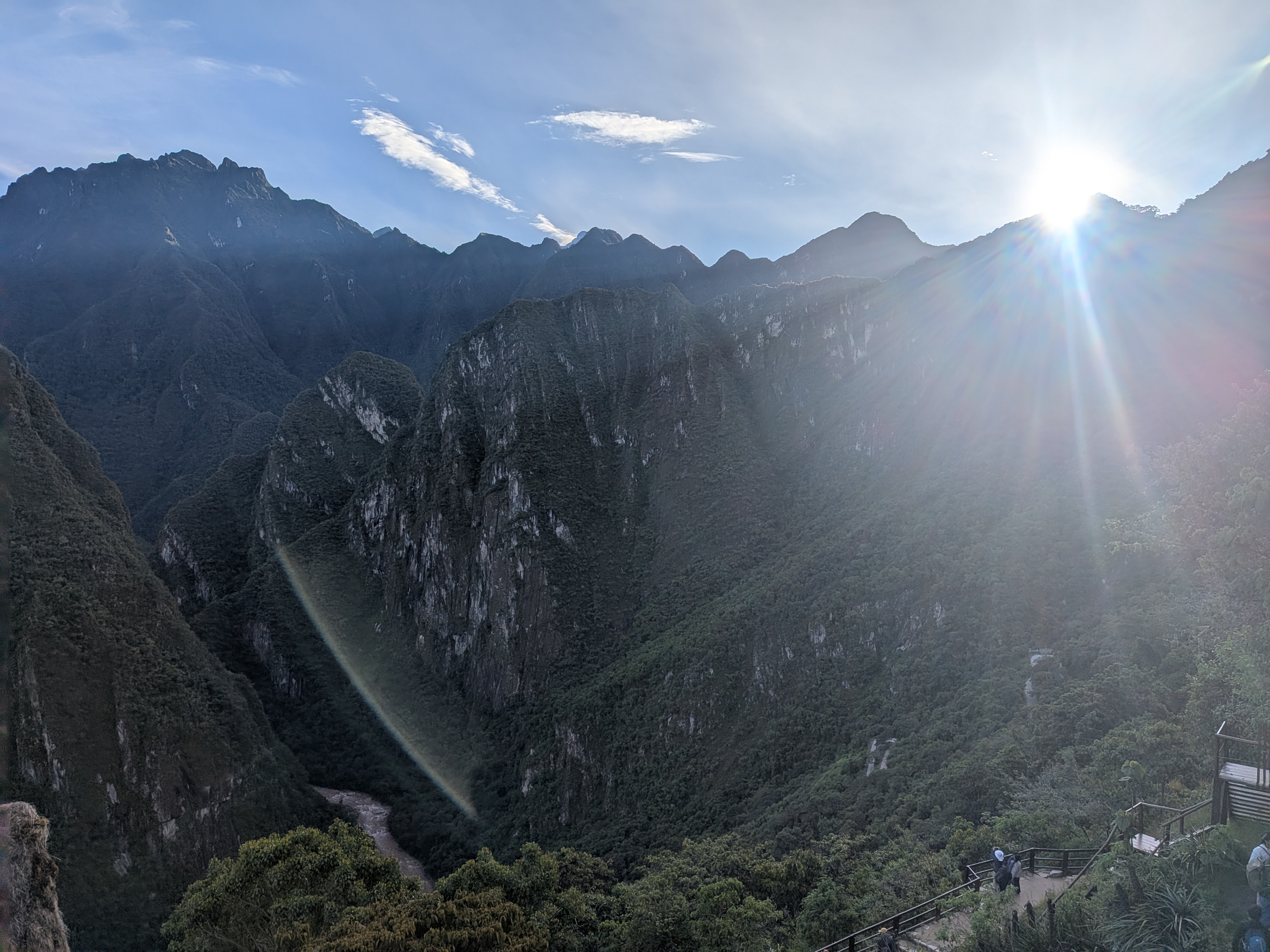
We started the day getting on the move, Leaving the hotel we stayed at behind, Just while the locals were finding their groove, So new adventure is what we could find. We traversed across the sacred valley, And hunted to find our nightly lodging, Yet we found that we needed to rally Because we have listened to the mountain ring. There is a city hidden in those clouds That is the main reason we have come here, And we are grateful history allowed To make it on a day that is so clear. So please raise you glass over this earned meal Because only a day like this feels real.
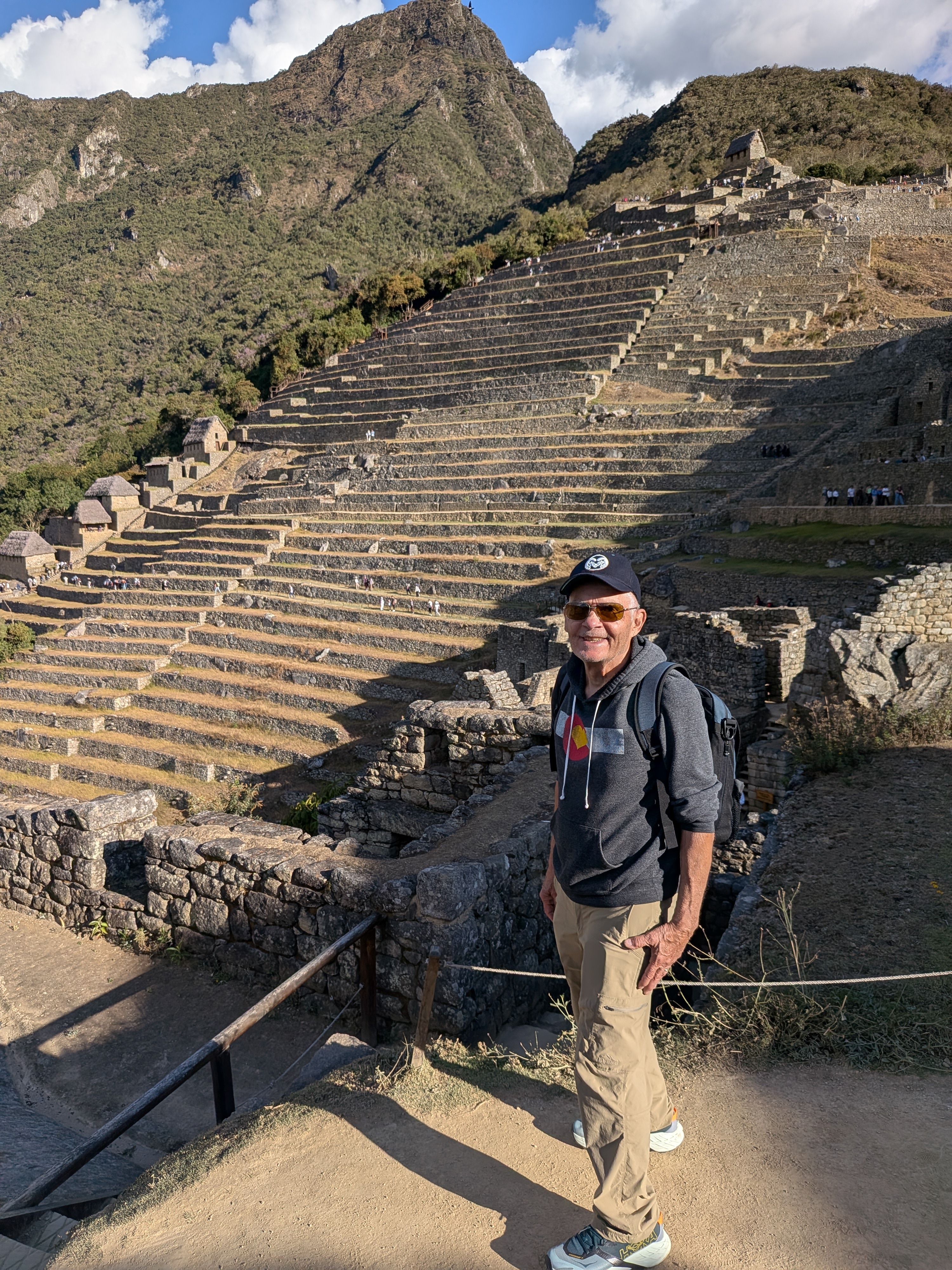
This is the second time that I have been to Machu Picchu this year. During the first time I was there, I was standing on one of the terraces and a tour guide was trying to take a picture of a son with his elderly parent. He was asking for both of them to crouch down so he could take a great picture of them with the fame old city in the background. The older of the two crouched down, but then lost his balance and almost fell over the edge of the terrace before his son was able to catch him and settle him down. It was a scary moment that even brought the employees of the sight out from their hidden corners to make sure everything was okay. It was this moment that made me wonder if taking my dad, who is 86, out here to see the wonders of this amazing cultures heritage sight. There were many questions that I needed to ask myself about making sure this trip worked for him. Would he be able to enjoy the wonders of Machu Picchu? Could he handle the rough terrain that he will have traverse though in order to enjoy the sight? How should I schedule the time that he is out here so he can enjoy it while not feeling worn out?
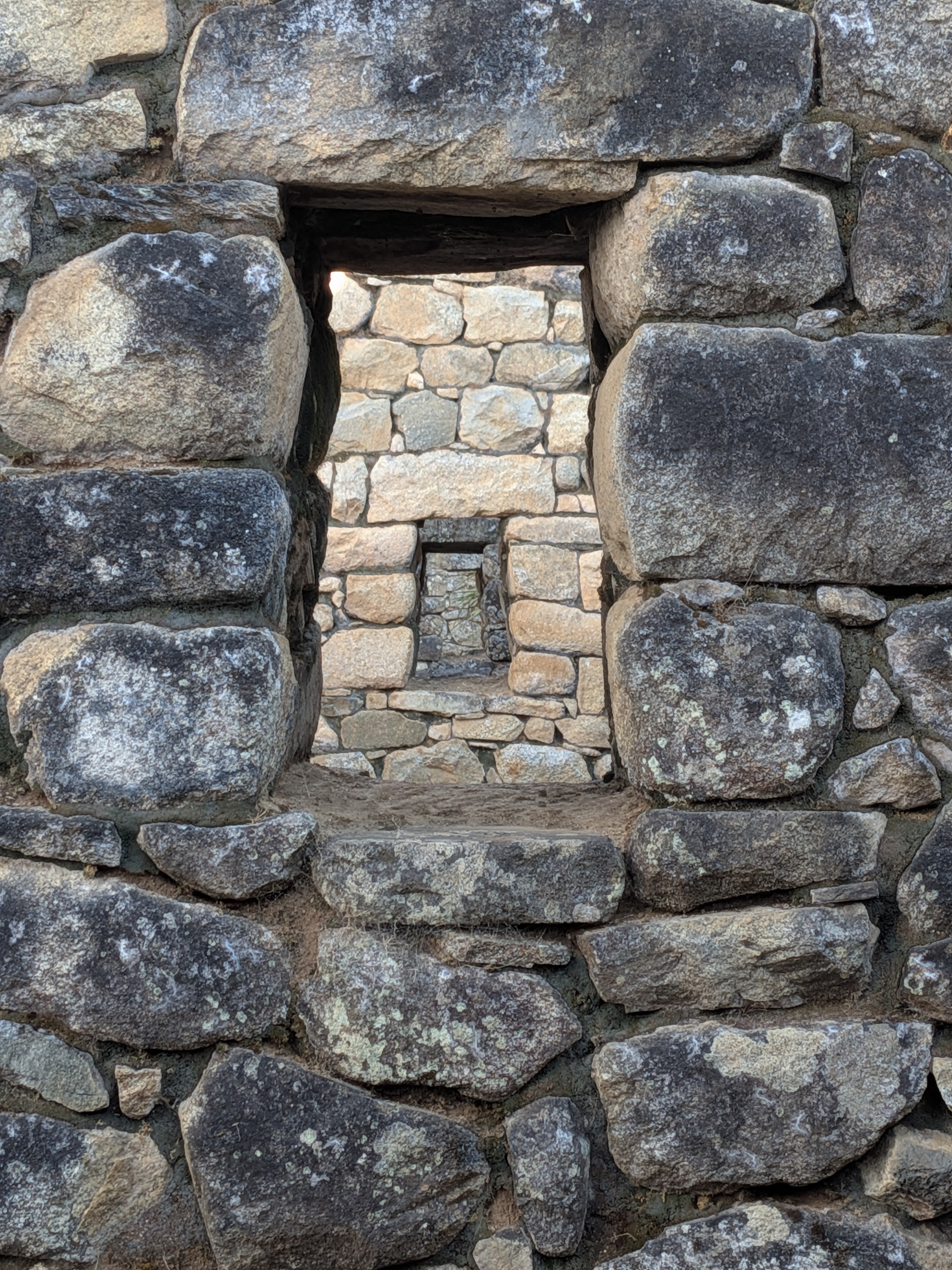
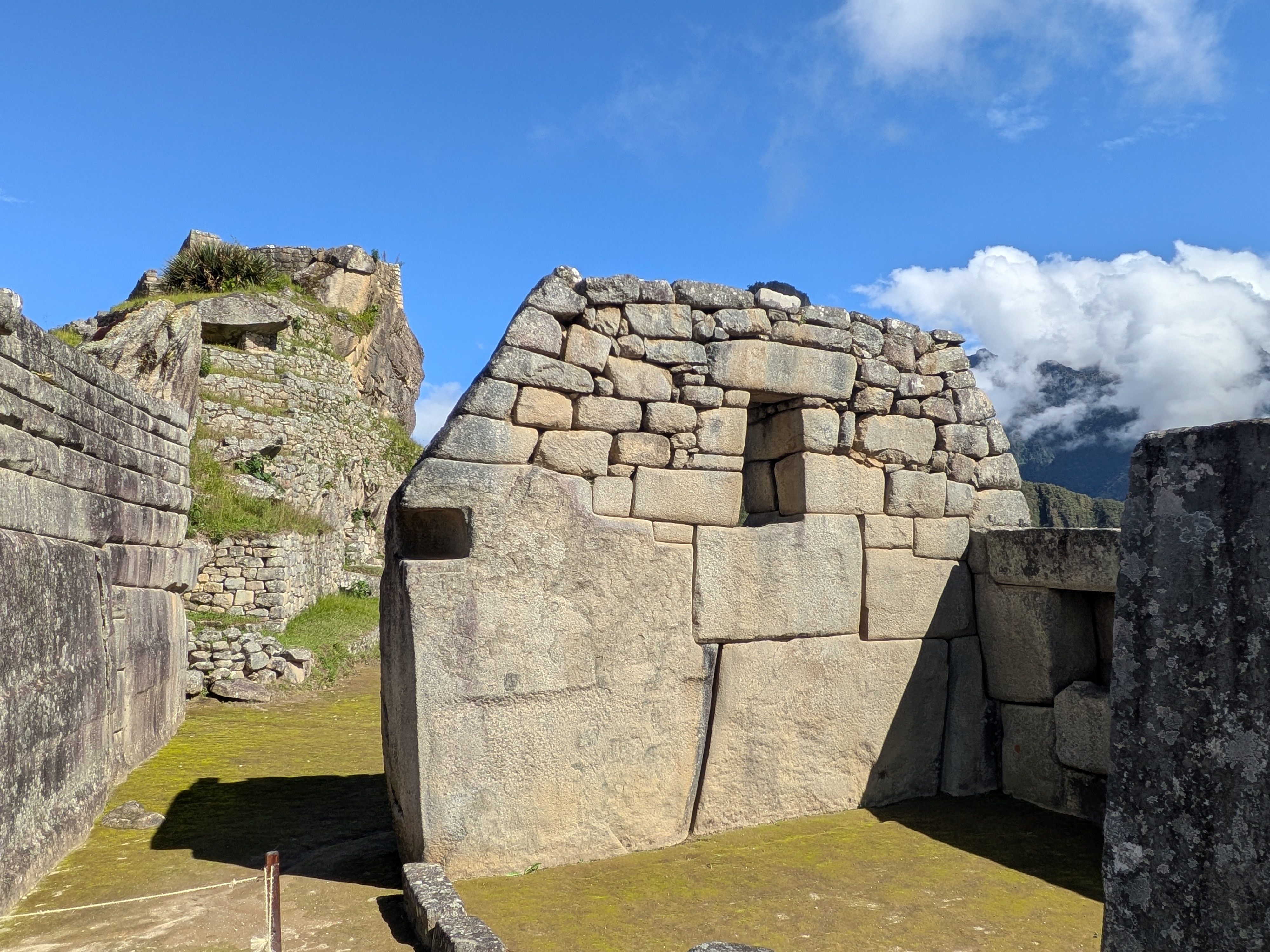
First off, would my dad enjoy the wonders of Machu Picchu? And that was easy to answer. Of course, he would. I still have not met an individual that would not enjoy this historic sight. There is a reason that so many people have added a day at Machu Picchu to their bucket list, because there is not another place like it in the world. It is not just the amazing views, or the spiritual feeling that this places holds within its haunted stones, but it is the amazing story that is told by the buildings and the history of this place, especially when talking about the precise that it was constructed. There is another wonder around each corner, and it is easy to be caught up in the magic of the place. Of course my dad would love this place.
A bigger question was: Could he handle the rough terrain that he will have traverse though in order to enjoy the sight? Let me start off by saying that my dad did great though we had to take it slow, and there were a lot of breaks along the way. The tickets have a specific entry time to Machu Picchu, but there is an hour grace period to work in. If you are planning on taking it slowly, it would be best to get there as soon as the time opens up because the place allows for four hours to go through your chosen circuit. I would also suggest using the bathroom before you enter the sight. There are no bathrooms in Machu Picchu, but there is a pay toilet outside of it, and it costs two soles (a little over 50 cents) to use, so make sure you bring some change with you.
Now with all of that being said, there are some other points I would like to make if you are considering making this decision. First off, my dad is in pretty good shape for an 86 year old man, and he started walking on a regular basis six months before he came because he knew it was going to push him some. He also lives in Denver, Colorado, so altitude is not always a problem for him. Machu Picchu is almost 8,000 feet above sea level, so being so high up is something that should be taken into consideration.
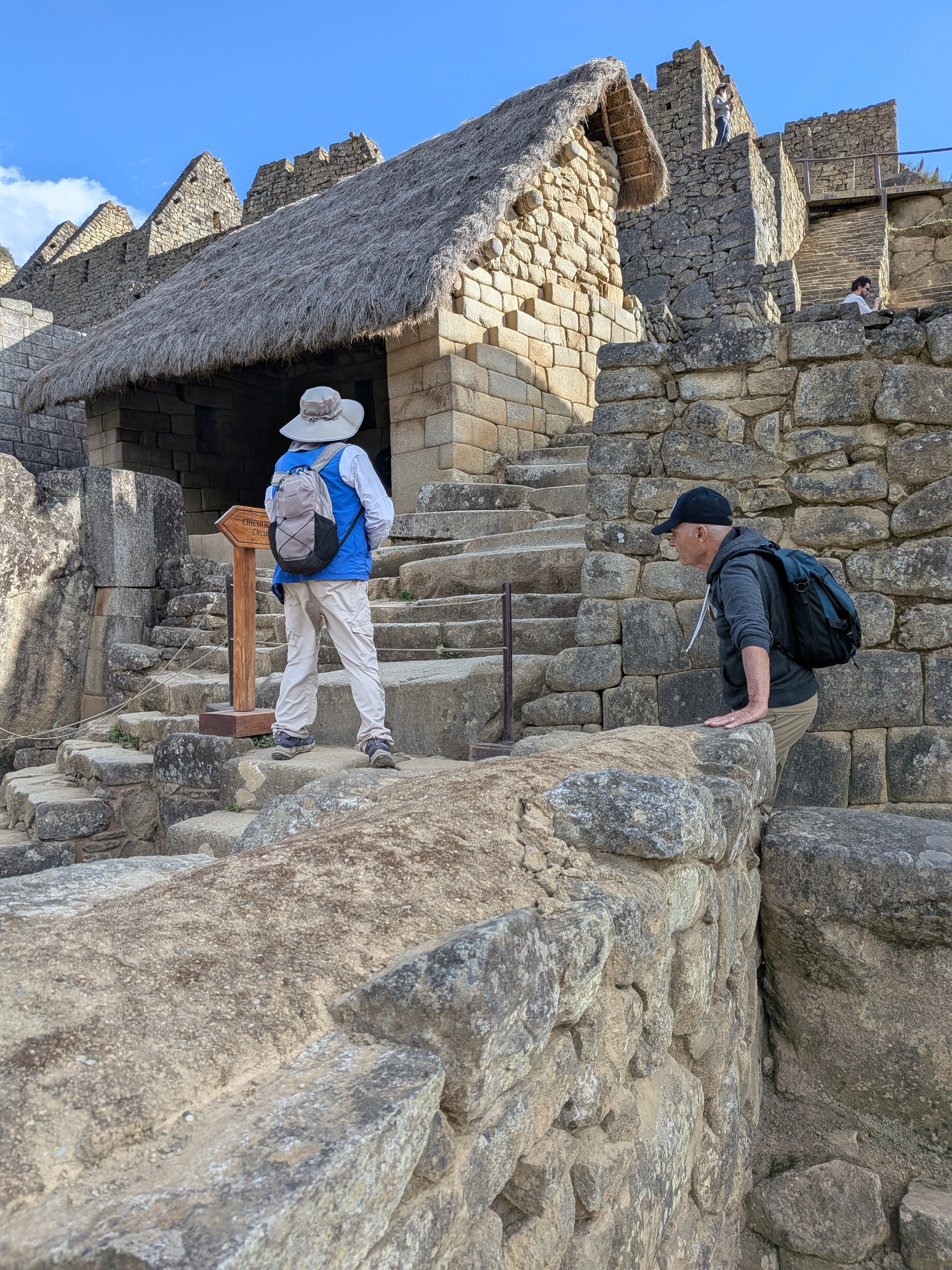
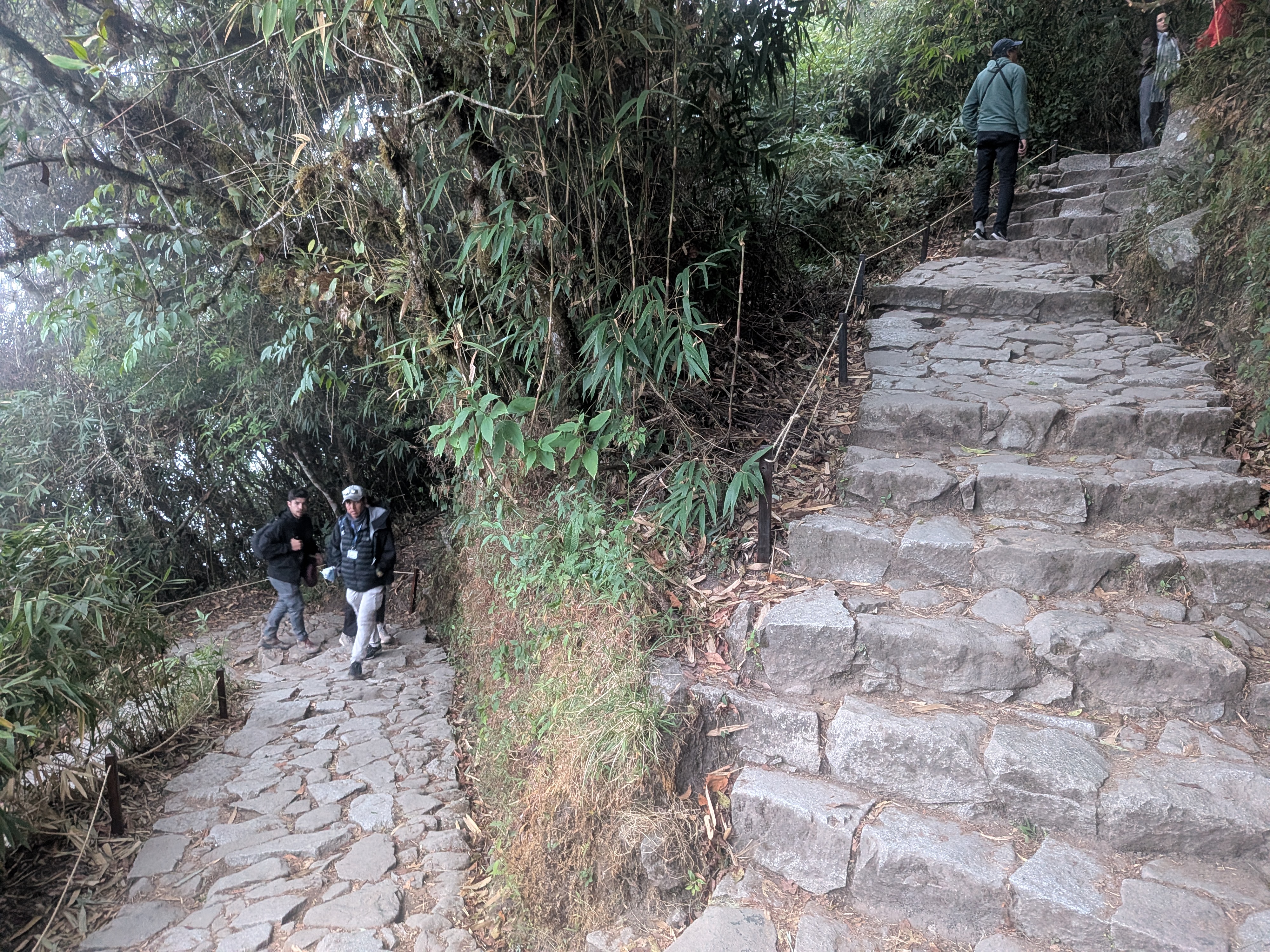
Also, just because my dad did well, other elderly people we came across on the trail did not fair as well. We saw many people struggle on the paths, and hiking up the uneven stairs that are found in the ruins. Most of them had to get help getting up and down the hilly terrain, and almost all of them were fumbling around with hiking poles while doing it. I am not saying that hiking poles are a bad idea, but it looked like they were being used for the first time by most of these people. If you want to know if hiking poles are going to help or not, the person should get out and walk around with them for a few months before ever coming to Machu Picchu. This way, they will know the height that is comfortable for them, and they will know how they can help them through the difficult terrain.
How should I schedule the time that he is out here so he can enjoy it while not feeling worn out? I will admit that I did not do the best job of this. There are a lot of things to consider when getting out to Aguas Calientes, the town that is the gateway to this amazing sight. First, you cannot drive out to Aguas Calientes; you have to take a train. This is a four hour train ride from Cusco, and a two hour train ride from Ollantaytambo. There are plenty of places to spend the night in the town, and it might be best to plan for two nights to stay there with two of the days used to go to Machu Picchu so you can have enough recovery time. I thought it would be best that we should go up on the day of the train ride, and that was a little too much to do in one day for my dad. It would have been better to spread it out a bit.
I would also recommend an afternoon visit and a morning visit, especially on the day you are leaving if you are staying in Ollantaytambo that night. It might seem to be a bit much to get up, hike through Machu Picchu then catch a train, but if you are going up to see the sunrise, and then heading back down, you will only be at the sight for an hour or two, and the train station is not far from any of the hotels with most of the hotels willing to help you get to their hotel when you arrive, and back when you are ready to head on.
There are three different circuits that take you around Machu Picchu and you can only go in one direction on them. They all offer amazing views, but the most spectacular views come from Circuit One. This is the shortest of the hikes, but at the same time, it is up and can take a lot out of many people. It is possible to do, but just make sure you take plenty of breaks along the way. Also know that the steps are the original steps and can be difficult to navigate on the best of days. These steps are at all of the circuits though. The steps are also not uniform so it takes big steps sometimes to go up or down, and that is something that should be considered when coming to Machu Picchu.
Circuit Two and Three go more around the inside of Machu Picchu, and are best experienced with a guide. These can be found at both outside of Machu Picchu, and down in Aguas Calientes. If they are hired in town before the bus rides, they are great in navigating how to get on and off the bus and where to go for the trip. The can also help in making it around the more difficult parts of the hike while taking pictures for you at the same time. The other two circuits can also be difficult, but there are short cuts around some of the more difficult parts, but it also takes away from the overall experience, so this something else that should be kept in mind.
In the words of my dad, Machu Picchu is a magical place, and there is a reason that it is on many people’s bucket list. It is not for everybody though, and great consideration should be taken if thinking about taking an elderly person there. But if they are adventurous and are still mobile, with good planning, they can tap into that magic that is found there. It is also great to watch them as they start to experience that magic with you.
Until next time, enjoy getting out there and seeing what the world has to offer.
The Sacred Valley is the biggest draw for many people who come to visit Peru, mainly because of the attraction to its crown jewel, Machu Picchu. But there are many more things to see while visiting that lie along the path of Peru’s famous Peru Rail that travels from Cusco to Aguas Calientes, the small town where people stay before visiting Machu Picchu. But taking the train is not the only way to get between the two sights; there is also the option of hiring a driver that can take you all the way to Ollantaytambo. You can even arrange to have them stop at a couple of the smaller sights along the way to get more out of your Sacred Valley experience. Two of the easier stops along the way are Maras and Moray, and can make a travel day a great just by taking the time to go off the beaten path a bit.
First of all, know that it is off the beaten path. To get to these sights, you take skinny mountain roads that have not been paved, and drive through the back alleys of small towns hidden in the Andes. You could rent a car to make the drive, but it is not an easy drive. It would end up be a very stressful experience, and it would be much more relaxing to just hire a driver to take you the whole way. This way you can sit back and enjoy the scenery of the valley below you unfold in all its majesty.
If you are traveling from Cusco to Ollantaytambo, the first stop along the way would be Maras. Maras is a actually a small town in the mountains of the Sacred Valley, and it is not the real reason that people come to this area. The main attraction is the salt flats that can be found there. If you do come here, know that the Cusco Tourist Ticket does not include this location, so you will have to pay an extra twenty soles per person if you wish to visit. It is still an interesting place to see, and though the drive on the small mountain roads can be slow due to traffic, you can get some nice views along the way to make the drive worth it. The terraces out there have been around since the Incas, and are still in use today as a way to collect quality salt that is used all over the world.
The salt comes from an underground spring and is collected in an intricate system that allows the water to flow through various quadrants where the lips of each section collect the best of the salt. The water is slowly drained when enough salt is collected and a common salt is scraped together to be distributed to various stores in the region. It is a process that has been repeated for centuries, and you can come here and watch the slow process being done very similar to the way it was done before the Spanish ever made it out to this region.
Only a half an hour drive away is another sight that I think is even more exciting than Maras. This is the ringed terraces of Moray. There are three different locations where these were created by the Incas, and they are not only a marvel in architecture but also agriculture. The Incas built this sight as a way to experiment with their crops. They formed these co-centric terraces in the ground so that there would be different micro-environments that they could plant various crops in. It allowed for different levels of temperature to exist in a small area so they could see which plants would grow best. The plan worked so well that there is a fifteen degree difference between the top level and the lowest one. They even brought in different kinds of soil from the region to see how the plants would grow here.
The marvel of engineering goes even beyond the terrace to the various way that they could travel up and down them as they added rock staircases into the walls to allow for easy vertical maneuvring. Recent rains have caused some damage to the location, but for the most part, it is still intact, and an amazing place to see.
People come out to the Sacred Valley all of the time to see the wonders of Machu Picchu, but there are many other treasures held within the valley. If you have enough time out here, you should try to see as many of them as possible, and Maras and Moray are two easy additions to the trip.
Machu Picchu is one of the most popular sights in the world because of its beauty and the magical things that happen when visiting. Traveling there takes some planning though, and when that starts happening there are many questions that come up about how to get the most out of the experience. When doing the research on Machu Picchu, one of the biggest questions that come up is about the circuits. There are three circuits where you can schedule specific times to walk through them, and each one has their own specific appeal, so which ones would be right for you?
Circuit 1
At one kilometer, circuit one is the shortest trail, but it is also the one that has the most elevation gain. It is basically a one-kilometer hike on the backside of the ruins up stairs most of the way. Some of the stairs are made out of wood with standardized step sizes, but there are the old rocky uneven Inca steps the rest of the way. It is a little bit of a workout on the way up, and you do go back the same way you came, so there is always the struggle of finding enough space to navigate the steps.
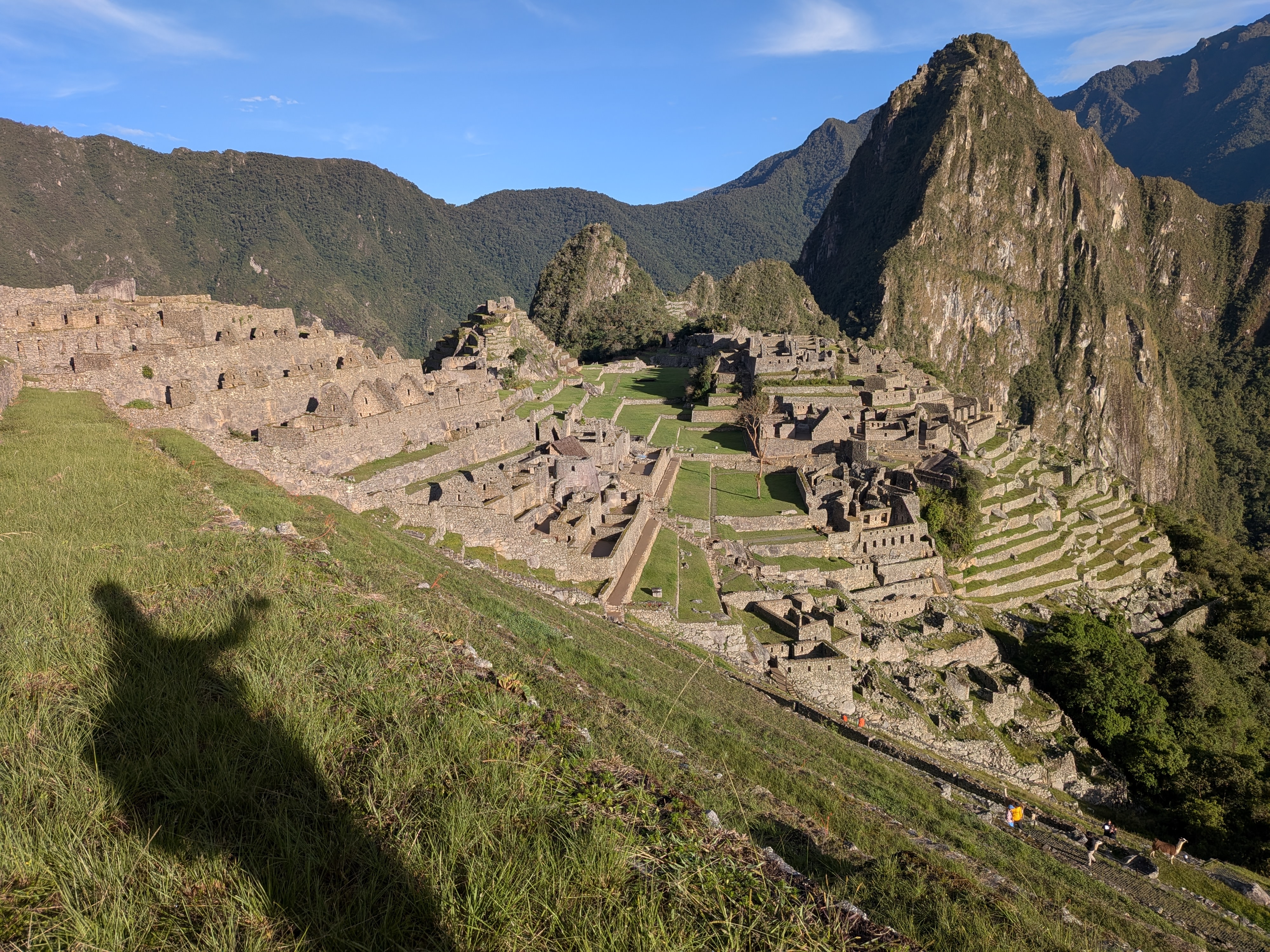
It does take you up to the highest ridge in Machu Picchu, and offers the iconic views that everybody thinks of when thinking of Machu Picchu. There is not a lot of history to the hike up, so I do not believe a guide is necessary for this circuit. Most people just take it so they can get that iconic view of the sight in person. There are a couple of offshoots to the circuit that you can add if you wish to make the hike a little more exciting such as going up the path past the ruins to the top of the mountain path that was first used to get into the sight. It is worth the views, but that is really the only thing that makes this circuit worth it. If you are taking this circuit, I would recommend to get it as early in the morning that you can because this is when the least amount of people will be on the path. It also allows you to be up there during the sunrise which is one of the most magical times of the day at Machu Picchu. When I went, we were a part of the 6:00 group, and the whole sight was blanketed in a cloud. I thought it was going to be a complete bust, but the sun came up and slowly burned away the clouds, making for a dramatic reveal of Machu Picchu that I will never forget. This was also during the end of July when the sun is powerful enough to break up the clouds. If you are planning on going during the rainy season, December through February, the clouds might be too thick, and I have heard that they sometimes stick around all day.
Circuit 2
Circuit 2 starts at the same place as Circuit 1, but it heads into the sight quickly instead of skirting around just outside of the spectacular views of the sight. It still goes up the terraces to some amazing spots with great views, and it is worth getting there early so you can look over Machu Picchu before all of the other tourists arrive and start to fill it in. The pictures are not as dramatic as they are when you are looking down at Machu Picchu from the perch on Circuit 1, but there are still plenty of spots that have great views.
The circuit is basically a big circle that will eventually take you down into the sight, taking a bigger loop around the central part of the sight than Circuit 3 will. There are a few important places that Circuit 2 will take you to that are interesting, but sometimes you will not know about their significance, so if you are only able to get tickets to this circuit, hiring a guide would be suggested because they will be able to explain to you more of what you are seeing, and they will also point out things that you might have missed if you did not have one.
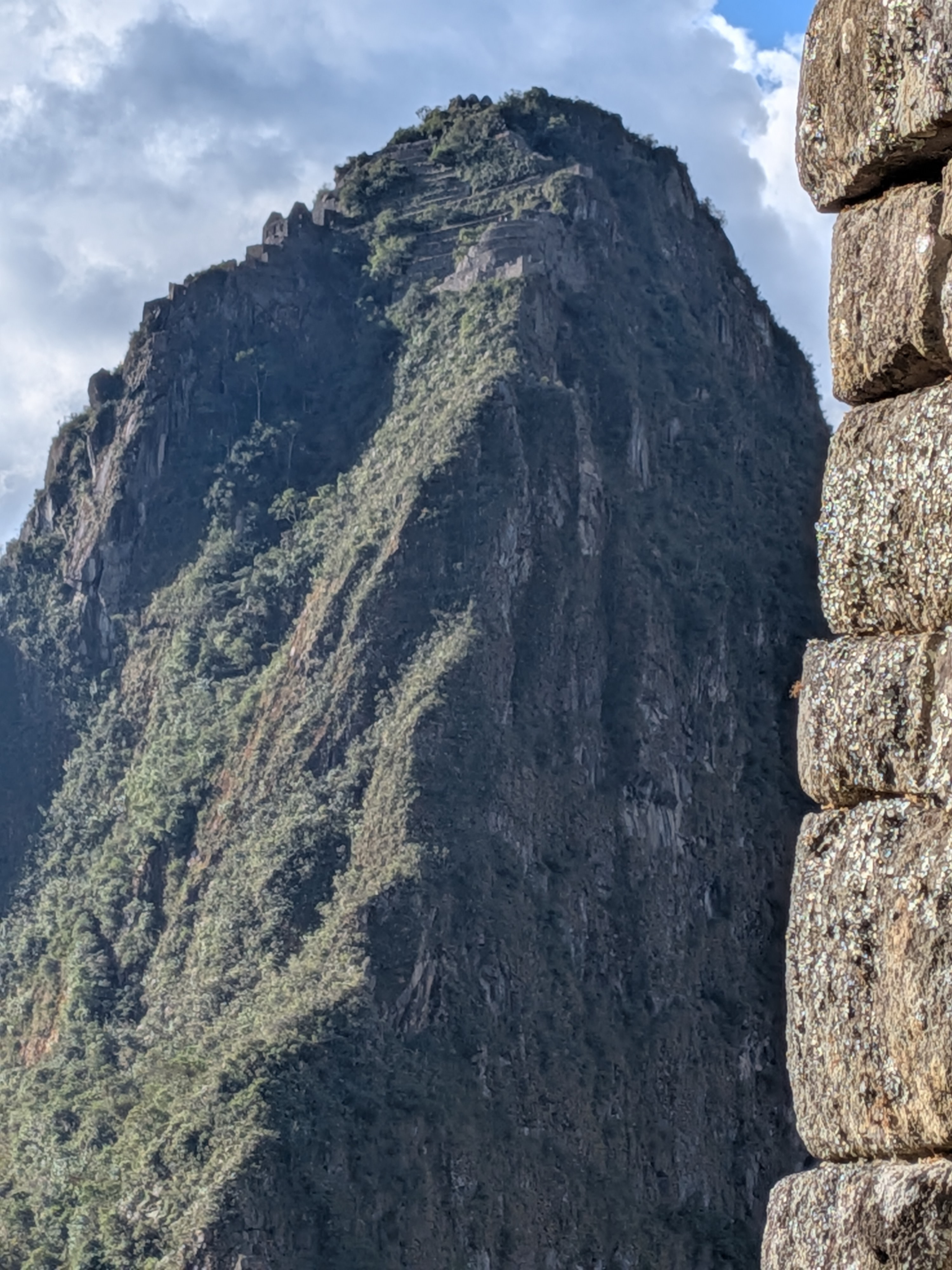
There is an extension that you can add on to Circuit 2 that is for the more serious hikers. It takes hikers up Huayna Picchu (also spelled Wayna Picchu). This is the pointy mountain that is usually pictured when people look at Machu Picchu. Most of those pictures do not reveal some more structures that are on top of this mountain that people can hike up to. The hike itself takes one to two hours to complete and it is not for the more casual hiker. It does take people straight up the mountain over some rougher terrain, but the views from up there are seldom seem by people coming out to Machu Picchu, and it might be something you would want to consider if you are in good shape.
Circuit 3
Circuit 3 has its own entrance into the sight, and it is the one that I enjoy the most. It takes visitors out to the terraces just like the other two hikes, but this is the one that will eventually take you into the heart of Machu Picchu. The circuit is a lot of up and down that takes people over the original steps of Machu Picchu, some of them easier to traverse than others, but all of them can be handled by most people. Just know that you will need to exert yourself some if you do take this route.
This is also the route that has the most history and stories to tell. I would highly recommend getting a guide during this section because they will really make it come to life, and most of them know how and where to take the perfect picture of you in the majesty of Machu Picchu. You can find many of the guides waiting outside of the entrance to Circuit 3 or down at the bus stop in Aguas Calientes, but make sure you ask how much they will cost before you hire one. I would also recommend that you talk with them for a bit to see how well they speak the language that you would like your tour in. All of the guides are multi-lingual, but sometimes an accent or pronunciation of certain can make some of them hard to follow, and you would like to know that before you are already on the trail with them.
Circuit 3 does offer some views, but none of them as amazing as the ones that you will see in Circuit 1 or 2. This is why I would suggest that you schedule at least two different tours. I would start off with Circuit 3 with a guide who will give you the background knowledge that you need so you can take one of the other circuits on your own and know enough about what you are seeing and why you are enjoying it. I would also spread the circuits over two days, one in the afternoon and one in the morning. This way you can see what Machu Picchu has to offer during the different times of the day. If you plan it right, you can minimize the time you have to spend in Aguas Calientes because out of all of the towns you can stay in the Sacred Valley, this is the one that is the least interesting. It is more exciting to take that twenty minute bus ride up to Machu Picchu and see the real attraction of the area.
Machu Picchu is an amazing sight, and it can easily be seen why it is on people’s bucket lists. If you are going to scratch it off your list, make the most of it by choosing the circuit that is best for you. Until next time, keep adding to that bucket list, but make sure you are crossing off things on it as well.
It is one of the most recognizable sights in the world. People have put it on their bucket list as one of the things that they want to see in their lifetimes. It is the center of one of the most mysterious and intriguing cultures of the world. Lots have already been written about it, from its discoveries, to its conflict with the Spanish conquistadors, to the way people make a pilgrimage out of it in the modern day. There has already been a lot written about Machu Picchu, so I will not try to cover the same material and will give you my wandering thoughts about the place because I cannot visit a place like this without writing about it.
To start off, I have been holding off on visiting this place because I knew any visitor I had in Peru would want to make a stop there, so there was no reason to go out of my way to visit if I knew that I was going to go there anyway. I had made this mistake with Petra in Jordan and by the time I left after four years, I was starting to become an expert with that sight. Even with this wait, I still made my first visit to Machu Picchu within six months of moving to Peru. It just shows you how willing people were to jump on that chance to visit this sight that I was taking the trek during my first big break in the region.
I also went during a slower season. There are many paths that are opened to guests to travel through the sight so they are not just running any direction that they want and threatening to damage the beauty of this location. It was during the rainy season or Peru’s summer. Not all of the paths were open at this time because some of the more adventurous ones are too dangerous tonight travel on. Also, most people avoid this time because Machu Picchu can be covered in clouds, making it hard to see, especially in the morning. We were exceptionally lucky in this regard. We had scheduled a hike through the complex during the late afternoon, and another hike around the outside of the complex during the morning. On both occasions, we avoided the weather, and the clouds, but I am told that this is not the norm during this time of the year. I will have to come back during the high tourist season to see what the difference actually is.
There are two paths connected with the sight, one that I knew about, the other I didn’t, that I really want to do. The first is the Inka Trail. It is a four day trek that takes you over the ridge that gives you the iconic picture of Machu Picchu that everybody has seen. The other is a steep hike up the mountain that sits in the background of the iconic photo that takes people to a more obscure collection of buildings where the high shaman used to live. It is supposed to be a tough hike, but the views from that place have to be amazing.
There are also guides that sit outside of the sight and are willing to take you in and give you more context of what you are seeing. If you are doing route 3, I would highly recommend hiring one of them. They are very knowledgeable and ours was a great photographer as well, getting us pictures with everybody in it. Our guide was able to point out a lot of the subtleties of the buildings while giving us a perspective of the Inka culture that we would have missed without them. It was also nice having that knowledge with us as we did route 2 without a guide because we could now look at things with a different perspective and still know what we were looking at. At the time this post is being written, the going rate was 70 soles for person which translates to about 15 dollars. Totally worth it, though I am sure that if I go back enough, I will be able to supply the information without the guide.
Also, the llamas rule the sight. We were told that there were sixteen of them on the ground with the newest one just having been born. They make for some great pictures and they are used to the tourists who go up to them to get that snapshot. They serve another purpose because they graze on the grass that grows on the terraces, keeping it relatively short. I know they are not the most majestic of animals, but in this environment, they look regal.
It was a great first trip to this sight, and I know I will come back again to try a different experience there. I can’t wait for those moments just as could not wait for this one, but I will because I know I will eventually have more visitors and I will get to see the sight through their eyes the next time around.
Until next time, look forward to those adventures you have always wanted to take and get excited when you eventually get to take them.