At the End of the Americas: My Time in Patagonia

It was not exactly what I was thinking of when I think of Summer Break. Most of the time I get visions of hot weather, lying on the beach, and roaming around the world. Of course, most of the time when I think of Summer Break, this happens during the months of June, July, and August, not January and February. Then again, I had never lived in the southern hemisphere, and never really thought of this time of the year as the summertime, so when I got to my first Summer Break, I thought of the one place where I could visit that would let me experience the travel fun of Summer Break, but give me a little chill that I have become accustomed to this time of the year, and the place that was closest to me where I could achieve this goal was Patagonia, the very southern tip of South America where summer does happen, but more like I would see if I had visited Alaska, or some place in Scandinavia.
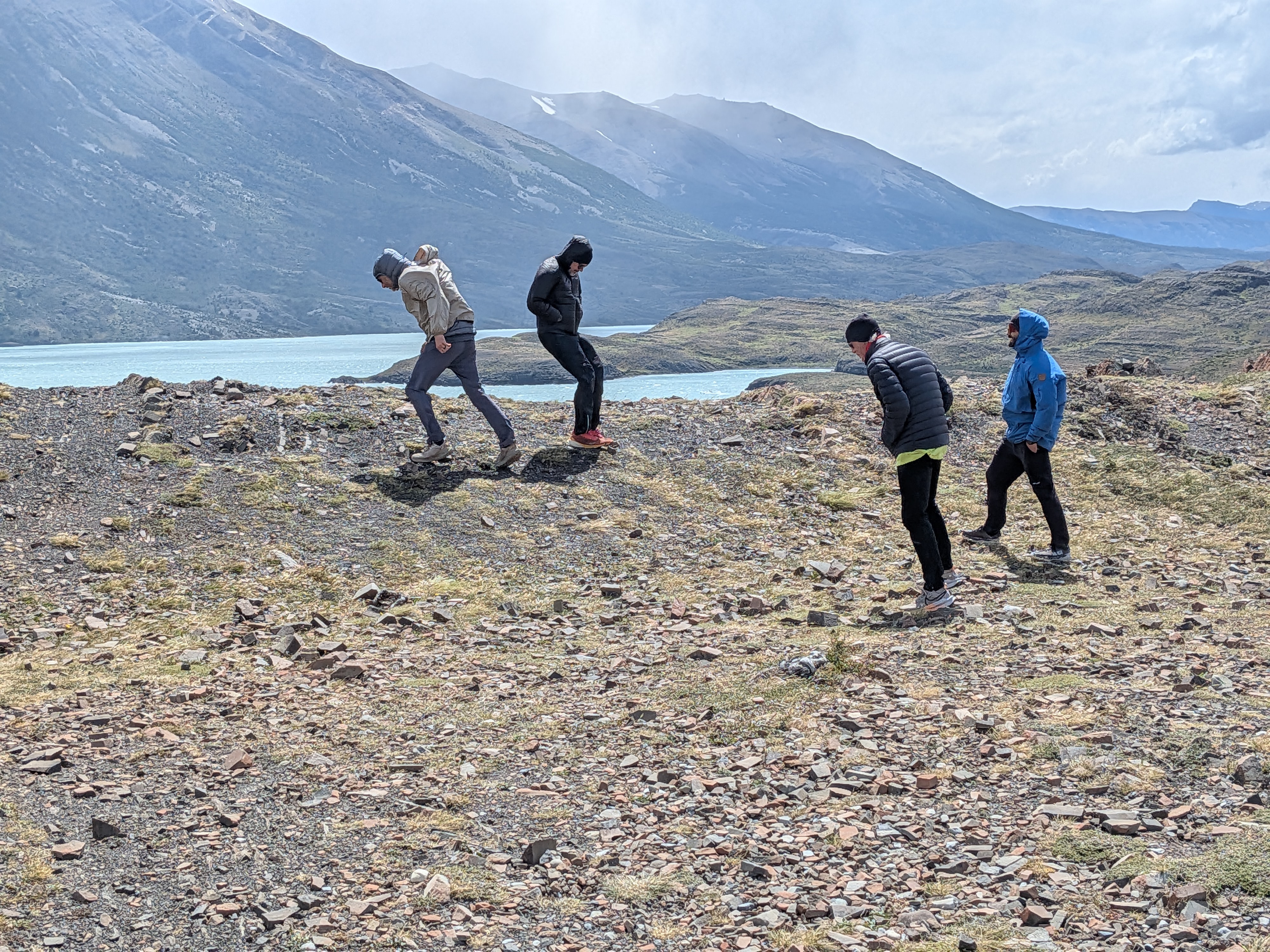
When I thought of going to a place where the sun set for only a couple of hours a night, and the weather of summer does not reach as well as some other place closer to the equator, I had visions of my time spent in Iceland. It was amazing, but it is also a hard place to stay in. We had encountered a lot of rain there, and the wind can be brutal. I was pleasantly surprised to not see the same thing in Patagonia though we did have some rain, and one day of brutal wind. It was so bad that things would just blow off of us and disappear over the mountain ridge. Also when renting our car, they showed us how to open up the doors to prevent the wind catching them and blowing them off the car.
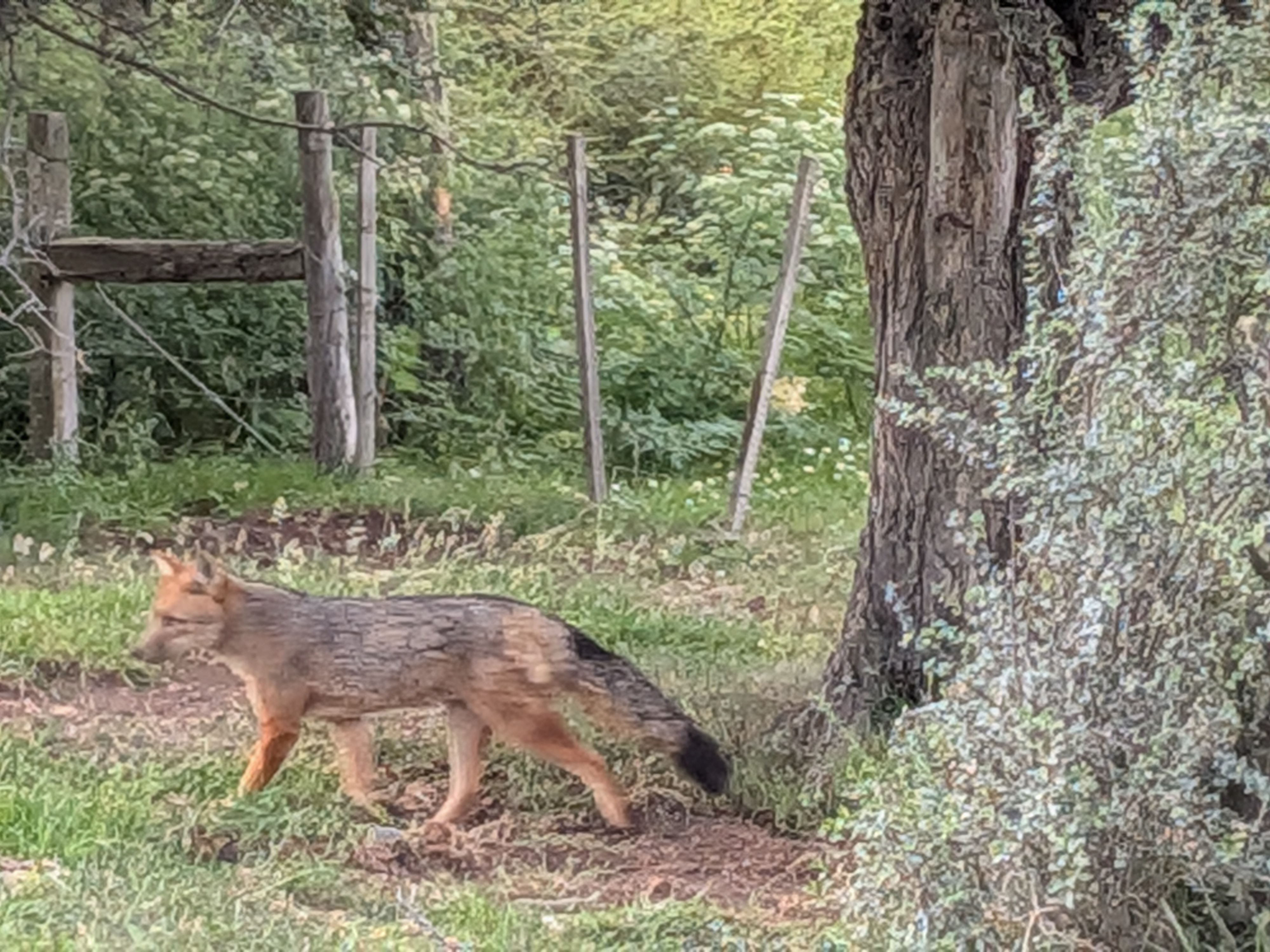
Despite the possibility of harsh conditions, life is still able to find a way. I know I should not have been surprised by all of the wildlife that I would find out there, it still shocked me. The animals varied from guanaco, a large relative to the llama, to the fox, to the condor, and even puma which we were not fortunate to see. Still, almost every day out there we encountered an animal that was living its best life despite the fact that they also had to contend with the wind, and rain, and probably even harsher conditions when it is no longer summer.
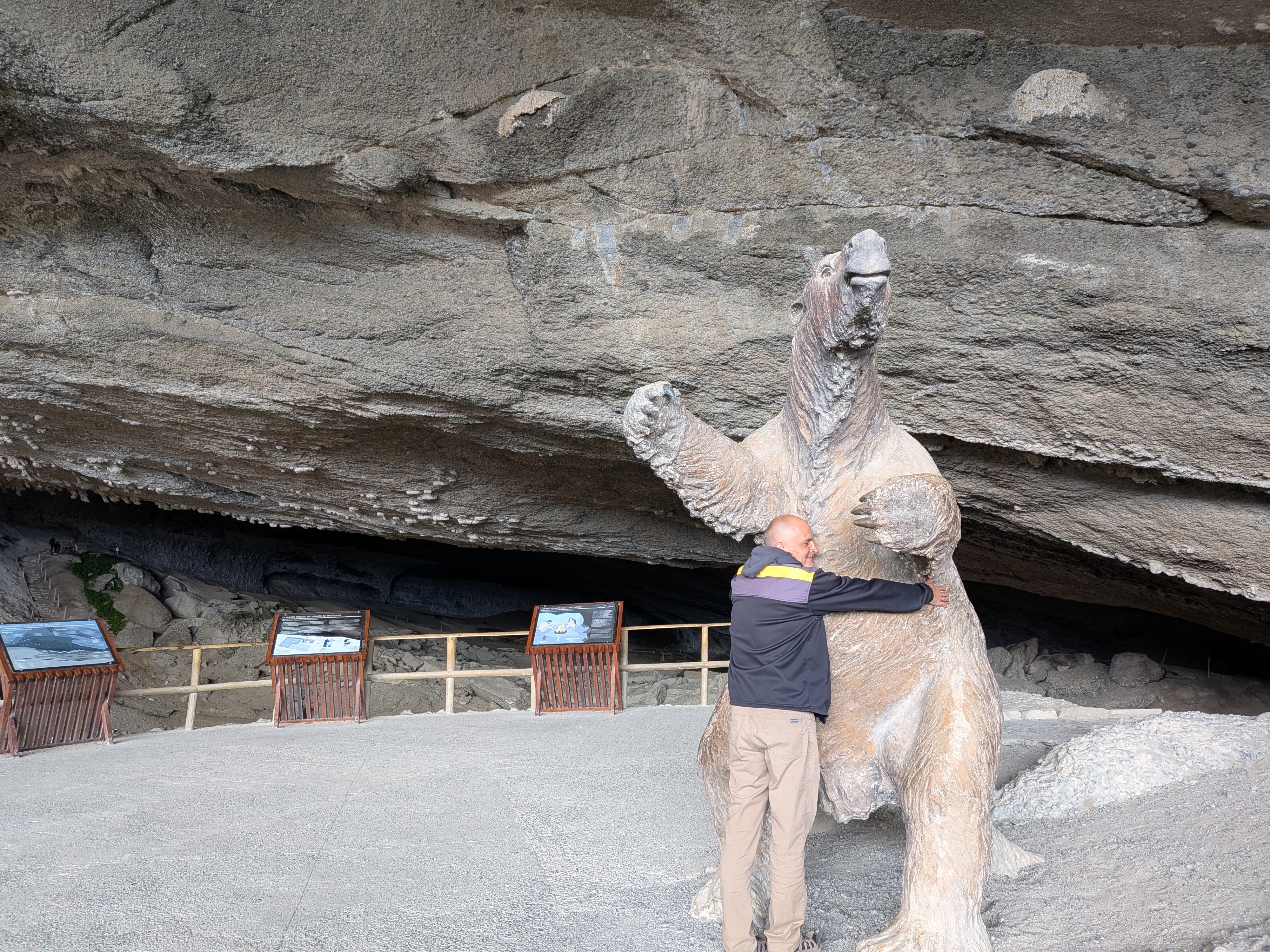
Even though we had some amazing days, it still did not feel like summer. A lot of that probably had to do with the fact that we had to always carry layers of clothes with us wherever we went. At any time the weather could go from sunny and warm to windy and cold, and if I did not have a rain coat with me at all times, there was the possibility of getting drenched in a torrential downpour. It just meant that we had to do a little extra planning every day before we left our place to go and adventure out into the exciting things we could find at the tip of the Americas.
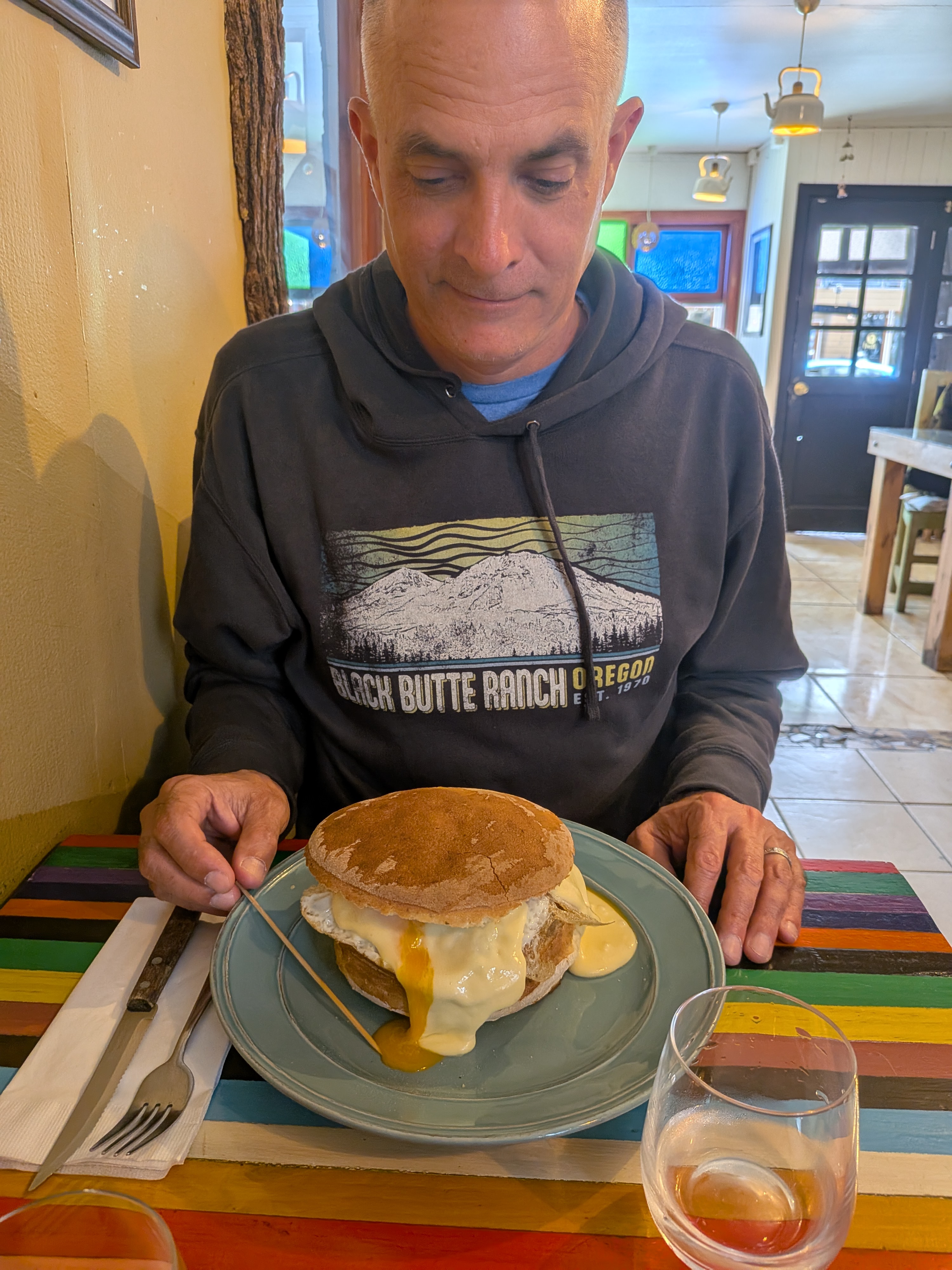
And the surprises came from many places other than the natural beauty that we came out there to see. I will be honest that I did not have grand expectations for the food. It is not like Chile and Argentina are either known for their cuisine, and coming from Peru meant that there would probably be a step down in the quality of food. This was not always the case. I was able to have parrilla which is a grilled food where you see whole animals slowly rotating over an open fire, and that was spectacular. But I was also able to find great seafood, bar-b-q, and some sandwiches that were nothing like I had ever had before. I still do not know how to describe the cuisine in Patagonia, but I can tell you that there are some places, especially in Puerto Natalis, that are delicious, and can compete with many other countries out there.
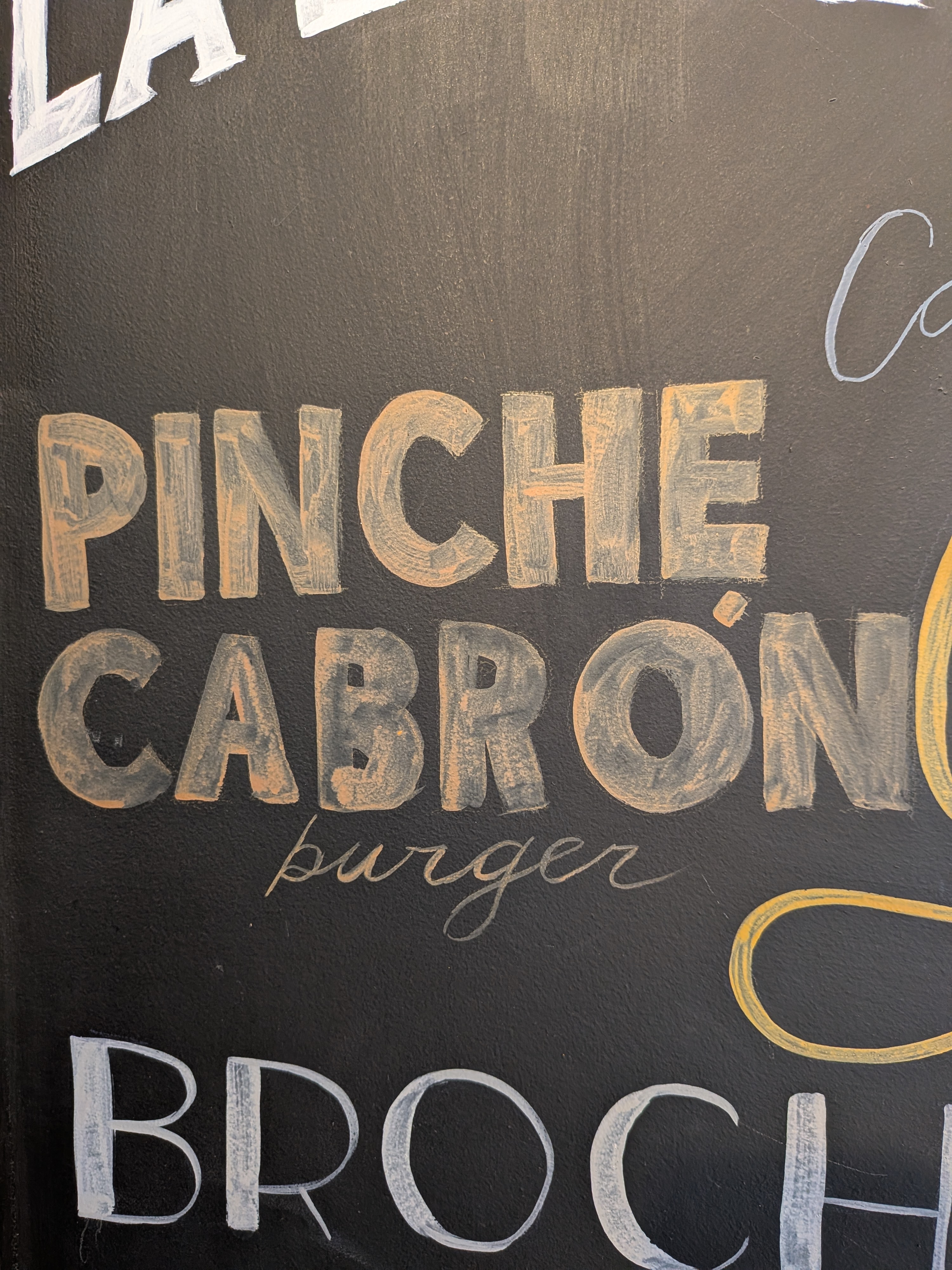
I also thought that the language would not be that big of a barrier considering that I am starting to pick up a little Spanish. I would even go as far as to say that my Spanglish es muy bueno. Spanish is the main language used in this part of the world, and I was able to get by okay when reading it. It was when I had to interact with the locals that my limited Spanish did not do so well. I have gotten used to the Peruvian accent, and the Chilean and Argentinian accents are dramatically different. I have to really concentrate on what people were saying, and I still could not get it because of this barrier. Still, it is a big tourist destination, and there was plenty of English spoken in the region, so it never prevented me from having a great time.
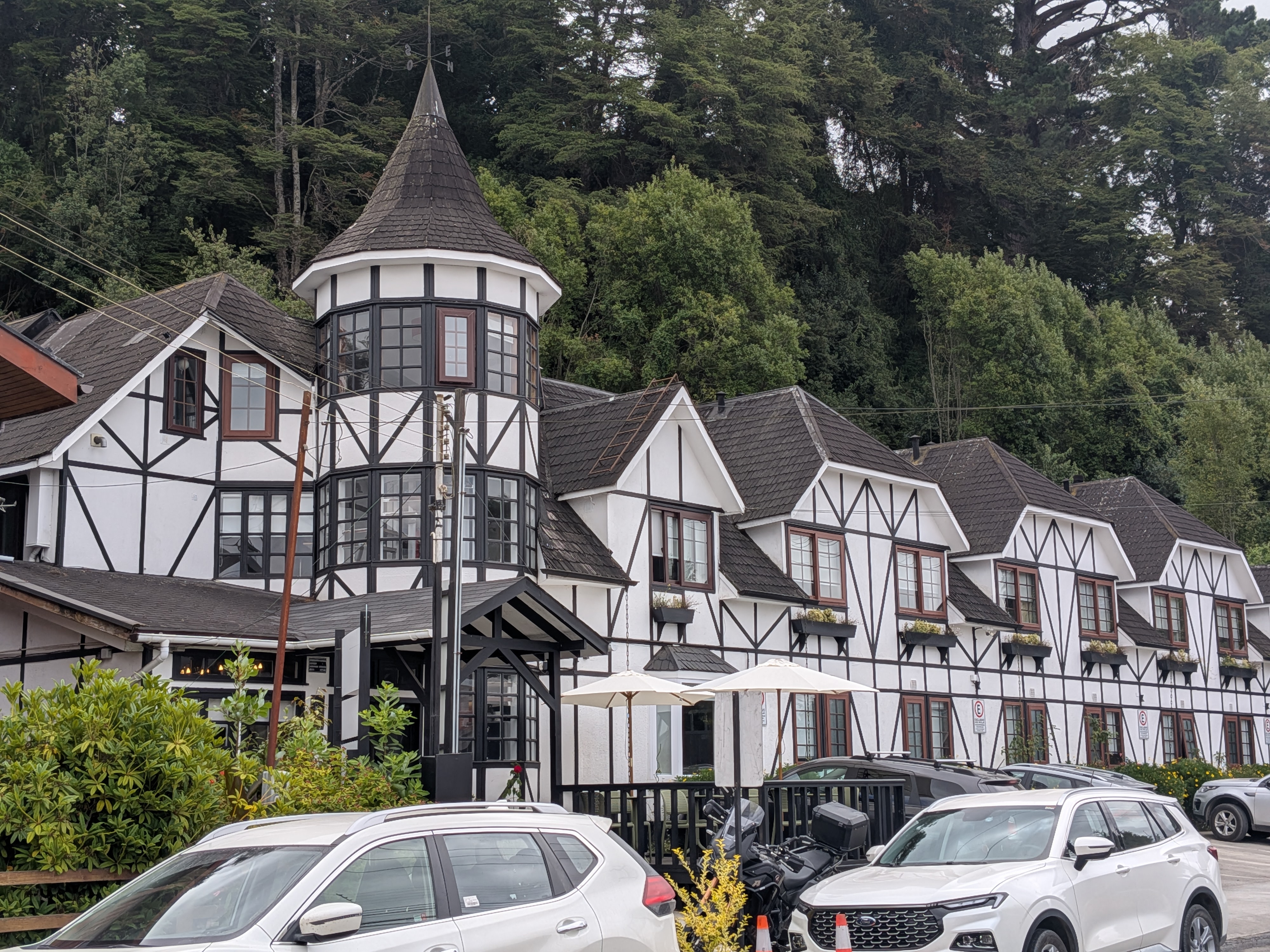
I was also surprised by the amount of German I found there. I am not talking about German visitors because that happens everywhere in the world. I am talking about the German influence that can be found in this part of the world. There were German towns filled with German architecture serving German food. I was not aware that the German people were also some of the ones who immigrated to this part of the world, and I knew that after World War II that some Germans came out here. But I never thought that I would see their influence in the towns, and people.
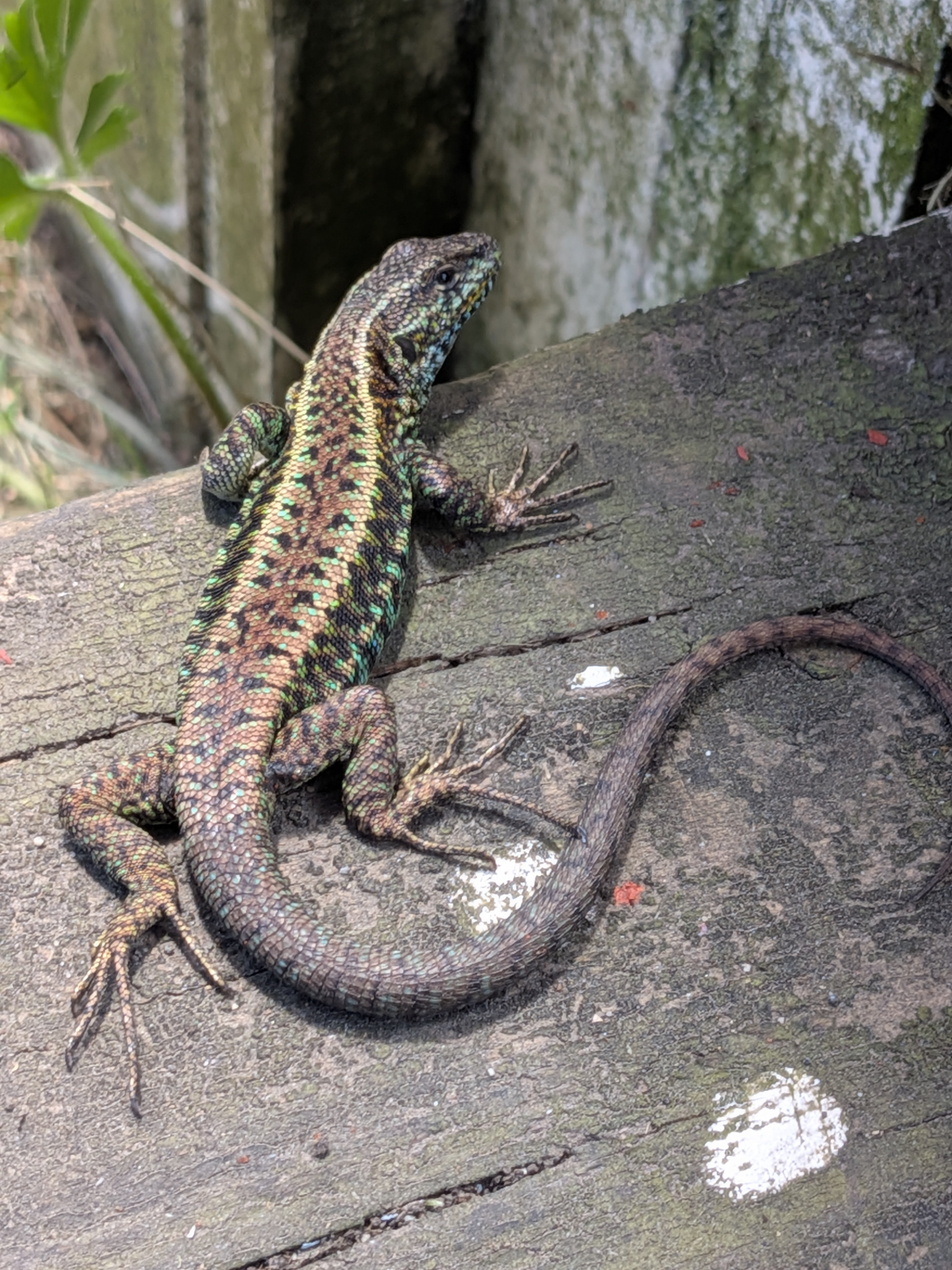
After a while, I started to look closely at all of my surroundings, looking for those surprises. They started to pop up all over the place, one part familiar, and yet at the same time exotic enough to remind me that I was in a different place, experiencing a season during the time of the year I was not expecting it. The whole trip became another moment of wonder and made Patagonia one of those places that I will carry with me wherever I go.
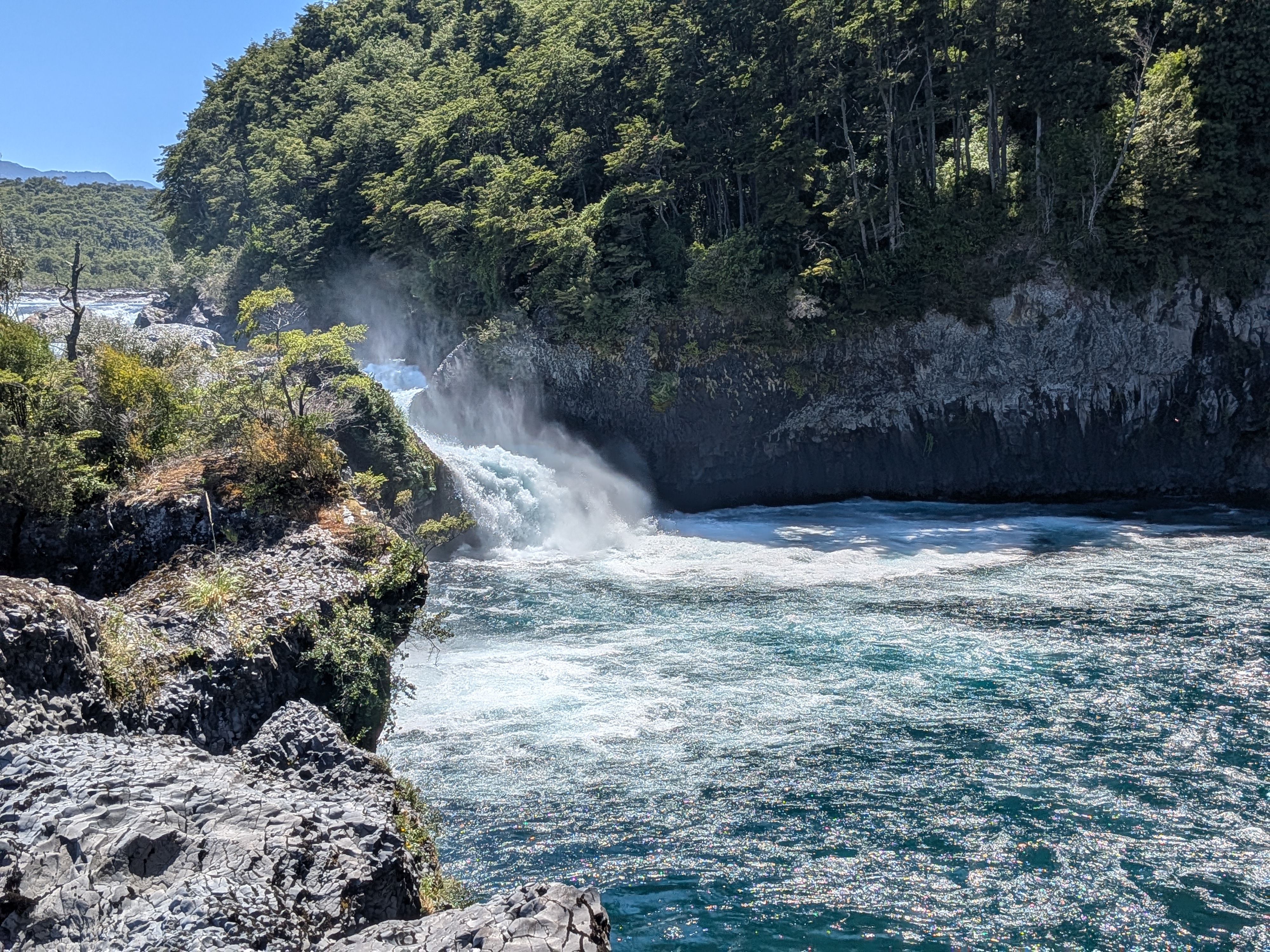
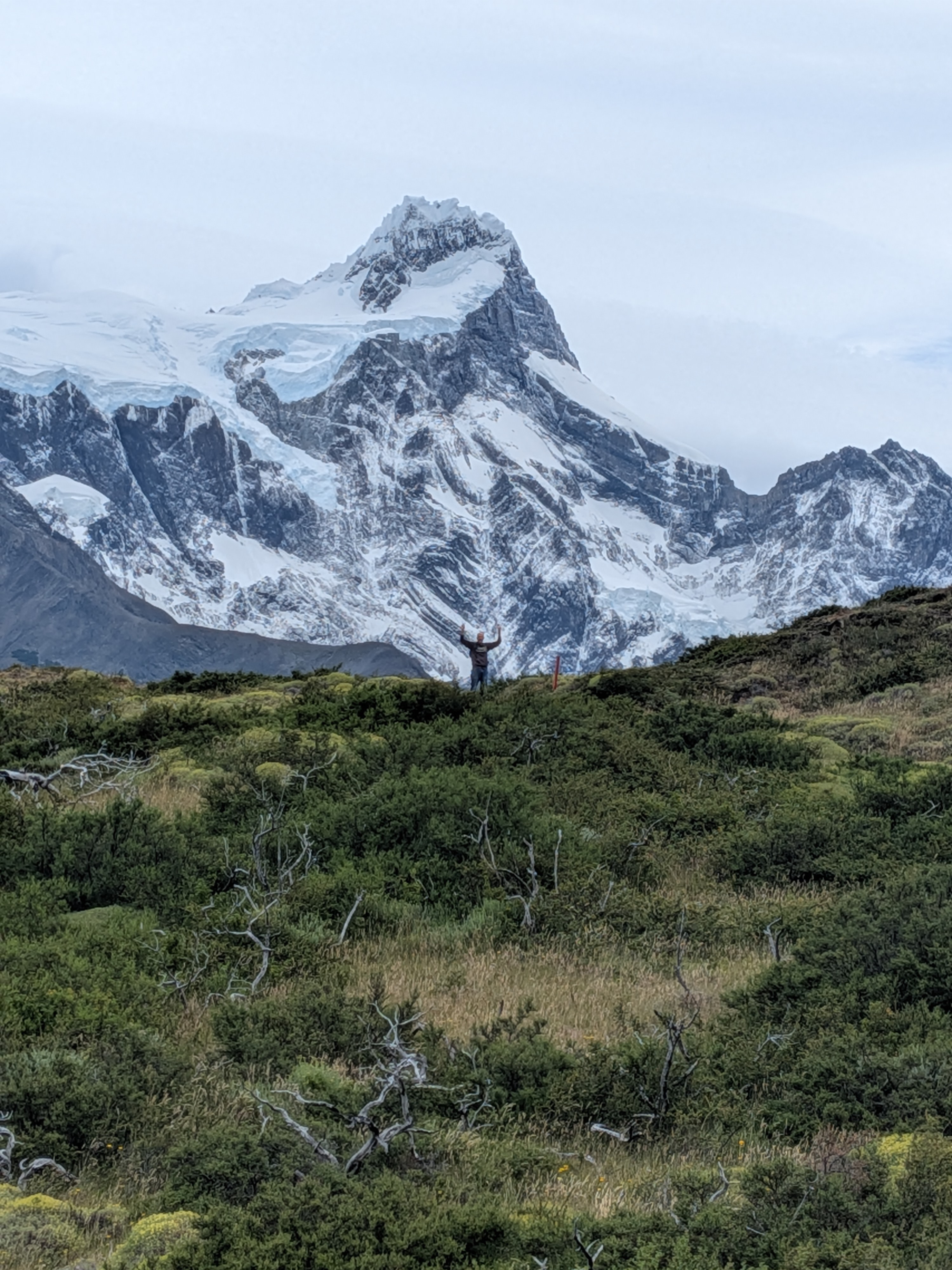
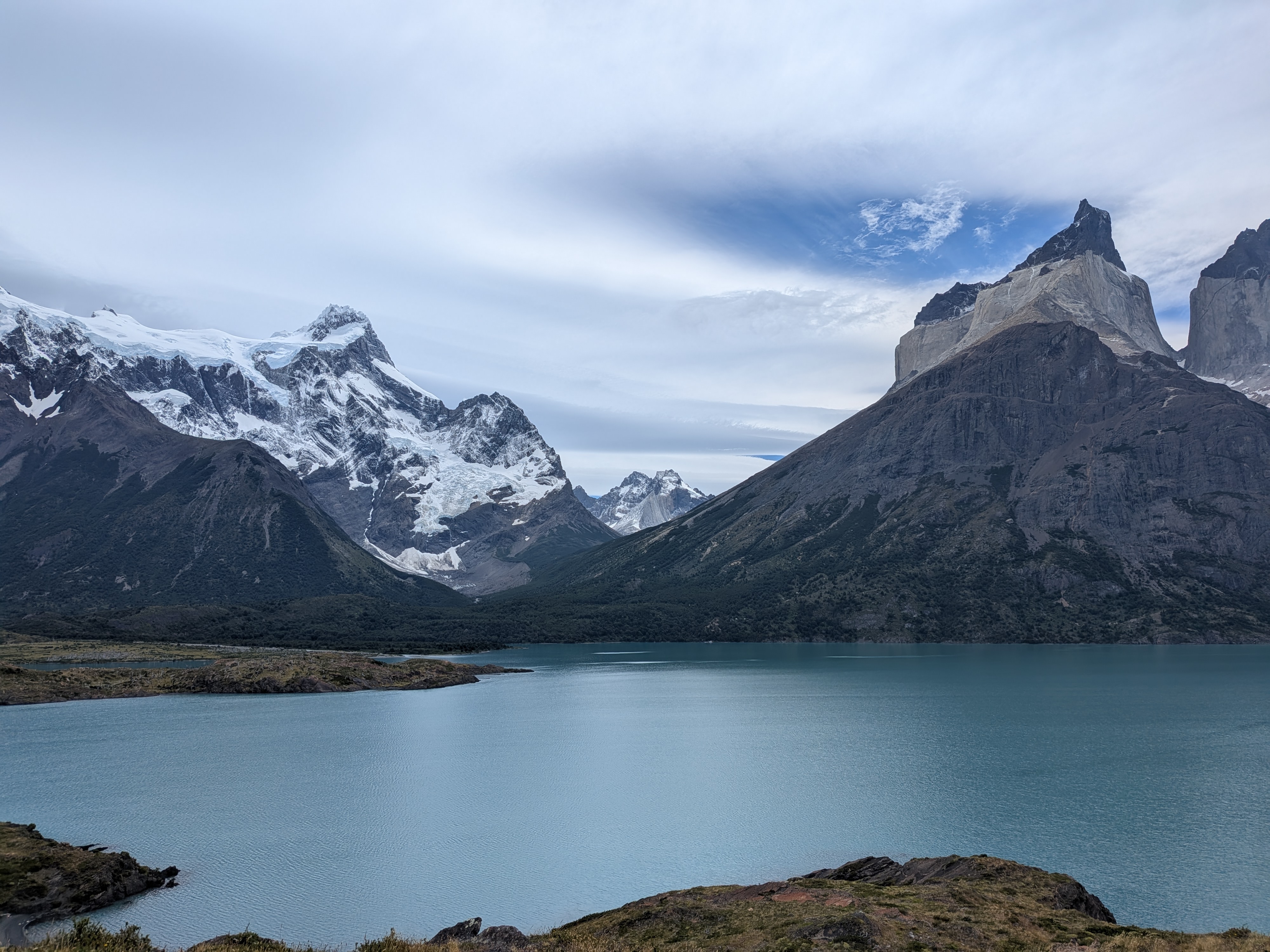
Of course, the real attraction to this part of the world is the natural beauty. It seems as if Patagonia is one of the untouched places left in the world. Yes, there are the towns filled with restaurants and hotels, but they are a ways from the natural attractions that can be found out there. Tours do come through to drop off a bunch of tourists. Still, if you plan your time right, you can find yourself in some spectacular locations where it feels like you are the only ones there.
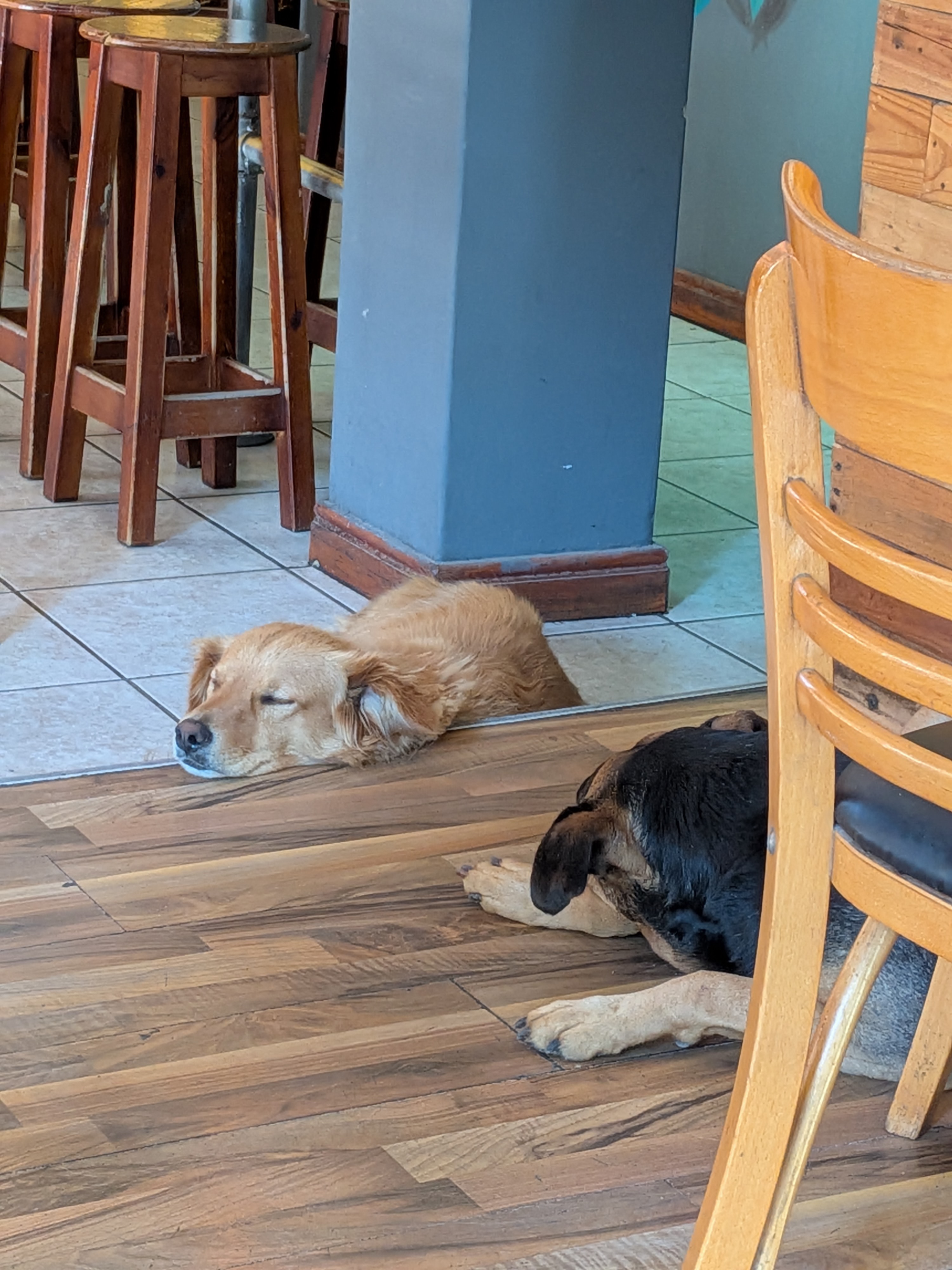
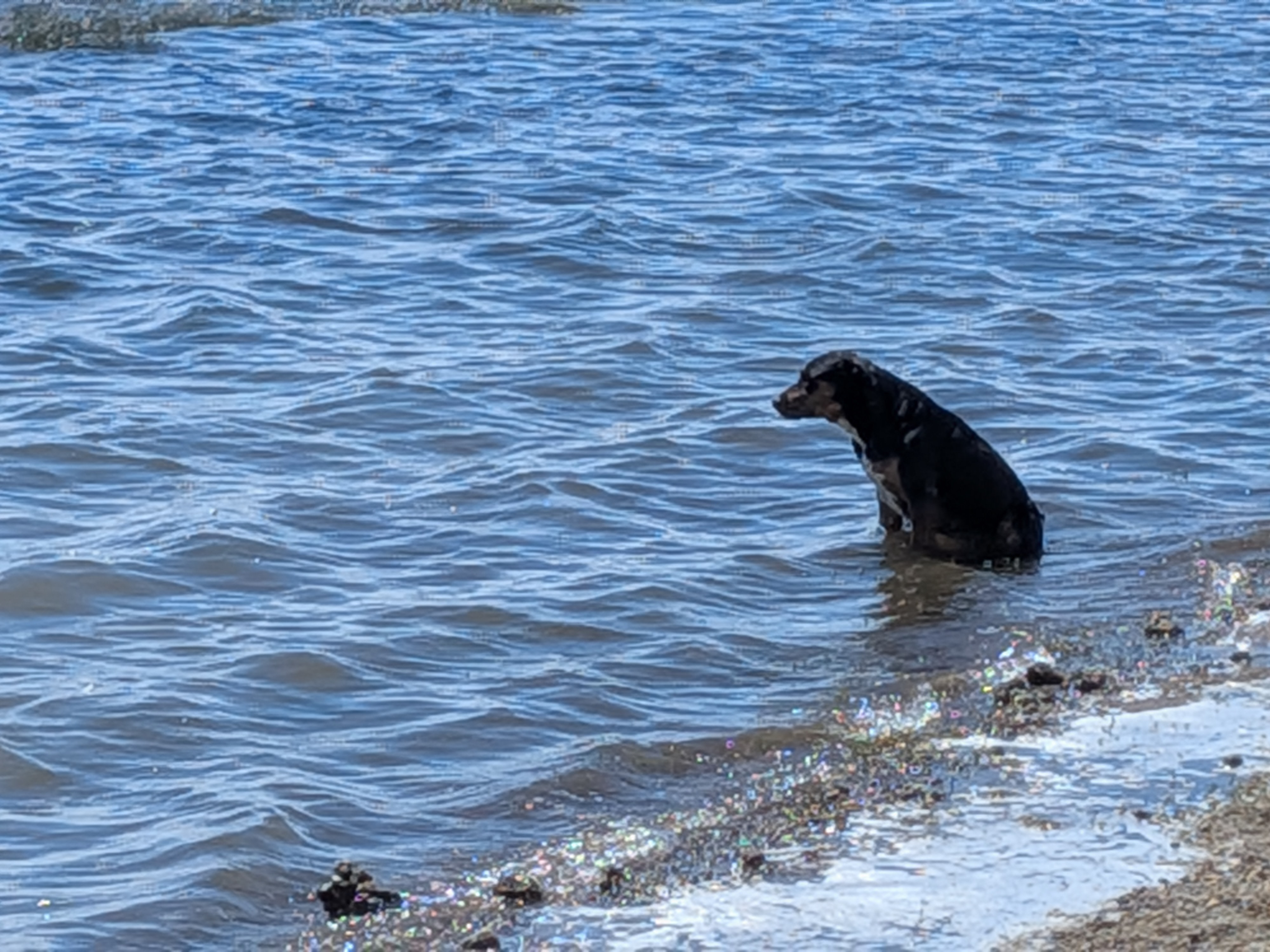
It did not take me long to adjust to the change of seasons and accept what I was seeing as part of my Summer Break. I got into the groove of the towns and forgot that my family living on the other half of the world was enduring a cold, and bitter winter. I do not think that I will have a problem making this adjustment as I continue to live in the southern hemisphere. Jus like the dogs that we ran into in all of the places we visited, I start to become comfortable with my surroundings and enjoyed them for what they had to offer when they were willing to offer it.

Until next time, enjoy those seasons whenever they are given to you.
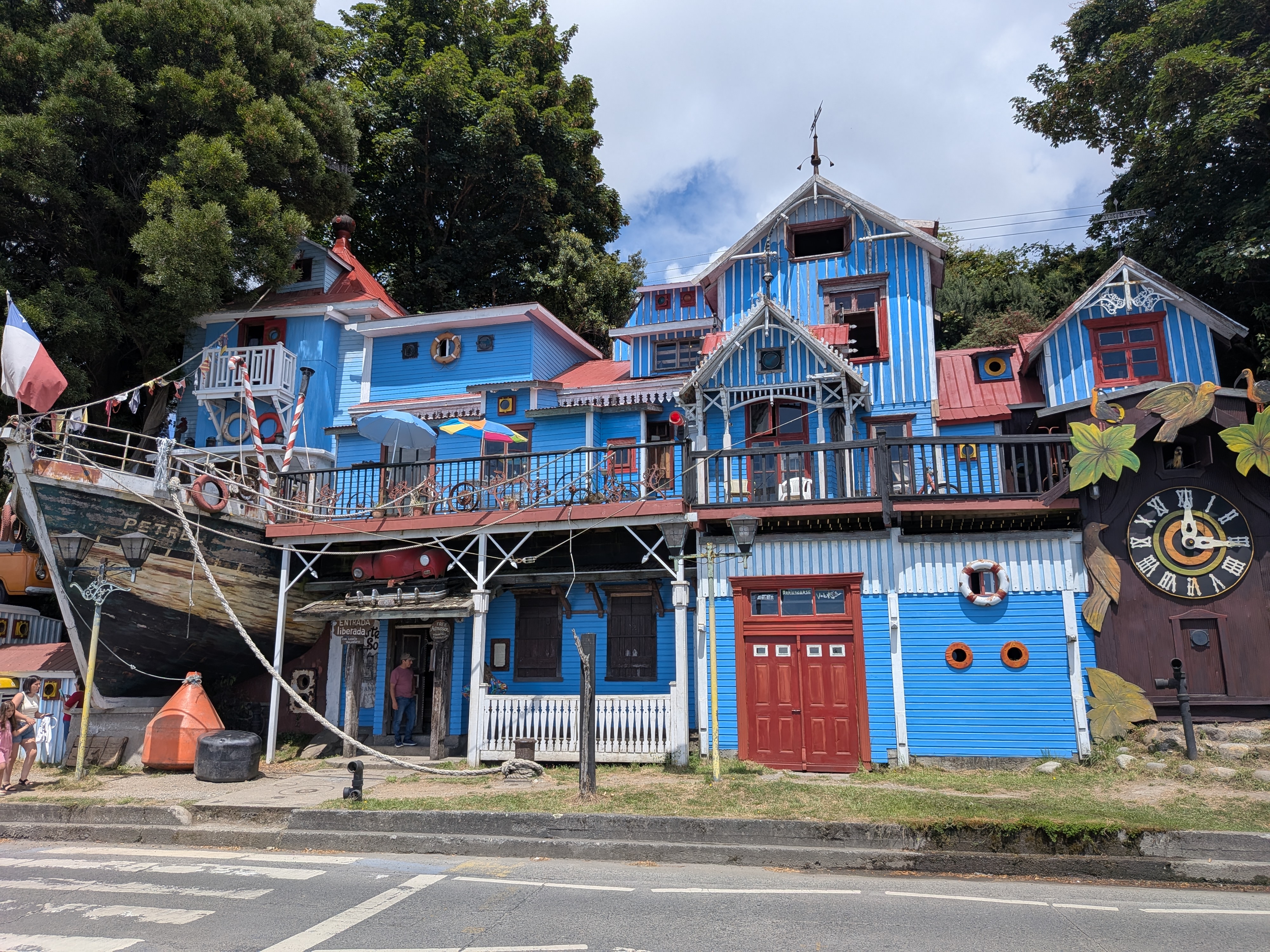
The Museo of Pablo Fierro – Puerto Varas, Chile

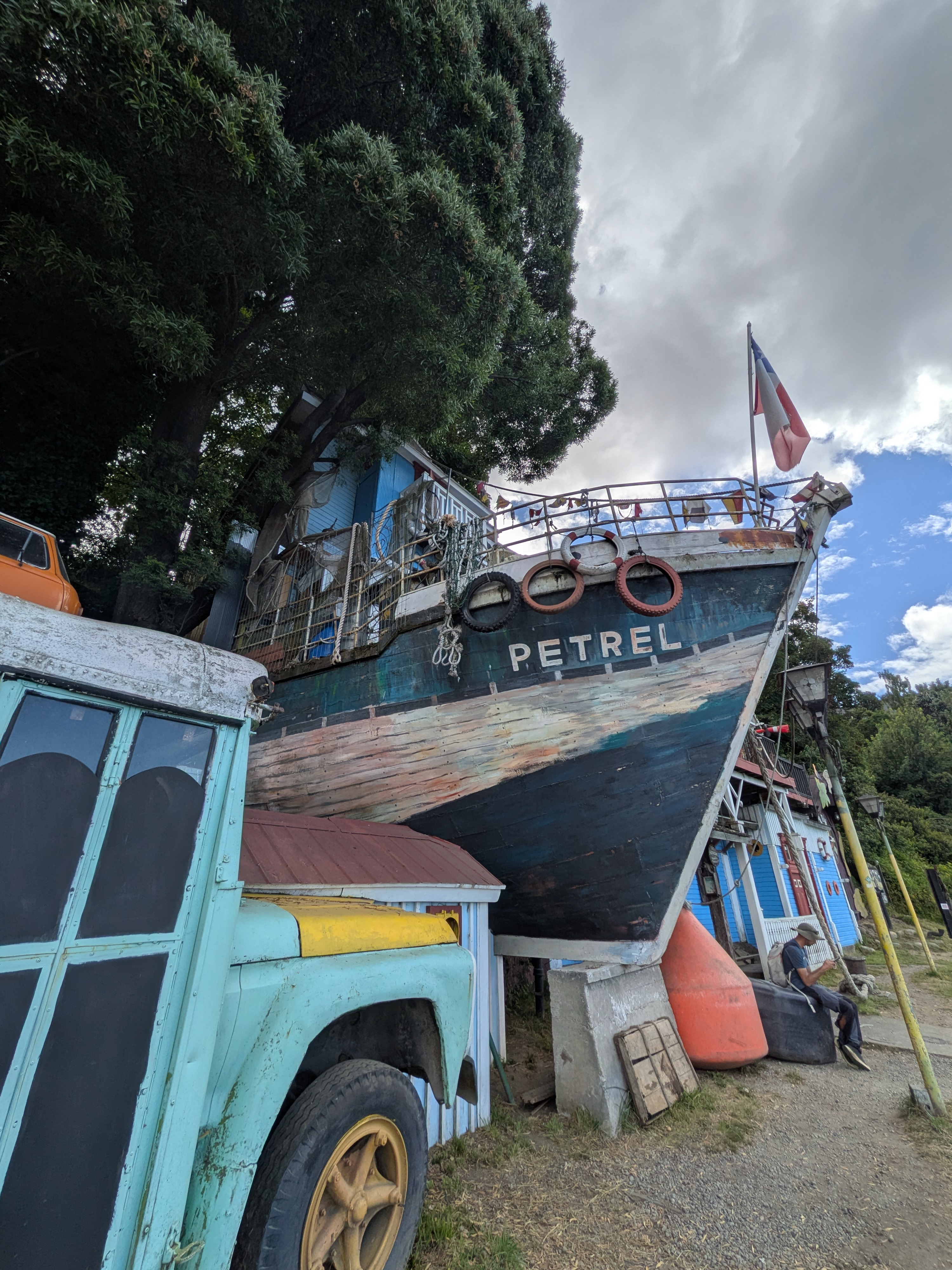
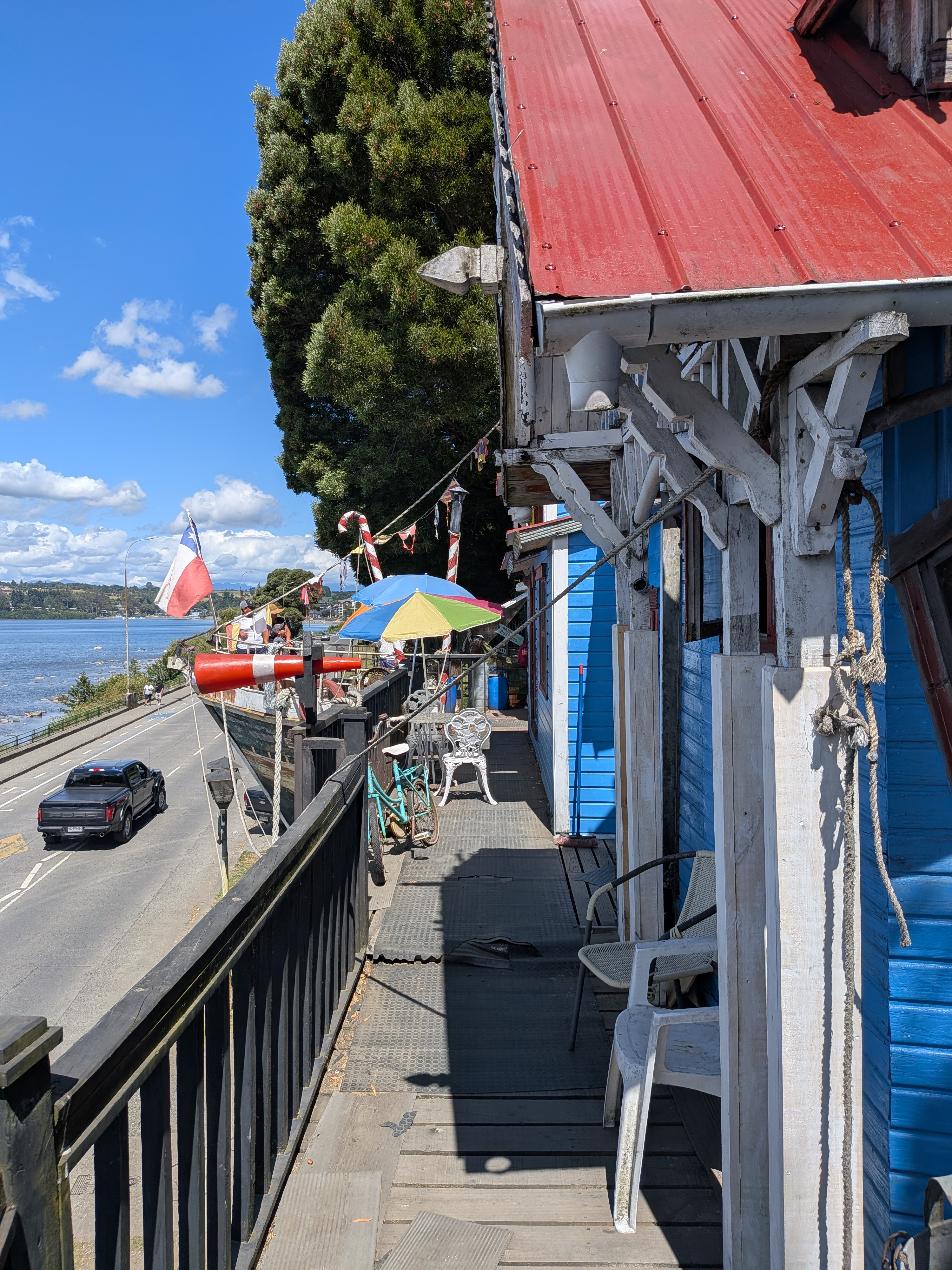
In a small vacation resort town among the volcanoes of Chile right next to the lake district, and wine country, the architecture reminds one of a small German town in the Black Forest. Among these beautiful buildings, there is one that sticks out more than all of the others, and draws visitors to it. The building is hard to miss. People will take a stroll along the beachfront and come across this building, and wonder what it is they are looking at. It is the strange museum of one of Chile’s most known artists, Pablo Fierro, and it is the main attraction in the small town of Puerto Varas.

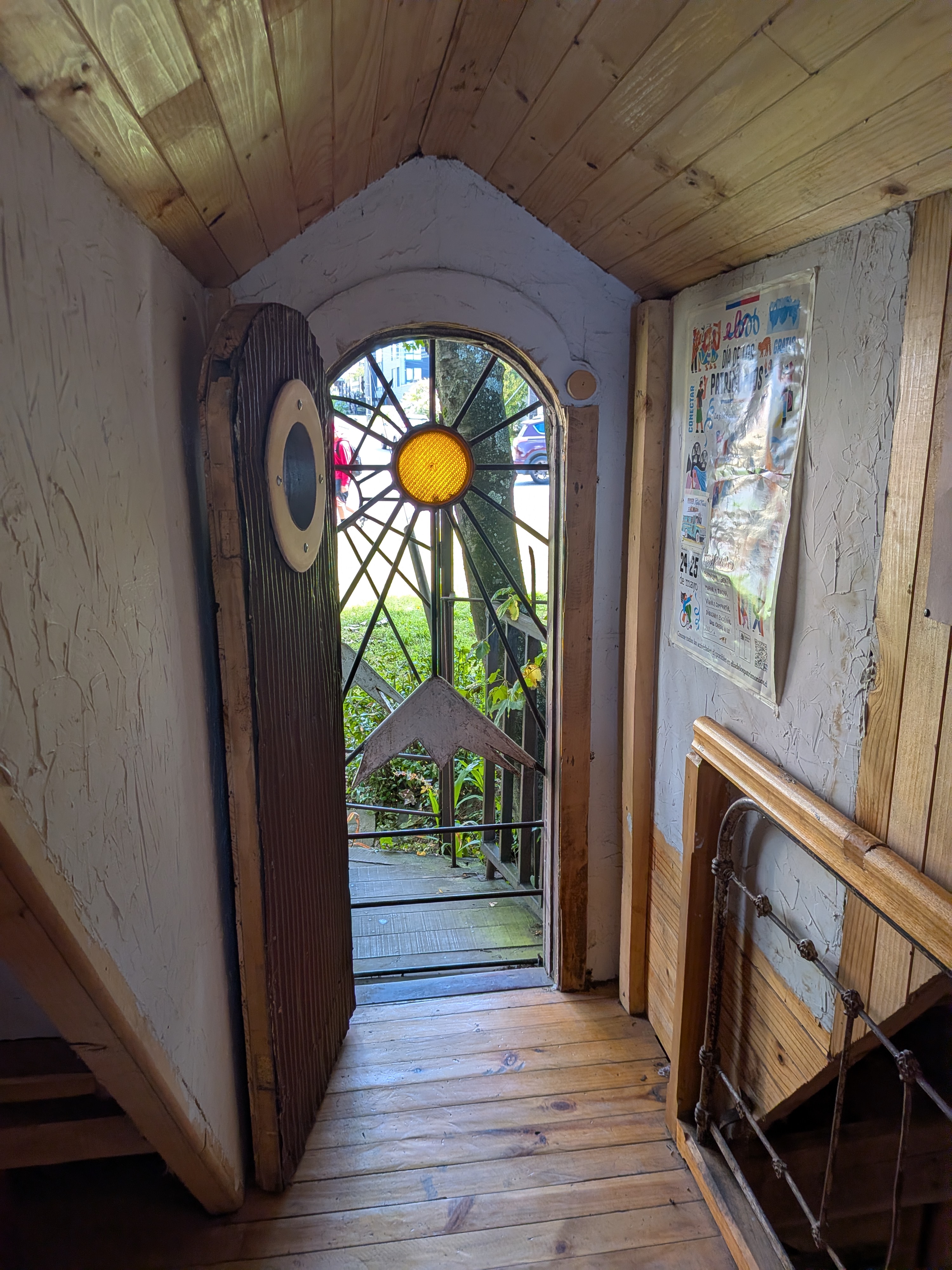
What exactly in the Museo Pablo Fierro? Well, that is hard to describe, and the pictures do not do it justice either. It is definitely something that people need to experience. Basically it is the studio of Pablo Fierro and he opens it up to the public from 9:30 to 1, and 3 to 8 everyday but Sunday. You can wander around the place, look at the art, and interact with the way he has put together the house.

The museum reminds me of Meow Wolf, and could easily have been the inspiration for it considering that it predates that museum by almost twenty years. There are random things that are place all over the house, and at times you will find yourself in an old boat, a cuckoo clock or school bus. Everything is interactive, and there is a lot of strange things placed in weird location, but there also seems to be some kind of logic concerning how things are palced.

The surprises are endless and you do have to play around with what you see because sometimes what you think is a wardrobe turns into an entrance to another room, or a door will open to a beautiful sight that you had not expected.

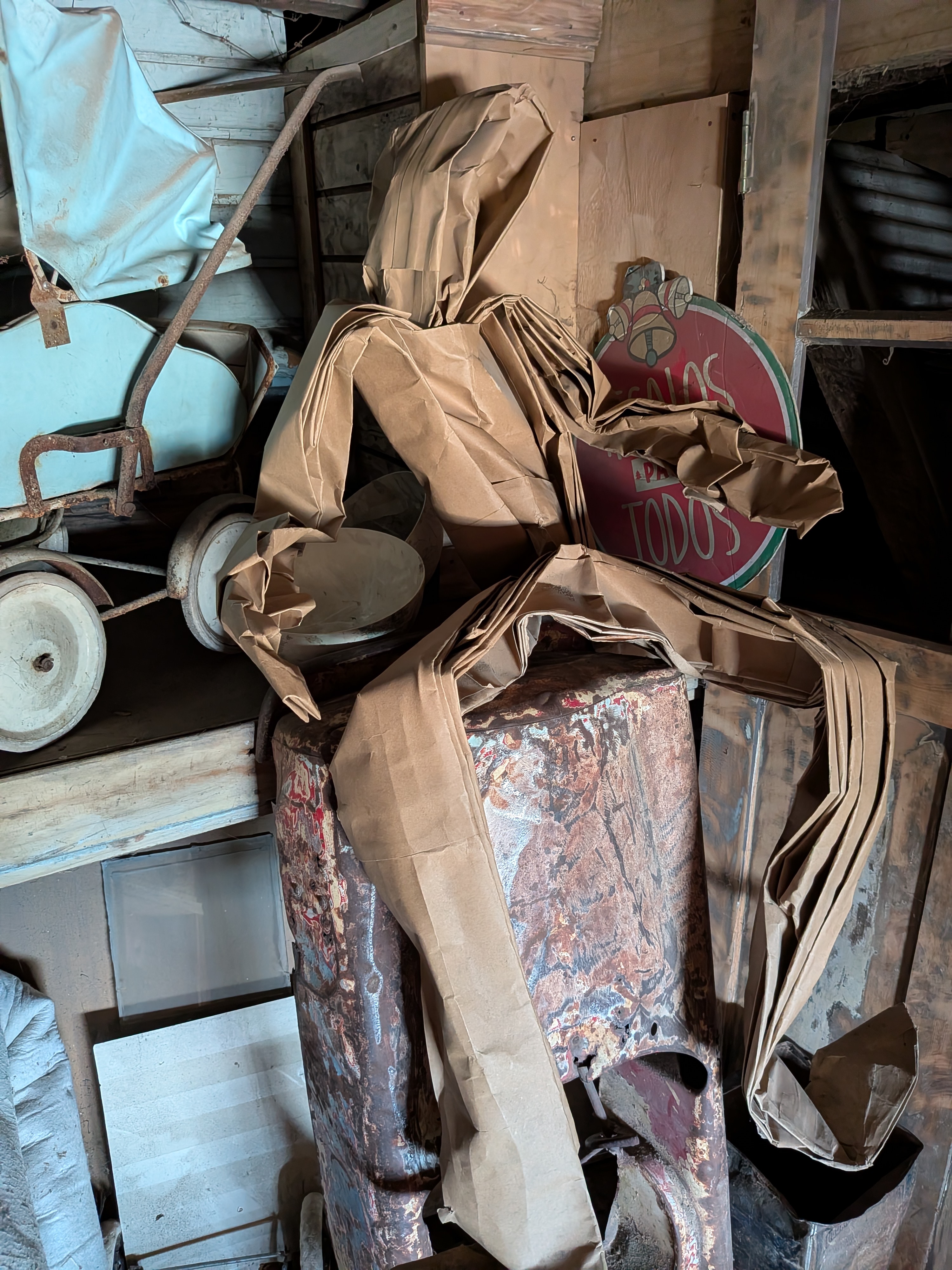
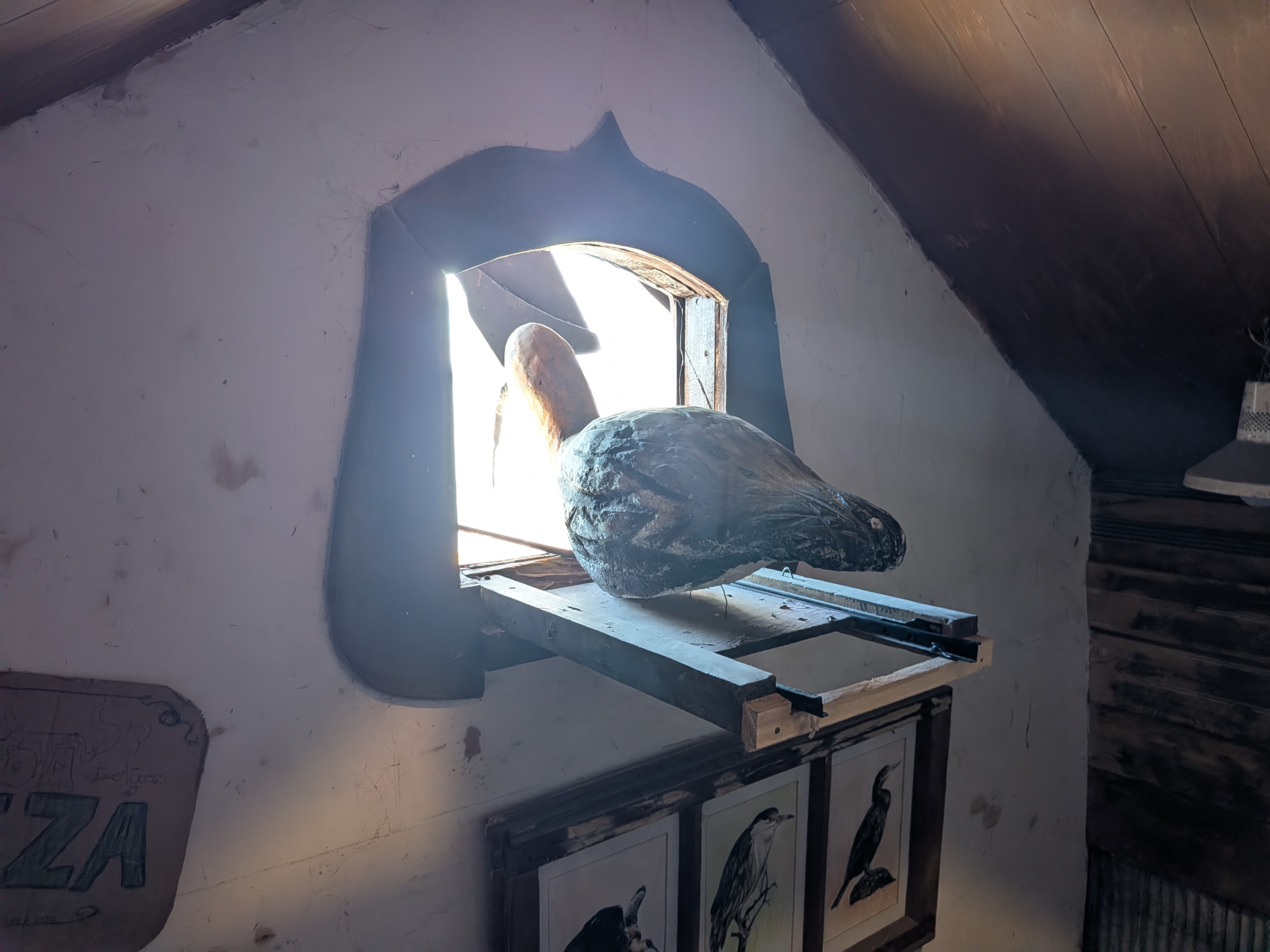
My favorites were what I called the ghosts that we hanging out in various places in the house. They were men that were put together in an origami fashion from large pieces of cardboard. They looked a little out of place, especially with the first one that I found, but in an odd way, they also looked like they belonged to this living museum.

And that is the best way to describe what Pablo Fierro has and continues to create. It is a living piece of art that grows and builds upon itself based on the whim of its creator. It is a work that you have to walk through in order to experience it the way that it is meant to, and it is impossible to walk away from when you first come across it. The museum is the must see sight in Puerto Varas, and I think that goes for every time you come here because you do not know how it will evolve the next time you come out this way.

Until next time, look for those crazy places in the towns you visit. That weird location may be the best thing you see on your travels.

Mirador Cuentos – Torres del Paine, Chile – Without the W or the O Part 5

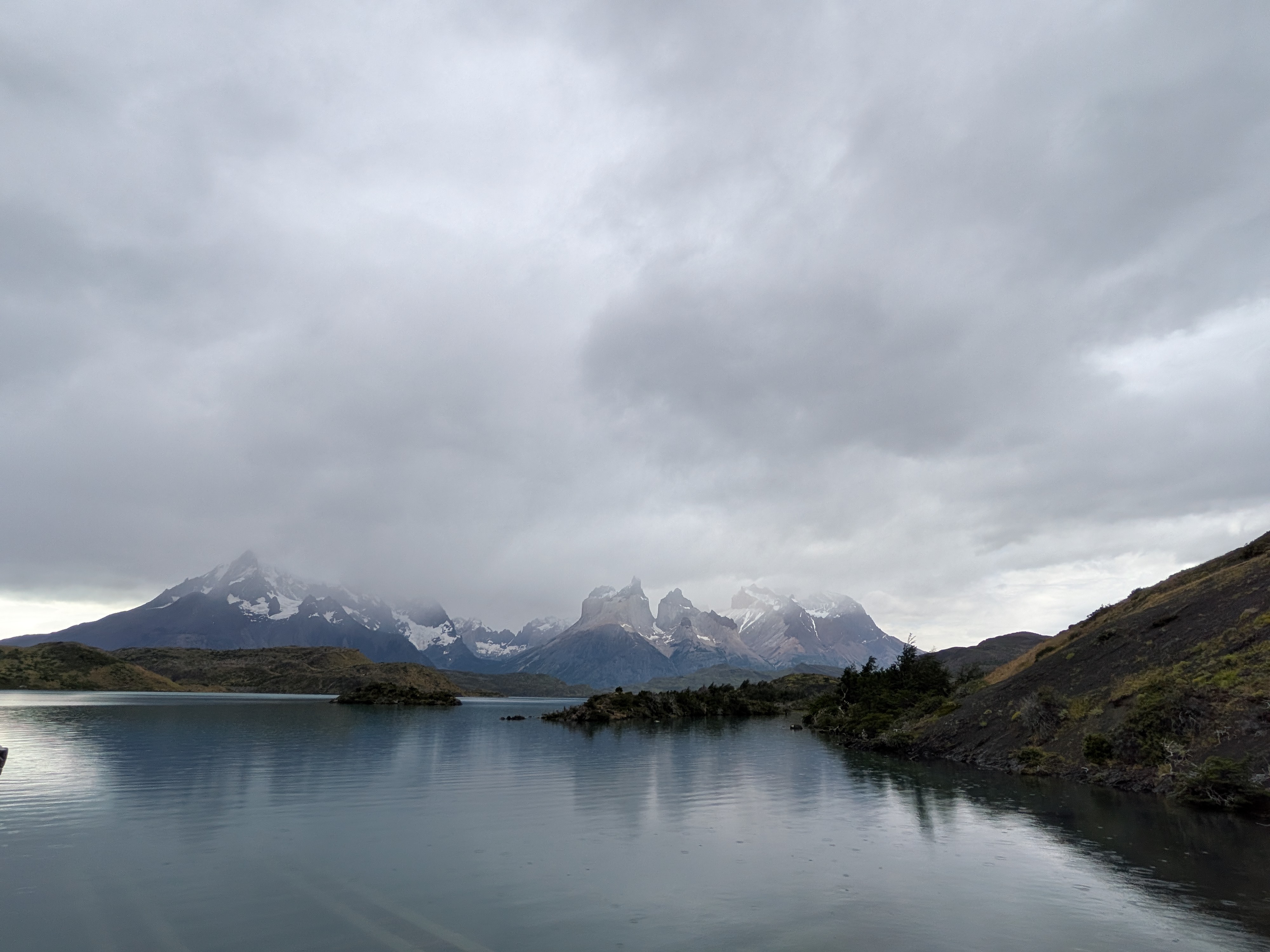
One of the things that they do not show you in the pictures of Torres del Paine is the weather. Well, they do show you the weather, but only one those days when it is perfect. The sun is shining. There is a slight breeze. People might even be walking around wearing shorts. This is the ideal, and I get why they show these pictures. This is the best way to sell a vacation to this part of the world. The reality of the situation is that Torres del Paine is on the tip of South America where the weather is unpredictable and though those beautiful days do exist, there are just as many rainy, cold, and windy days, even in the middle of the summer, so the hikes do not always go as planned.

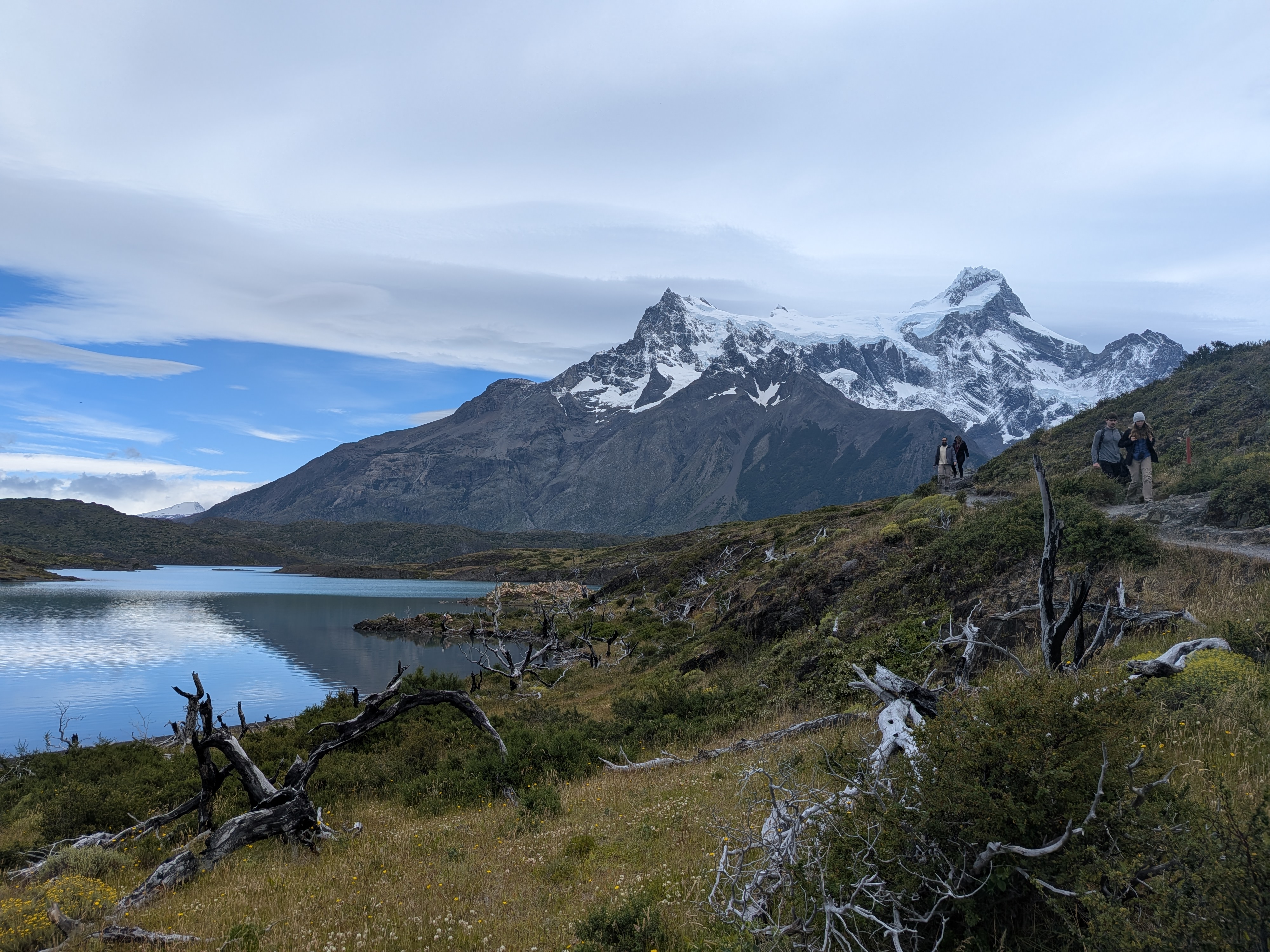
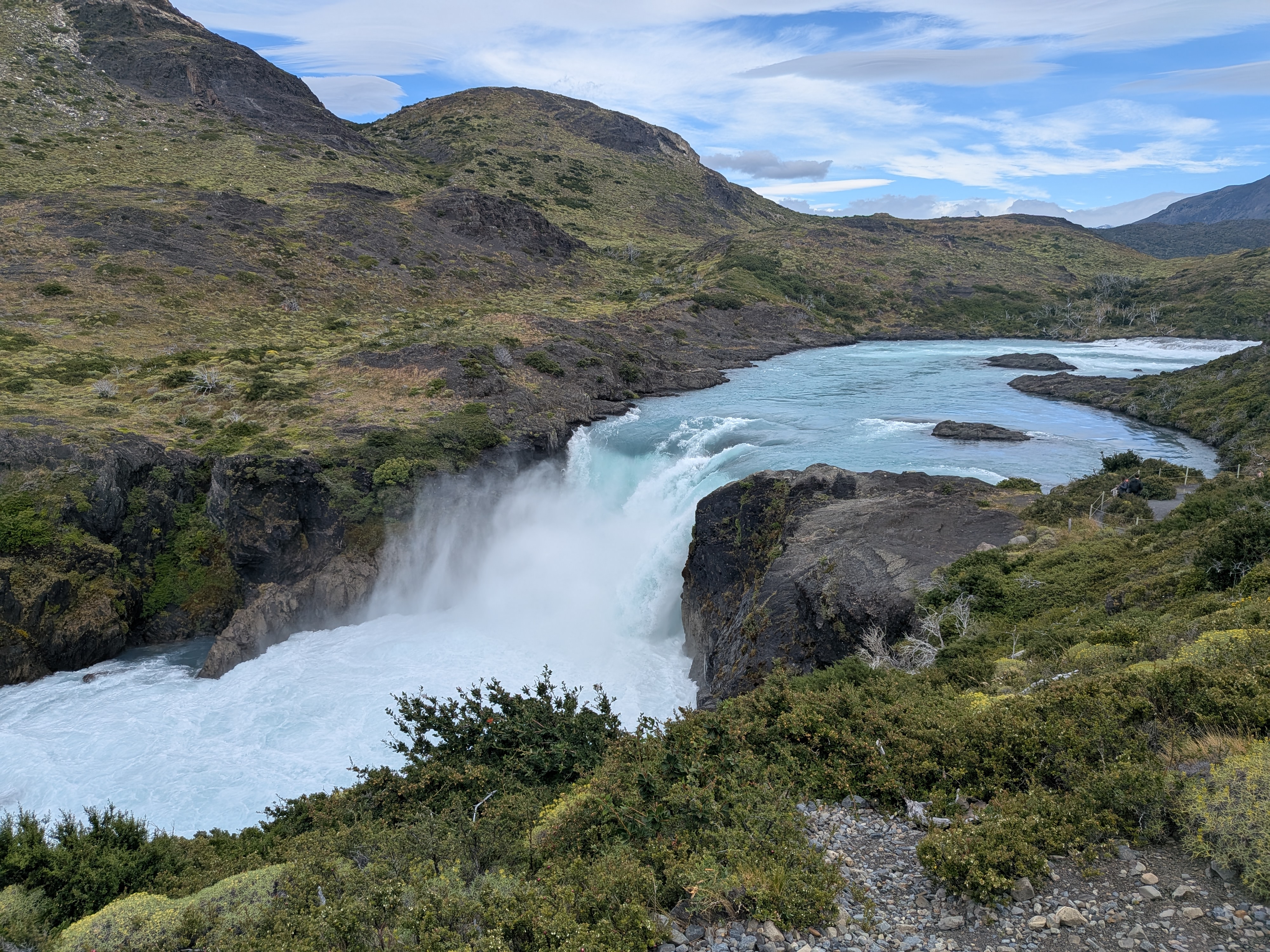
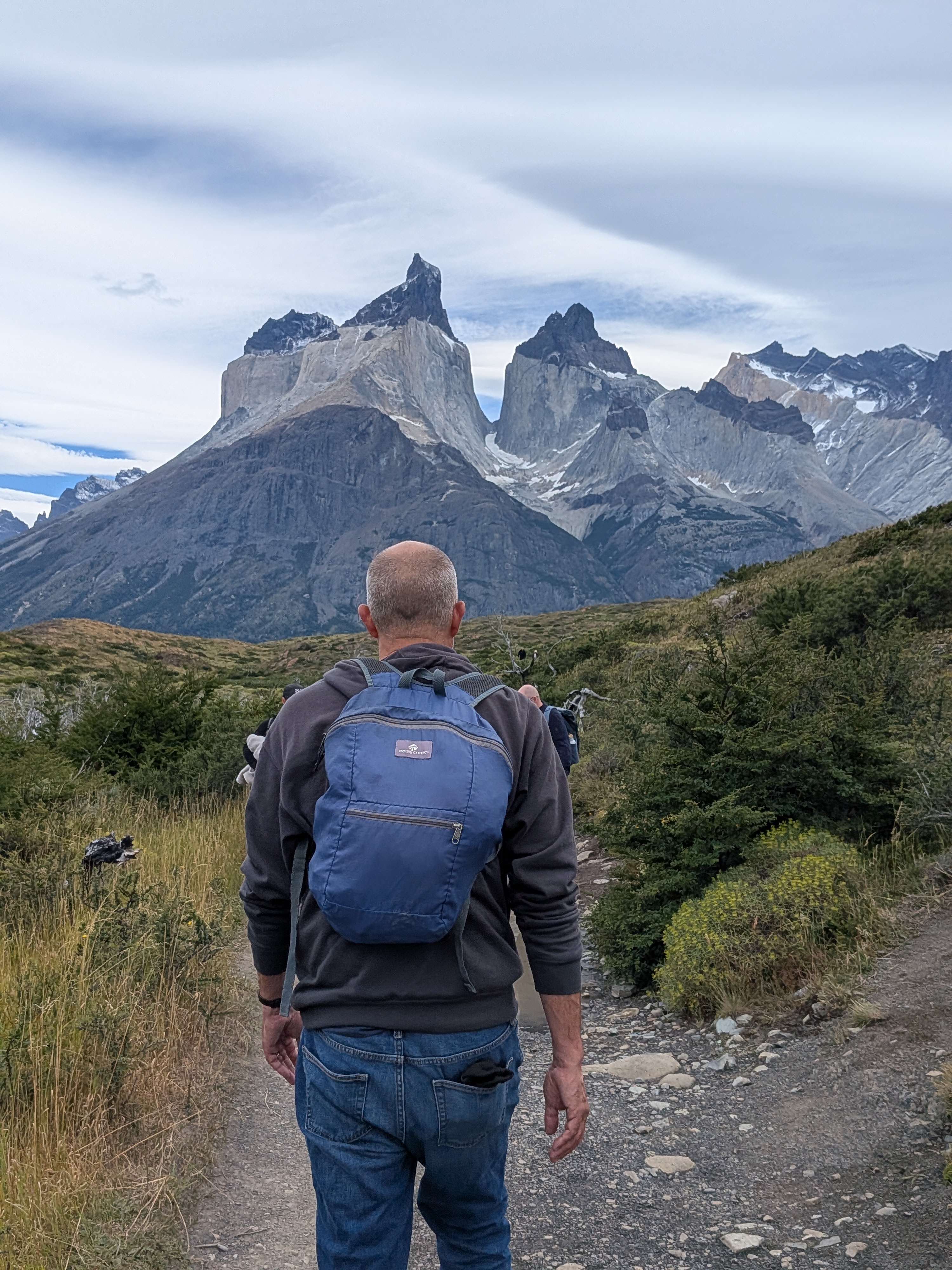
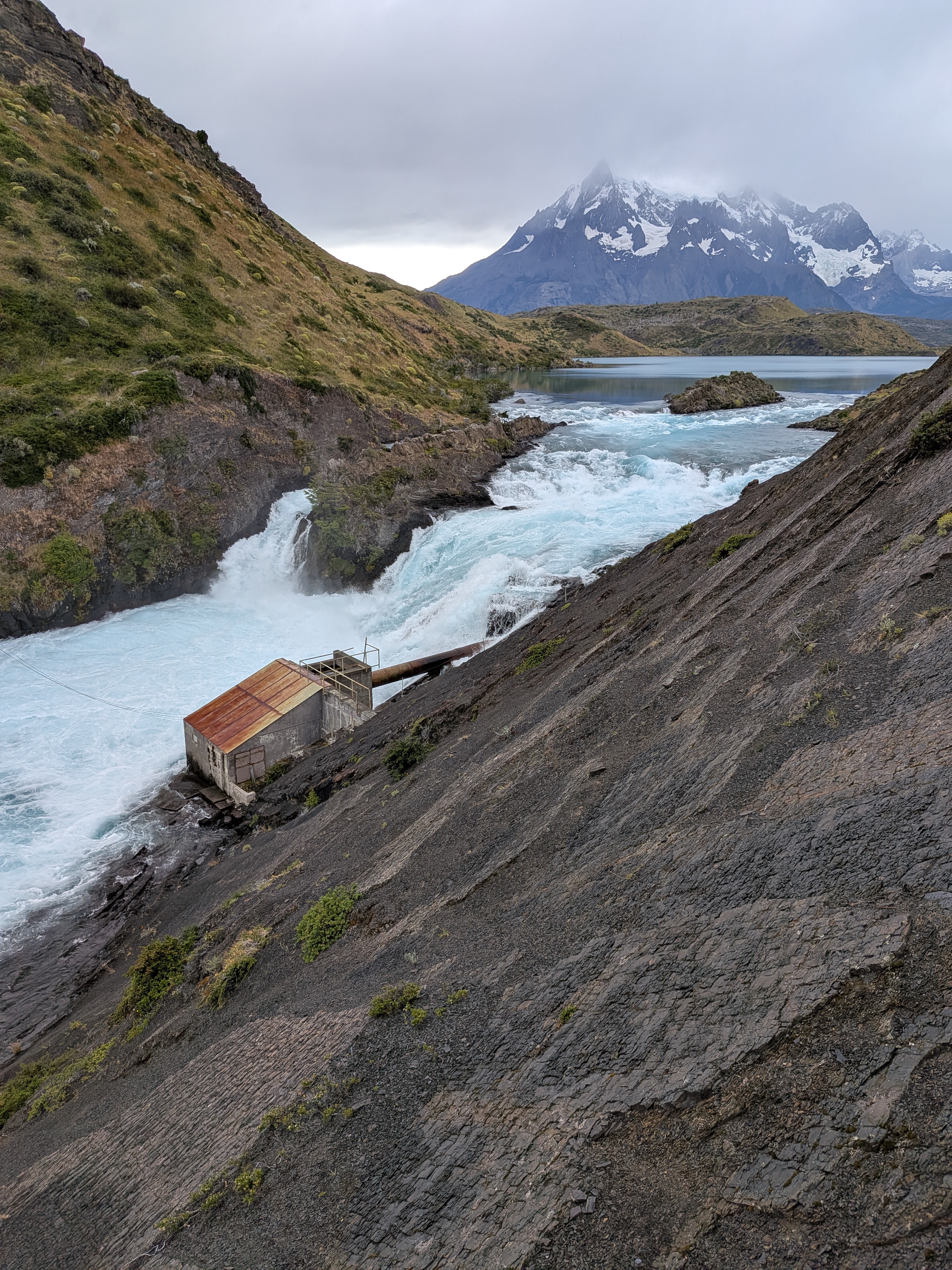
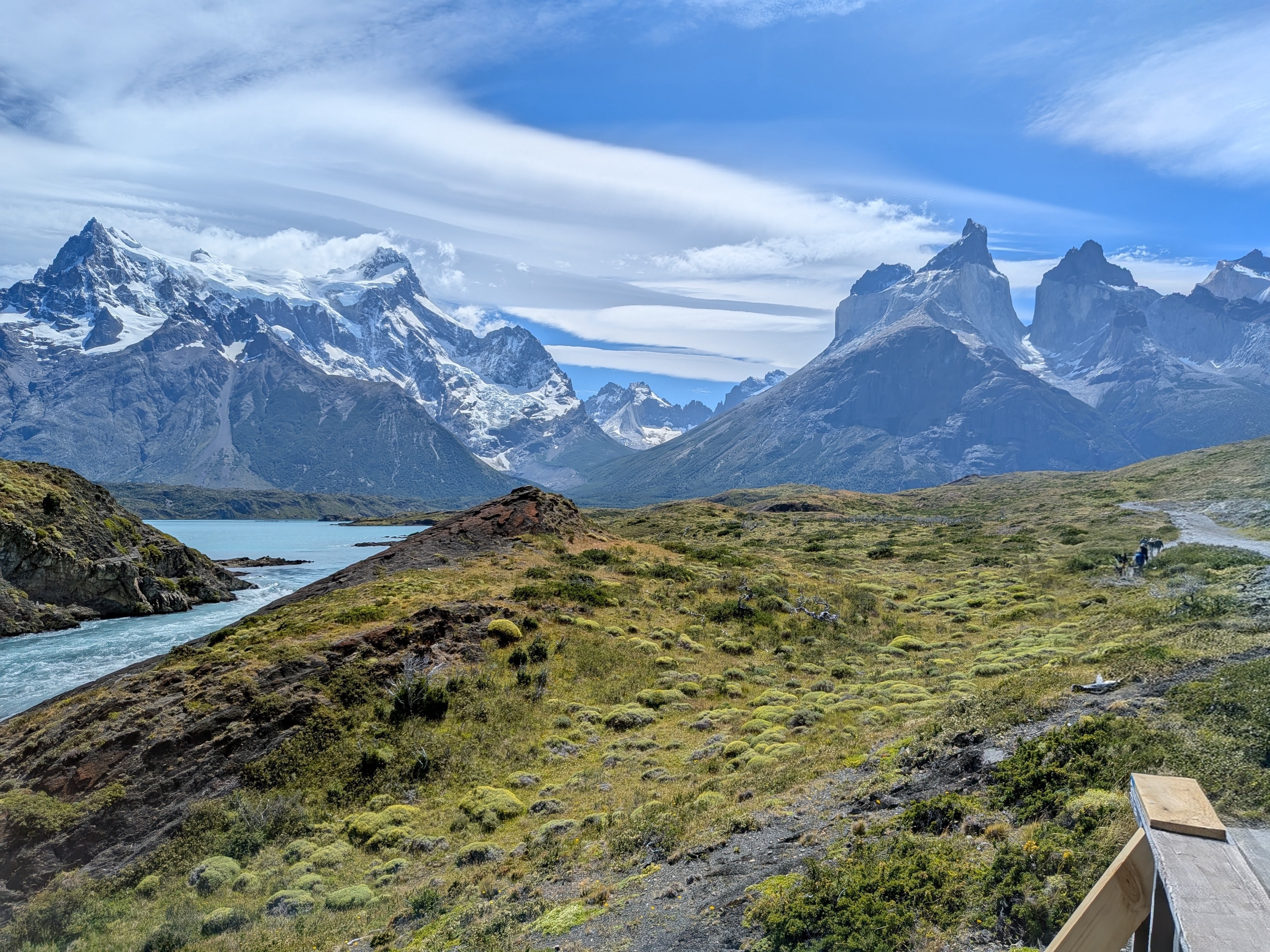
We had this problem with one of the hikes that we had planned to go on to, Mirador Cuernos. This is a very popular hike with the tour groups. It starts off at a cafateria just a little down the road from the Hotel Pehoe, and after a leisurley twenty minute stroll it takes people to a big waterfall that many people stop at to take pictures and watch large portions of water dive over a cliff. But if you take this hike another three kilometers away, the crowds start to die down, and you are rewarded with some of the more impressive views of the mountains in the area. This is the reason to come out and take this hike.

The hike basically follows the lake that feeds into the waterfall that most of the people stop at. It is on a well-groomed path that is wide and basically flat. There are a couple of rises on it, but it is nothing to strenuous and most people should be able to complete the hike without any problem. In fact, I saw many people on the hike that did not even bother to bring water or any additional equipment with them, and treated the hike as a lovely Sunday stroll. But do not be deceived; that could be the worst thing that you do if you take this hike.

Like I said earlier, the weather in Torres del Paine is unpredictable. A beautiful sunny day that you see in most of the pictures of the area can turn on you really quick, and you might find yourself out in the middle of nowhere as a storm blows in over the mountains. And let me tell you that when I storm blows in, it is not at all a pleasant experience. The winds out there can be extreme. We experienced one such day where we struggled to walk and after certain gusts, even continue to stand. Even though, the path is flat and wide, the weather can add a new diificulty to the hike. There are even times when they will shut down the path if the winds are too strong which happened to us the first time we attempted to make this hike.

Still, we did not let this deter us, and we came back another day when the weather was perfect. It wasn’t shorts weather, but it was just crisp enough to make for the perfect conditions to make a hike. We packed layers just in case the weather changed on us, and we brought a small lunch to enjoy at the beach we came across on the shore of the lake. And when we finally made it to the viewpoint, it was worth the wait. The views were stunning, and the sun shining on the peaks made for the perfect conditions to take pictures. It was a great hike to take that gets you close to the same places on the W loop and it only takes a couple hours to do, easily worth the time for those that are not doing the bigger loops.

Thank you for following me on this exploration of places to go in Torres del Paine besides the W and O loops, and I hope it gives you some ideas for your trip out to this area.

A Stroll Along the Boardwalk – Torres del Paine – Without the W or the O Part 3

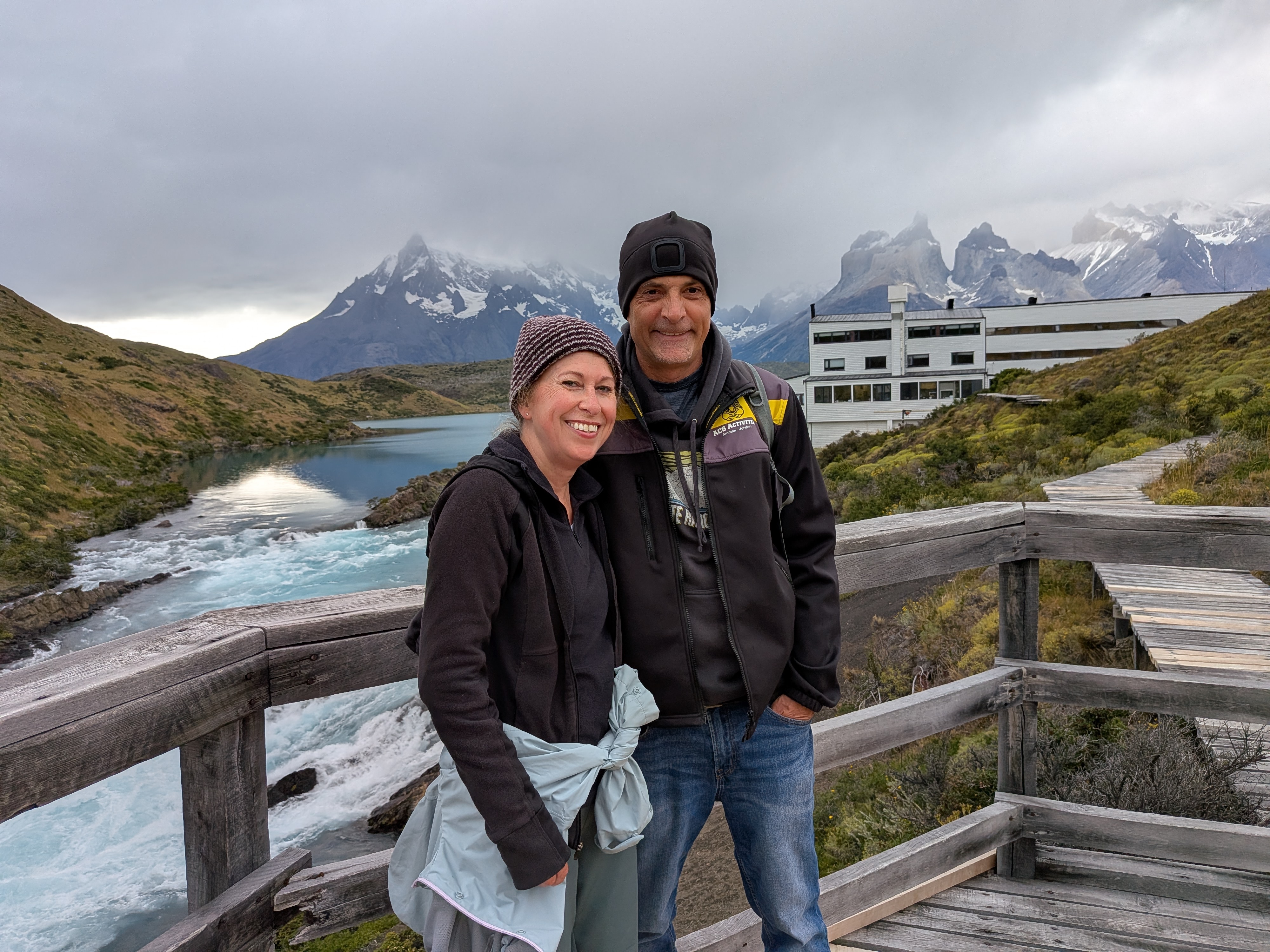
We had an hour to kill in the afternoon and the weather was beautiful so we decided to take a leisurely stroll down the road to the Explora Hotel where we heard that there was an easy boardwalk stroll to see a waterfall next to the hotel. What we did not realize was that the boardwalk was actually a maze of paths set up by the hotel that did not always go directly to the viewpoint of the waterfall. In fact, what we thought would be a twenty minute stroll to see a waterfall turned into an hour and half of wandering over old wooden paths, always hearing the waterfall, but taking a long time to finally get to the spot that we had heard about.

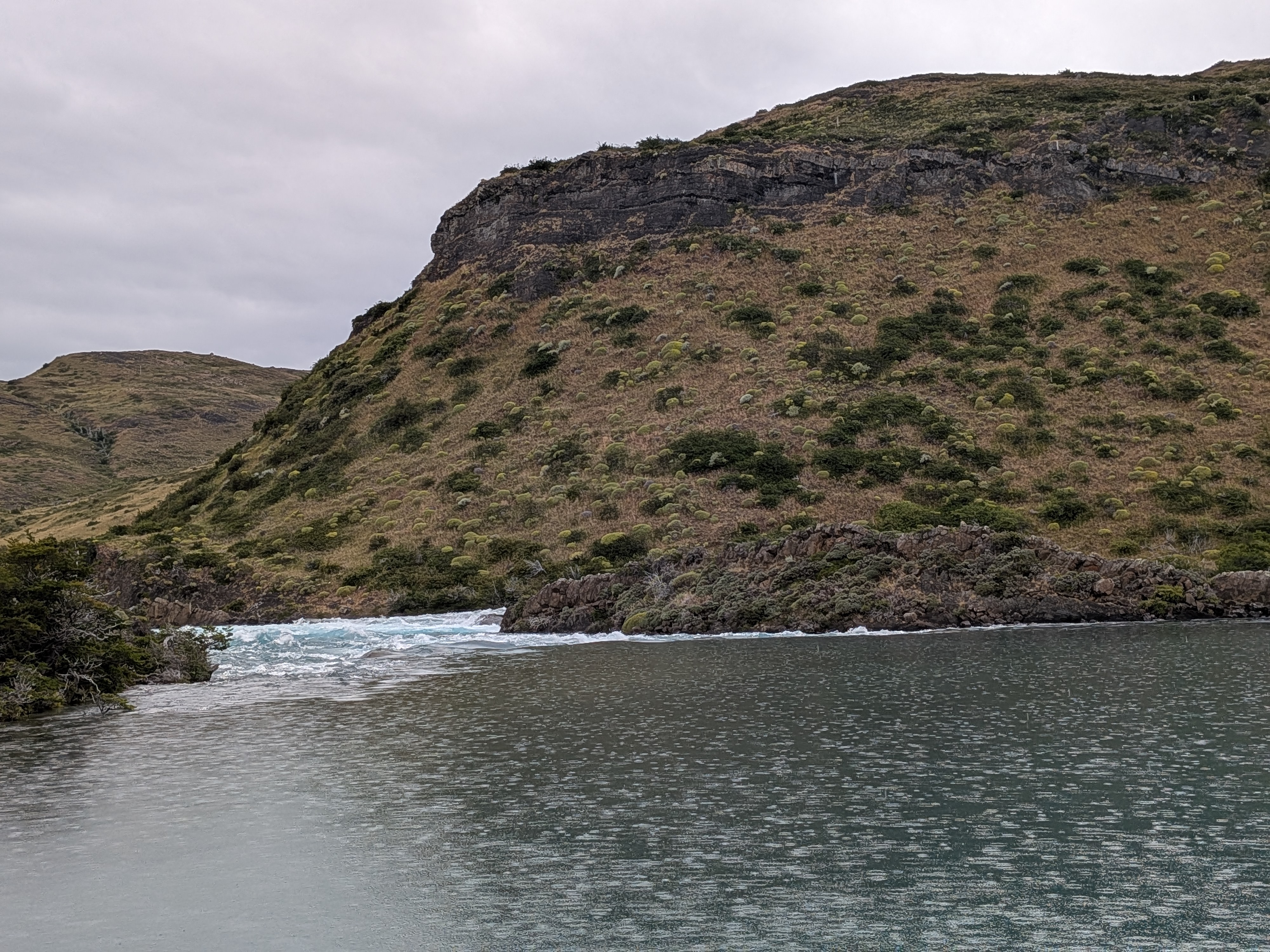
We traveled from Campground Pehoe by turning right out of the parking lot from the restaurant and walking fifteen minutes to the Explora Hotel. The boardwalk was hard to miss when looking from the right side of the road, but this was the back part of the boardwalk, and we made a few mistakes from this point. When wer got to our first four-way intersection on the boardwalk, we thought taking a right would be the logical choice because this led to the lake and we could hear the waterfall coming from this direction. But this was incorrect. This took down to a dock where a large boat was parked, and we could see the rapids that were formed at the top of the waterfall, but could not see the waterfall itself. It was still okay because we had some beautiful views of the mountains in the distance and the whole lake, but we knew there was a better view, and we just needed to find it. 

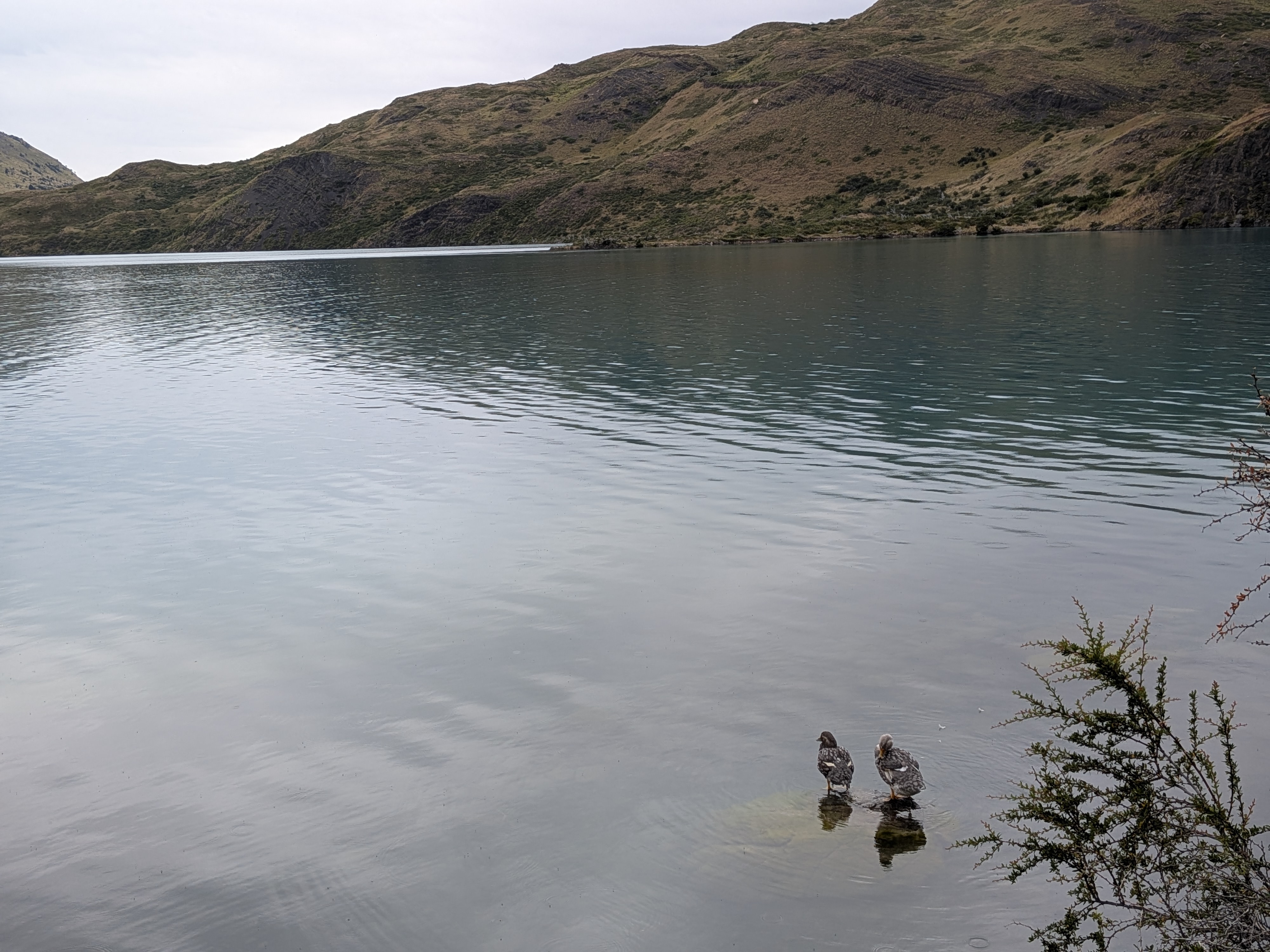
We backtracked and took the left turn this time because if we had gone straight from our original position, this would have taken us to the hotel. This part of the boardwalk seemed promising even though it was taking us down to the hotel’s spa. Still, there was another fork in the boardwalk that went right and took us down by the lake on the other side of the hotel. This followed the shore of the lake and its calm demeanor. We were able to get nice views from here as well, and there were even a couple of ducks sitting on the side of the lake that were there to greet us. Just to warn you, the boardwalk was at its most dangerous here with many of the board rotted and ready to break at any moment, but we took it slowly and were able to get to the other side without any problem.

This is where we were rewarded with the waterfall. We had to climb up a series of rickety wooden stairs to get to it, but once again we took it slowly and we made it up without a problem. Lo and behold, there was a waterfall there. It was a great spot to get some great photos and we were still able to talk over the roar. Even though it turned into a much longer hike than we were anticipating, it still made for a fun outing, and we were able to find some other nice viewpoints along the way.

Going back we found the last of the boardwalks that took us straight to the hotel’s parking lot. It took us a lot longer than we expected but eventually we found the path that we were originally supposed to take to make this a twenty minute stroll instead of the afternoon adventure that we had. Still, I am glad that we did it the way that we did because I think we got more out of the experience. It is a great way to spend some time if you have a lovely afternoon and you really do not have anything better to do.

Laguna Nimez – El Calafate, Argentina

I have made it to the tip of the Americas, and it is here that I have found another frontier that is free of people and big on beauty. It is a big portion of the continent that spreads out over the countries of Argentina and Peru and is known as Patagonia. People do make their way to this part of the world to explore the wonders of nature and enjoy one of the places left where you can feel as if you are not fighting through crowds, traffic, or the annoying barrage of modern society. It presents itself with a calming Zen like atmosphere that I feel I will enjoy as I explore the area over the next couple of weeks.

The people that make their way out here are usually looking for the adventures that the mountains and expanses of wilderness have to offer, and I have made some plans to make sure I participate in this, but I first needed to acclimate myself to the area after a long day of travel to get down here. I wanted to get out and explore the area, but not do anything too strenuous to start off. The obvious choice came from a wetland preserve on the edge of El Calafate called Laguna Nimez.

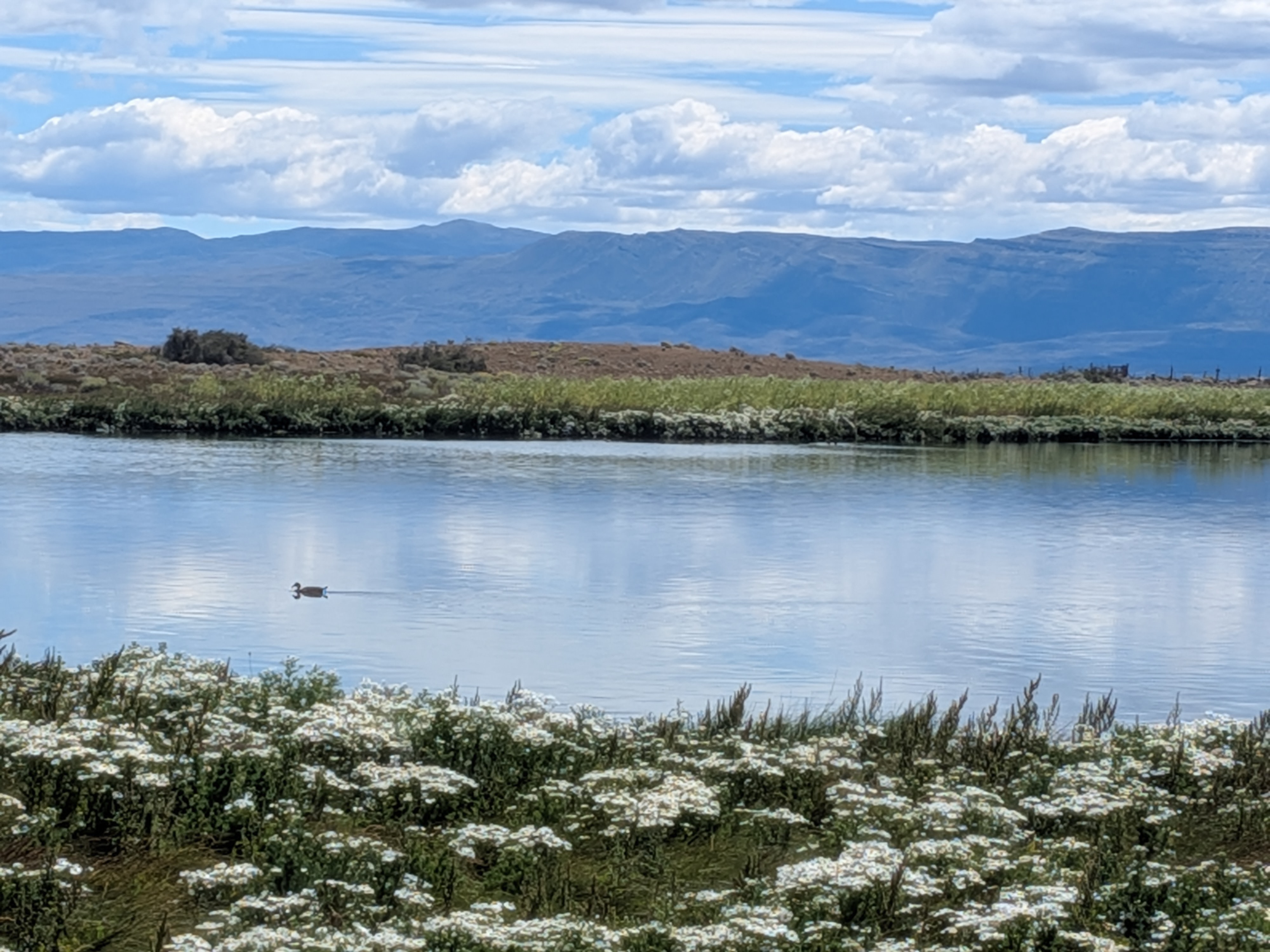
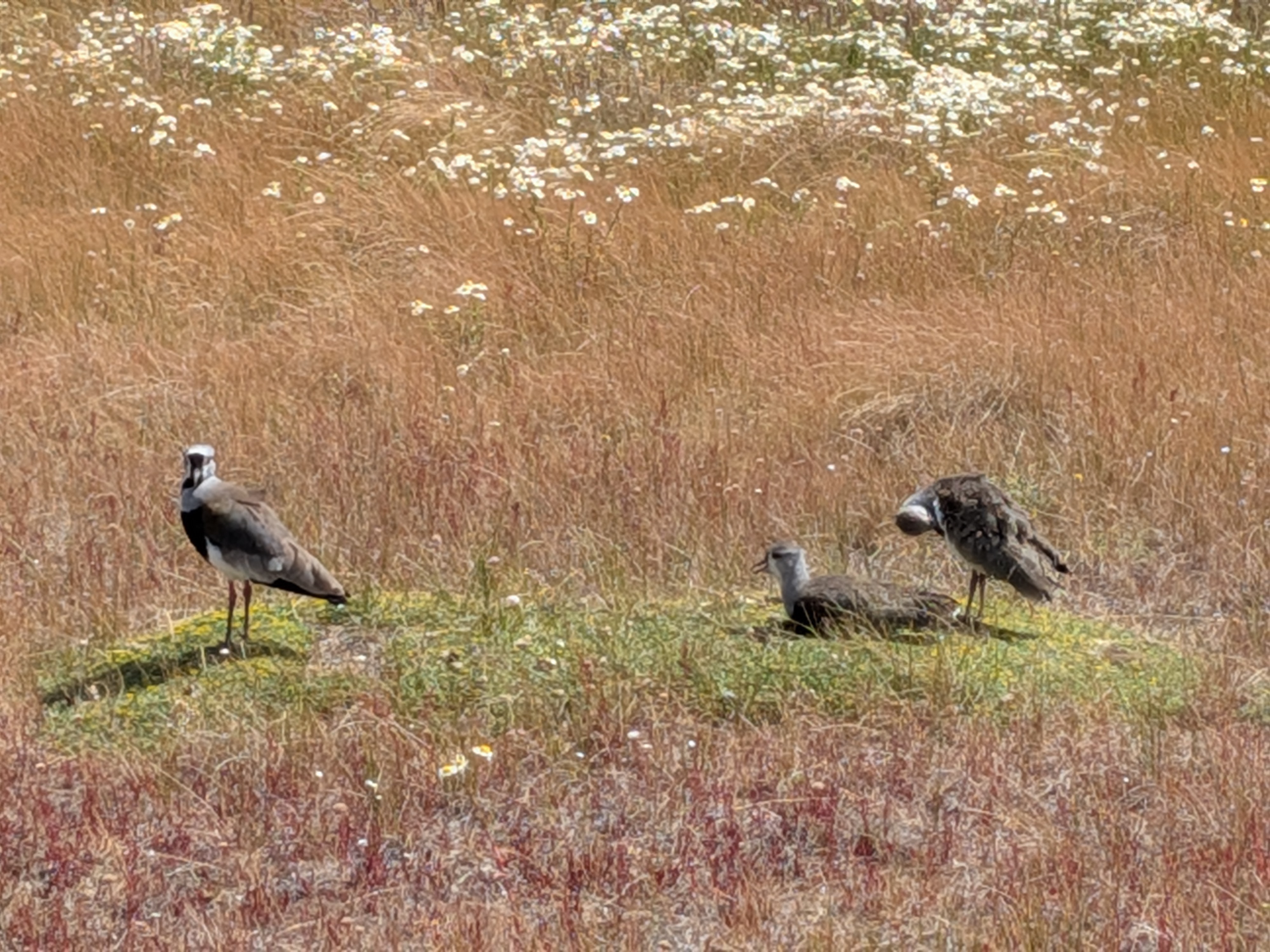
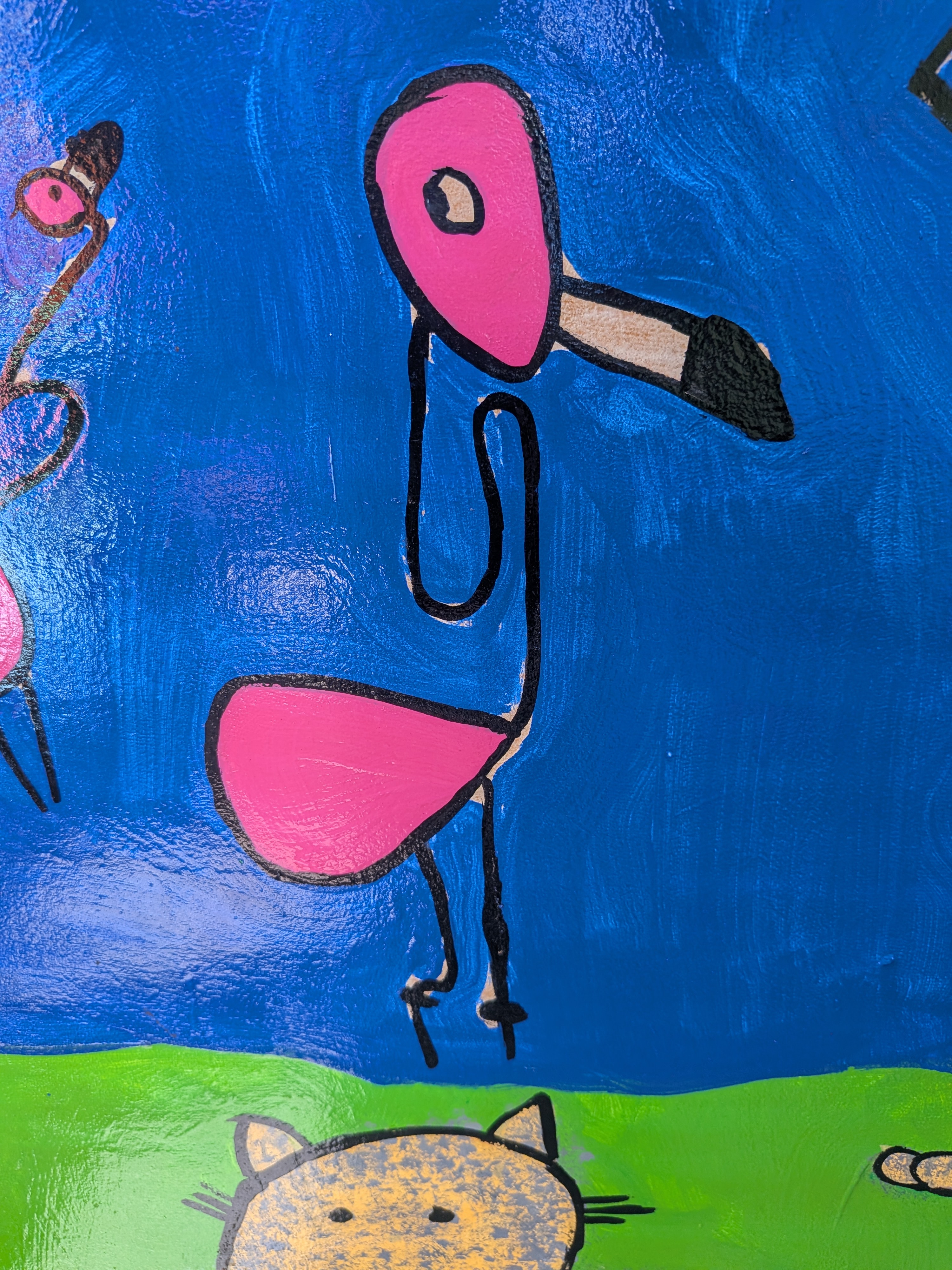
The preserve is a avian sanctuary where numerous types of birds find themselves at home. There are many types of sparrows, finches, ducks, swans and other birds that hide among the tall vegetation, swim in the lakes, or hunt along the sandy shores. Most people make their way here to see flamingos as they graze in the wetlands, and take pictures of the beautiful landscape along the way.

Though we spent time looking for these colorful birds, we did not find any while we were out there. We were told that they are in town year round, but the prime viewing times happen in the spring or fall months. We were hoping to get lucky, but it just did not happen. Still, we saw many ducks, and other kinds of birds to satisfy our curiosity about the place.

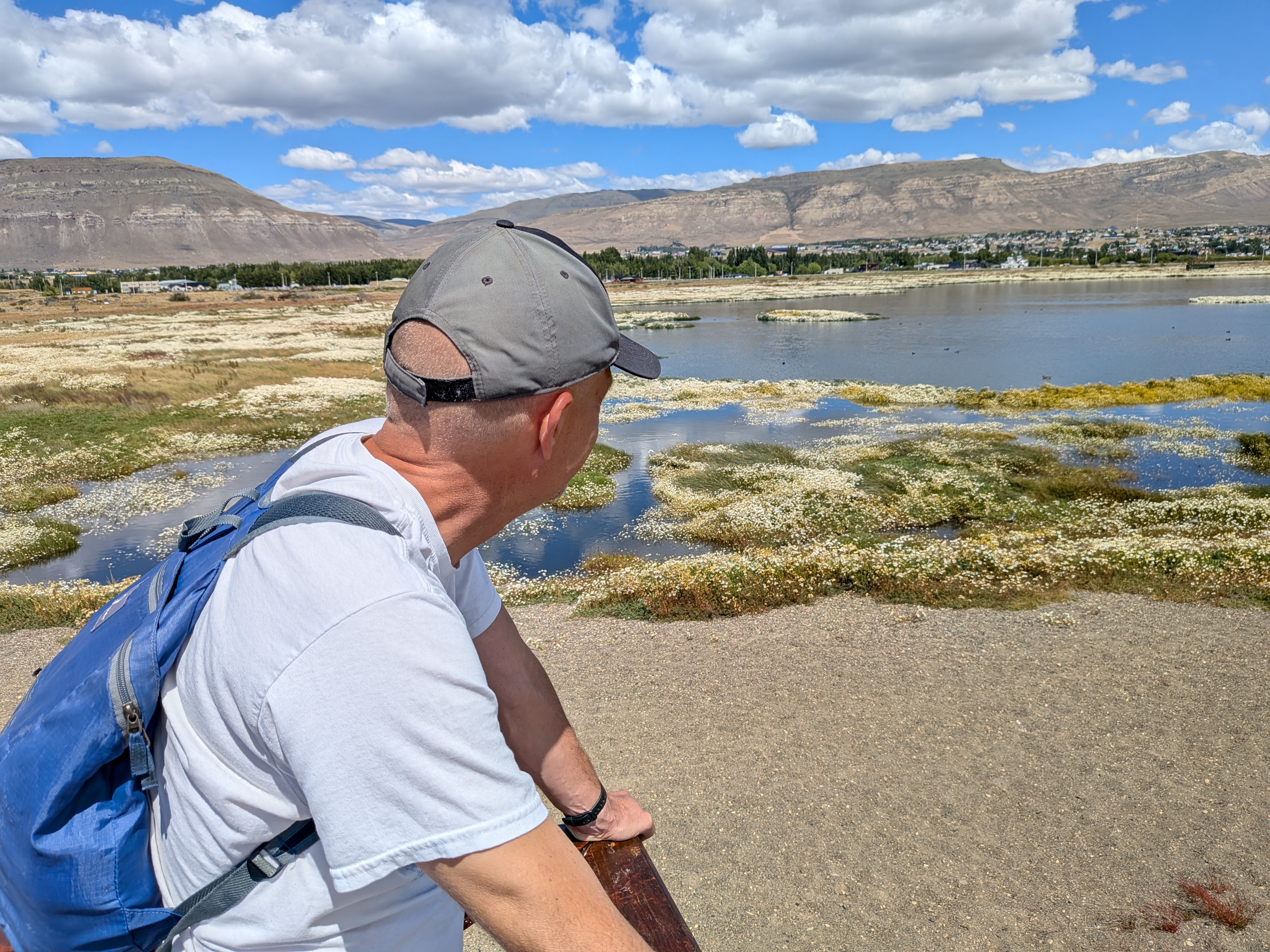
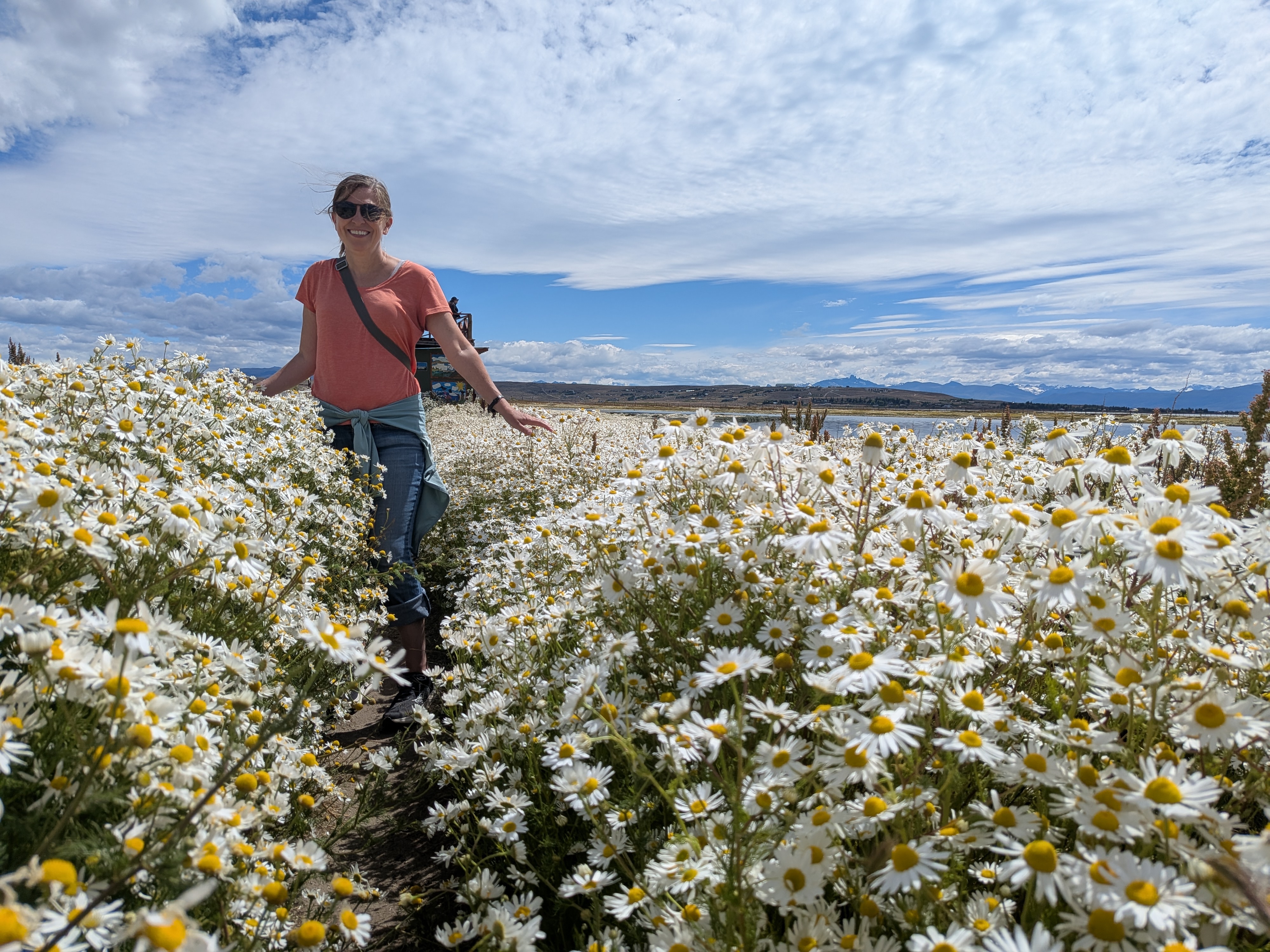
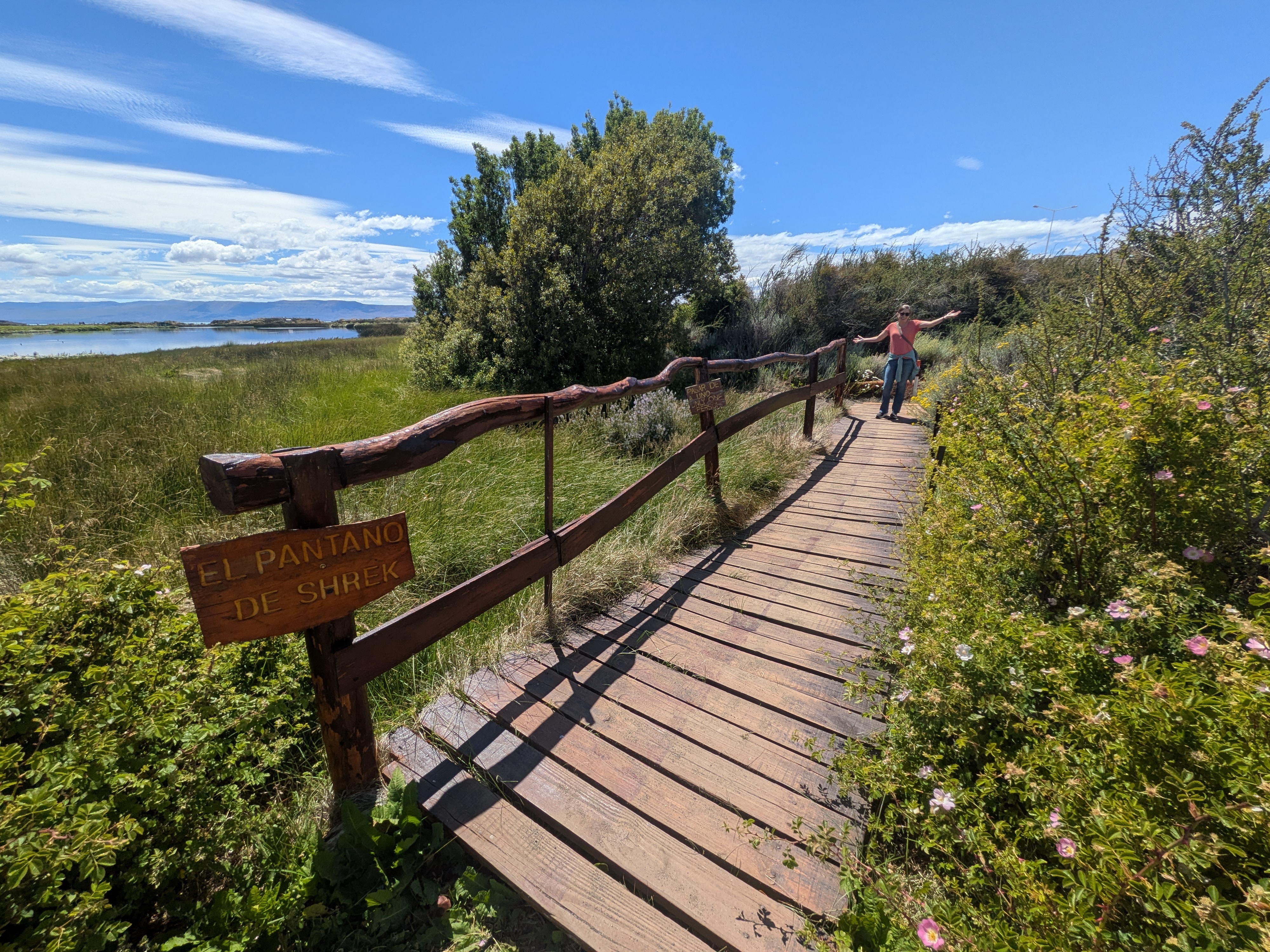
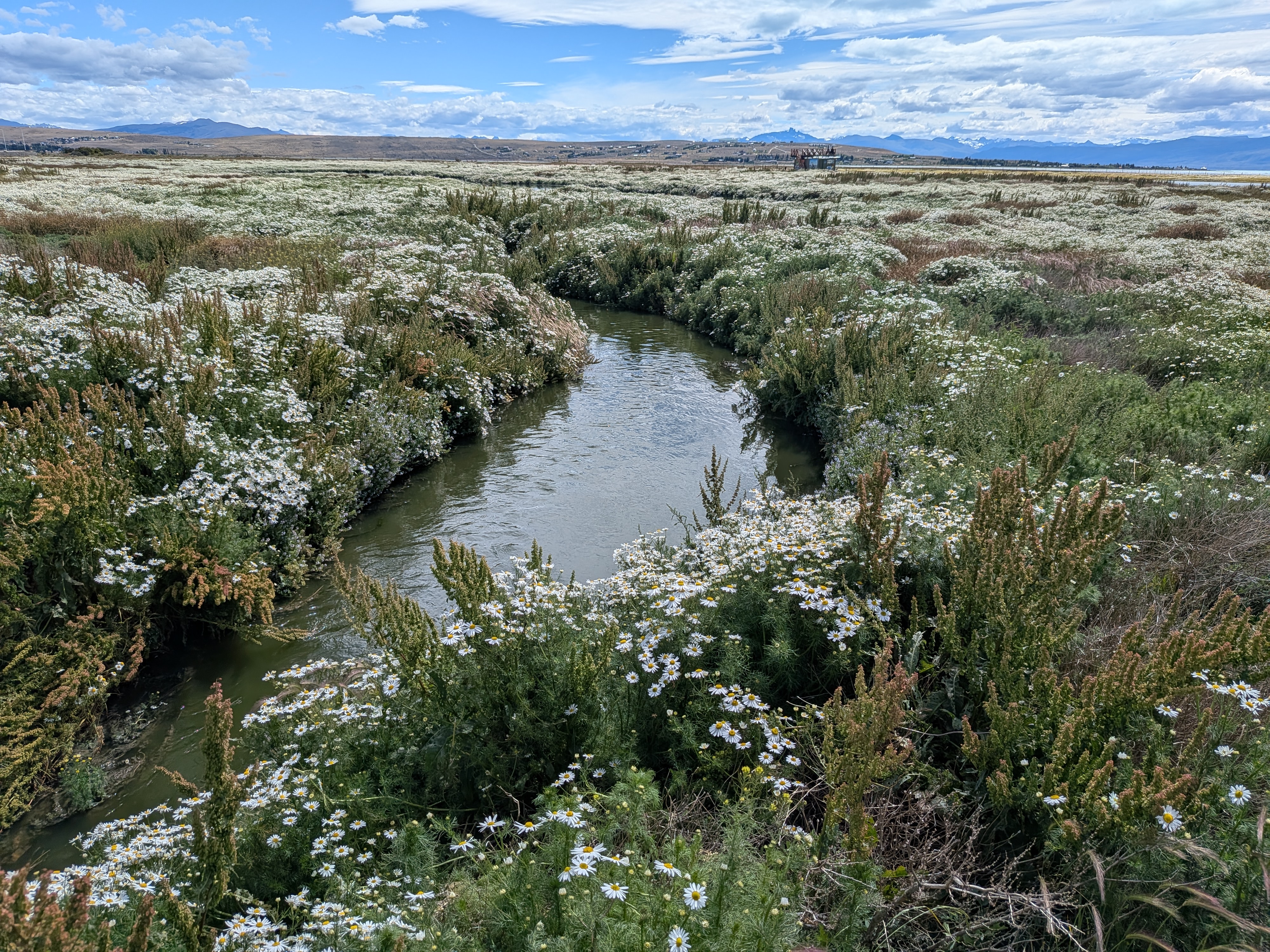
And what we did not see with birds was made up for by the bounty of nature that was blooming all over the location. The fields of wild flowers was just as beautiful to look at as did the landscape of mountains and blue waters that were all over the place. It no longer was about the birds as we strolled through this area. Instead, we just enjoyed the scenery.

The walk was not that difficult either. The whole path is three kilometers long, and basically flat. Most of it follows a wooden boardwalk that they would like you to stay on so that you do not disturb the fauna of the region. Even if you tire out, there are many benches along the way that you can sit down and enjoy the relaxing views while you collect your breath, but that was not necessary for someone who spends a lot of their time outdoors. But for those who struggle with longer walks, this is a great one to take because it is not too strenuous and has a lot to see at the same time.

There is even a place where you can pop out of the wet lands and go to the sandy shore of the lake. It would be a wonderful place to spend an hour or two and the tickets for the location allow for access to the sight for ten days. So if you go down to look at the birds one day, you can come back the next day and enjoy the beach. It is a nice ticket to have if you are spending a couple of days at El Calafate.

There are many things to do in the town of El Calafate and most people spend that time up in the hills and the glaciers, but Laguna Nimez is a nice way to ease yourself into the business that will happen when you start to explore these other places. It is a nice way to get out in nature, and enjoy what this part of Patagonia has to offer. It is definitely worth an afternoon to stroll around the place, enjoy the birds and the scenery.

High in the Andes: My First Outing in Peru

I moved to Lima three months ago, and I have been able to enjoy it quite a bit, but it was time for me to get away from the gloomy skies of the city and see what the mountains just outside of town had to offer. It was Spring Break, so I packed my bags and headed to the second biggest city in Peru, Arequipa. It was not only quite the change in landscape, but also a change in attitude as well. Both places are big tourist destinations, but for different reasons, and it was fun being a tourist in the Andes Mountains rather than living a day to day existence off the coast of the Pacific Ocean. It made me excited for all I was going to see as I learned to live and explore this part of the world.

First of all, Peru is the story of the clash of two long-standing cultures, the Spanish colonialists that sailed over the sea in search of new lands and riches, and the Inca culture at the height of its power as it spread its influence over much of the western part of South America, specifically in the mountainous regions of the Andes. Despite the fact that these conflicts happened centuries ago, the influences of both cultures are present all over this part of Peru.

The ruins of the old civilizations can be found in the mountains still well preserved though nobody has lived in them for a long time. It takes a bit of a hike to get to them, but once there they are worth the visit. You can see the old roads that used to take people from one place to another combined by the stone construction of their homes, walls, and aqueducts. Some of the sights even predate the Inca culture, such as this abandoned town near Yanque which was once the Oyu Oyu village before conquistadors from Toledo came and removed the people to move them over to the now present town of Yanque.

If the small towns and ruins of the Andes are not enough, there are always the bigs city lights of Arequipa that is just over the ridge of the Andes Mountains. Arequipa is the second largest city in Peru, and has about 1 million citizens living there. Though it is a ways off the Pacific coast, it was one of the first place that the Spanish settled when they first arrive, and there influence is all over the older part of the city. You can see it in the plaza in the middle of the city to the large cathedral that looms over that square. The cobblestone streets do allow traffic to drive through them, but at the same time it feels completely walkable as you look at various alpaca shops, restaurants, and souvenir places selling cheese ice-cream. It is not just the language of Peru that was influenced by the Spanish, but there whole towns as well.

Still, it is a blending of both the original culture and the Spanish colonialism that gives Peru its charm. The dresses and dances might remind you of flamenco dancing in Seville, but upon closer inspection the dresses have intricate designs that take from the fauna and boldness of the mountain setting that inspired them. The dance comes with a determination and confidence that could only be found among a group of people who conquered these vast wilderness, and do not necessarily have the grace associated with the dances from Spain. It is its own unique thing, and it is wonderful to watch wherever it might spring up.

The blending of cultures to make a new and unique thing is the basis of much of Peruvian culture, especially their food. I am surprised about the amount of people that know so little about Peruvian food, and in many places in the world, it is almost impossible to find at all. Despite its absence on the world stage, it is one of the best cuisines I have ever experienced. From ceviche to lomo saltado, all of the dish are a culinary delight, and if you are in the mood to try something from one of your favorites, they will put their own spin on it to create something even better than the original. I went to a Thai-Peruvian fusion restaurant in Arequipa called Kao that was a traditional Peru dish, tacu-tacu, with Thai flavors that blended so well together I will never forget the dish.

Peru is the land of numerous surprises and I have only started to explore it. I have been in the big city on the coast and a small section of its mountains. I still have to explore its jungles and river area, and I am sure there are other surprises I am not even aware of yet. Still, I got to roam the majestic mountains of Peru and have been higher above sea level than I have ever been in my life. I have enjoyed the hot springs brought on by the rising steam of active volcanoes. I have gotten to see the graceful flight of the condor, the second largest bird in the world.

I have enjoyed my small exploration of this country so far, and I cannot wait to see what else it, and the rest of this region of the world has to offer. I hope you join me in my journey, and hopefully, I can inspire you enough to make it down here yourself. You will be fascinated with what it has to offer.

Until next time, keep exploring the world and see how we all come together to create something new.