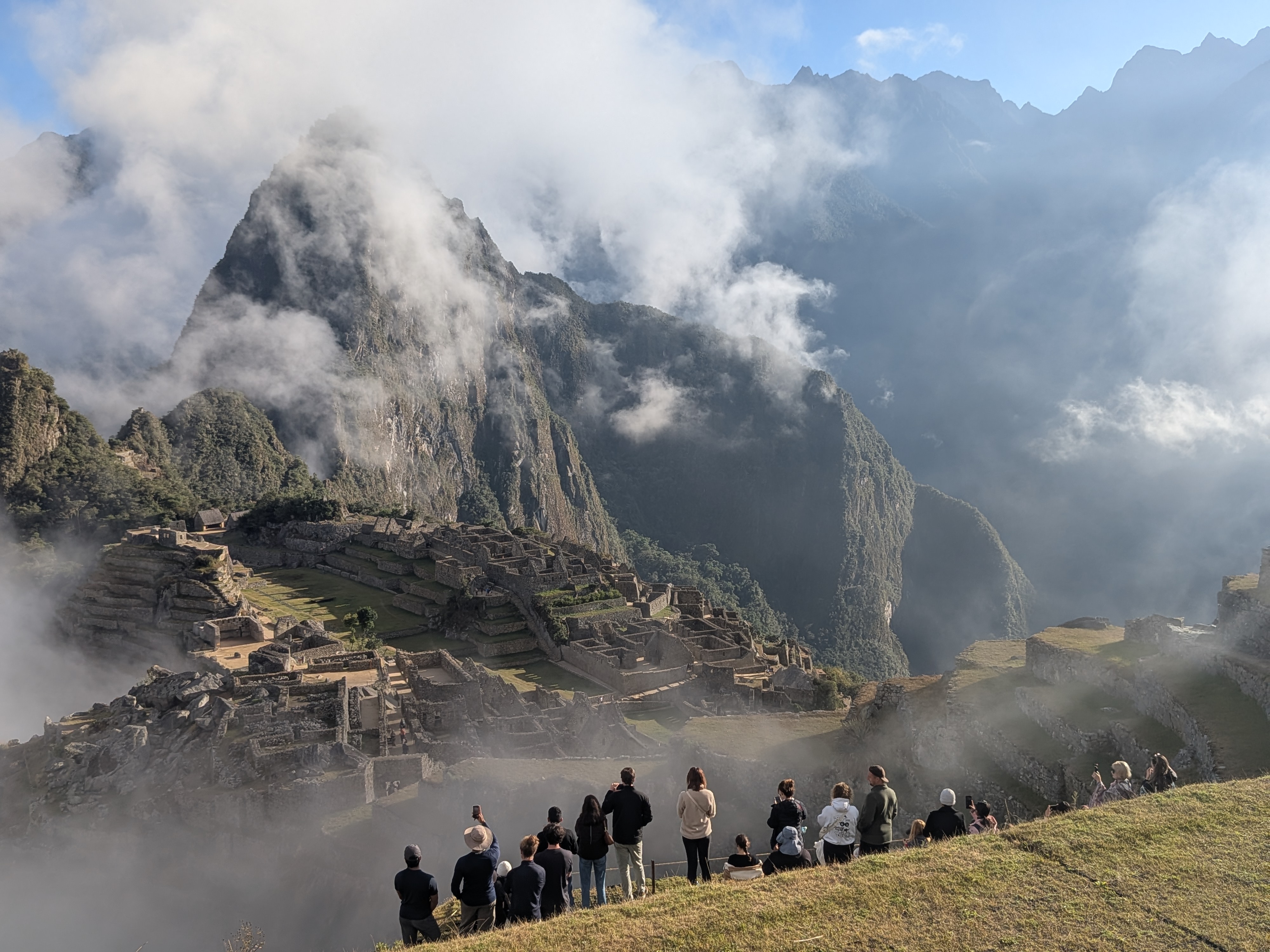
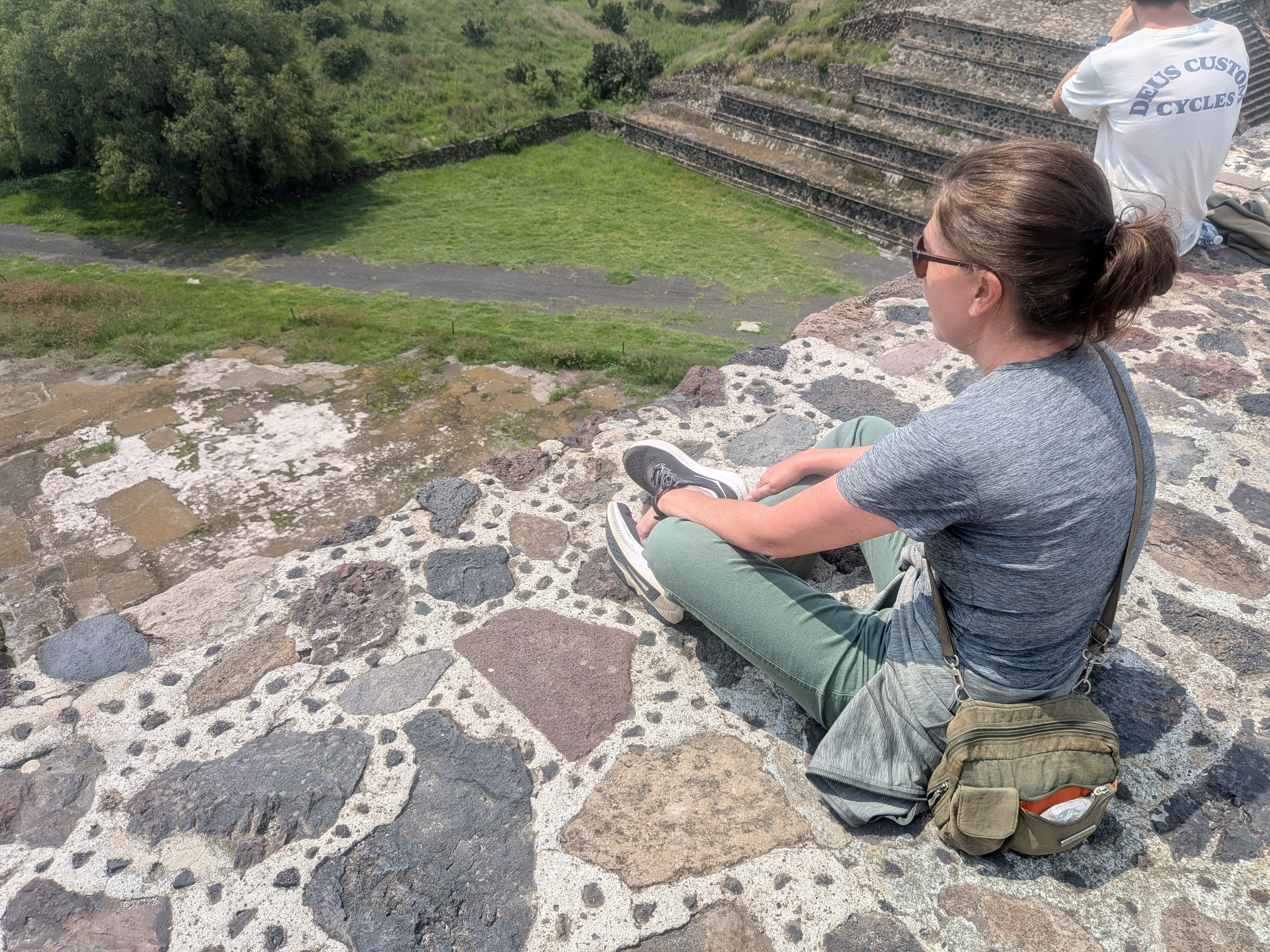
We have hiked to the summit of this peak, Through hanging clouds, early in the morning Just to see what the rising sun does seek, And the sights that we wait to see forming. The mist will cling to the top of the mountains, Fighting against the heat of this near star, But as the day progresses, what remains Is wisps dancing in the air for afar. Below is revealed the greatest sight, A town hidden from civilization Which, at one time, reached the greatest of height, But now hides in history’s rotation. The only way we know how it begun, To speak of memories with the day’s sun.
Every tourist location has its must-do locations; otherwise, you will leave feeling like you really did not experience that place. For Mexico City, it is a location about an hour drive outside of the city, the Teotihuacan Pyramids. This ancient city predates the Aztec culture that is so associated with this part of the world, and it is just as impressive as any of the other ruins that people can visit in Latin America.
Sadly, not a lot is known about this culture except for the fact that it has been around from 200 B.C.E. and that the Aztec people discovered this abandoned location when they first settled in what is now Mexico City. Despite the fact that the history of the place has been pieced together from what archaeologists can determined based on what they find while excavating the site, it was, at one time, an impressive civilization, and this city took up an area about 28 square kilometers, much of which is still taken over by the forest that surrounds this area.
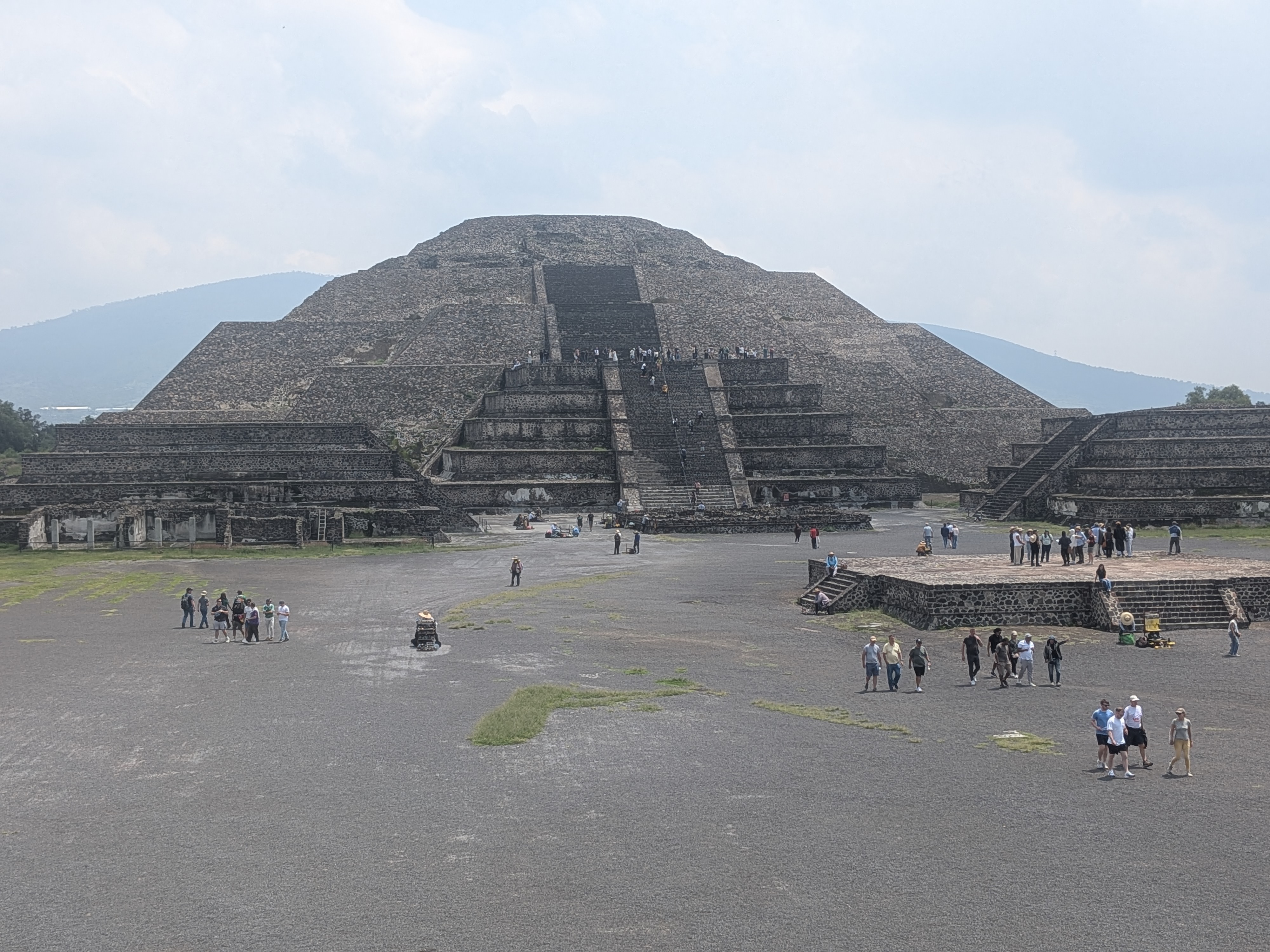
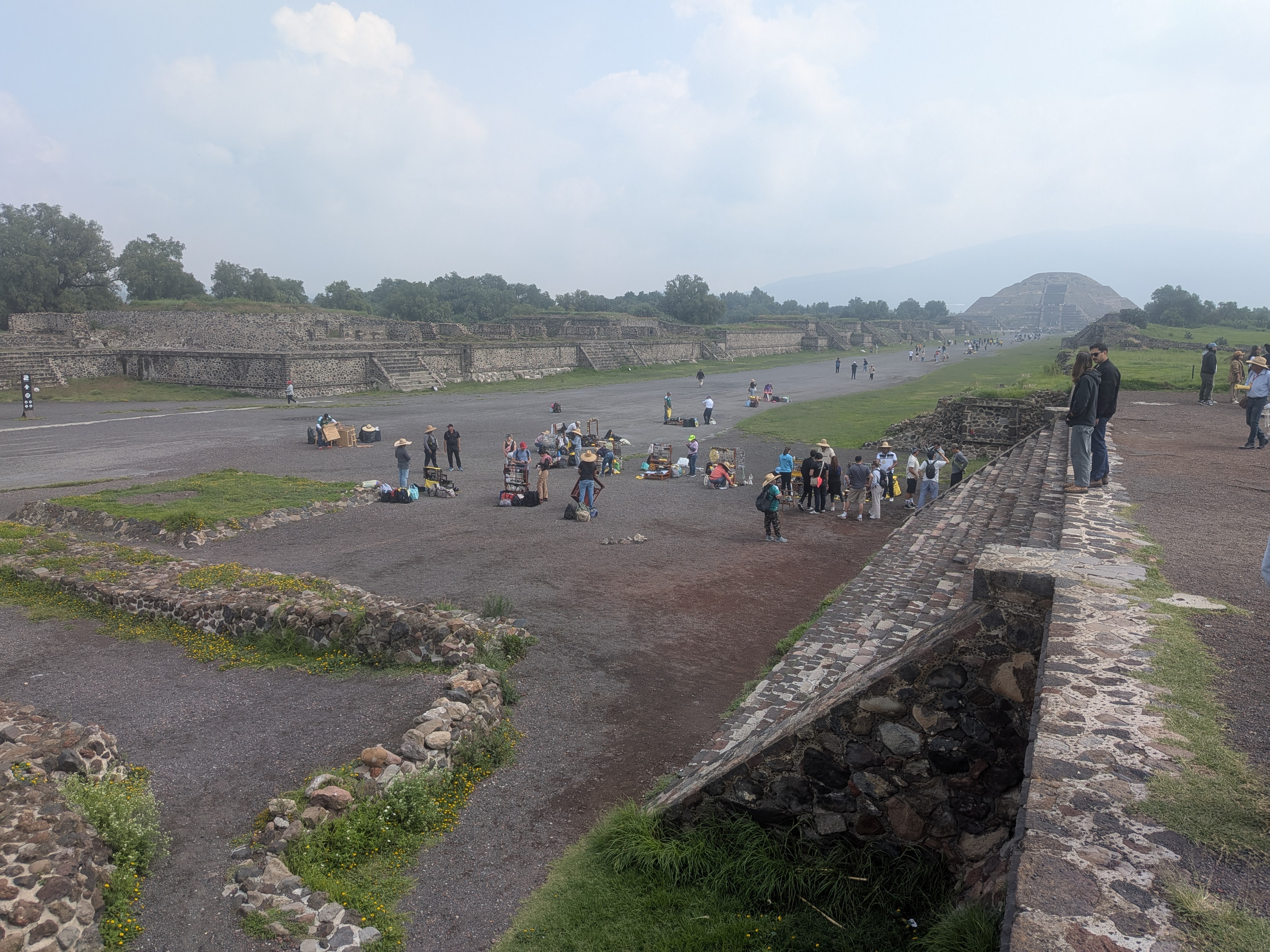
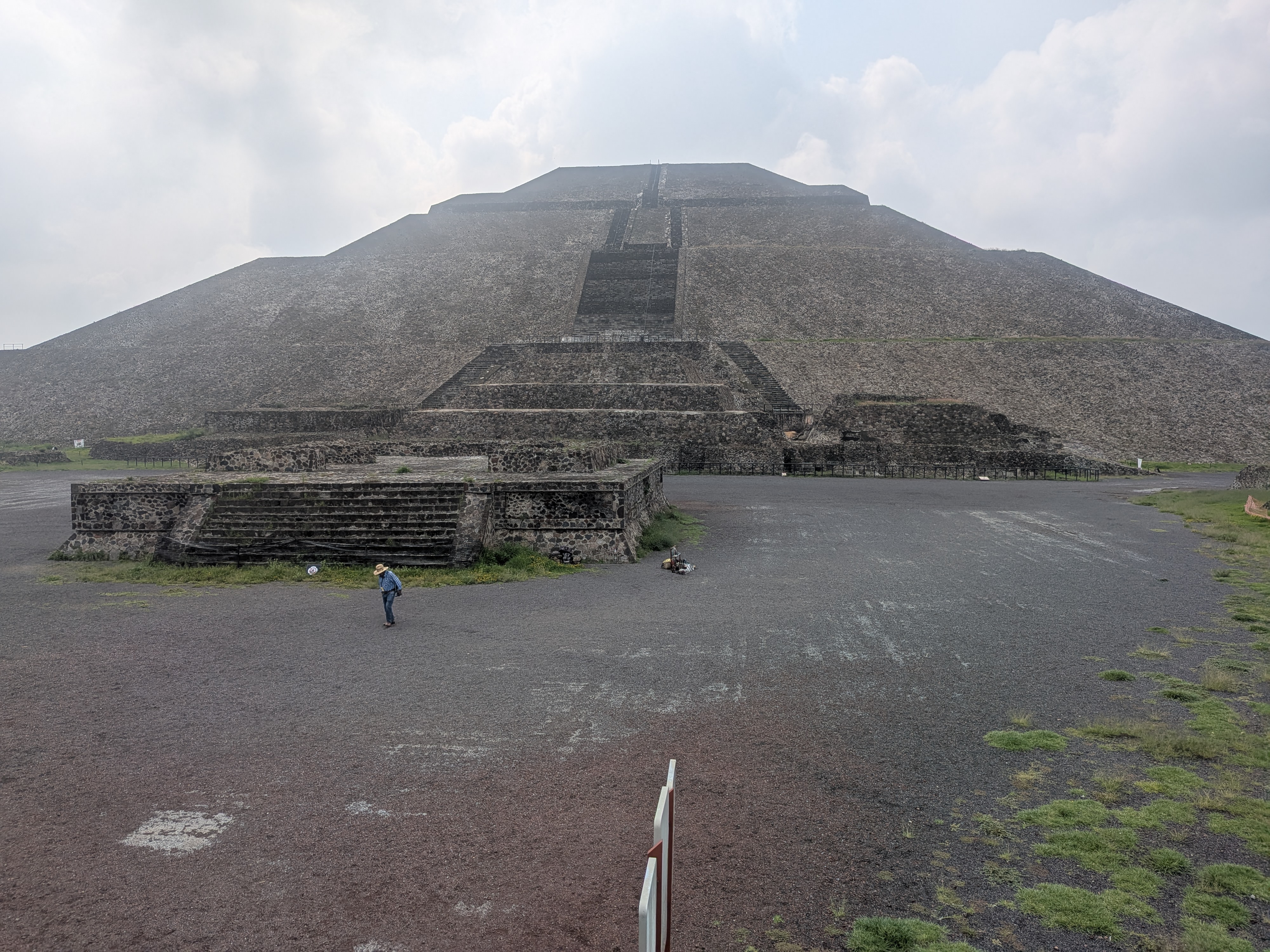
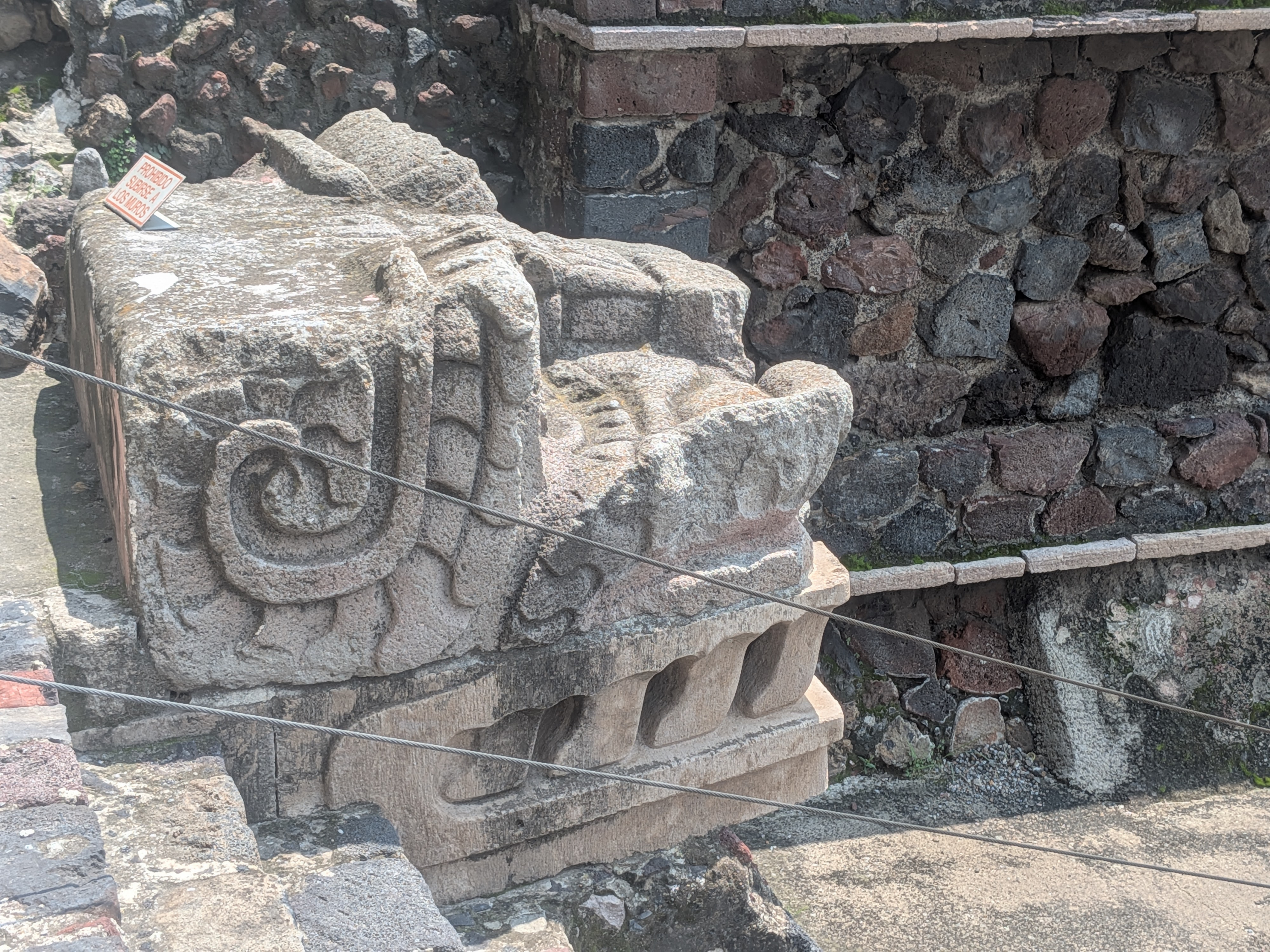
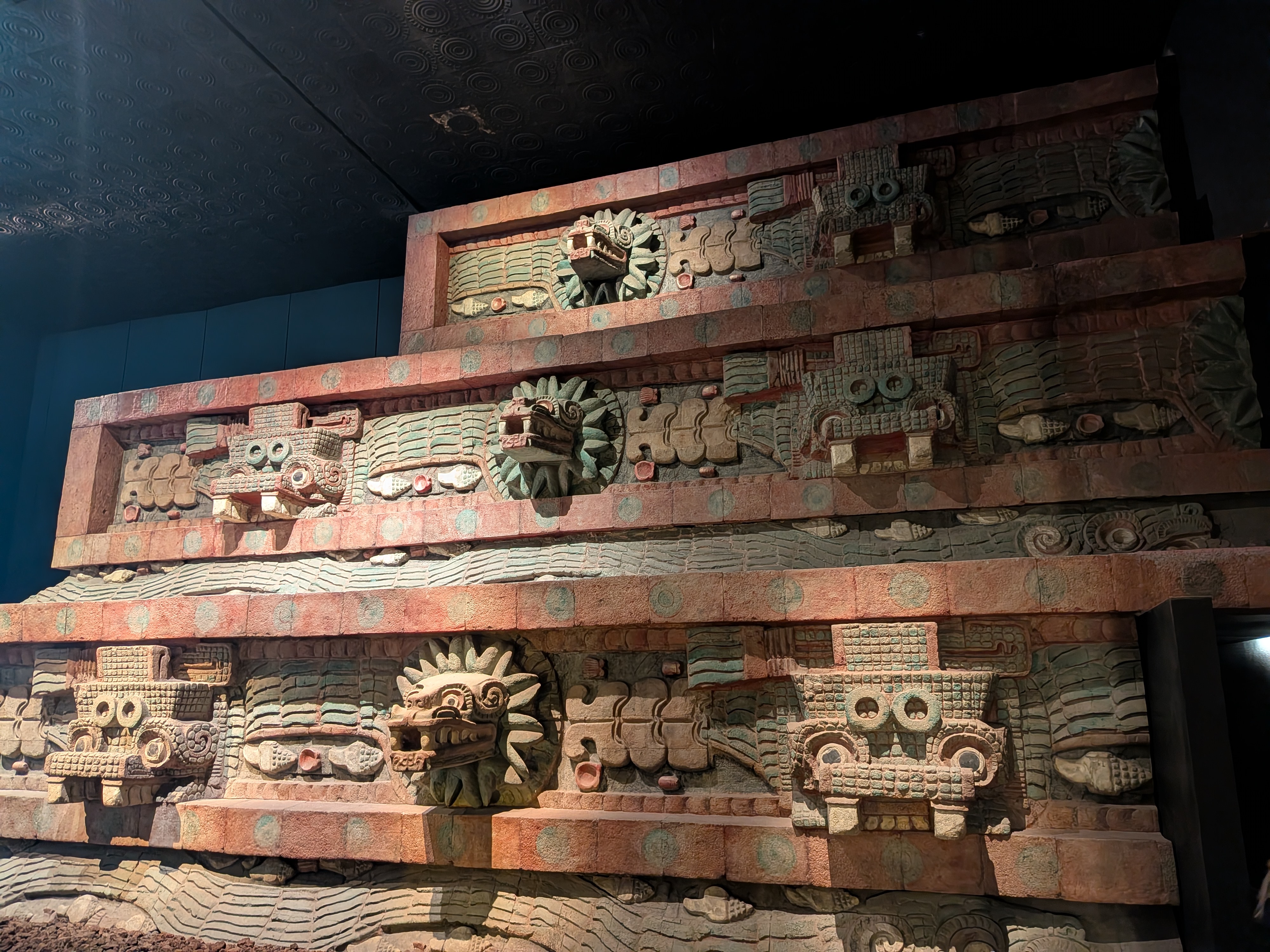
Though they know the size of the original city, they have only recovered an area that is six square kilometers big. The part that they allow visitors to see is by far the most impressive of what has been uncovered. This included the two main temples, the temple of the sun, and the temple of the moon with the path between them also being uncovered. This major thoroughfare would have been where all of the important people of the Teotihuacans would live, but today, it is known as the path of the dead. This is because when the site was first being excavated, archaeologists believed that many of the structures that were left behind were tombs, but this is no longer the believed theory. Still, the name stuck, so like many other sites in Latin America, it is still what it is called today.
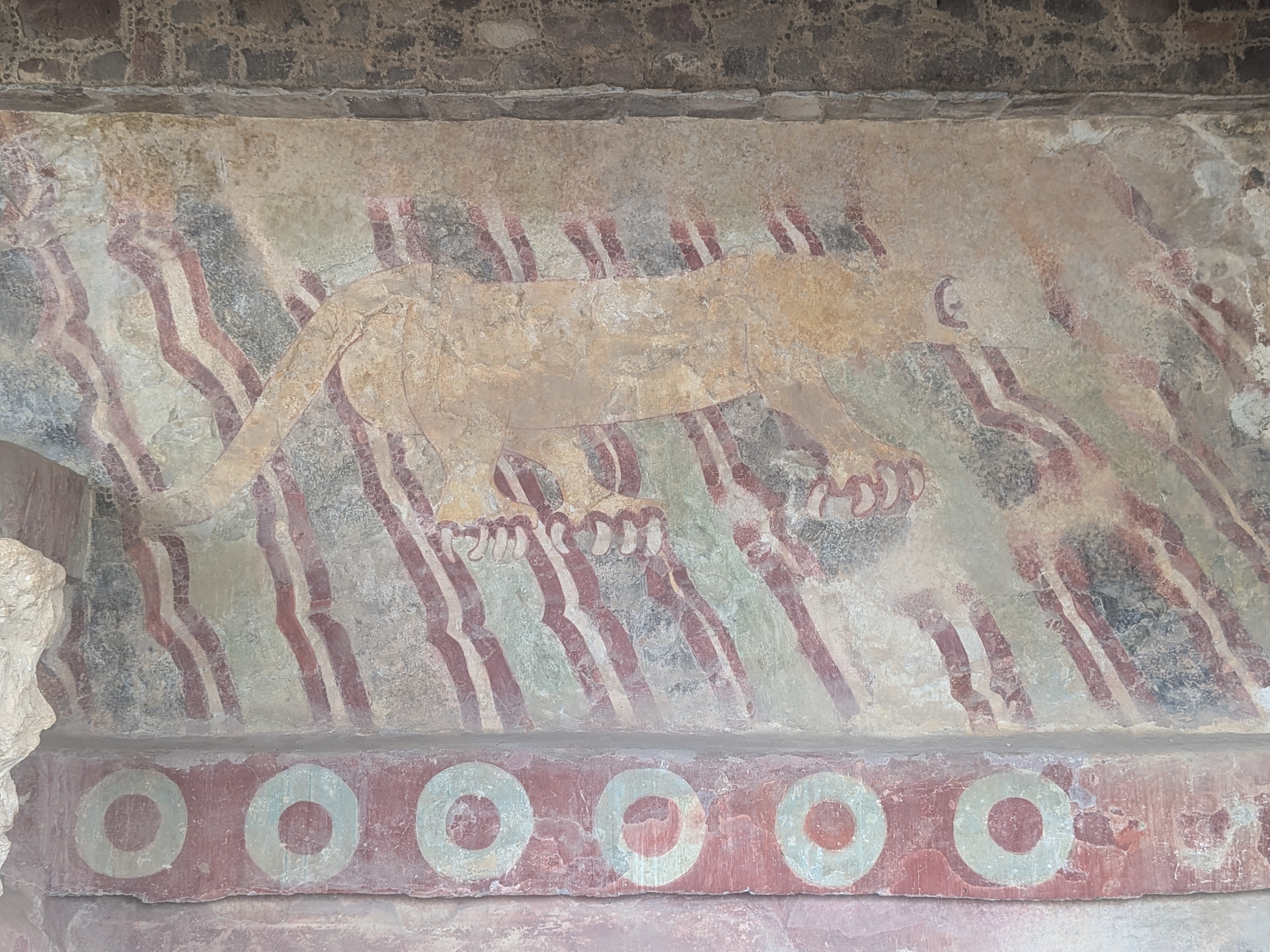
The path is just as impressive as the temples that it connects. The smaller steps that were used for the houses leads one to imagine what it would have been like to have lived in this part of the world at the height of its civilization. There are also a well, and murals along the path that if you know where to look, give even more hints of what it would have looked like back in the day. We were lucky enough to have a demonstration of how the Teotihuacans made their paints from the various materials they found in the area, and then how that could be used to make these paintings. It added so much to the experience, and only comes from having a guide to take you through the sight.
I definitely recommend having a guide that will take you through the sight. There are a lot of secrets held in these ruins beyond the murals and names, and the sight does not have any signs that explain what you are looking at. Some companies will even arrange for pickups at certain places around Mexico City, drive you out to the ruins, take you on the tour, and make sure you get back. The whole experience takes no longer than four hours to complete.
This part of Mexico is rich with history, and ancient cultures just waiting for you to explore, and it is a great way to spend a day if you are staying in Mexico City. Though it is a little out of town, and there is some hiking involved, it is mostly flat, and not very long. The hardest part was walking up the Temple of the Moon which has massive steps that you will have to climb up, but it only take a minute or two to make it all the way up. It gives you some amazing views of the whole place from up there, and makes you feel like at one time you could have been a part of the Teotihuacan cultue.
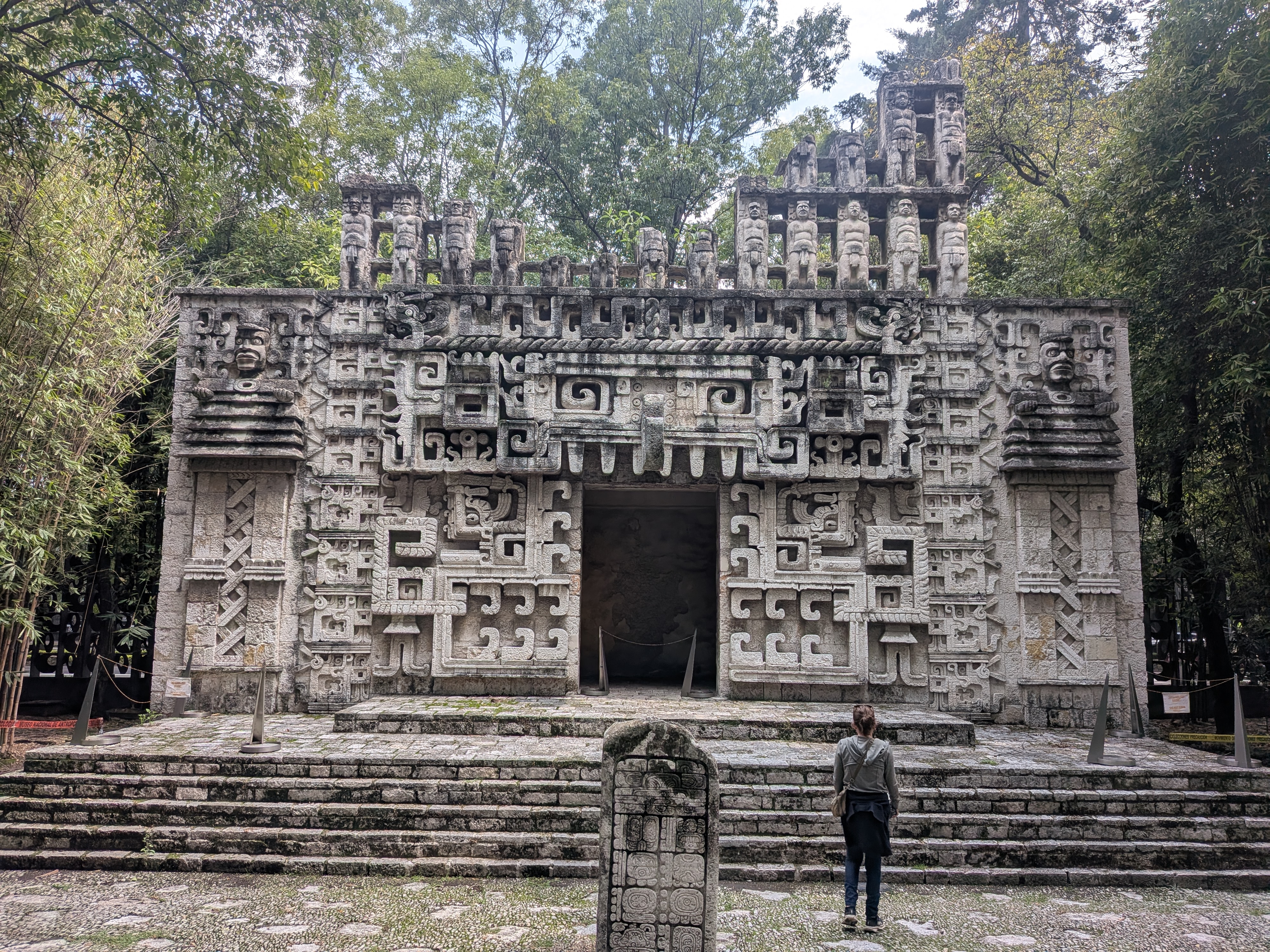
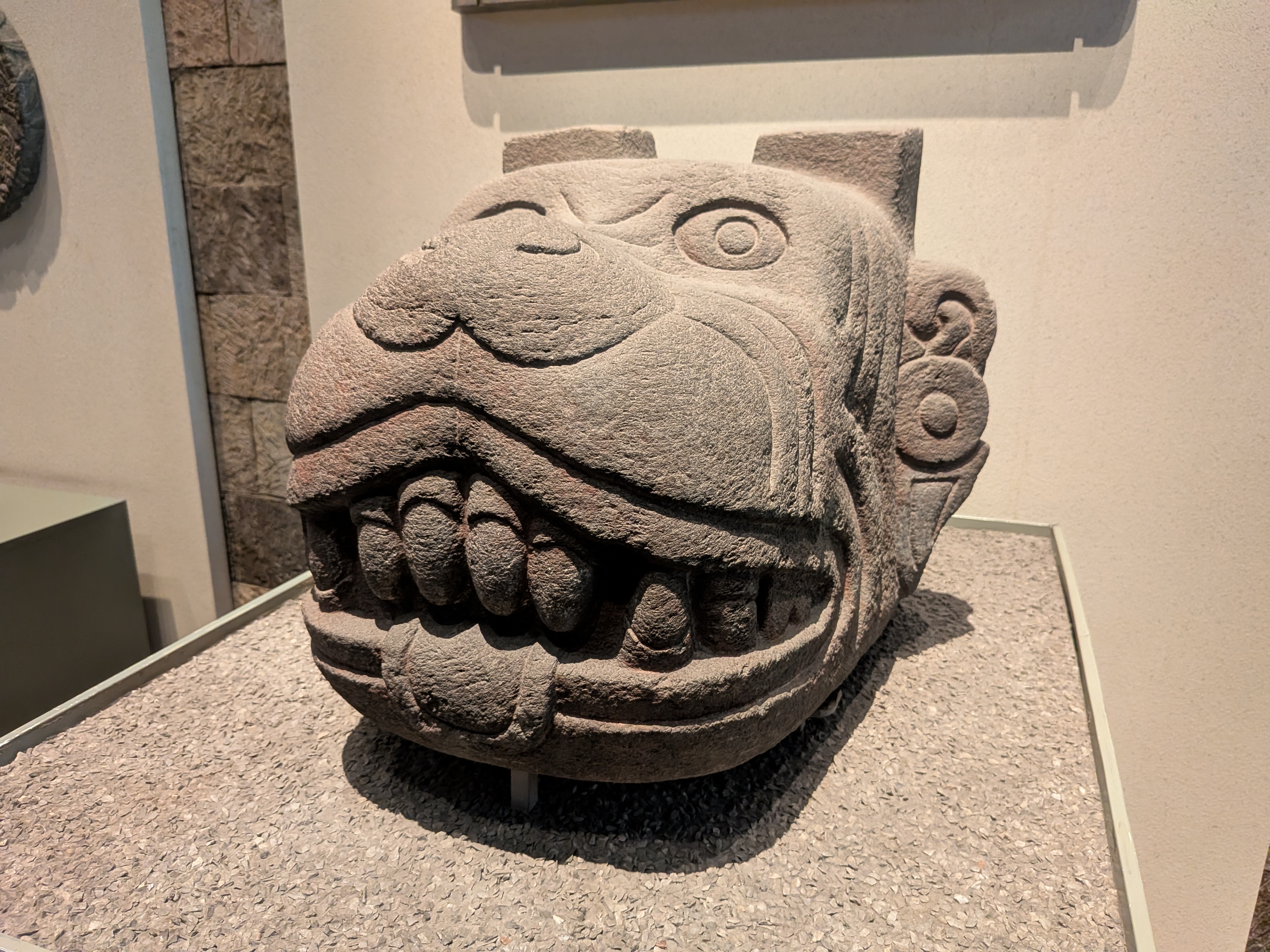
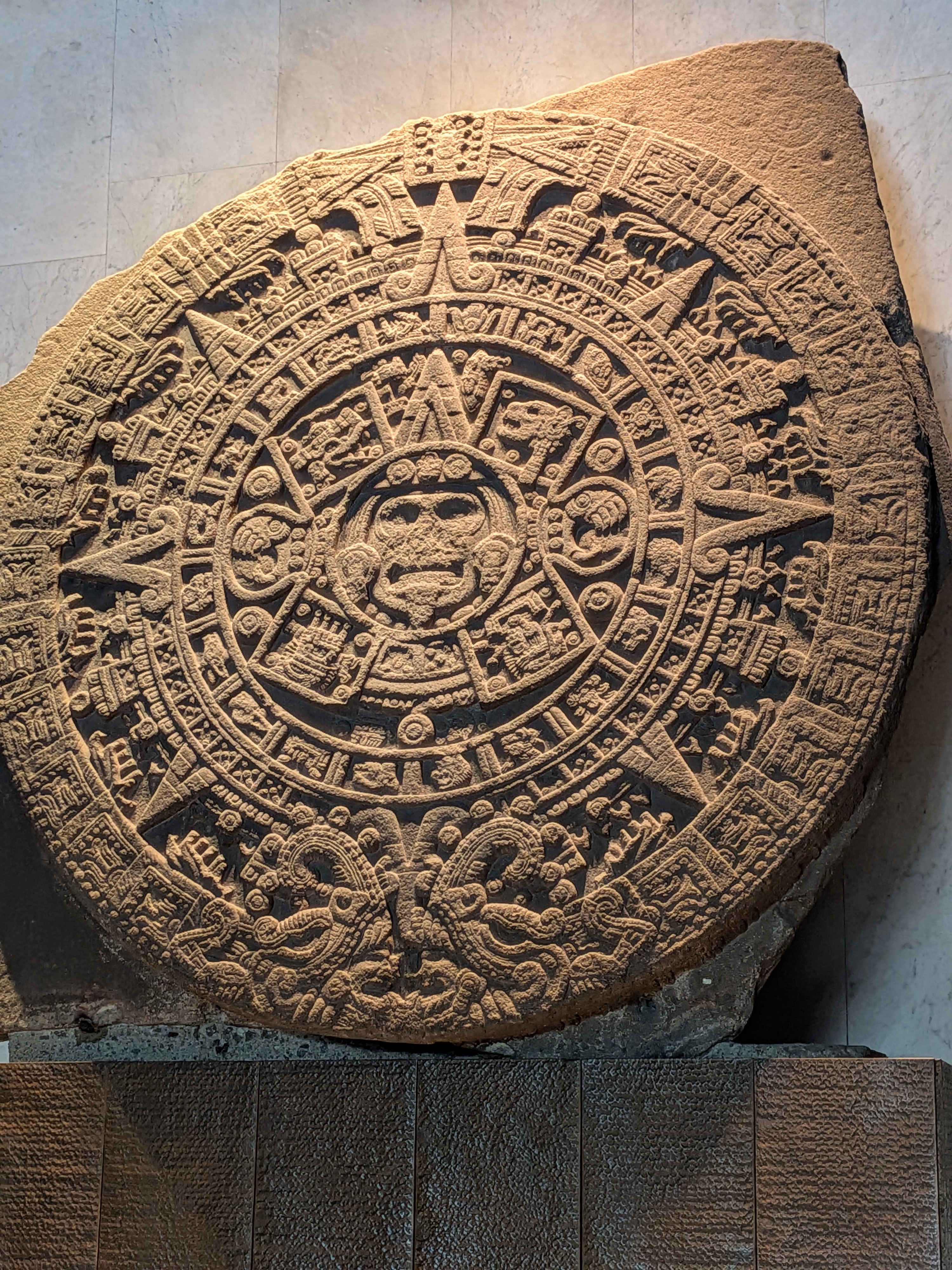
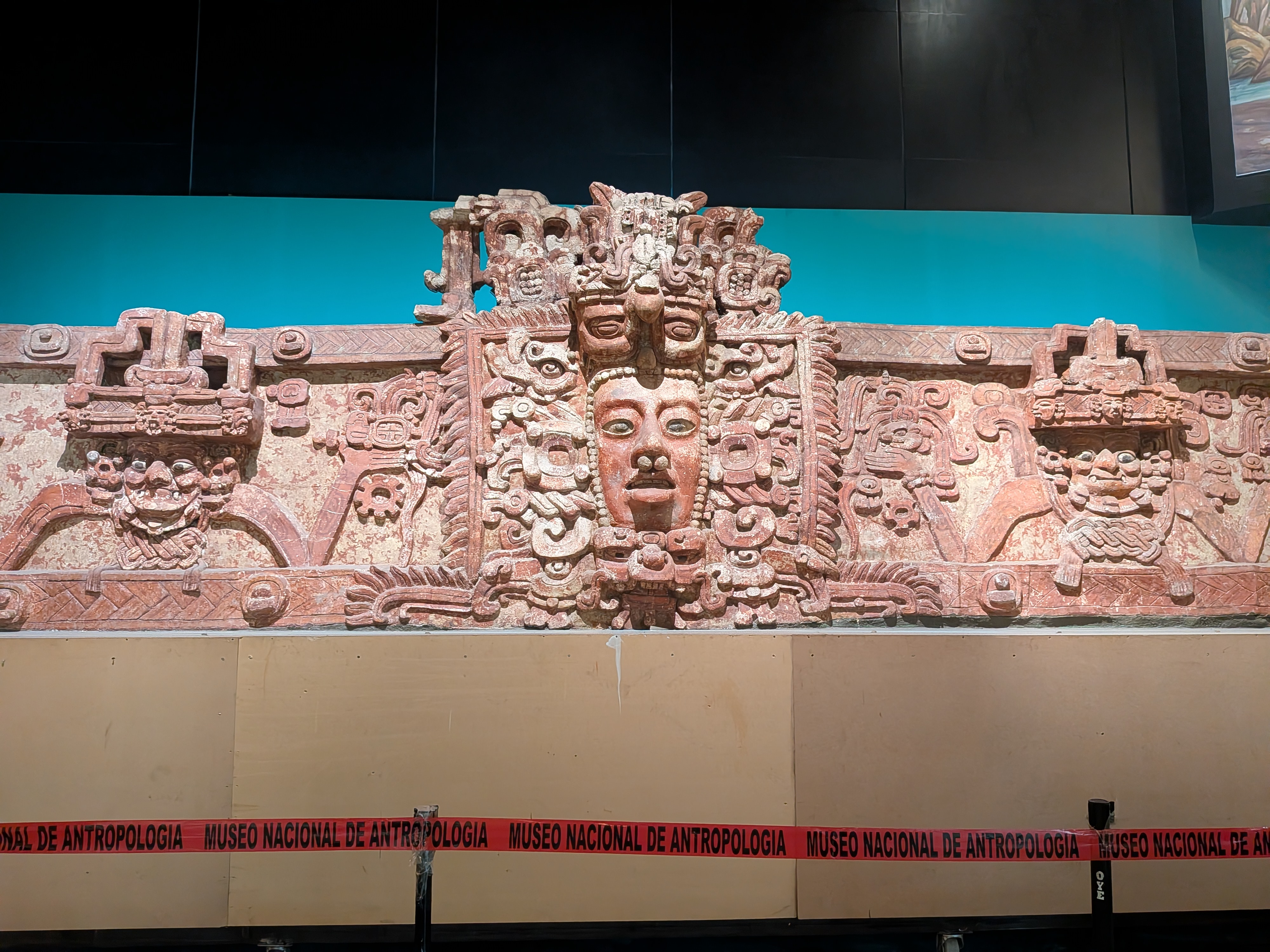
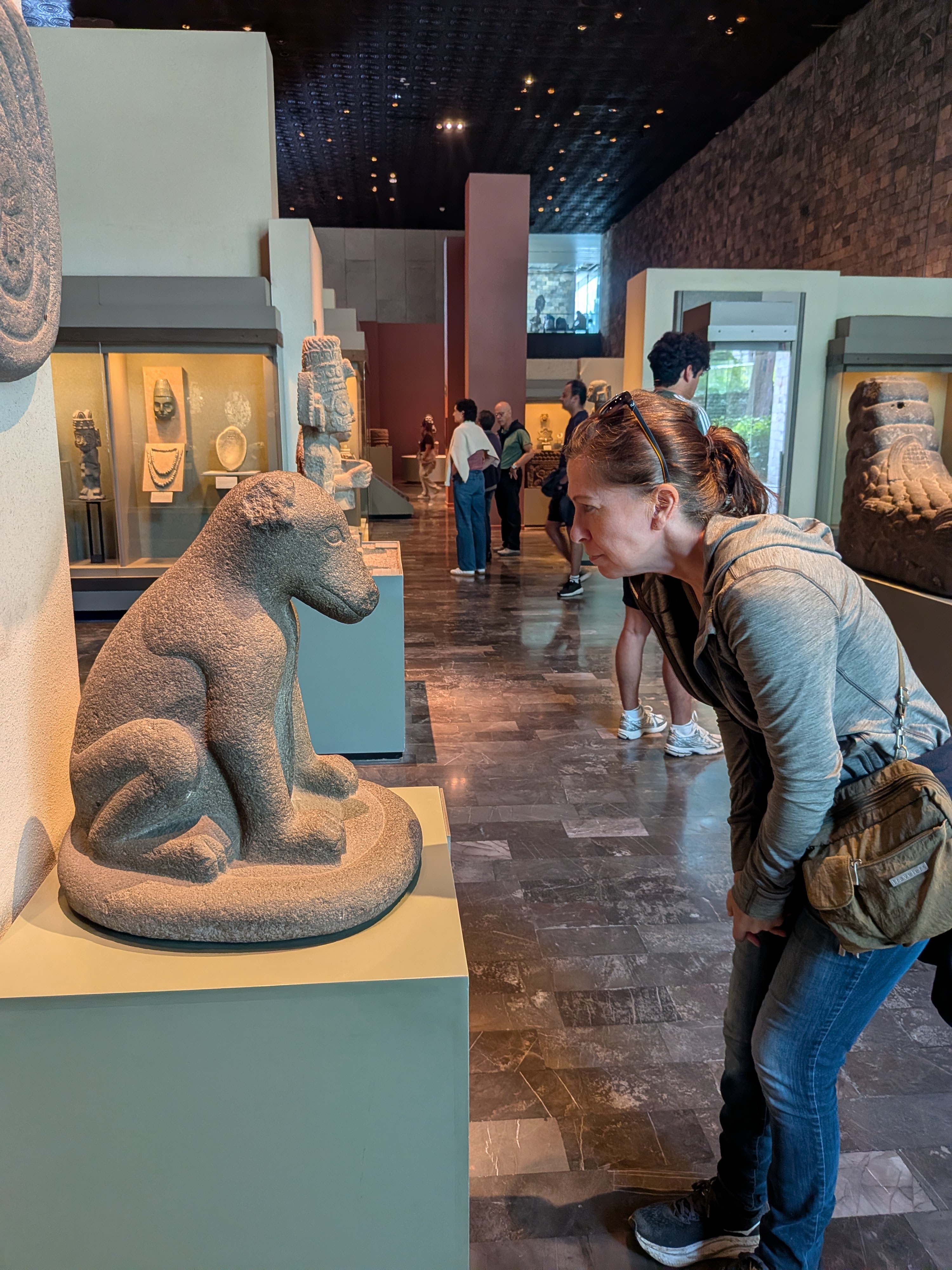
When people think of Mexico City, they often think of the great food that is available there, and then they think about the various civilizations that span centuries and makes this one of the most in interesting cultures that the world has to offer. There are ruins both inside and outside of the city that offer a glimpse at these civilizations, but the country was smart enough to gather the most important antiquities and put them together in a museum that allows people to explore these cultures and learn a little about what mankind knows about them. This place is found on the edges of North America’s largest park, Chapultepec Park, and is open six days a week from 9AM to 5PM called the National Museum of Anthropology.
To start off with, this museum is huge and holds a massive collection of mesoamerican pieces that cover cultures from the Mayans to the Aztecs to the Teotihuacans and many more. It is not as large as the British Museum but all of the pieces on display here actually come from the region that the museum is in, and does not take the treasures from other parts of the world to put on display. Though not as big as the British Museum, it would still take more than a day to cover all that this place has to offer. You could probably do it if you wanted to, but you would be exhausted afterwards and everything would blend together in the end, not allowing you to get anything out of the experience that you could if you just took your time instead.
I would recommend just picking and choosing what you want to look at instead of trying to take it all in. The museum is laid-out exceptionally well which makes finding what you are looking for easy. The civilizations are divided up into separate rooms with the main descriptions of what you are seeing written out in both Spanish and English. Unfortunately, when it gets to the more singular piece details, they are usually written in Spanish, so you better brush up on that language if you want to know all the in-and-outs of what you are seeing. But still, there is plenty enough English if you do not know Spanish that you will be satisfied with the knowledge that you will gain visiting here.
I spent most of my three hours in the museum in the rooms about the Aztecs and the Mayans. It is impressive the amount of pieces that were spared from the Spanish colonial period as they went through destroying much of what they had to offer the world considering it blasphemous to their religion and thinking. I am also amazed at how much can be learned about the culture by looking at these pieces because, especially with the Aztecs, much of it was lost due to the conquistadors and priests that came over from Europe. They had spent a lot of the time destroying the stone statues believing that they were blasphemous towards the Catholic religion. I am grateful that there was such a vast collection out there that I was still able to view so much of it, but it also makes me wonder what treasures were lost.
If I have any complaint about this museum, it is a minor one and it is more of a reflection of who I am rather than what this museum has to offer, and that is with the gift shop. Most of the time, I believe gift shops to be a waste of time filled with a bunch of silly trinkets that don’t really mean anything, and this museum keeps up with that tradition, but I still go and visit them anyway to see if I could find a book that would help me learn more about what I just saw. I have found some really good books all around the world that have helped me dig deeper into the cultures I am exploring, and there were some books that looked really good in this museum’s gift shop, except they were all in Spanish. My Spanish is not strong enough yet to be able to read these more complex texts, so I wish that they supplied some books in English so I could have known more about the Aztecs and the Mayans. Still, I should be able to find this information elsewhere, and like I said, it is a small complaint about an otherwise wonderful experience.
Even though it might not be on your radar if you are visiting Mexico City, it is a place that you should consider adding to your itinerary. It is something that is truly a part of the area, and explores its long history. The National Museum of Anthropology is easily one of the best museums I have ever been to, and worth the visit.
Sitting on a whole city block in the middle of the old part of the city of Arequipa sits the winding streets and bright walls of one of the oldest European claims in South America, the Santa Catalina Monastery. This is a must-see sight if ever visiting Arequipa, and when you do, plan to take a couple hours to explore all that it has to offer. I would also recommend that you make it one of the first things you do in the morning to avoid the heat of the day and the large crowds that eventually make their way to this place. It is nice to be one of the first people of the day to walk through the location because it will make you feel as if you have the place to yourself.
The monastery is a nunnery that is still in use today even though it no longer boasts the number of nuns that it held during colonial times, and it is a rare sight to see the nuns who live in the corner of this historic sight. At its height, there were about 500 people living on the grounds. Some of the women that lived here were given their own rooms if they came from a wealthy enough family to pay for this luxury; whereas, many of the other women found themselves to be a part of the big dormitory that sits in the middle of the monastery. Even with all of these people in this place, it would still feel rather large and it has easily enough space to accommodate all of them.
Not every woman that ended up in the monastery ended up becoming a nun. Many of them arrived when they were as young as twelve years old, and they were brought here to learn from the nuns, and prepare for a life outside of the monastery. They would live beside the nuns, and learn from them. As I was walking around the grounds, I found hints of this lifestyle in many of the corners, and the place itself reminded me of a large campus where I could imagine students, and nuns alike moving from place to place as they completed what needed to be done.
One of the most interesting spots on the grounds is the place where they did laundry. It was based upon an irrigation design that was brought over from Africa. Water would constantly flow down this little groove in a wall, and when someone wanted to divert it into the basin that they were using, they would place a rock in the path of the flow to have it go through the pipe that would lead to their basin. These basins were made out of old wine pots that were used to ferment the beverage. They could no longer be used for wine, but they made the perfect sink for washing clothes.
There are also magnificent gardens on the grounds that they could tend to so there could be some beauty added to the place. This is even more impressive due to the fact that the monastery sits in the middle of a high desert where a patch of green is hard to come by. Still, the nuns were able to create this zen paradise in the middle of this kind of environment.
If that was not the place where they wanted to spend their time, there was also the fountain which could be found in the middle of everything. I was told that it was the place where they would go to get their water, but I did not think that the green water that was found in the fountain while I was there would be worth drinking. Despite that, if you look closely enough into the water, you can find small koi fish swimming around in it. They are not as large as some of the koi ponds I have come across in my travels in Asia, but it was a nice addition to this little spot on the grounds.
Santa Catalina Monastery is a great place to visit, nestled in the heart of the old part of the city. It is easy to spend a morning there after breakfast, and you will have explored it thoroughly enough just in time for a great lunch in the neighborhood. It is worth walking through with a tour guide and they are only ten soles, or two and a-half dollars per person for an hour guided tour. They do have both English, and Spanish guided tours, and I think that I even heard French while I was being guided around. They have the ability to point out the nuances that would be missed if you went by yourself.
Otherwise, until next time, keep getting out there and see what the world has to offer.
Cairo is one of the oldest cities in the world. It is surprising that what is considered the oldest part of town is still pretty modern in its overall history; this is just the part of the city that has survived the longest. Despite its age, it is one of the places that brings in tourists, pilgrims and curious because it is the Christian part of town, and boasts some impressive old Coptic churches that have their own history that adds more to a city that already has a lot to offer.
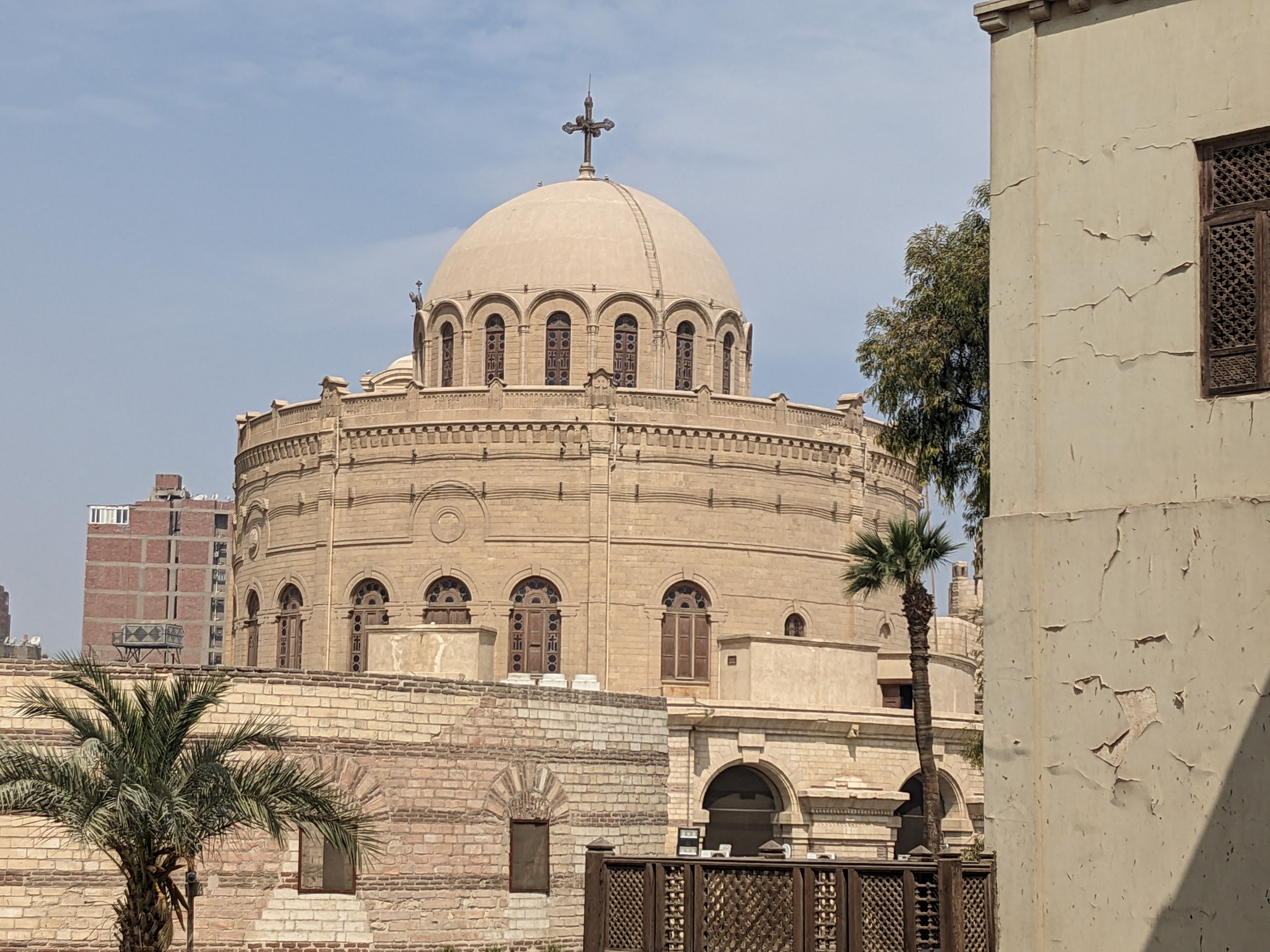
The most visited of these churches is the Church of St. George. It is a Greek Orthodox church that looms over the whole neighborhood, and its history emanates from the site. This is the place where St. George was held, and tortured for seven years as they tried to have him denounce his faith in the Catholic church.
The church holds many of the torture devices that were used to convince St. George of the conversion to no avail. They are housed in the same cell where he lived for the seven years, and even include the chain that was used to keep him captive. The chain is the main attraction for visitors here. It is said that if you hold the chain, and say a prayer that God will hear and grant this request. There is always a line of people waiting for their chance to hold the chain.
The history of this part of Cairo goes back even further than St. George. Another church that gathers a lot of people is Saint Sergius and Bacchus Church. It is told that in a cave underneath the altar there is a cave where the Holy Family stayed when they had escaped King Herod’s reign and voyaged into this region. Many people come to this church as well to hop into the line that allows them to walk through the cave and take quick pictures of what their lives might have looked like back then.
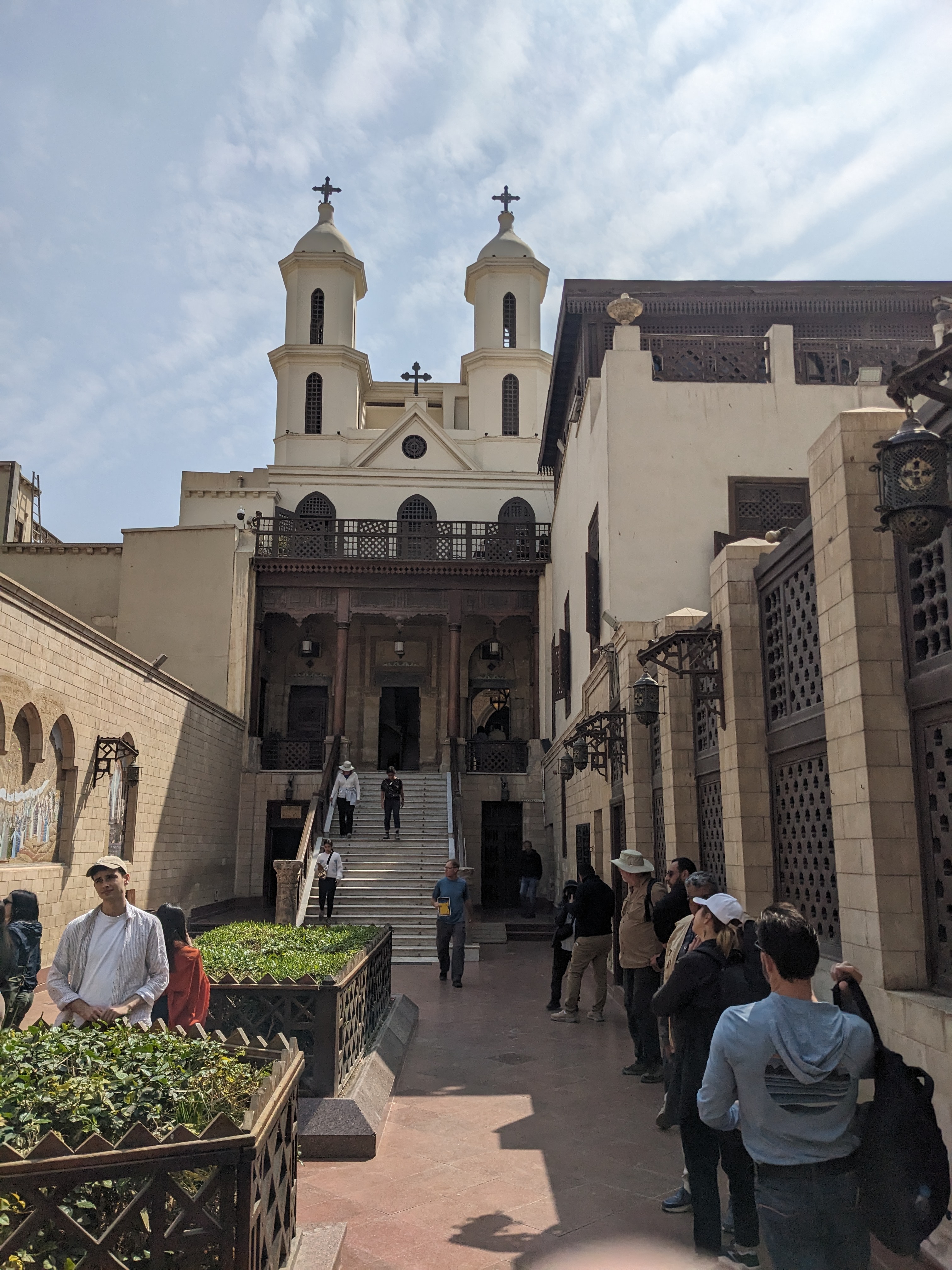
The hanging church also brings in many visitors. On the outside, it does not look like much, a plain church that sits on top of many steps in the middle of town. What many people do not realize when they first enter the church is that there in no bottom floor. Underneath the church is another street with a whole group of visitors passing by without ever knowing that there is a church above them. It is an interesting architectural marvel that once you are inside you can see why it has earned the name the hanging church.
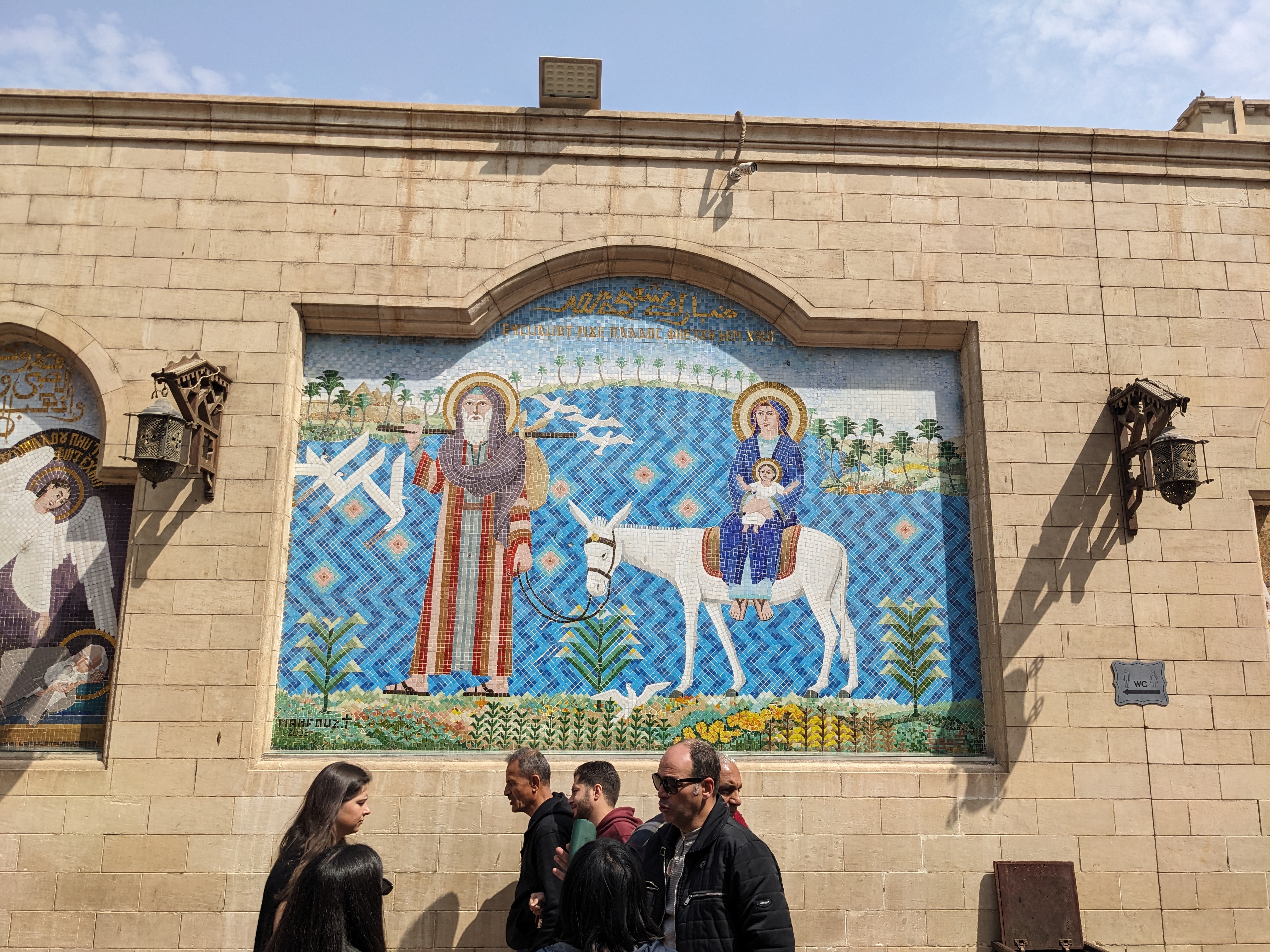
The courtyard of the church also has some beautiful mosaics to look at. Though they have been a recent addition to the area, they still add to the feel of the place. Even though they feel a little out of place in Egypt, it is interesting to know that there are so many of them in the Coptic part of the city.
It is interesting to see how much of Jesus’s story is present in the streets of Old Cairo. It is as much a part of the cultural of Egypt as the pharaohs, and adds another layer to this country. It makes traveling to the Coptic churches in Cairo just as much of a tourist destination as to the pyramids. Make sure that you spend at least part of your time in this historic part of Cairo.
I have been many places in the world where history is around every corner, but I have never been to a place like Egypt. The history that is in this country pre-dates many of the places I have visited, and the representation of that history is so grand in design that it is hard not to feel overwhelmed by it. There are many historical sites that people visit when out here like the pyramids, and the ancient city of Thebes, but Egypt has recently opened a new museum that will quickly rival those traditional spots, the Grand Egyptian Museum.
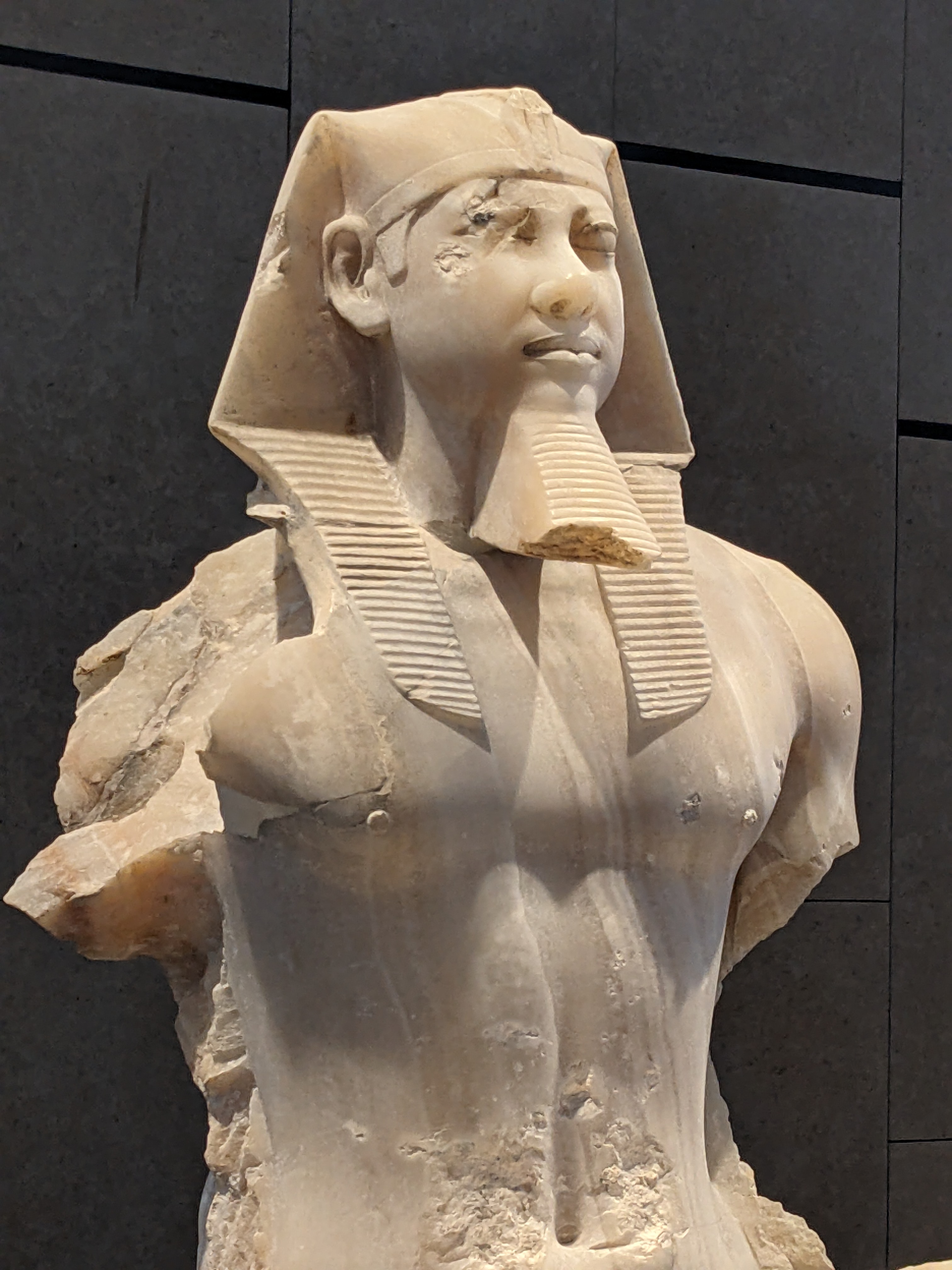
The building itself is an impressive structure located in Giza in the shadows of the pyramids. It has slowly been being built starting in 2006 when they moved the impressive statue of Ramses II which used to be located in the center of Cairo. Since then, they have opened up other sections of the museum over the course of the next couple of decades, and as of the writing of this in 2025, there is 80 percent of the planned museum opened up to the public right now.
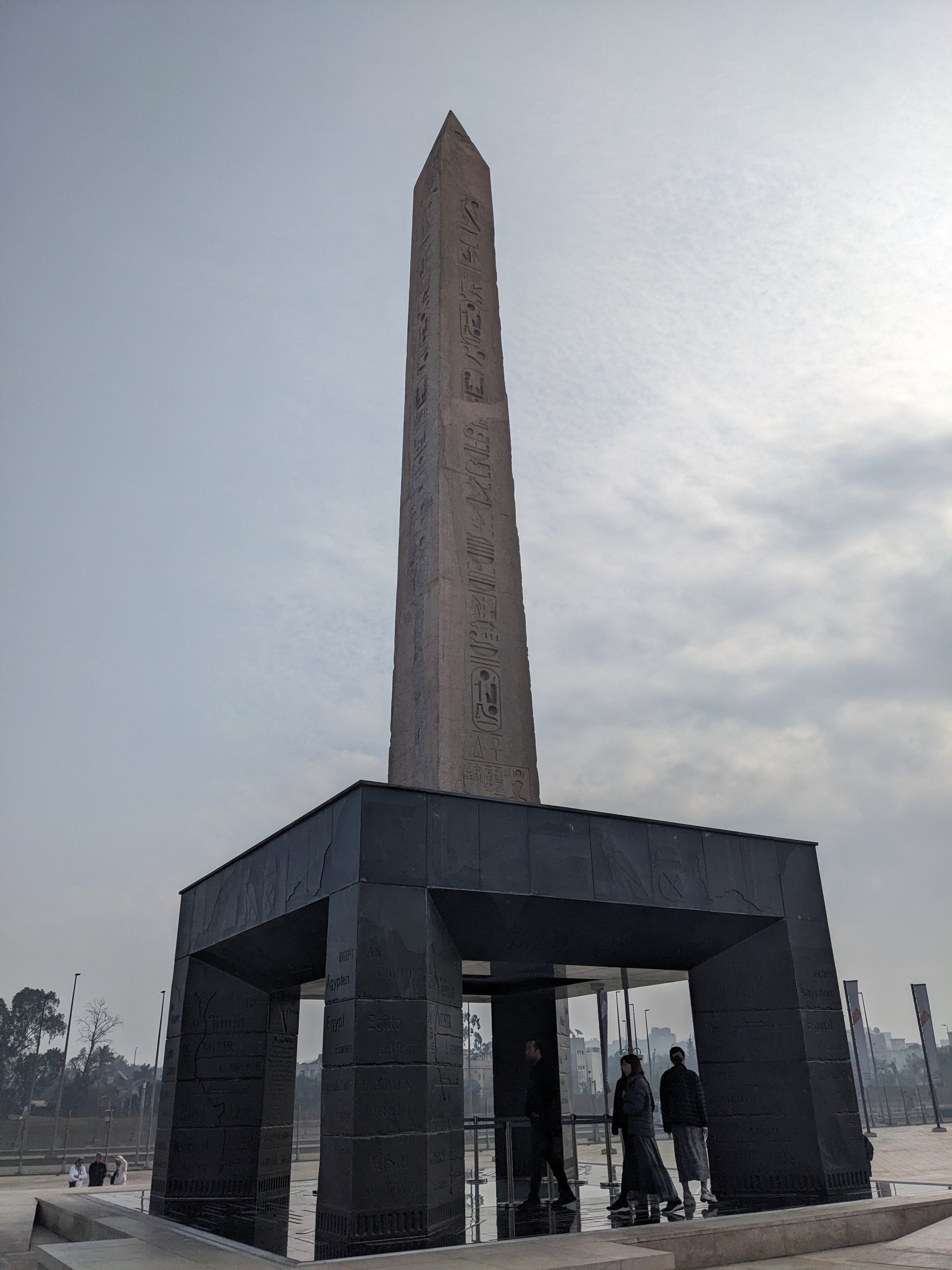
This includes the hanging obelisk just on the grounds up to the main building. It is the first thing that most visitors will see and it is a great introduction to the treasures that are held inside. It is a great introduction to the culture. There are many hieroglyphics carved into the stone, but the most interesting one is the one carved on the bottom. Here Ramses hid his name, so if any other kings came and tried to erase his name to take credit for his accomplishments, people would still be able to find the truth on the bottom of the obelisk.
There is also the grand staircase. Visitors have to travel up this staircase to get inside the main gallery. The staircase is covered with the largest collection of Egyptian tombs, statues and arches. They are the ones that are too big to bring into the main gallery, but are still impressive to see. Each one holds its own story, and I would highly recommend hiring a guide so they can take you to the more important ones, and tell you the stories that they hold.
The main gallery was just opened in October of 2024, and is where the main collection resides. There are so many pieces in this place that it would be impossible to see all of them in just one days. In fact, our guide told us that if we spent a minute looking at each one, then we would be in the museum for the next 80 days.
It is broken up into different rooms that follow the history of Egypt as it progresses down the hall. They then break up each era into the culture, history, and stories of that era. It is a lot to take in, so I would recommend taking a guide who can point out the more important pieces, and tell the stories behind them as well. I would not have gotten out as much from the experience if I did not have a knowledgable person to guide me.
I found out that there is a lot to see in Cairo, and that you need to make some decisions if you are planning a short trip out there. The pyramids and the sphinx are obvious musts, but there is another one that most people need to see as well, and that is the Grand Egyptian Museum. I was blown away by the sheer scale of it, and I could not imagine how it will grow even more when they open up the last twenty percent of it. It just gives me another reason to plan another trip some day to go out there to enjoy the museum again.
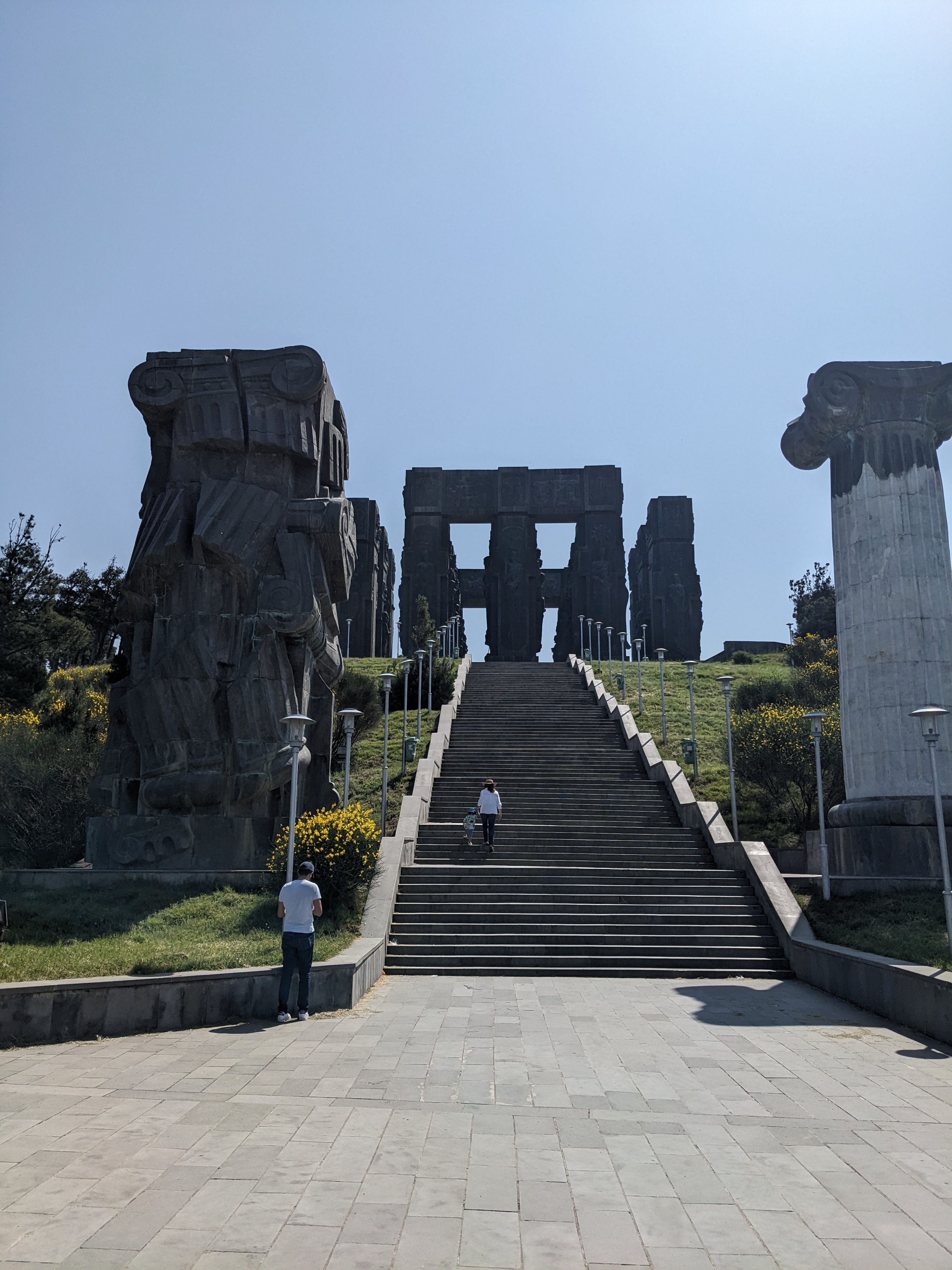
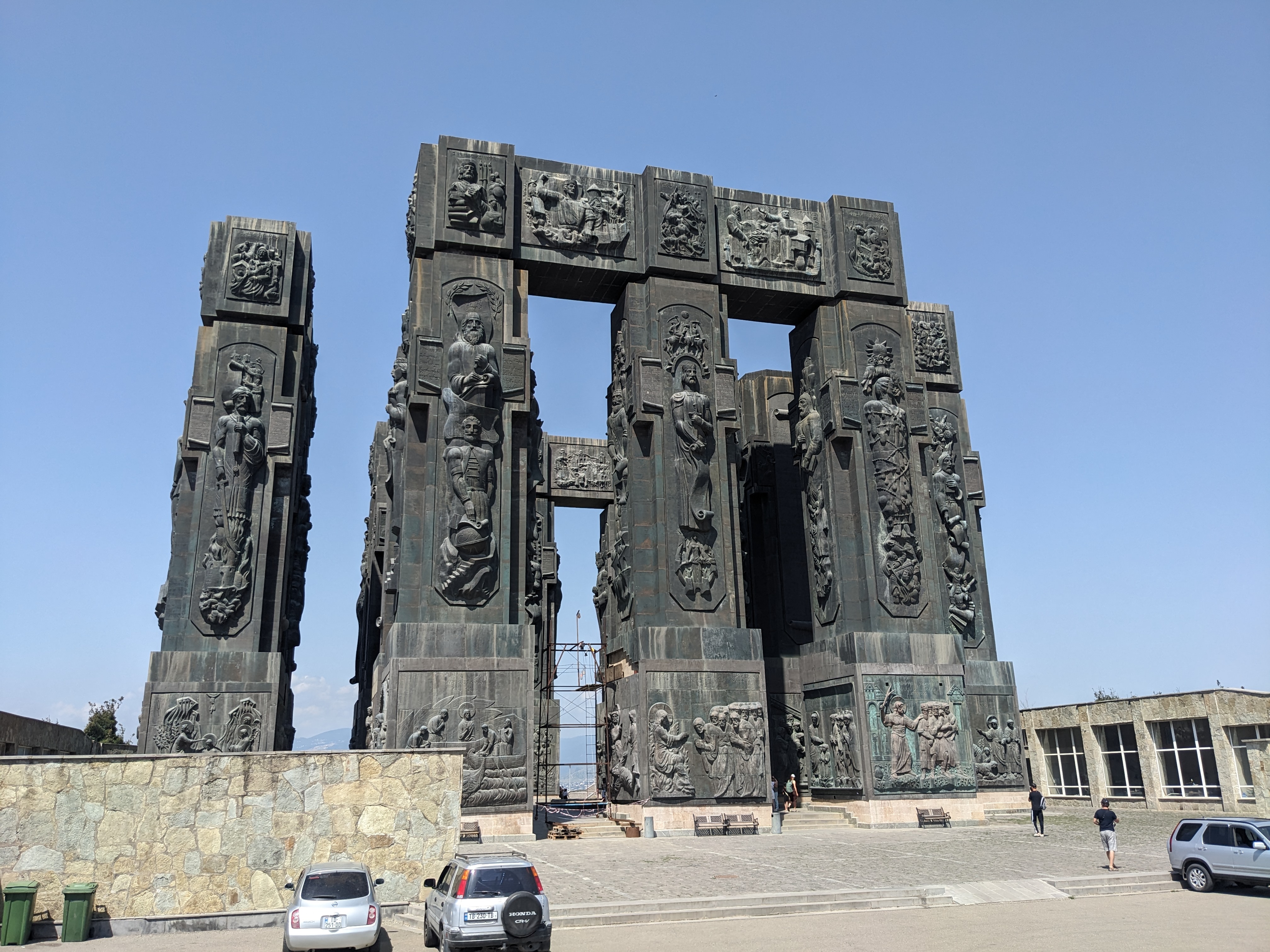
Sometimes when I am traveling, I spend so much time seeing what a town has to offer that I miss one of the bigger, more exciting features just outside of the city. Tbilisi has just one of these structures, the Chronicles of Georgia. Out on Keeni Hill just north of the city stands this massive structure of Stonehenge like pillars. It is hard to miss when you start traveling out that way, and it just begs to be visited.
The structure looks like it comes from a time before, but in reality, it is a relatively newer monument. Construction of the Chronicles started in 1985, and it was never completed, but enough of it was put up that it still is fascinating to come and look at. After climbing up the stairs to the structure, you are instantly immersed into the culture of Georgia as the pillars depict different aspects of it as well as some the country’s more famous participants.
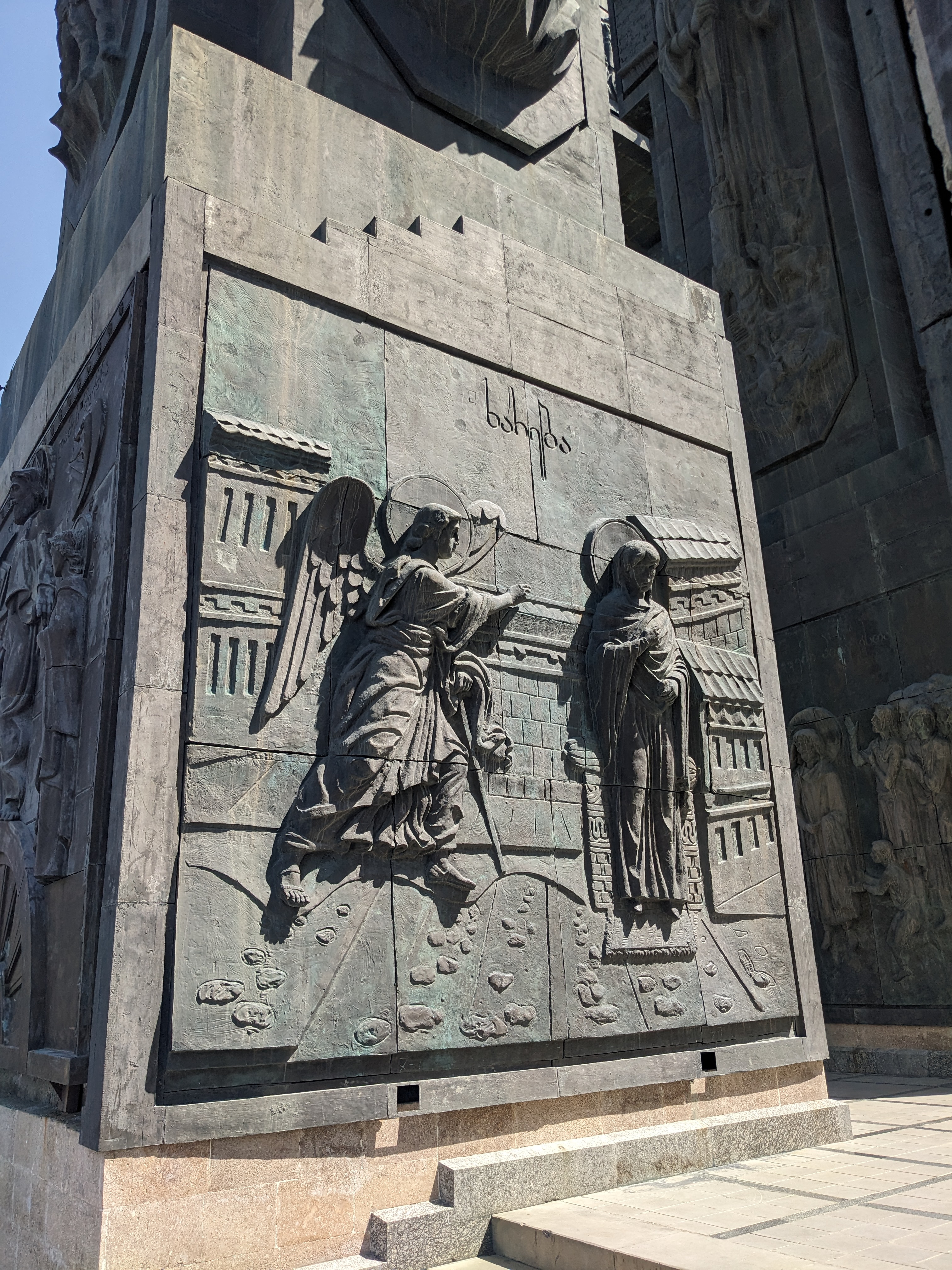
A closer look reveals that there are actually two different stories being told. The base of each pillar has up to four different reliefs depicting important stories from the Bible; whereas, the upper portion of the pillars has stories from the history of Georgia. The Bible stories were pretty easy for me to figure out because I am familiar with them, but the Georgian stories came with no context, and there was no information up there that helped to bring their stories to life. I have searched all over the place to see if I could find something that would give me more insight into the kings and queens I was looking at, but I still can’t find anything.
Despite this shortcoming, it is still an impressive spot to visit, especially if you are moving on to other parts of the country, such as the wine region or the mountains. It is a quick stop that you could easily spend thirty minutes to an hour at, and feel like you have really enjoyed it. Though you might not know the stories, the detail of the carving is still fun to explore, and talk about. The views up there are also spectacular, and there is an old church that is worth the time to explore as well.
From a distance, it may look like it is off the beaten path, but in reality, it is only a little detour from a regularly scheduled tour. It is so fascinating that it should eventually become a part of that regularly scheduled tour, so you might want to make it a part of yours if you come to Georgia.
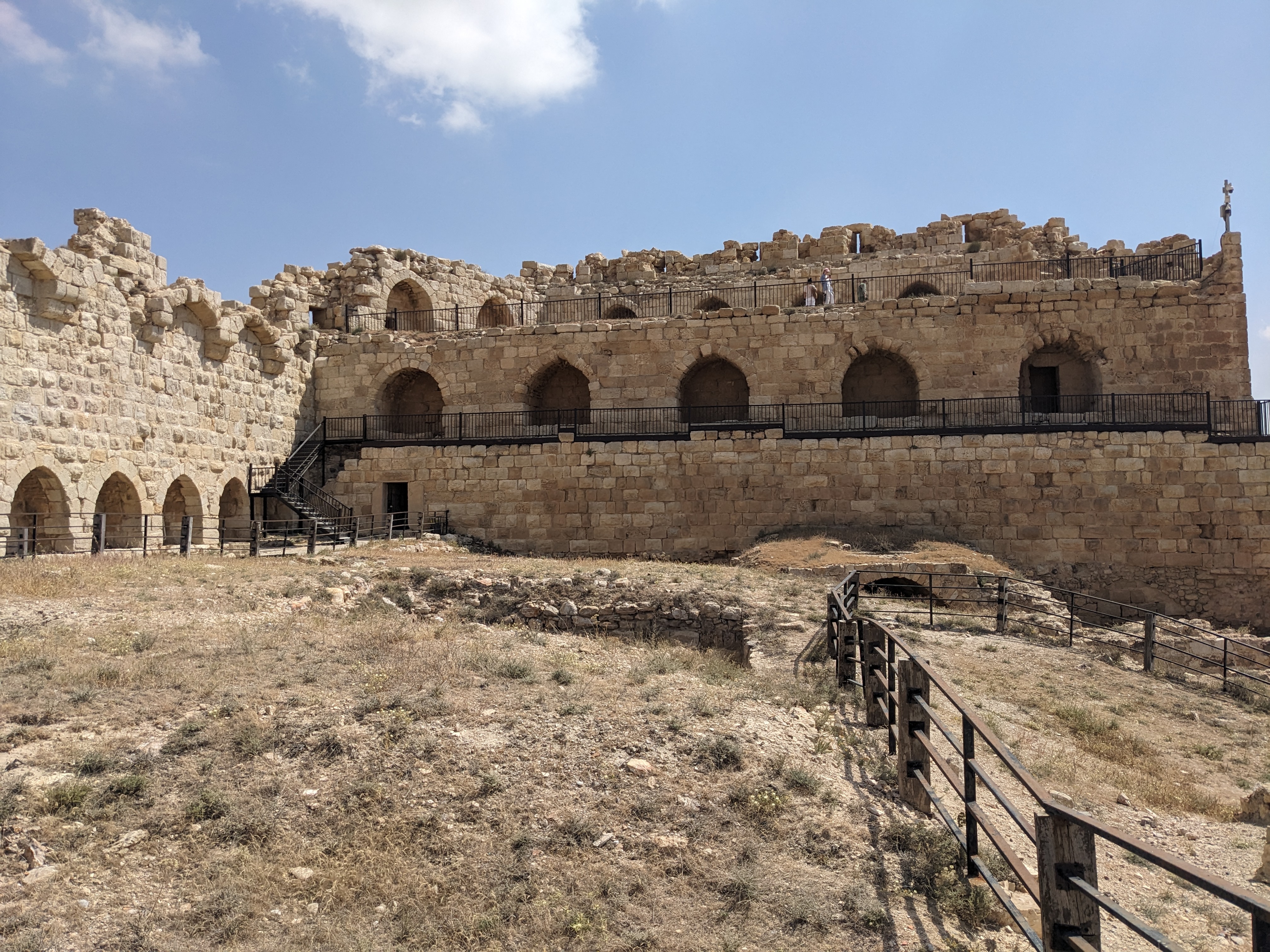
If you find yourself doing the Jordan Loop, and you have just left the Dead Sea to make your way over to Petra, there is a nice stop along the way that makes a nice break, and a beautiful place to enjoy a little piece of the areas history that does not have to do with either the Bible or Roman times. It is the Karak Castle, a large medieval castle situated on a hill in the city of Karak. The castle was built during the Crusades in 1142, and was used as a defensive position by many factions during that tumultuous time period in history.
The castle is a windy series of tunnels and rooms that sits on the hilltop that overlooks a large expanse of the valley below. For the most part, it is well preserved, and even though its dark passages might look foreboding at first glance, they light up as you walk along them so you can explore all the nooks and crannies that are there.
For how big and interesting it is, it is surprising how few visitors come to this location. I went during a down period of tourism for the country of Jordan, and I felt like I had the place to myself, but I am told that even when tourism was at its height, it was still not very packed. This makes it an essential place to visit, especially if you are traveling between the two bigger sights in Jordan.
The photo opportunities that it offers are limitless. I loved looking through the many embrasures, or arrow slits, in the castle and seeing how they could frame the valley below. Though the castle does not offer many explanations about what you are looking at, there is a museum on its grounds that will give you more insight about the area. I would tell you more about it, but I visited it on Jordan’s Labor Day, and it was closed on that day.
Even with missing out on the museum, there was still plenty to see on the grounds of this medieval castle. It is a great place to stop, and should be included as a quick adventure for all people making their way around the Jordan Loop. I would do it sooner rather than later because this place cannot remain a secret for too long.
It wasn’t until the end of my trip when I was asked if I had a little Scottish heritage in me. The question came from a driver who was taking us from where we dropped off our car rental to our hotel for the evening. The way he said it sounded as if he asked any tourist that he was in a car with the same question. I am sure he got an answer from many of those people that was the same as my answer, “Yes, I got a little bit of Scottish in me.”
Scotland is one of those countries that becomes a pilgrimage for many people because it tugs on something from within. They can hear the allure of hazy skies, whiskey tastings, history, kilts, highland games, and the occasional fish and chips. It promotes a lifestyle that they have only heard of in the books they have read as children or the stories told to them by an elder generation. They are curious about whether or not they can find a home in a land that was a home to their kin for so long.
Despite the rugged landscape, and the various castles, there is a sense of home that comes with traveling to Scotland. No matter where I went, I was greeted with a warm smile, and a friendly ear. Community was everywhere I looked. People would put down their phones to meet each other at the pub, or spend a day exploring the vast landscape that was offered. It is hard to come out to Scotland, and not fall in love with the land, the history and the people. For that reason, it feels like home.
The history of Scotland is one of rebellion, and national pride. It tells tales of victory, and defeat and how the land and the people were shaped by these moments. It boasts heroes whose exploits have been slightly altered to share national pride in other nations, so they can believe in the same fights that the Scots have fought for generations. It brings together nations under one banner while keeping its unique flavor for who they are and what they believe in. The history of Scotland is a fascinating one, and wherever I went in the country, I would run into a reminder of how rich and powerful that history was.
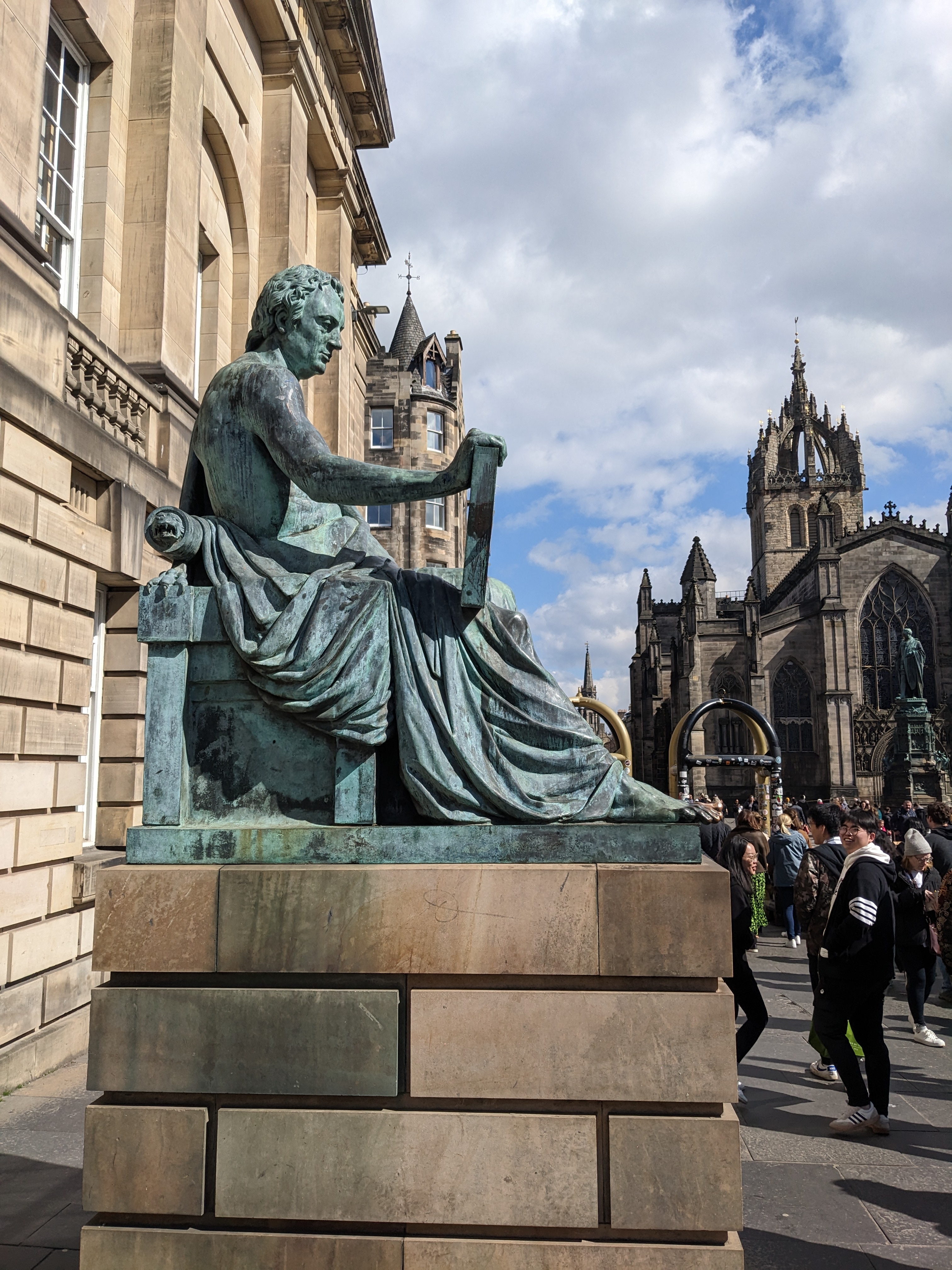
Scotland does not just offer the world a rich history and wonderful story to tell. It is also one of the hearts for intellectual thought in the world. Many great writers and philosophers have called Scotland, or more specifically Edinburgh, their home. Names such as David Hume, Robert Louis Stevenson, Sir Arthur Conan Doyle, Charles Dickens, Robert Burns, and J. K. Rowling all have connections to this great city, and many people from across the globe have been affected by their works in some capacity at some point in their lives.
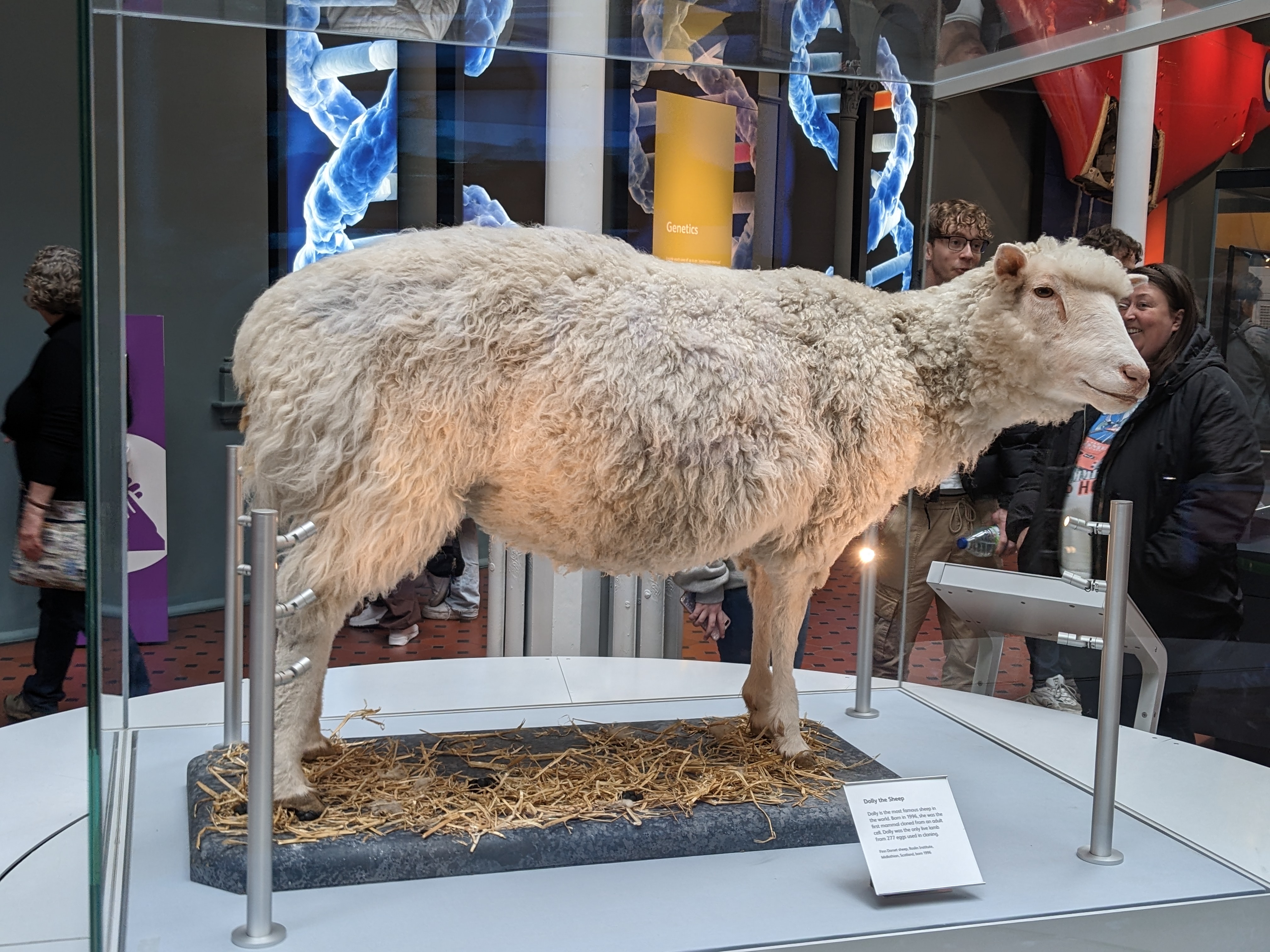
Scotland’s impact on the world does not only stop at philosophy and literature, but extends into the sciences as well. There were great medical discoveries that came from Scotland including the discovery of the first anesthesia, chloroform. They were also the ones who cloned the first animal, Dolly the sheep. Their contributions to medicine has influenced the common practices so much that we would still be in the dark ages without them.
Scotland may be a small island off in the distance to so many people that they would never consider it a part of their lives, but if they look closer, there is a part of their lives that have been touched by the Scottish. In a way, when that man asked visiting guests whether I had any Scottish heritage, their answer should all be the same. Their is a little bit of the Scottish heritage in all of us. We may not be able to claim a clan as our own, but we can talk about how their history and culture has affected us in some capacity.
I am really glad that I was able to take the trip out to Scotland. It is a beautiful country, and I felt instantly at home in it. I suspect that this would be true for anybody that travels there. It should not be a must see destination for the ones who have a tartan hanging in their closets and they want to see the land where it comes from; rather, it should be for anyone who has ever been enthralled by its literature, learned a lesson from its history, or been saved by its contributions to science. It is everybody’s home.
I hope that someday, you can take the trip to Scotland and have the same kind of experience that I did. It is really worth the pilgramage.
You all look like ants, crawling down below When I am able to stand from the height. I can see how far that this city grew As it takes, from nature, another bite. Over the desert, the road stretches forth To the places where the Bedouins camped; You may look to the south, east, west, and north To witness how that culture has been stamped. It can now be found within the museums, Or the picture books given to children. Humankind is subjected to its whims To ignore the places where it has been. I stand atop its crowning achievement, A tower, to God’s grace, will not be bent.