Mountaintops peek out from a sea of ice Hoping to survive from its greedy bite, Knowing time will enact the ice’s price. They know they cannot win against this fight, So they will still stand while they are able Before the slow advance breaks them apart, Leaving behind a pile of peeble Flowing down where the ocean will start. It is here the mountain becomes the sand And the glacier turns into the water Reuniting upon a distant land That neither of them had thought to charter. Will they ever return to that first sea That is dying because of you and me?
When the final scallop has been eaten And I’ve mopped up the spicy sauce with bread; When the volcano top has been beaten, Just so I could disprove what you had said; After the kayak has been put to shore From skimming out to a calving glacier; After we have visited the gift store We are forced to see on a museum tour; When the mementoes are in the cases That we have purchased without much thinking; When we have gotten rid of all traces In hotels where our butts had been sinking; With the memories of this holiday, We can return to our regular fray.
Winter storms have covered the land in snow, And the chilly winds have kept folks indoors. They have to shovel if they wish to go To any of the restaurants or stores, But they wish to stay away from the slop That coats roads in an obstacle course Where sometimes they are unable to stop, And physics operates in a new force. If only they could get away from there Where winter is a distant memory, A warm place with a desert atmosphere With a pool under a stand of palm trees. It’s a lifestyle they might not have heard, Leaving cold behind to be a snowbird.
After all the time we spent together Traveling the vast globe from pole to pole, After a month of seeing all weather From the icy winds to the blazing sol, After we have put the parents to bed Reversing the roles we now have to share, After the good nights which we both have said Accompanied by a kiss of our care, After we have unpacked the suitcases Finding spots in our house for new trinkets, After we have bathed and washed out faces And got into bed under thick blankets, We can put away our long vacation Returning to our normal rotation.
Sunlight filters through the cracks of the tent, And tries to reach the safety of my bag Where I dig in more to avoid the glint, Giving the morning the okay to lag. The sun burns off the night but not the cold As I can see my breath hang in the air. Leaving the warmth of my bed would be bold, And I will give it time before I dare. Both the campfire and the hike can wait; They will still be there once I have risen Because where I find myself now is great, And those other things I am not missing. This is my favorite part of camping, To start each day continuing napping.
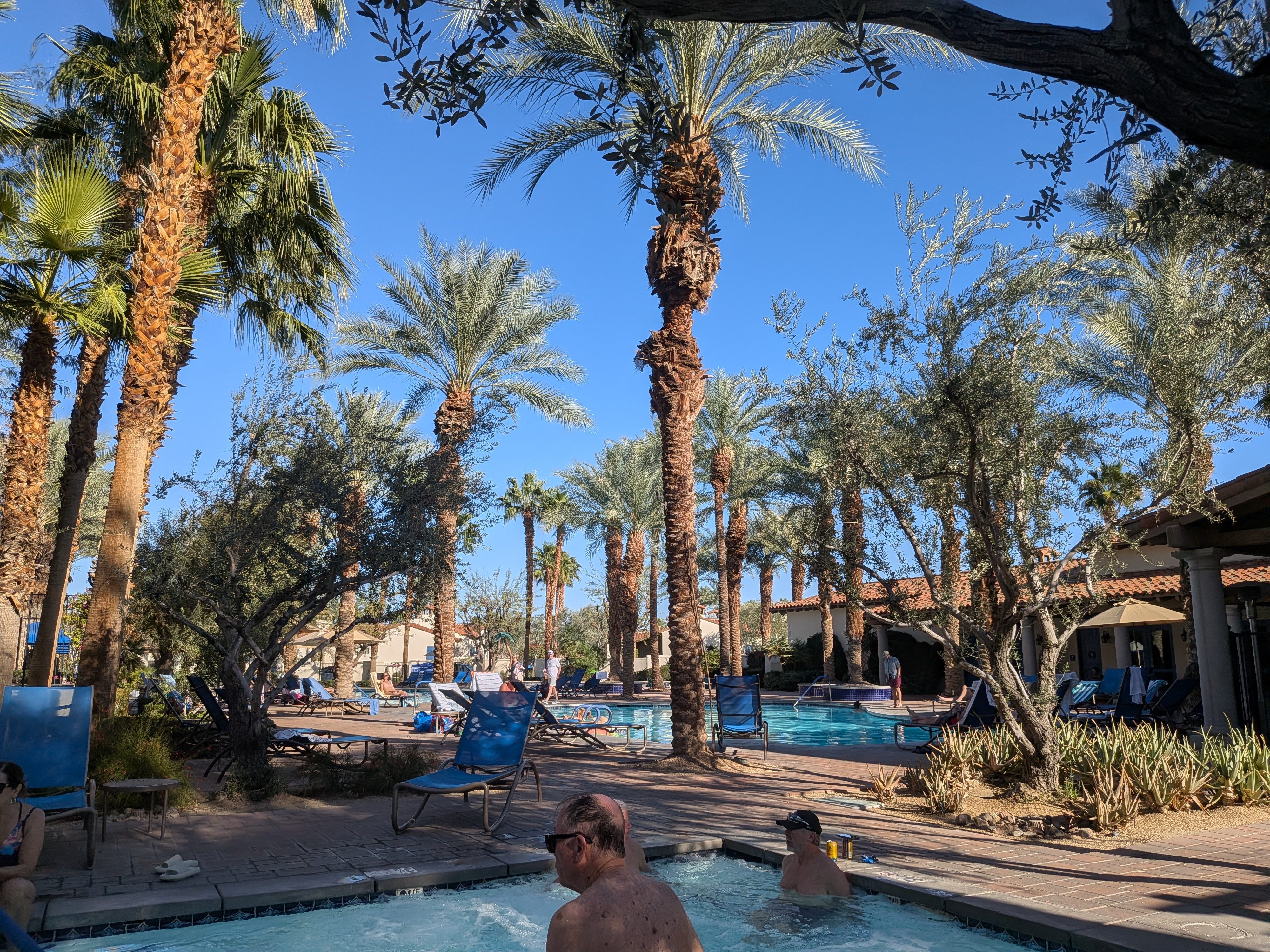
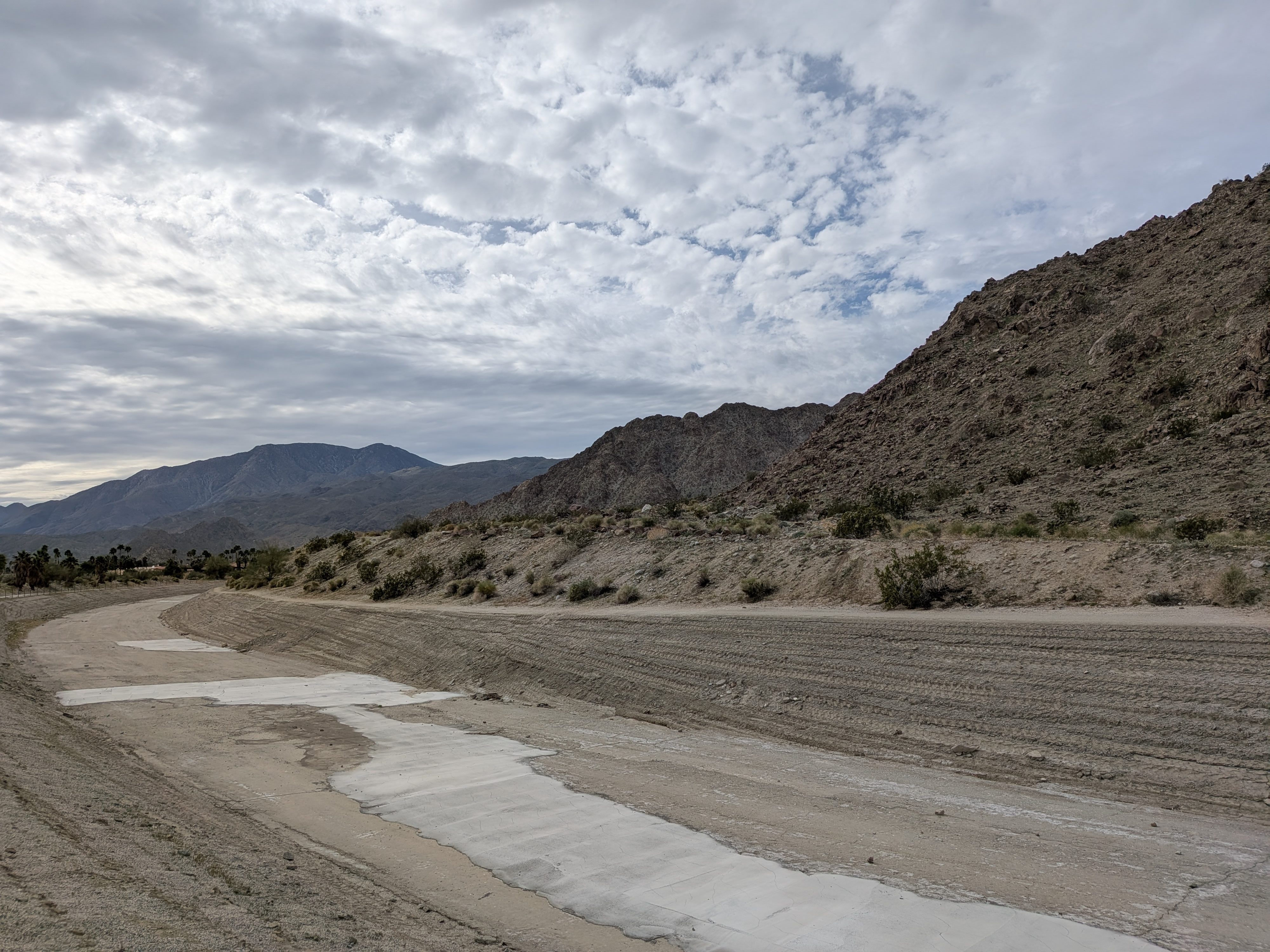
Who wouldn’t want to be surrounded by palm trees and swimming pools on a hot day? Who wouldn’t want this to happen in February, usually one of the coldest months in the Northern Hemisphere? There are many people in the northern part of the United States that ask themselves this question every year, and some of them actually do something about it. They pack up their belongings, hop on a plane or rev up the old car, and head south to warmer climes. If they live on the East Coast of the United States, they usually end up in Florida, but on the West Coast, they end up scattered all over the Southwest. One of the places that you can find a lot of them is in Coachella Valley in California.
Coachella Valley is the perfect place to escape to during the months of December, January, February, and March. Basically, the place is a desert, but during these months, it is not too hot, and it makes for each day to be a pleasant experience where hanging outside, and enjoying the stark landscape is all that you need to feel like you have escaped from the cold weather from the north. Oddly, it felt a bit warmer there from where I had just voyaged from, and that was in the southern hemisphere where they were experiencing summer. However, I was on the southern tip of South America in the Patagonia region, and even though it is summer there, it still has the ability to get quite cool there. So I was enjoying the warmer weather and it was perfect.
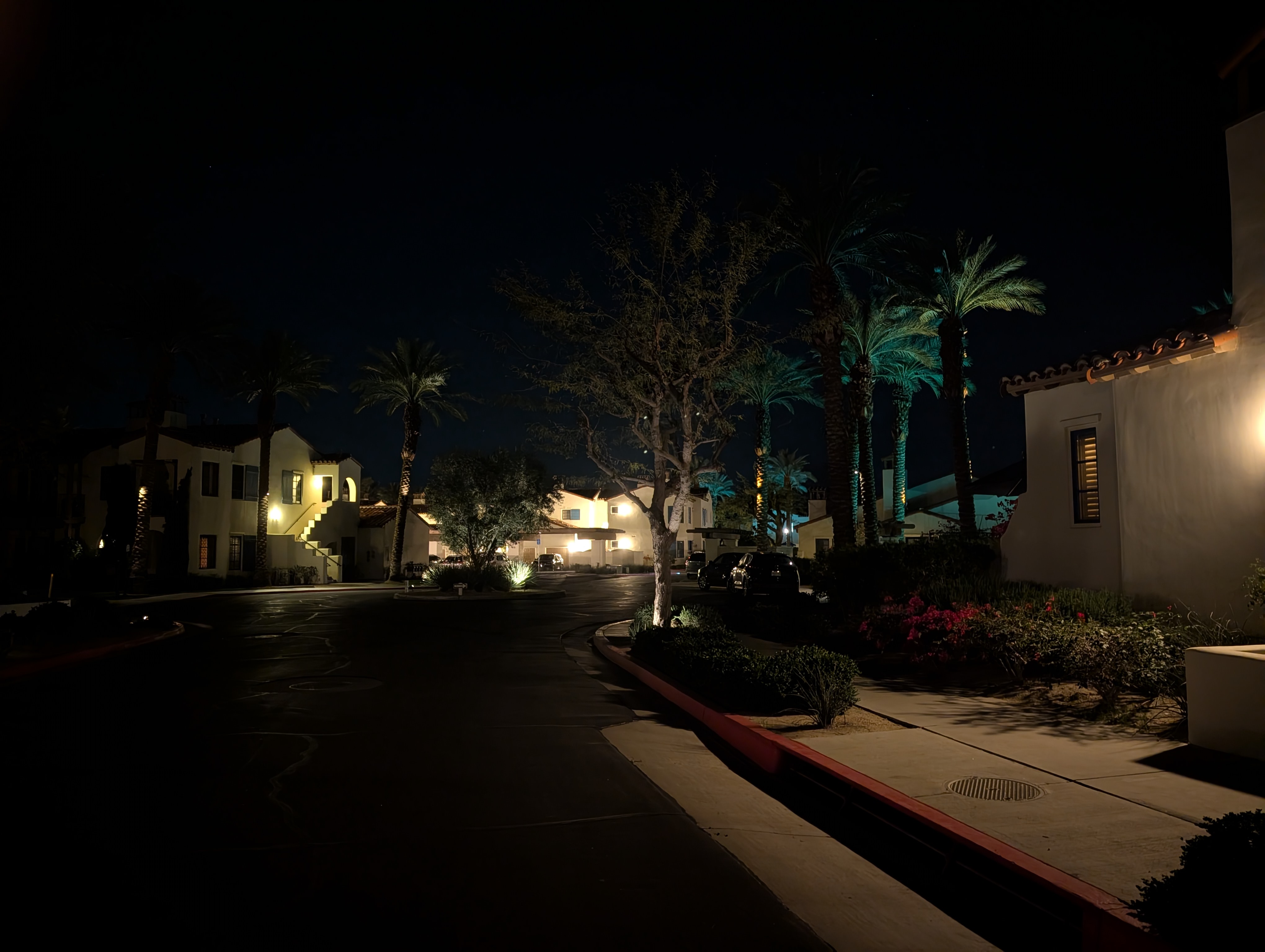
Even at night, it would cool off a bit, but I could still wander around the neighborhood we were staying in wearing the shorts and t-shirts designed for the summertime in other parts of the world. It was hard to believe that I was living in the heart of the winter months while I was there. I could see why many people travelled to this part of the world to get away from that cold.
It made me start to reconsider what I would usually do for vacation during those colder months of the year. I was able to start and see the benefit of being one of those snowbirds, of collecting my bags, and renting that house to occupy for a week or two. It made me feel like I was at home and on vacation at the same time, and I think that is what is at the heart of being a snowbird, having that feel of both things at the same time.
Until next time, I hope you look for those opportunities to live the life of a group that you never thought you would join before.
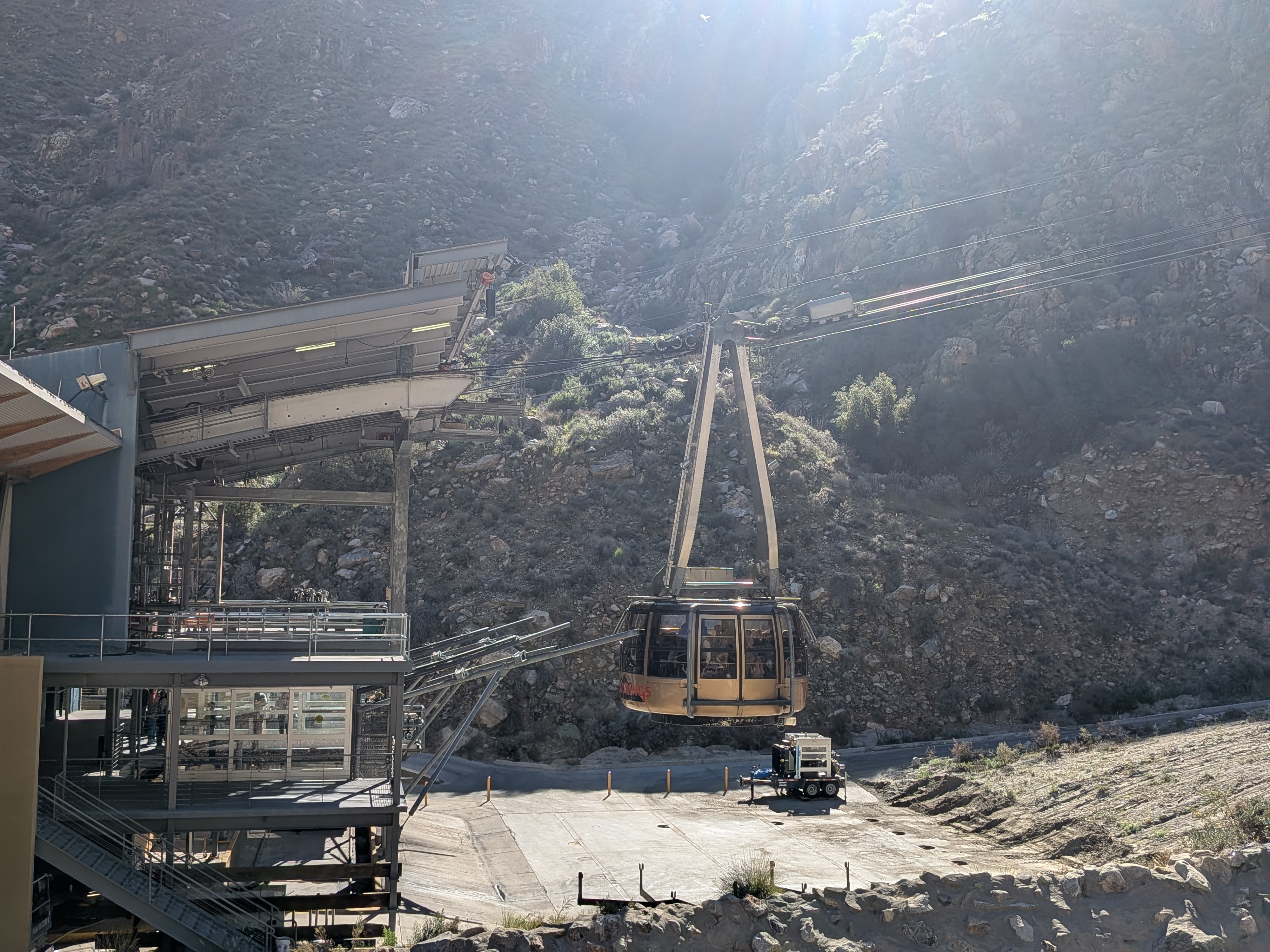
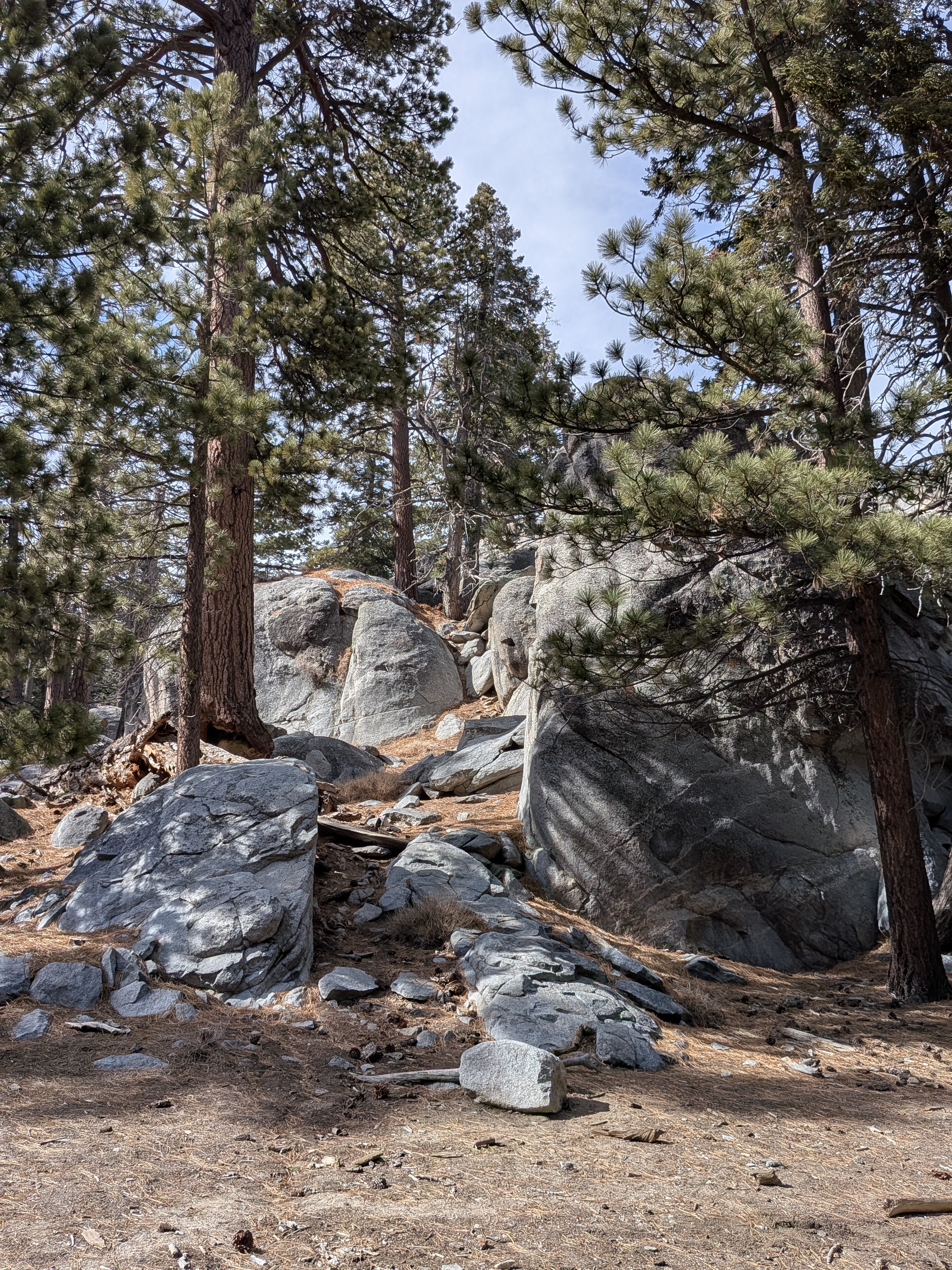
Over the hills east of Los Angeles about two hours way by car, there lies a dessert valley that first got discovered by the stars of the golden age of movies. They built houses out there, and soon the valley became populated with tennis courts, golf courses, casinos, and polo grounds. It was a paradise surrounded by large granite mountains that protected the valley from harsh weather, and the prying eyes of the metropolis just 120 miles away. Way back in 1935 an electrical engineer named Francis Freeman Crocker proposed to build a tram up one of the mountains so people could explore the wilderness that sat on top of the rocky peak. It wasn’t until 1963 that his dream became a reality and it has since then been one of the larger tourist sights in the valley bringing thousands of people a day to ride up to the top and wander around through the beauty of nature that is possessed there.
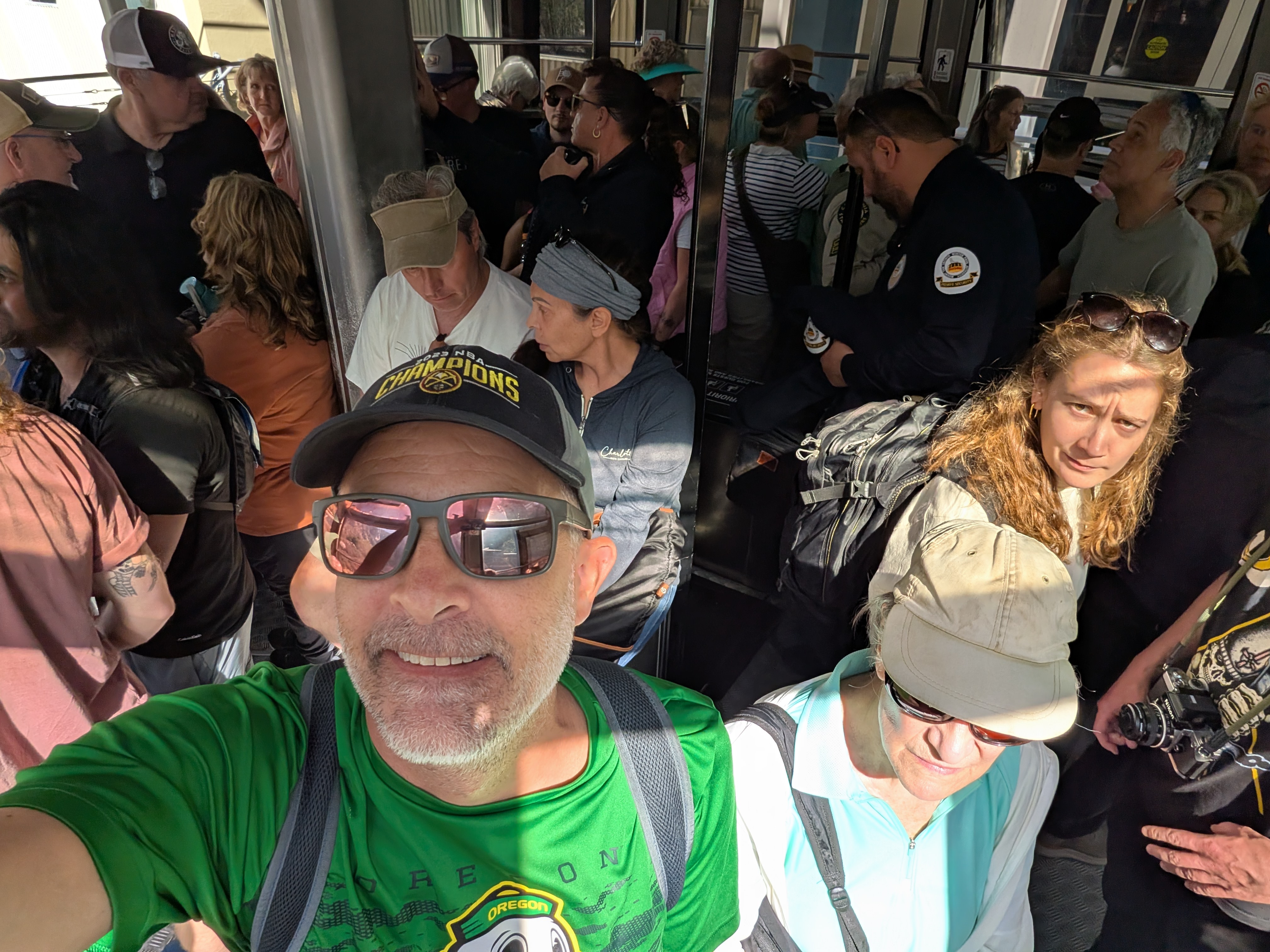
The tram itself is the largest rotating aerial tram in the world, and the two and a half mile voyage to the top of the mountain takes about ten minutes to complete as the room they put you in rotates around so you can view all of the wonders that come with this spectacular spot. It is a crowded car where they put up to eighty people into it. Despite the numbers, it is still not as claustrophobic as you would think, and if you sit a little back away from the window, you can find a rail to lean against that will rotate with the room so you will not feel as if the room is rotating with you.
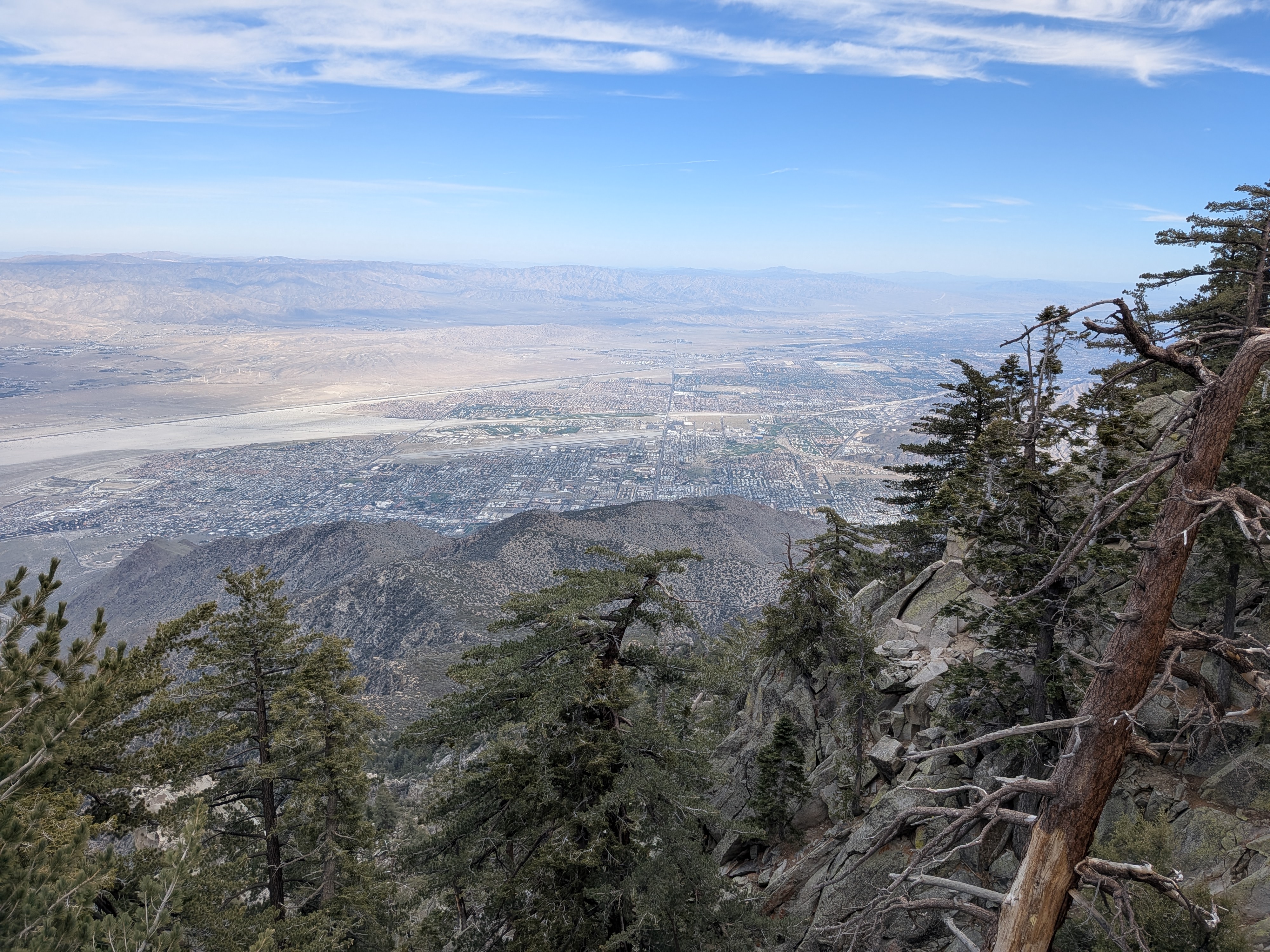
The ride is worth it because it does take you up to an amazing view of the valley below. From up there you can look out of the wilderness that sprawls out on top of the mountain or turn around the other way and see Palm Springs, La Quinta, and Indio as it spreads out on the dessert floor. Also if you look close enough, you can pick out the San Andreas fault as it threatens to split California in two. It is also a great way to escape the heat from the city as it can be over ten degrees cooler on the top even to the point of collecting snow on a few of the winter days.
As I looked over the valley, I couldn’t help but to think about how beautiful it would be looking at it when it was night and all of the city lights were on. There is an option with the tram to take it up there during the night time and have a meal at the restaurant that is on the top so you can look at the night lights. If you are thinking about doing this, keep in mind that it can be very expensive as an adult ticket costs at the time of the writing of this blog, 43 dollars per person and only offers a cafeteria style kind of meal. This does not include parking that you will need to get up to the tram, and that is an extra 15 dollars per vehicle. You can still get a reservation at the restaurant on top of the mountain but that is also expensive, and will require a ticket to go up the tram which is at 37 dollars per adult.
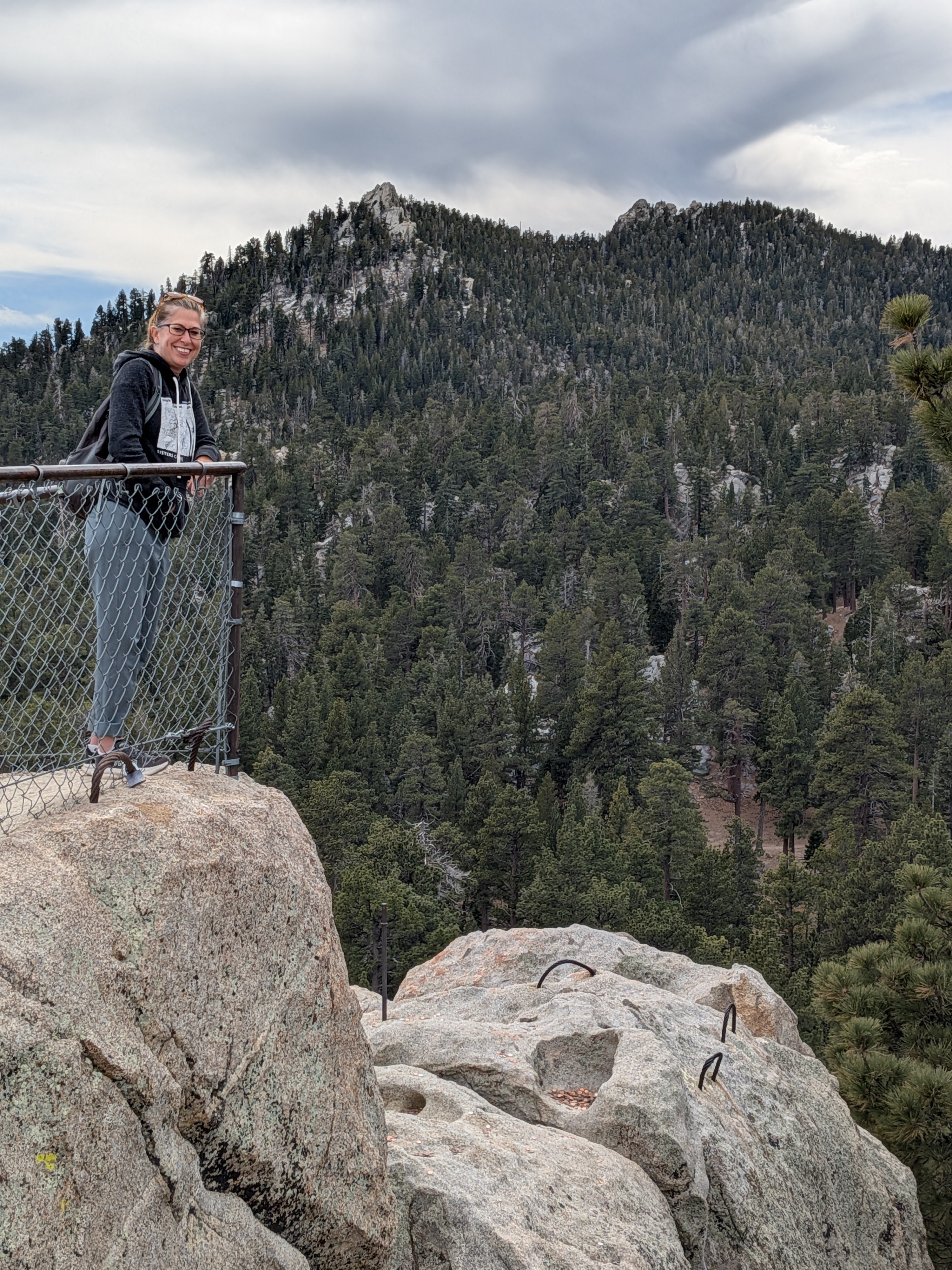
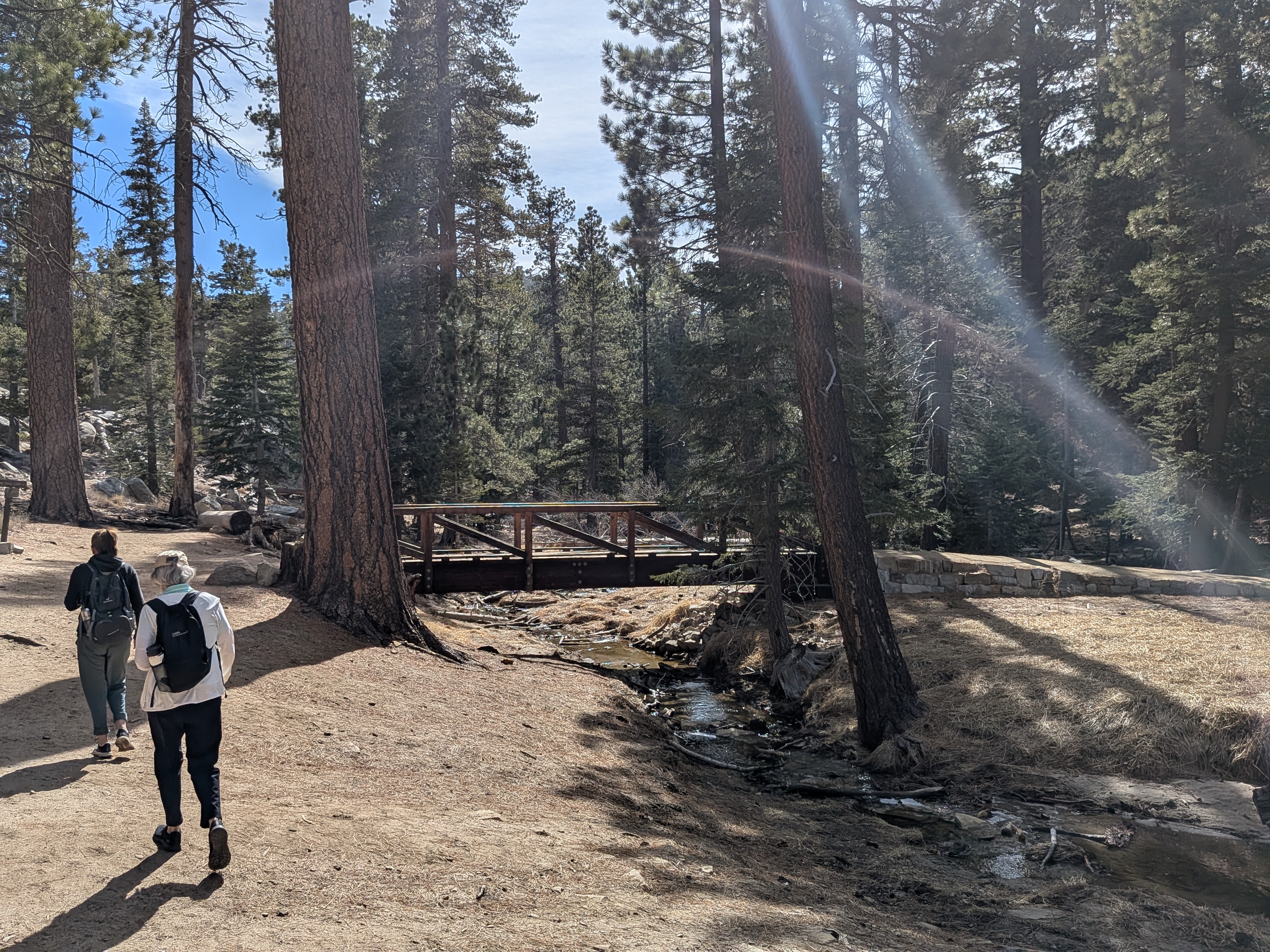
Just know that it does cost some money to take the tram up to the top, but once there there are many hiking opportunities. There is a three-quarter of a mile nature hike that is rather easy and takes you to some pretty spots. Or you could take the mile and a half trip out to the dessert viewing point, and for the very adventurous person, you could take the twelve hour hike that will take you past the campgrounds and deep into the wilderness. It can get cold up there which is a dramatic shift from the dessert floor where we originally started from, so if you do plan on doing some hiking, I recommend that you bring layers of clothes with you to make the adjustments needed depending on the changing weather.
It is a great day trip to take if you find yourself in the Coachella Valley. I spent a good four or five hours there, and did not really look into the museums that were at both the bottom and top levels of the tram. There is of course shopping there as well as a fifteen-minute informative movie that is shown at regular intervals. You have plenty of options of things to do, and all of them make for the perfect day up top of San Jacinto Peak.
Until next time, enjoy those little gems wherever you may find them.
I’m sorry about the lateness of this post. Usually I am sharing with you the biggest posts of the year right around New Year’s Day, but because I was traveling through Patagonia at that time, I wasn’t able to sit down and sort through all of the data until now. 2025 was a crazy year for most of us for various reasons, and this was no different for me. I had taken a new job in Peru in July, so I spent a lot of the time getting all of my stuff together and moving it halfway around the world in Jordan. During that time, I was able to travel to many places such as Egypt, London, around Jordan one last time and a couple of trips back to the United States, but most of my time was spent moving all of our stuff and our puppy to Peru. Because of the visa requirements, I was not able to leave Peru once we arrived, but this was not a bad thing because the time I did have off was spent traveling through this amazing country. I hope you enjoy this look back of last year, and here is to more opportunities to see the world this year.
2025 was the last year that I spent in Jordan, and before we left, we started to have visitors. I was able to make the Jordan Loop, (Petra, the Dead Sea, and Jerash) one last time. It was a month before I left, and it was like my farewell tour of the area. I do consider myself lucky that I was able to make this trip that one last time, and do it with such good friends. It allowed me to create great memories of Jordan before I left it forever.
Egypt featured heavily in the posts for 2025, showing up four times in the top 10. The first time was a poem that I had written while out there, thinking about what it would be like to be a mummy so many years after you had been rediscovered by archaeologists. It was great to see them, but it was also gave me a sense of dread of what it would be like to have your body on display in a museum so people could come by and view you.
My first post of the year was also one of your favorites. I spent a lot of time in the States this year, and I had spent some of that time with my family during the holidays. It is easily the best way to spend this time of year, and it always makes for great memories, but at the same time, there comes that moment when you have to pack everything up, and return to the life that you live. It is the reason that January is always a quiet month for most people, but it was still nice to have this to hold on to during that quiet month.
I made a big move this year, coming from Jordan halfway around the world to land in Peru. Because it was my first year there, I needed to stay in Peru for my visa. It is not a bad place to be stuck in as there are a lot of things to see. We were holding off on the big one, Machu Picchu, because we knew we would have visitors and we would see that eventually, so we went off to other locations. Our first big trip was to Arequipa, and it is a place in Peru that is not talked about enough. The monastery is a great place to visit if you are in Arequipa, and a lot of people enjoyed the post.
A return to Egypt with another poem about my time in Cairo. I really enjoyed this unexpected trip last year as what I thought would be another experience in a Muslim country turned out to be a cultural education about one of the oldest places in the world. The thing that struck me the most about the place was the way that the people embraced both aspects of their past. There was a huge pride in both their connection to Islam and the Egyptian kings of centuries past. At times, it seemed as if these cultures were at odds with each other, but there was a marriage between the two that allowed them to exist in perfect harmony in this part of the world.
For many people, 2025 was a tough year. The world seemed to be imploding, and as I left one of the parts of the world where that struggle could really be felt, I wanted to take some time to reflect on my time there. I started to take one picture a day during my lat 100 days in Jordan as I went about my routine and posting that picture to Facebook. I was not trying to be political or get people motivated to think a certain way; I was just documenting the mundane. I received a lot of feedback from doing this as it gave people a reprieve from the crazy they were seeing on social media. This little experiment resinated with you as well, and oddly enough, it became a simple way to bring a little happiness to people’s lives during a time when they needed it.
I had gotten back into one of my favorite hobbies, board games, during the 2020 pandemic. It was a great way to have fun with the few people that I had contact with at that time. It turned into something that stuck with me beyond that strange time in the world. As I explored this hobby more, I have gone to a couple board game cafes, but never the one that was right down the street from where my dad lives. Over the summer of 2025, I met a few of my friends down there to finish off our Dungeons and Dragons campaign that we were unable to finish due to me having to leave Jordan early. I am glad that I had finally gone into this place. It has opened the door to look for more of these little places around the world as a way to enjoy a couple hours of downtime during my travels. It was also nice to give Enchanted Grounds a little plug to keep them busy for future years.
As I started to explore the board game hobby more, I started to review the games that I picked up along the way. I have only done one or two reviews a year, but they always seem to be very popular, and people continue to come back to them as they decided on the board games for their collections as well. This year I reviewed one of my favorite solo board games, Onirim. Many people must have been just as curious about this game as I was when I first came across it because it was one of the posts that was visited, and is still visited, the most last year. I still stick with my initial assessment that the game is fun, but the free app is a better way to enjoy the game.
Usually when I think of Egypt, I think of the ancient culture with its pantheon of deities, or the modern people with their position in the Middle East. What I tend to forget about is the fact that Egypt plays a prominent part in the Bible. Jesus and his family spent a lot of time in this part of the world, and even some of the more important saints, such as Saint George, have part of their stories told in Cairo. There is a little corner of the city where these Christianity stories come to life, Coptic Cairo. It added a deeper level of nuance to a part of the world that already held a lot of depth, and it is one of the places on this trip that really stuck with me.
Egypt has been putting a lot of energy and resources in order to get this museum open, and as of October 2024, it was 90 percent of the way there. I was able to visit it shortly after the opening in February of 2025, and the place is easily the best museum that I have ever been in. The collection of antiquities that can be found in this place is overwhelming, but I was lucky enough to have a guide to take me to the things that I really should be seeing. I must have stuck with a lot of you as well because it was the biggest post of mine last year.
Thank you for going through this walk down recent memory lane, and joining me on all my voyages throughout the year. I hope to see you more often in 2026, and look forward to sharing with you all that this crazy world has to offer.
It has been another great year of gaming. I have played over 80 different games this year, and many of them new to me. I have also been able to play many campaign to their finish, and have gathered with many friends over the year while creating new ones through this hobby. This list has come out a little later than I would have hoped for because of travel, and the time it takes to put this list together. Once again, the list is comprised of my choices when put into Pub Meeple, the on-line service that helps me rank the games I have played. I have also placed next to them how their position has changed based on last year’s list, and it is always fun for me to visit this list every year as I hope it is fun for you to look at it as well.
20. Oath (Down 13)
This is not an easy game to get to the table, and it requires finding a group of people that would like to play it on a regular basis. Even when I do get it to the table, we have to review the rules again, and play with how fiddly they are, but I love the fact that this board creates it own history, and is an amazing way to tell stories. The last game I played told the greatest story out of any that this board has presented to me which makes me want to get it to the table more often. It sits here because I have moved away from my regular group, and I have not found that new group to play it with yet.
19. Dungeons and Dragons (Down 5)
This is the game that occupies the most of my time, and I really do enjoy the moments that I get together with my fellow players, and continue to experience our campaign. I did finish up one campaign this year, and started a new one, both with different parties. I also took up the mantle of being a Dungeon Master for the first time, and it does switch how I look at the game. It forces me to know more about the game than I ever have before, but I think I am doing a good job of adjusting, and there have been a couple of moments that have really stuck out in our campaign so far.
18. Scythe (Up 2)
This is another game that does not get to the table easily, but every time it does, I enjoy the experience whether I win or lose. The blending of area control with worker placement and Euro gameplay tells the perfect story of an alternative universe where mechs rule over the landscape of a post-World War I eastern Europe. There is not another universe of a completely original IP that captures the imagination of the players as well as this one, and I love the stories that
17. Sagrada (New)
I have been playing this game for years on my tablet. It has always been a fun little puzzle to ponder while traveling the world, but I had never played a physical copy of the game before. This year I came across a used copy of the game in outstanding condition in a 2nd and Charles store with the expansion included. Since then I have gotten this game to the table on numerous occasions and it is just as much fun using the physical copy as it does with the digital one, and the table presence is amazing as the colors of the dice really pop out. I can easily see this becoming a staple in my game play over the years.
16. Sylvion (New)
Recently I have gotten into solo gaming, and though it does not dominate my collection. Even though I have picked up a couple of news ones over the last couple of years, this was the first one that I have owned. It sat on my shelf for a couple of years, and I had forgotten about it, but I brought it out this year to play again. I had forgotten about how much I love this game. It is a great card game with big choices, and a story that unfolds as you play. I have not played all of the games in the Oniverse, but this is my favorite one, and can easily see it never leaving my collection.
15. Raiders of the North Sea (Down 2)
I first downloaded a version of this game to play while taking a trip to Iceland, and it has been a regular go to since. It is the first game that put Garphill Games on the map, and since its publication, they have created many other games that other consider the favorites. I have never had the opportunity to play any of these games, and I always want to explore them every year. Maybe this next year will be the one that gets me to try another one of their games, but until then Raiders of the North Sea is a great game to play.
14. Root (Down 11)
This is another game that I have never been able to physically play, and I have only played online versions of it. Just like the other Cole Wehrle game on this list, I could only imagine that it would be extremely difficult to get to the table because of its asymmetric game play makes it a difficult teach. Still, I have met many people who have spent the time to learn this game, and they all have it as one of their favorites. This is the year that I hope to get to play a physical version of this game and know the joy that comes from moving these cute woodland creatures around the game board. Until then, it still holds a prominent spot on my games of the year list.
13. Azul (New)
On an impulse buy, I picked up a travel version of Azul this year. I have played it a couple of times before, and have always enjoyed it, but it never was one of my favorite games. Since I have bought the travel version of the game, and have gotten to learn more about the strategy behind the game, I started to understand the genius of this abstract masterpiece. The travel version is a great way to enjoy this game, and it has always found a place in my suitcase ever since I have bought it. I have no idea how I have lived so long without it.
12. Everdell (Down 4)
This is always a comfort game for me. It is the game that got me back into the board-gaming, and when I have gotten a couple of expansions that allow me to make this game as simple or complex as I want it to be. I still believe that it has some of the best artwork in any of the games I have ever seen, and the cosy way that you build a small village for critters makes it a perfect addition to any collection that will have most people wanting to join in to play. I do not ever see this leaving this list by the sentimental factor that it holds with it.
11. Challengers: Beach Cup (New)
I usually do not like party games because they are usually silly and they do not have much strategy behind them. There is also a lot of sitting around, waiting for your turn, and after a while, they start to bore me. That is why I was so surprised when I was given the opportunity to play this game. It is a deck building game where you rotate around the room and play all of the people in a one on one game. It was surprisingly fun, easy to learn, and had enough strategy behind to make it feel like you were playing a real game. It has made me re-evaluate party games, and got me into the deck building games more than I have played in the past.
10. Long Shot
Speaking of party games with a little bit of a bite, Long Shot: The Dice Game easily ranks as the highest for me. Once again, this is not your typical party game. In fact, I think this one operates better in a pub than an actual party. It is not as fast as Challengers, but people really get involved in the horse that plays out in front of them. It is a goofy game with the perfect artwork to accompany the silliness, and it actually plays better at a high player count than other roll and write games. It also is small enough that it works well as a travel game, perfect to bring with you on those long trips.
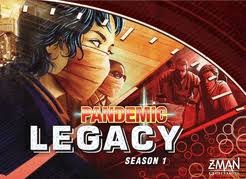
9. Pandemic: Legacy Season 1 (Up 6)
Pandemic has always topped my list as one of the best cooperative games ever created. I have spent a lot of time playing it on my tablet, and I actually prefer to play it by myself because I have a habit of quarterbacking the game and ruining it for other people. Along comes a chance to play the legacy edition and it helped to alleviate this problem because each new month presents a new challenge with it. I loved this way of playing the game, and I might hunt down the other seasons to see how they breathe new life into a game already love.
8. The Crew: Deep Sea Six (Up 1)
After finishing the Search for Planet Nine the year before, I did not think that I would play the Crew again. Then I ran into new friends that had a copy of Mission Deep Sea. I had played this a couple of times and always considered it the better version of the game, but with them, I was able to push through a lot of the missions though we did not complete the whole campaign. I still consider it the best cooperative game out there, making it impossible to have anybody quarterback the game, and everybody has to play their part. It is also the most inventive use of the trick taking mechanic I have ever seen. This is a great game, and I can see it popping up again on the list next year.
7. Imperial Assault (Down 3)
I have played the opening missions for this game on numerous occasions, looking for a group of people that would want to play through the whole campaign. This last year, I found that group of people and was able to play through the whole campaign. It was a blast, and as they powered up, I was able to throw more dangerous things at them. It ended up being a great lite version of role playing, and dungeon crawling all set in the Star Wars universe. It made me want to try out some of the other campaigns that are out there, but I do not know if I will get the opportunity because I now have to find another group that might want to play the game. It took me years the first time around, and I expect that this could happen again.
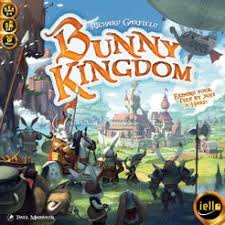
6. Bunny Kingdom (New)
This was another game that was introduced to me by going to a game night. I did not know what to expect with this, but when I started to play, it became apparent that this cute game about carving out a bunny kingdom on a grid was more complicated and strategic than the artwork implied. I really fell in love with the game quickly, and we played it a couple of times that night. I won both the times I played, and that is not why it makes it so high on this list this year. I loved the fact that I took different paths to victory both times which showed me the depth that this game possessed, and I am sure it could get higher if I am given the chance to play it more often in the upcoming year.
5. Arkham Horror: The Card Game (Up 6)
This has been the game I go to when I want to play a good game, and there is nobody around to share the experience with me. I love the fact that it is complicated, has many different scenarios with their own intricacies making each one feel unique, and it tells a great story in the process as well. I have not dumped a lot of money into this game yet because the two campaigns I own have been perfect enough to keep me happy. I have played them each a couple of times, and I have not gotten bored of them yet. I have also found others who want to play the game as well, so it might change its place on my shelf as a solo game to a collaborative campaign style game that might change my view of it in the coming years, but as for now, it is easily one of my favorite games to play on a dark night when I have nothing better to do.
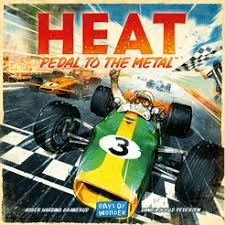
4. Heat: Pedal to the Metal (New)
I was never much one for racing games, but ever since this one made it to the store, I had an interest in playing. It was more about the deck-building then it was about the race, but when I finally played it, I found that the race is what really brought this game to life. The deck building is a brilliant way to get you to feel what it is like to be an F1 racer. It causes you to put together a nice balance between collecting the cards, speeding ahead, and trying not to lose control of your car. It also comes with different racetracks that if played together creates a mini-campaign. This game was an unexpected surprise this year, and I can’t wait to play it some more adding in the more complex additions that the game comes with.
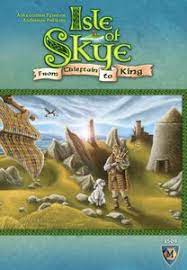
3. Isle of Skye (Down 1)
This is still one of my favorite games. I love the feeling of piecing together my little corner of this Scottish island while connecting things to make it as pretty as it can possibly be. I know that this is not the strategy you should employ to play this game, and every time I start a new game, I think to myself that I won’t do this, but in the end, I always have to make it look pretty. The combination of the bidding and the variety of the challenges makes this game quick-paced and different every time I play it. It will take a lot to remove this game from this position on my list. My only complaint is that you need at least three people to play, and I think it works better at higher player counts, so I don’t get it to the table as much as I would like to.
2. Final Girl (New)
I went out searching for a new solo board game, and decided on Final Girl and decided on the Happy Trails Horror feature as my first box. I didn’t know how much it would get me hooked, but the simplest of games in this series had me playing it at least once a week. I have since expanded to the Panic at Station 2891 feature, and even just having two has given me enough material to keep me busy for a long while. I love the fact that you can change the final girl that you are playing with, or place a monster in a different location, giving the places their own feel. It is completely immersive and I feel as if I am in the horror movie that I am playing. I know I am hooked and will keep adding features as I play this game more and more.
Chinatown
I know that this game is out of print, and has been reskinned recently, but I still love the original Chinatown. It is a simple game that can be taught in five minutes, but it is the simplicity of the game play that opens the game up to a complex fun interaction with the other people at the table. It is a pure negotiation game, and the interaction is what brings me back to this game again and again. I have introduced it to so many people, and every time we play, we laugh so hard about the negotiations that take place. I do not care if I win or lose, I just want to negotiate. This is why this game has taken the number one spot again this year.
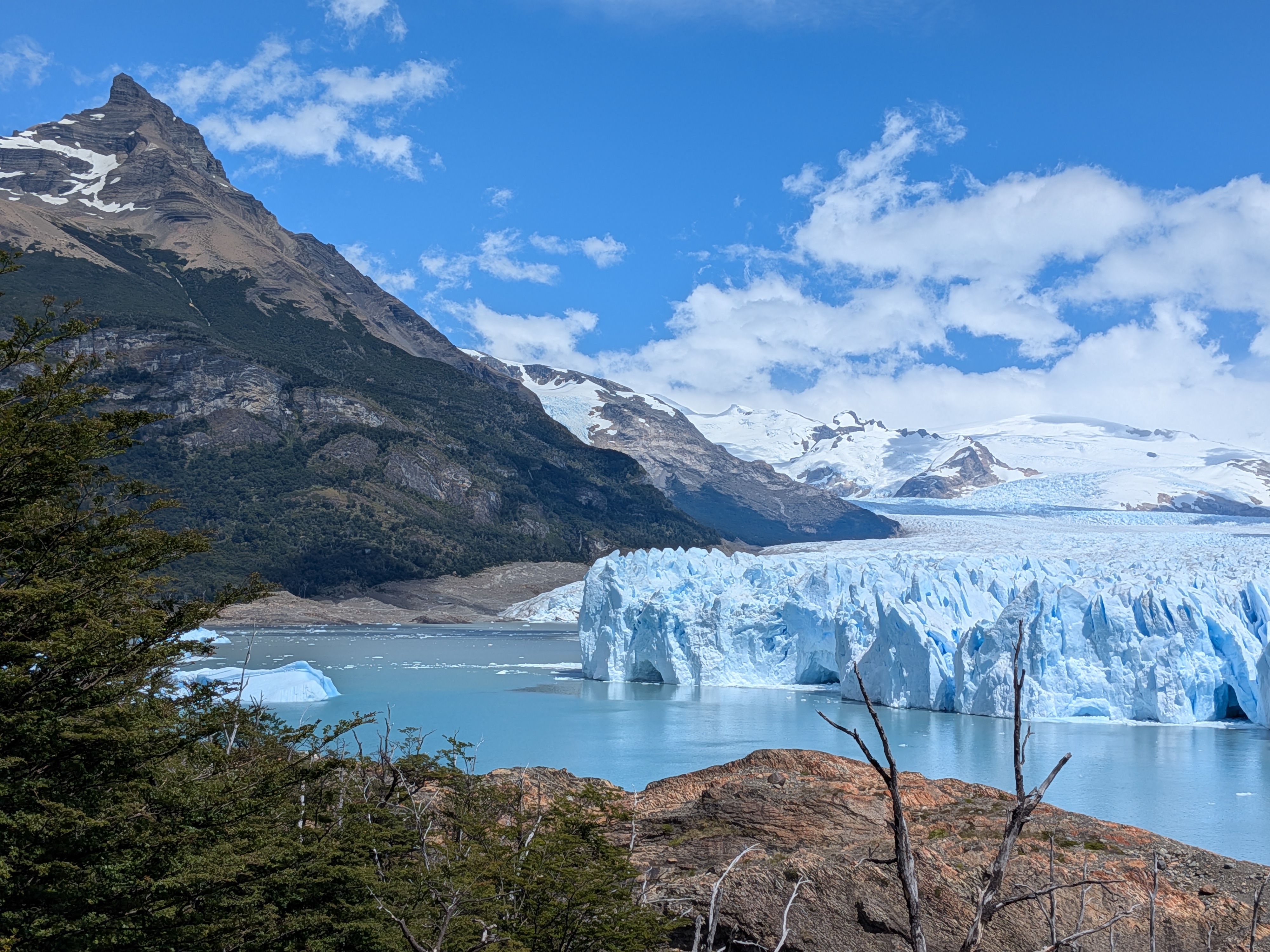
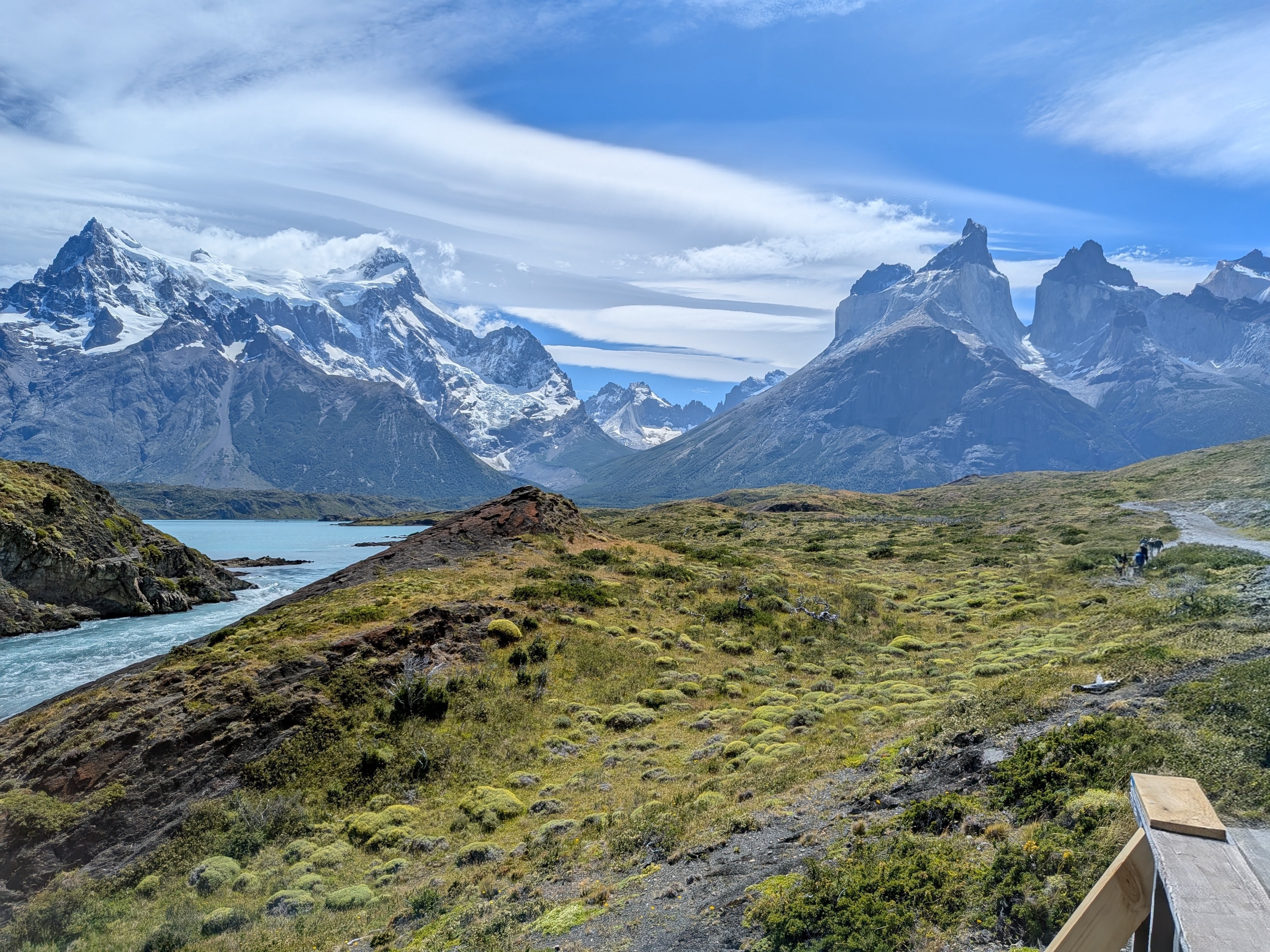
It was not exactly what I was thinking of when I think of Summer Break. Most of the time I get visions of hot weather, lying on the beach, and roaming around the world. Of course, most of the time when I think of Summer Break, this happens during the months of June, July, and August, not January and February. Then again, I had never lived in the southern hemisphere, and never really thought of this time of the year as the summertime, so when I got to my first Summer Break, I thought of the one place where I could visit that would let me experience the travel fun of Summer Break, but give me a little chill that I have become accustomed to this time of the year, and the place that was closest to me where I could achieve this goal was Patagonia, the very southern tip of South America where summer does happen, but more like I would see if I had visited Alaska, or some place in Scandinavia.
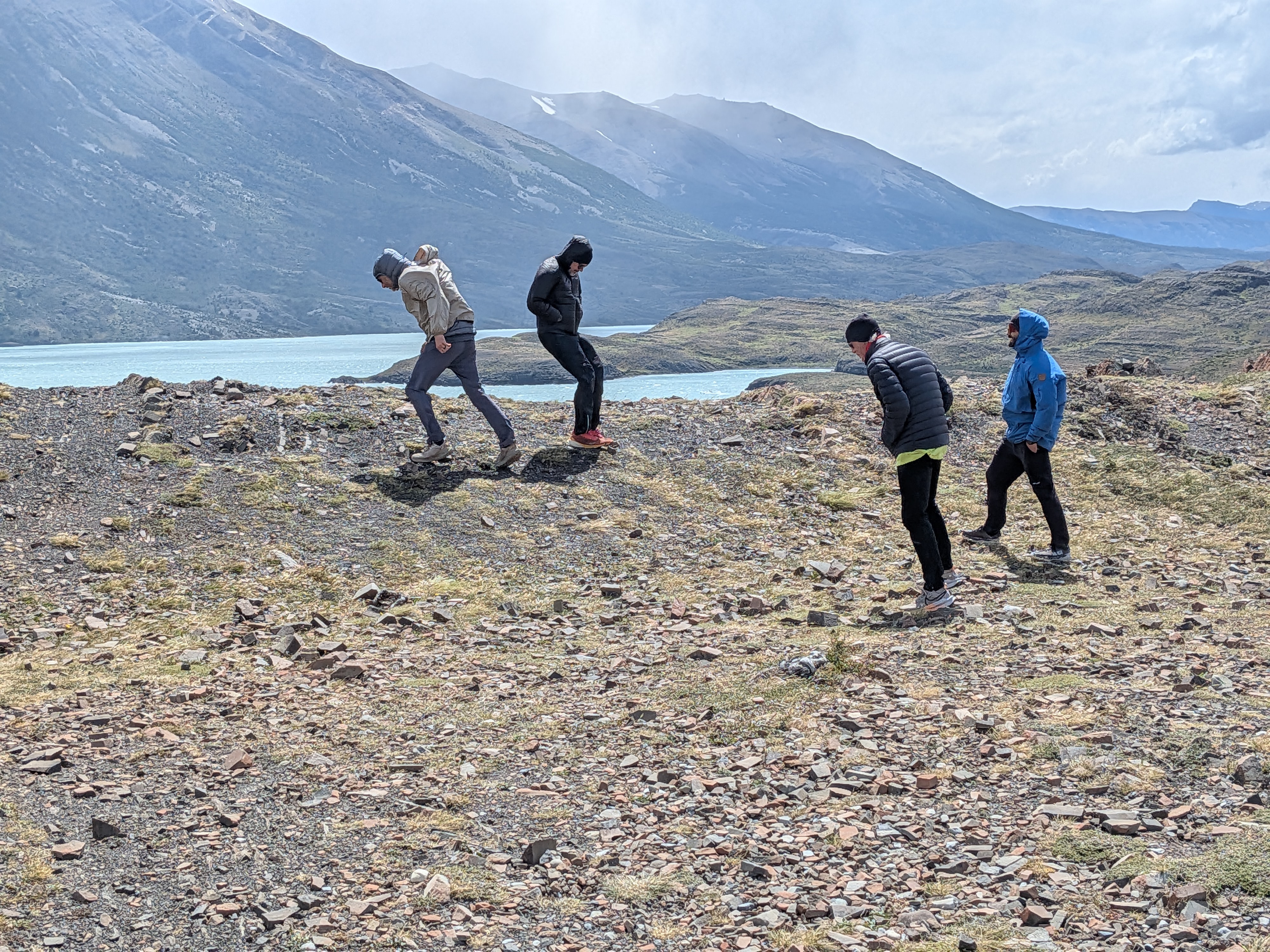
When I thought of going to a place where the sun set for only a couple of hours a night, and the weather of summer does not reach as well as some other place closer to the equator, I had visions of my time spent in Iceland. It was amazing, but it is also a hard place to stay in. We had encountered a lot of rain there, and the wind can be brutal. I was pleasantly surprised to not see the same thing in Patagonia though we did have some rain, and one day of brutal wind. It was so bad that things would just blow off of us and disappear over the mountain ridge. Also when renting our car, they showed us how to open up the doors to prevent the wind catching them and blowing them off the car.
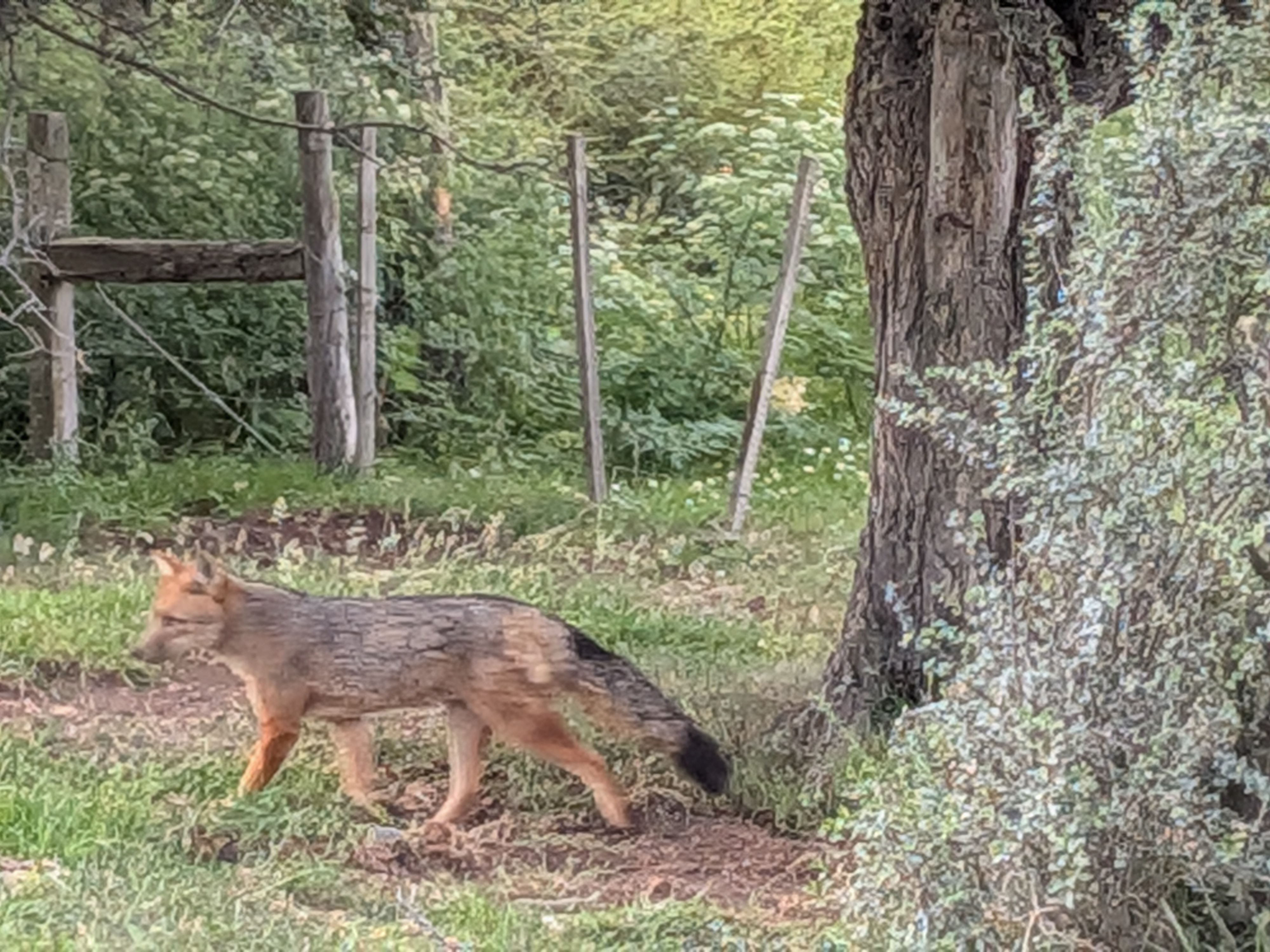
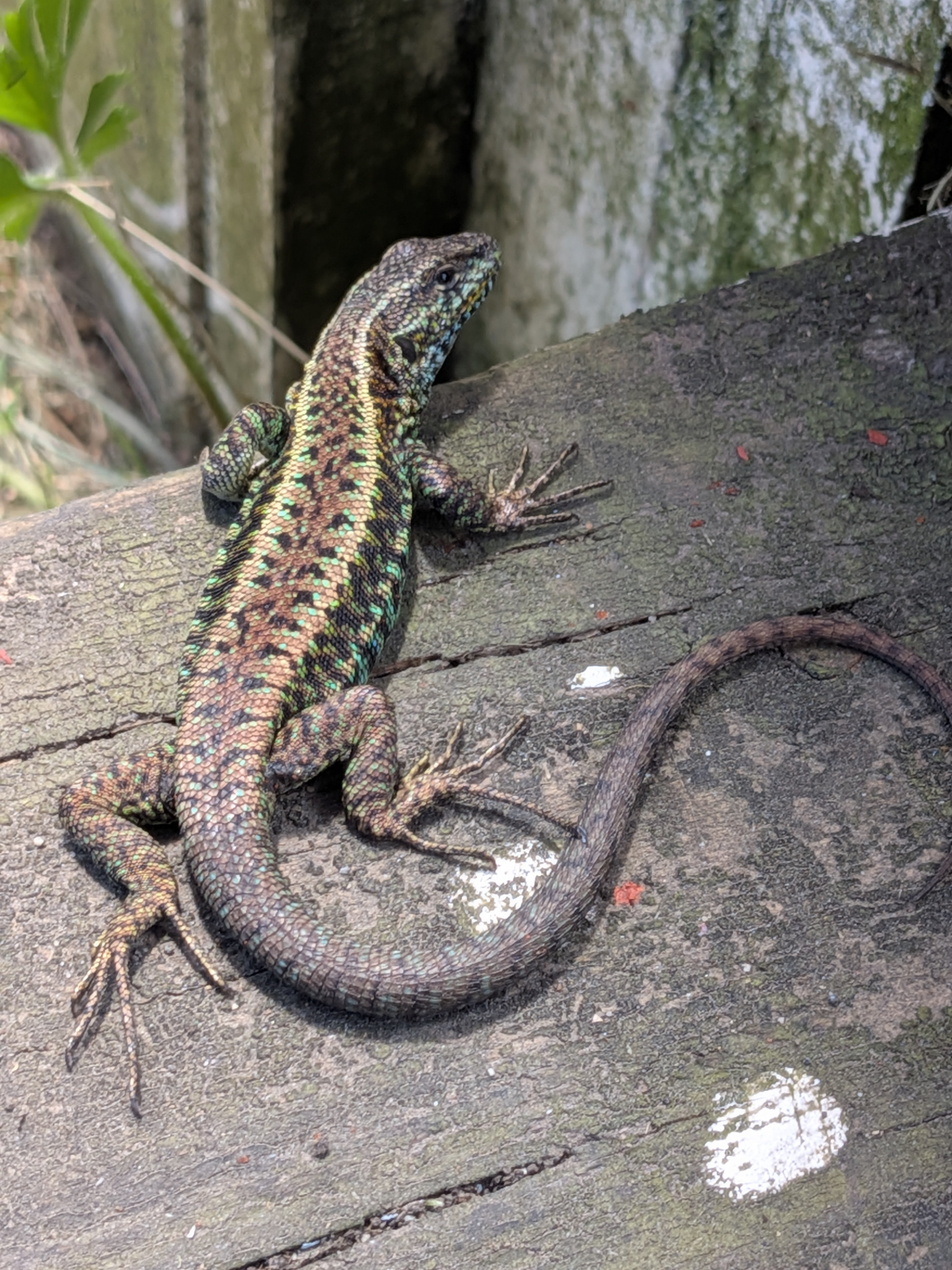
Despite the possibility of harsh conditions, life is still able to find a way. I know I should not have been surprised by all of the wildlife that I would find out there, it still shocked me. The animals varied from guanaco, a large relative to the llama, to the fox, to the condor, and even puma which we were not fortunate to see. Still, almost every day out there we encountered an animal that was living its best life despite the fact that they also had to contend with the wind, and rain, and probably even harsher conditions when it is no longer summer.
Even though we had some amazing days, it still did not feel like summer. A lot of that probably had to do with the fact that we had to always carry layers of clothes with us wherever we went. At any time the weather could go from sunny and warm to windy and cold, and if I did not have a rain coat with me at all times, there was the possibility of getting drenched in a torrential downpour. It just meant that we had to do a little extra planning every day before we left our place to go and adventure out into the exciting things we could find at the tip of the Americas.
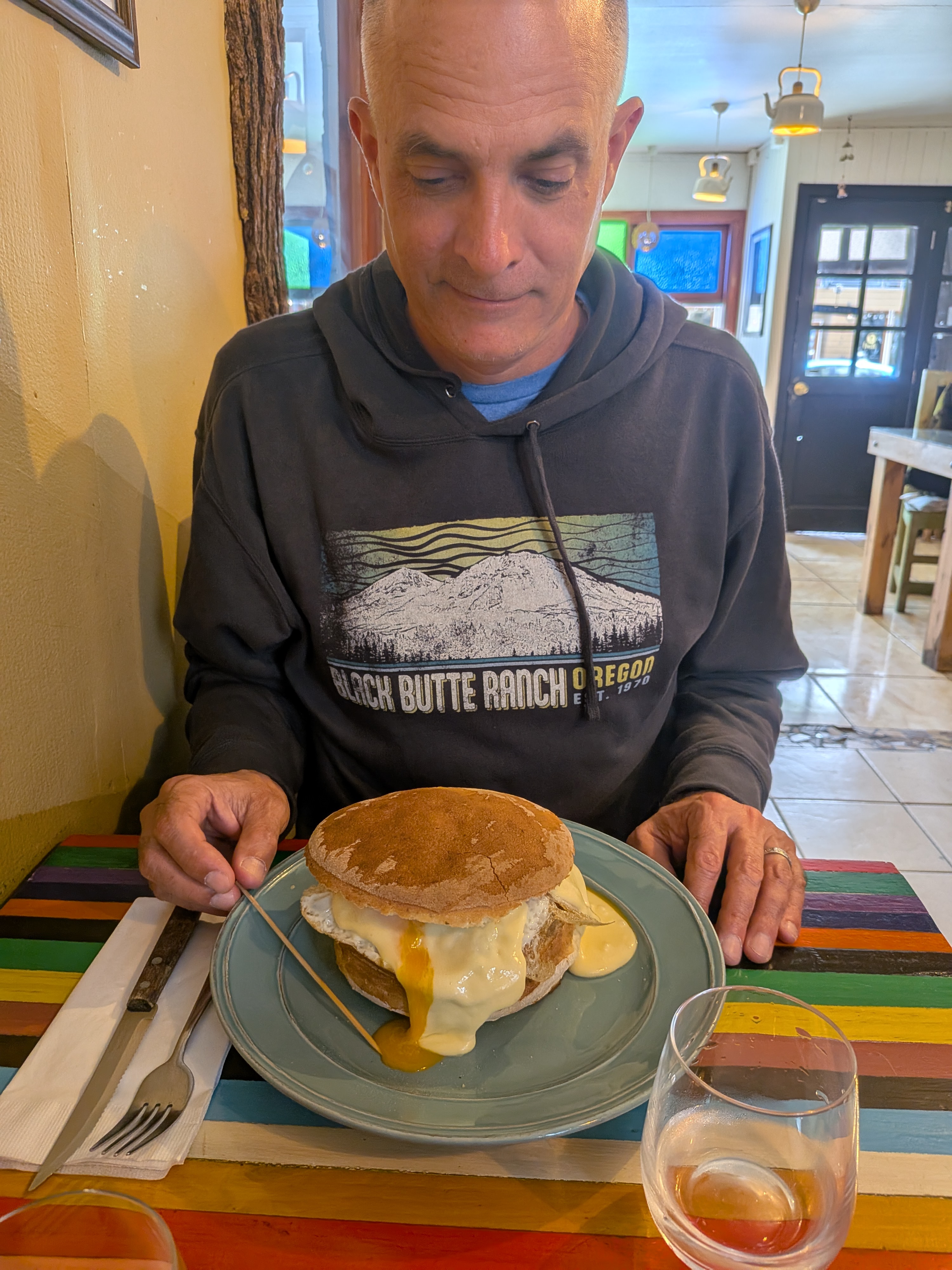
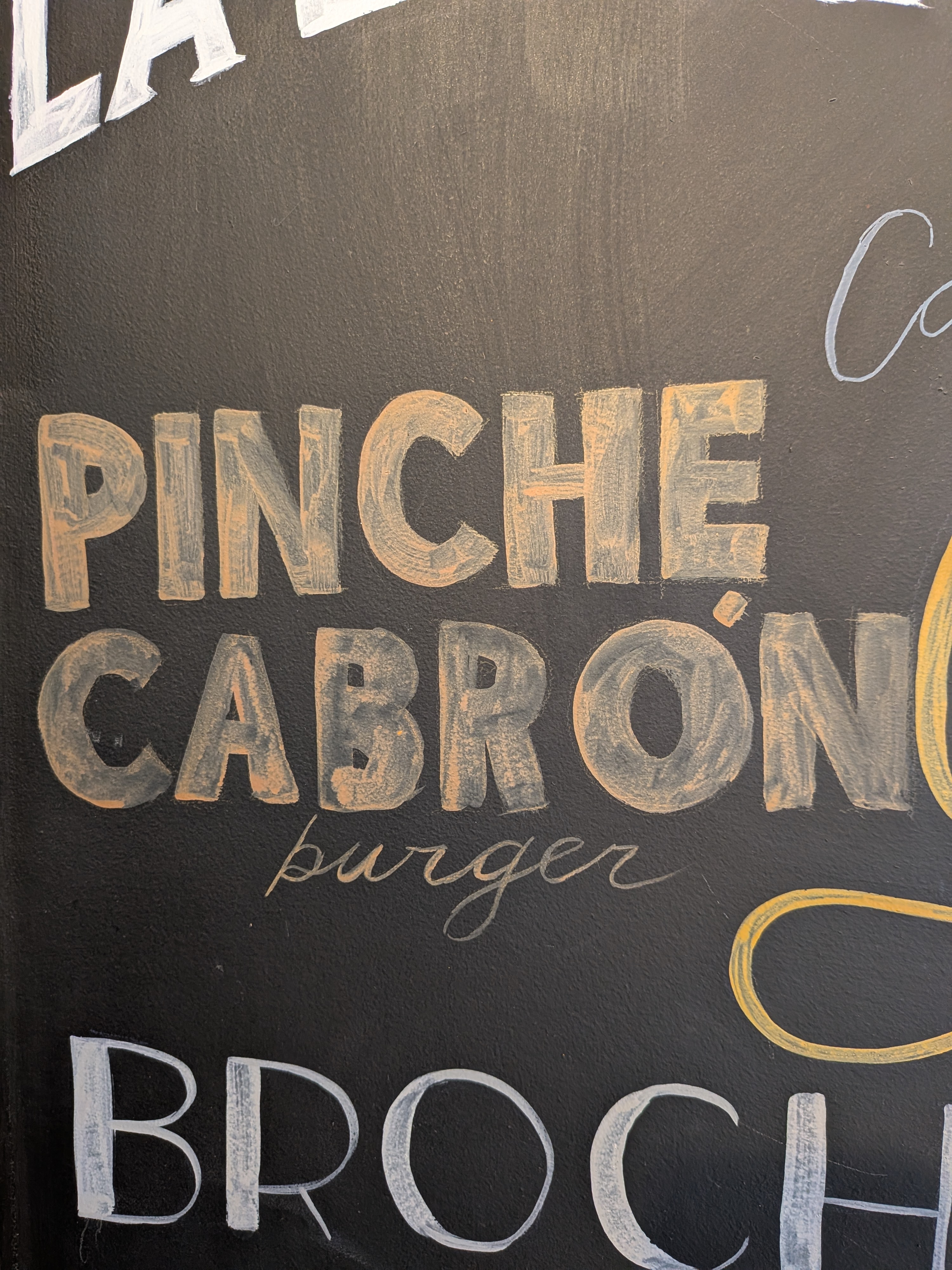
And the surprises came from many places other than the natural beauty that we came out there to see. I will be honest that I did not have grand expectations for the food. It is not like Chile and Argentina are either known for their cuisine, and coming from Peru meant that there would probably be a step down in the quality of food. This was not always the case. I was able to have parrilla which is a grilled food where you see whole animals slowly rotating over an open fire, and that was spectacular. But I was also able to find great seafood, bar-b-q, and some sandwiches that were nothing like I had ever had before. I still do not know how to describe the cuisine in Patagonia, but I can tell you that there are some places, especially in Puerto Natalis, that are delicious, and can compete with many other countries out there.
I also thought that the language would not be that big of a barrier considering that I am starting to pick up a little Spanish. I would even go as far as to say that my Spanglish es muy bueno. Spanish is the main language used in this part of the world, and I was able to get by okay when reading it. It was when I had to interact with the locals that my limited Spanish did not do so well. I have gotten used to the Peruvian accent, and the Chilean and Argentinian accents are dramatically different. I have to really concentrate on what people were saying, and I still could not get it because of this barrier. Still, it is a big tourist destination, and there was plenty of English spoken in the region, so it never prevented me from having a great time.
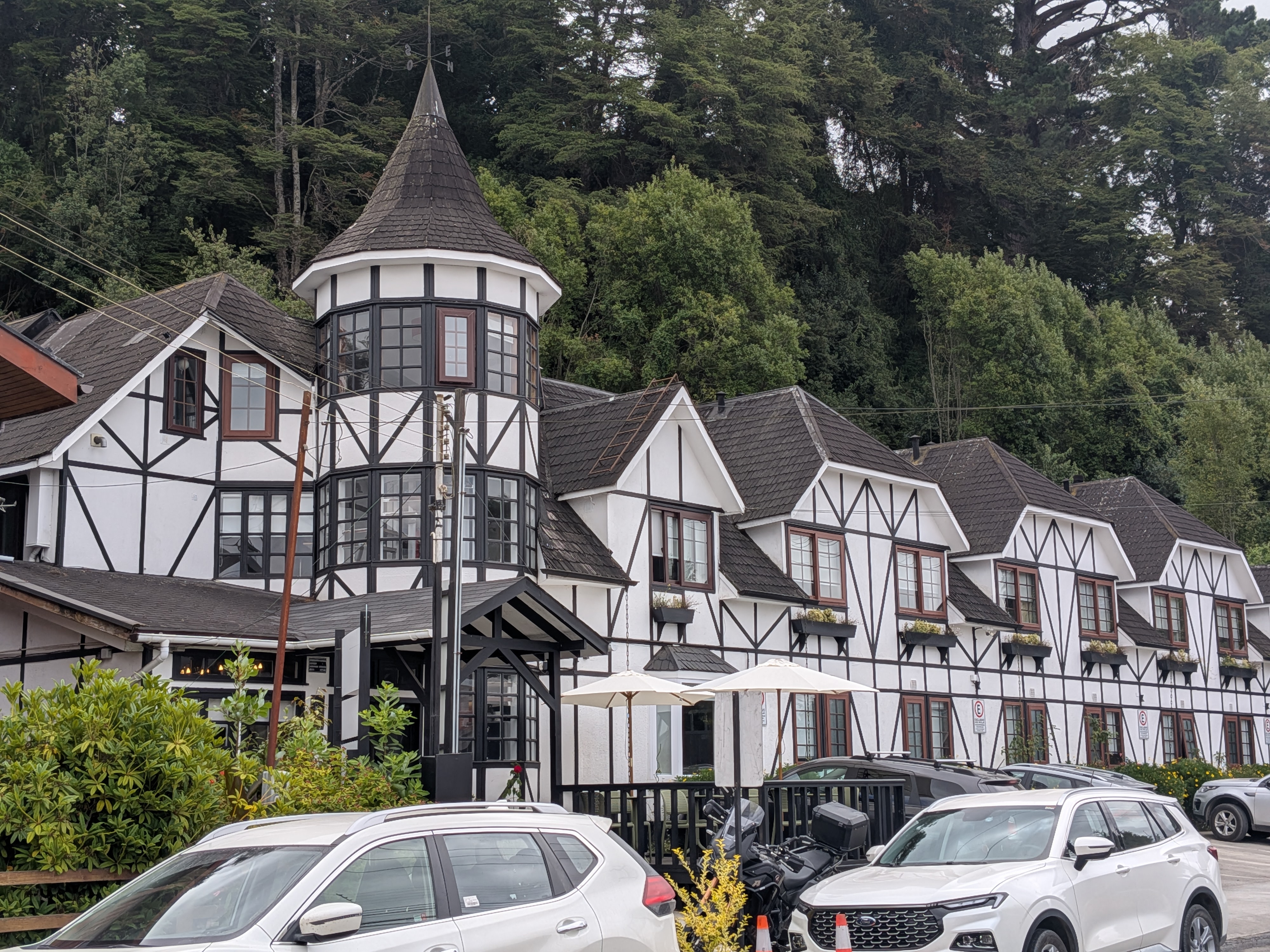
I was also surprised by the amount of German I found there. I am not talking about German visitors because that happens everywhere in the world. I am talking about the German influence that can be found in this part of the world. There were German towns filled with German architecture serving German food. I was not aware that the German people were also some of the ones who immigrated to this part of the world, and I knew that after World War II that some Germans came out here. But I never thought that I would see their influence in the towns, and people.
After a while, I started to look closely at all of my surroundings, looking for those surprises. They started to pop up all over the place, one part familiar, and yet at the same time exotic enough to remind me that I was in a different place, experiencing a season during the time of the year I was not expecting it. The whole trip became another moment of wonder and made Patagonia one of those places that I will carry with me wherever I go.
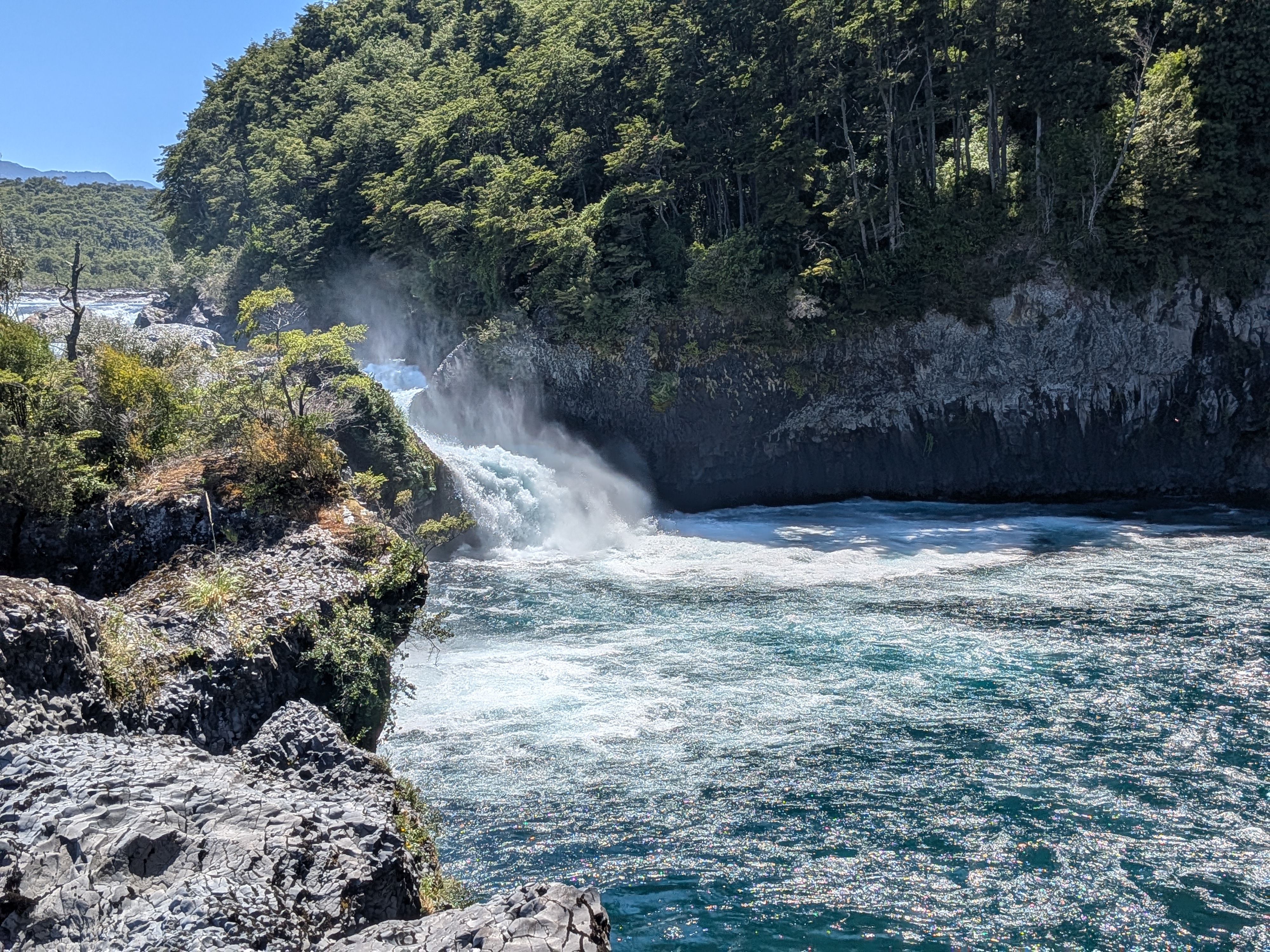
Of course, the real attraction to this part of the world is the natural beauty. It seems as if Patagonia is one of the untouched places left in the world. Yes, there are the towns filled with restaurants and hotels, but they are a ways from the natural attractions that can be found out there. Tours do come through to drop off a bunch of tourists. Still, if you plan your time right, you can find yourself in some spectacular locations where it feels like you are the only ones there.
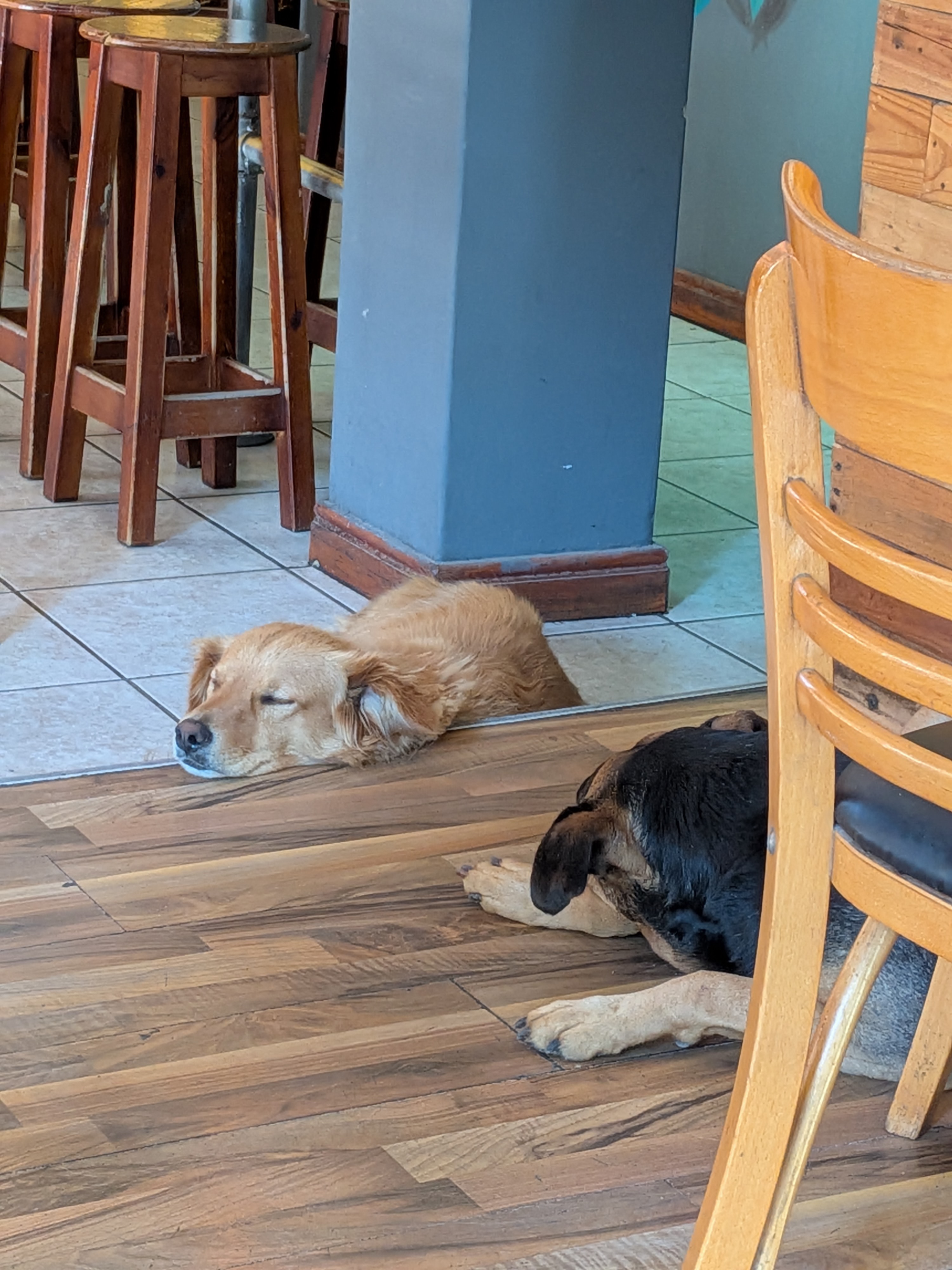
It did not take me long to adjust to the change of seasons and accept what I was seeing as part of my Summer Break. I got into the groove of the towns and forgot that my family living on the other half of the world was enduring a cold, and bitter winter. I do not think that I will have a problem making this adjustment as I continue to live in the southern hemisphere. Jus like the dogs that we ran into in all of the places we visited, I start to become comfortable with my surroundings and enjoyed them for what they had to offer when they were willing to offer it.
Until next time, enjoy those seasons whenever they are given to you.
















 John Collings