Betrayal at House on the Hill – A Review

It is the classic Halloween story, a group of misfits find themselves outside of a haunted house, and for some odd reason they want to investigate. Like all great Halloween stories, there is a twist in this one. While they are investigating, one of them turns on all of the others, and it turns into a crazy attempt to escape from the clutches of the haunted house. Will this band of misfits make it to safety, or will the betrayer have his or her way with the group and bring them into the lonely confines of the house on the hill?

This is the premise that players will find themselves in when they pull Avalon Hill’s Betrayal at House on the Hill from the shelf and play a round of the game designed by Bruce Glassco with help in development by Rob Daviau, Bill McQuillan, Mike Selinker, and Teeuwynn Woodruff.

THEME
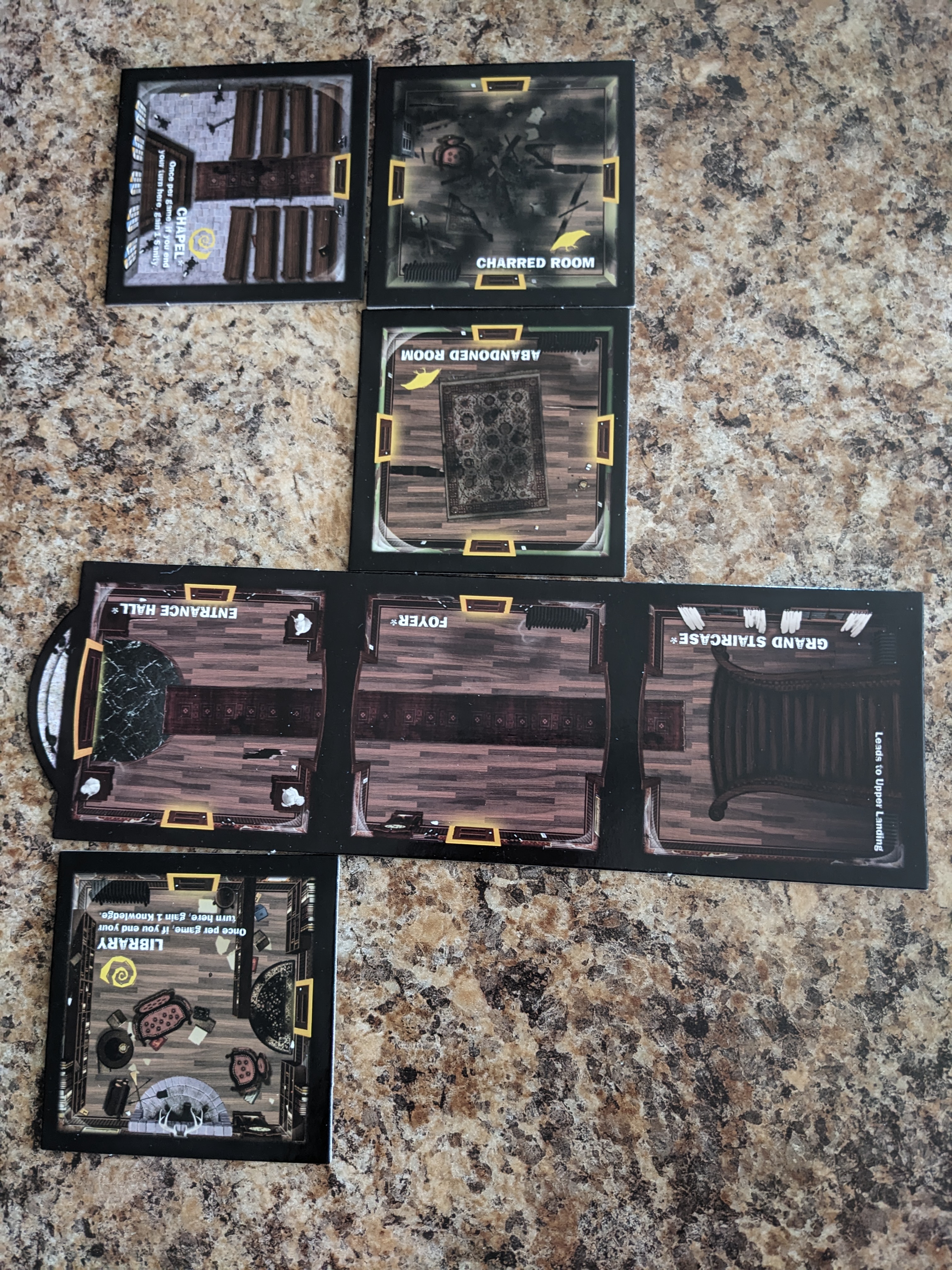
Betrayal at House on the Hill is the perfect game to play during the month of October. One session that lasts anywhere between one and two hours will tell a horror story that will make you one of the characters of that tale. It has a little bit of a Scooby Doo feel during the first part of the game where you explore the haunted house. Each tile flipped over adds more to the house, and creates more of a mystery. It also forces the players to make the biggest mistake that a group of explorers can make in any horror movie, go off on their own to discover what they can find. The game also comes with set of cards that have flavor text to them that when added to the various characters creates a great horror story full of all of the tropes that you would hope that a game like this would have. After a few game plays, the flavor text becomes predicable and it is hard to make a different story with it. On the other hand, if there is enough time between game sessions, the flavor text gets forgotten and you are able to create your own story.

The real adventure begins with the second part of the game when the betrayer is revealed. This is when the real horror story starts. There are fifty different scenarios that comes with the base game, and each one introduces different game play as the players try to solve the mystery of escape the house. It is also a mystery as to which scenario will be played as there is a great system in place to make sure that the mystery is unknown until a certain thing happens and unlocks the game play from that moment on. Some of the scenarios are more fun than other ones, but if you hit on one of the fun ones, the theme really shines and you feel like you are a part of a horror movie. All of the flavor text that you discovered before combined with the final events play out in a way that tells a complete story that will have you wrapping yourself in the moment of the game.

On the other hand, when it does not work, the story becomes a slog to work through, and you are trying to figure out a way to make it end. I have had this happen a couple of times, and I no longer cared about winning the game. I only cared about the way to make the story end as fast as I possibly could.

Rating – 7

GAMEPLAY
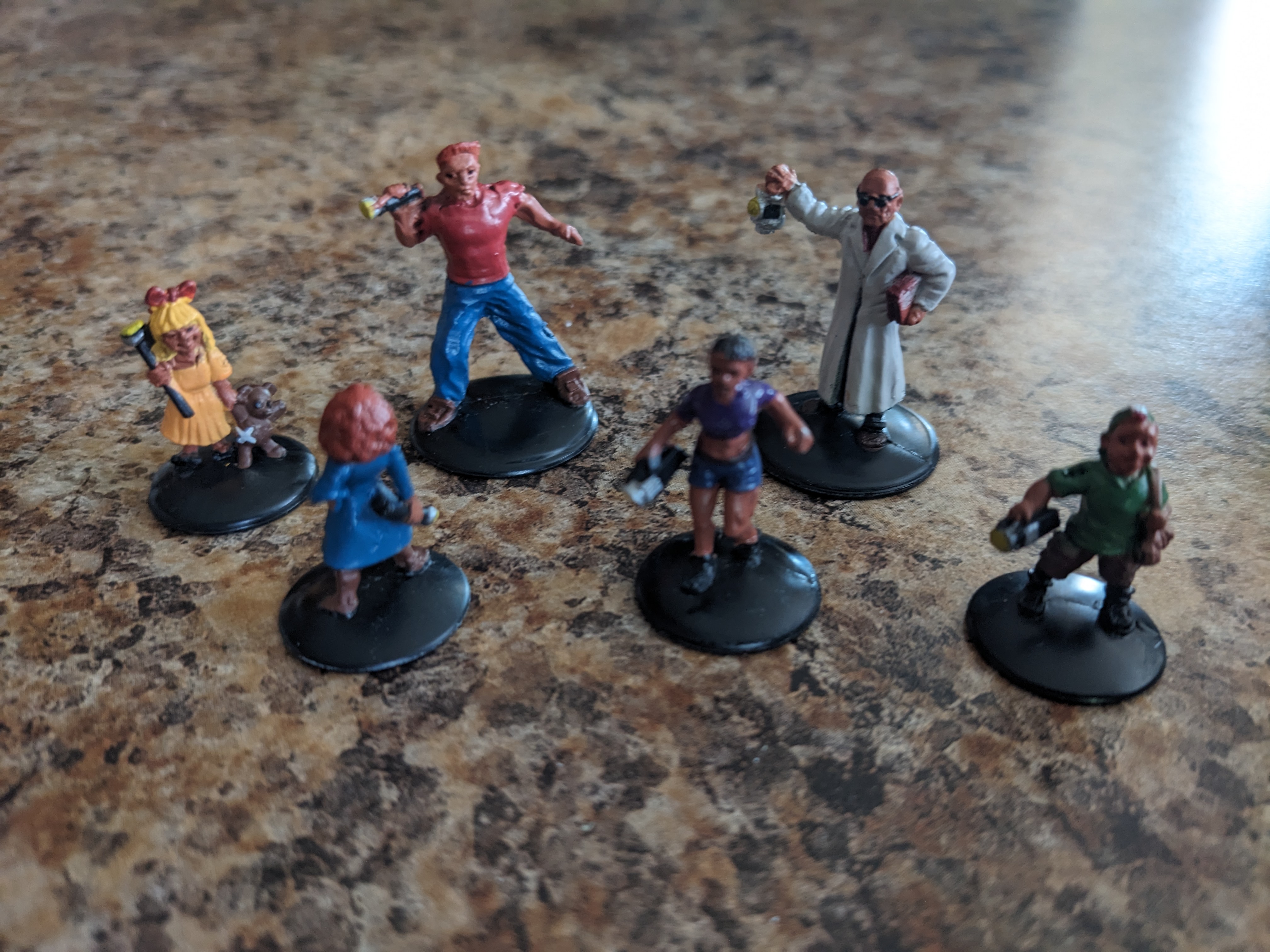
The game is broken up into two phases. The first phase is the exploration stage. During this phase, the characters start in the entry way of a haunted house. Each character is unique in their abilities. Some are faster and stronger; whereas, others are smarter and have a stronger resolve. Each of these abilities can grow stronger as the characters explore the house. On each of their turns, they flip over a tile to add to the map and then follow whatever is triggered by the room they enter. Sometimes this is a trap that will have them fall down to another level, or a mysterious room that will transport them to another part of the house. Most of the time involves finding an item, encountering an event, or experiencing an omen. The omen and event cards cause the character to try out their luck against the situation by looking at their abilities on their cards and rolling the amount of six sided dice that is indicated by their number. The dice only have zeroes, ones, and twos on them. After they roll, they add up the points, reference the card with the amount they rolled, and see what happens.

If an omen is revealed, the character has to roll again with six dice, and based on how many omens have been revealed, if they roll lower than that, the second part of the game is set in motion, the betrayal. They players look at which room and which omen triggered the betrayal. Then, they look in a book that came with the game, and based on the matrix, it will describe which scenario they will play, and who will be the betrayer. The betrayer takes control of the real threat of the haunted house, whether that is zombies, vampires, or deadly clown, and the two opposing sides have certain win conditions that they have to meet in order for the story to be complete.

The game is surprisingly easy to teach. There are intricacies to the game which can be brought up while the game is being played, but for the most part, I usually just go over the key rules, and hop into the game. When one of the rules needs to be discussed, I will bring it up, but that is a rare occurrence, and most of the time, I go right to having fun.

The game also works better with larger numbers as it fun to put all the individual stories together to create one overall narrative, but a lot hinges on the ability of the betrayer to guide everybody through the story. Considering that nobody knows who the betrayer is going to be at the start of the game, it means that anybody will have to be willing to take on this role and do it justice. Inevitably what happens is someone who is not great at running a game is the one who becomes the betrayer, and the second part of the game does not work the way that it is supposed to. This game works best with people who play role-playing games and are capable of taking on the Game Master role which means that this game is not for everybody. When everybody invests into the absurdity of the situation and helps tell the story, it becomes a blast to play. When more people who are not willing to help the story plays the game, the whole matrix falls apart and the game is not as fun. This makes it hard to get this game to the table. In other words, it is a hit or miss kind of game. When it is on, there is no game that is better. When it is off, it is painful trying to get through a whole game.

Rating – 6

ARTWORK
The artwork in essential to bringing to life any role-playing game. It helps to immerse players into the story. A real good game will consider not only the characters that are being used while playing, as well as the environment. The team of Justine Mara Anderson, Christopher Moeller, and Peter Whitley put all of this into consideration when putting together the feel of the third edition of the game.

The house that is created throughout the course of a game is created by tiles that give the perfect bird’s eye view of what each room would look like. It helps to feel like you are in a haunted house while you play the game.

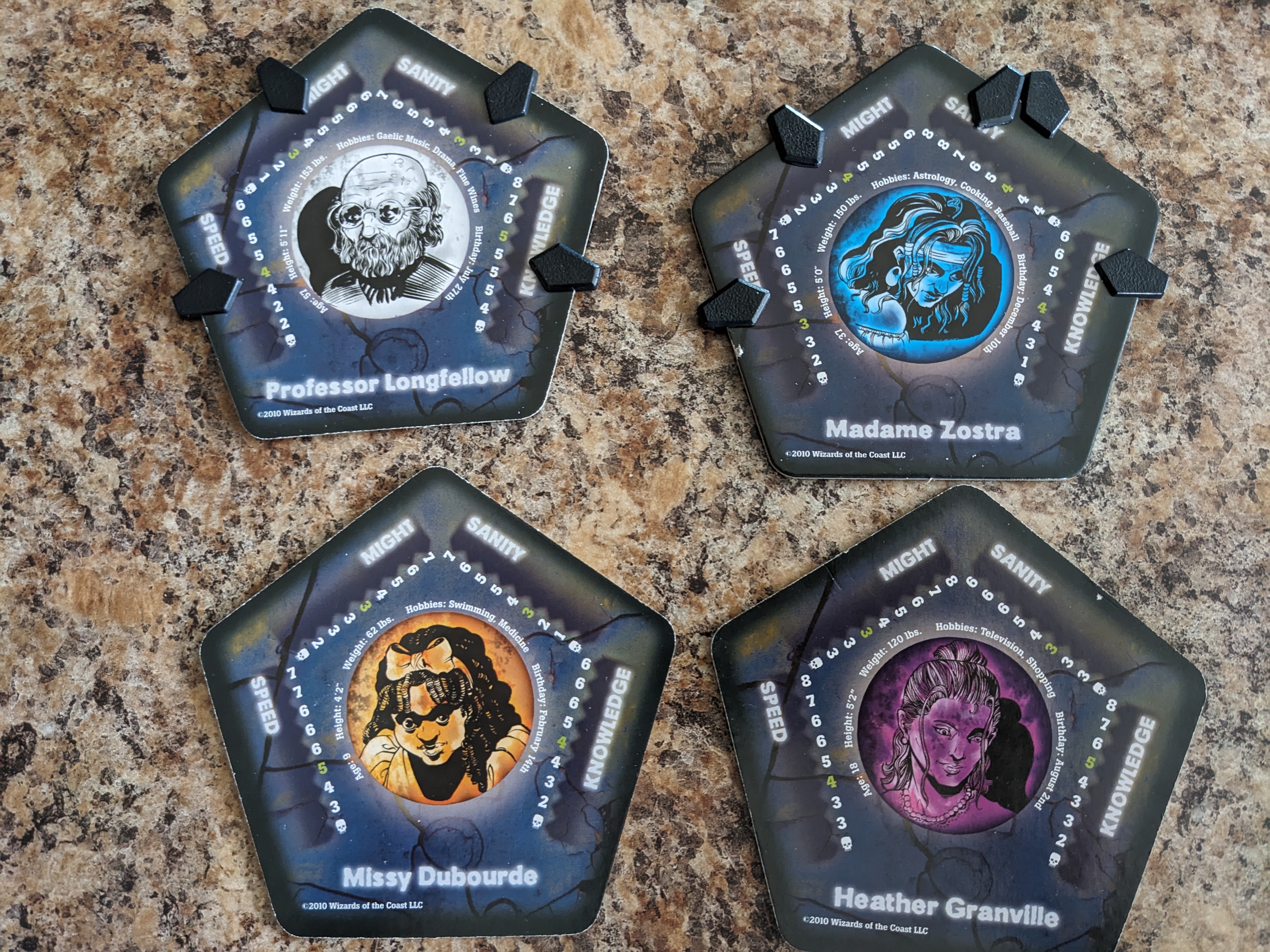
The minis that are created are great if you are one of the characters. They look pretty good, but with the intricacies that are found with minis today, they are not as detailed compared with other games coming out today. They did a good job of giving them different solid colors so that can easily be found on the board and associated with character boards. Each character board is double sided with two different characters giving the game twelve different characters that you can play. Each character is given their own little quirks that helps players find a way to become a part of the role.

After the betrayal, there are a series of monsters than appear on the board. There are a lot of different creatures that can come into the story, and the designers understood that if they made a mini for each one, it would make the box massive, and the price of the game would have gone up. To combat this, they made little cardboard tokens. It does help with the space and what they can keep in the box, but the monsters are tiny pictures and do not help with the immersion of the game.

Some of the components do not work the way that they are intended. There are little tabs to keep track of the different stats of each character. They are hard to attach to the character boards, and they do not move once they are on there even though that is what they are designed to do. Considering this is an important part of the gameplay, it is annoying that they do not work well. They do sell other character cards that have dials for each of the stats that would work better, but why not put them in the game in the first place instead of supplying the game with a poor design. The game is not that expensive to begin with, and raising the price just a little bit to have better components would not take away from people buying the game.

Rating – 6

INTERACTIVITY

The first phase of the game has the potential for being a great moment for people to interact with each other, but once again, it depends on the people playing the game. It all comes down to how much the group wants to tell a story together. The flavor text that comes with each card that is flipped over, combined with the different characters, the rooms, and the imagination of all present, it can create an original story every time you play. The horror tropes might be the same, but the way that they are tweaked for each retelling will allow the story to unfold in fun ways. It requires the players to add those missing holes to make the story really come alive when you play the game.

On the other hand, if the players just flip over the cards, read the flavor text, and expect the story to be told through just that alone, the story will never come together. It requires that extra interactivity to make the game work on all cylinders, but it also takes players who feel comfortable with this kind of storytelling experience.

The second phase works better forcing people to interact with each other, and the story unfolds more naturally. Both the betrayer, and the party that is left behind are given clear goals to achieve. The party is actually given some time to discuss what they want to do with that goal, and can look over the map that they have created in order to make a plan of attack. The betrayer will not have an opportunity to interact with the group during this planning stage, but they will be the one in charge of the game and will have plenty of opportunity to interact as the game continues. However, the same problem occurs in the second phase of the game that exists in the first phase, the people playing the game have to feel comfortable playing this kind of game to really have it work the way it is supposed to. This becomes more important when the decision of who is the betrayer comes into play. If the person who is the betrayer is not comfortable in this role, then the whole game falls apart. They need to be that extrovert that will help the game come alive, allowing everybody else to find that extroverted side of themselves, and allow the story to play out with all of the little details that were collected in the first phase of the game.

Overall, the game allows for many opportunities for interactivity, and can create a memorable night for those willing to stretch themselves to make the game really come alive.

Rating – 6

EXPANSIONS
There are a couple of different versions of the game that are basically a re-skinning of the original version that is designed for different audiences. One, Betrayal at Baldur’s Gate, is designed for people who would like a Dungeons and Dragons experience with the same kind of mechanics. It would be the perfect edition for a group of role players that find a night of adventuring falling apart, but they still have enough of the group together to still play a game. The other is Betrayal at Mystery Mansion that plays the game with the Scooby Doo characters. This is the perfect setting for this game because even in the original version of the game, it feels as if you are a part of a Scooby Doo story.

There is also a legacy version of the game that takes place over decades. Players don’t just play one character, but they play families instead depending on whether a certain character survived or not. I have not played this legacy version of this game, but it appears to play with the same mechanics as the base game, and extend the story. I would consider it like your favorite horror franchise with each game being a new installment.

All of these are stand alone games, and there is really only one expansion out at this time, The Widow’s Walk. The base game is needed in order to add this expansion, and it adds another floor to the adventure, the roof. It also comes with fifty more encounters, new monsters, and new items. Though it does add more elements to an already full game, it is mainly for those that have played the game so many times that they are starting to repeat some of the scenarios. It helps to breathe life into a game that some love so much that they need that little extra.

Rating – 7

OVERALL

I will start this overview by saying that the best experience I have had playing board games over the last couple of years has come from playing this game. We were so immersed in the story and all the pieces fit together so well that I still talk about it with the people I played it with. On the other hand, one of the worst experiences I have had playing games has been playing this game. The people I was playing with were not into the story, and we even had to switch the betrayer because they were struggling with running the game. It through these experiences that I realized that this is not a game for everyone. If you like your Euro games, and puzzles that have a theme but that is not central to the game play, then this is not a game for you. If you like your storytelling games and love the opportunity to help guide the storytelling, then you will love this game. You will just need to make sure that the people you play it with feel the same way; otherwise, it will not play out the way that you would hope everytime.

Overall Rating – 3.2 out of 5 stars
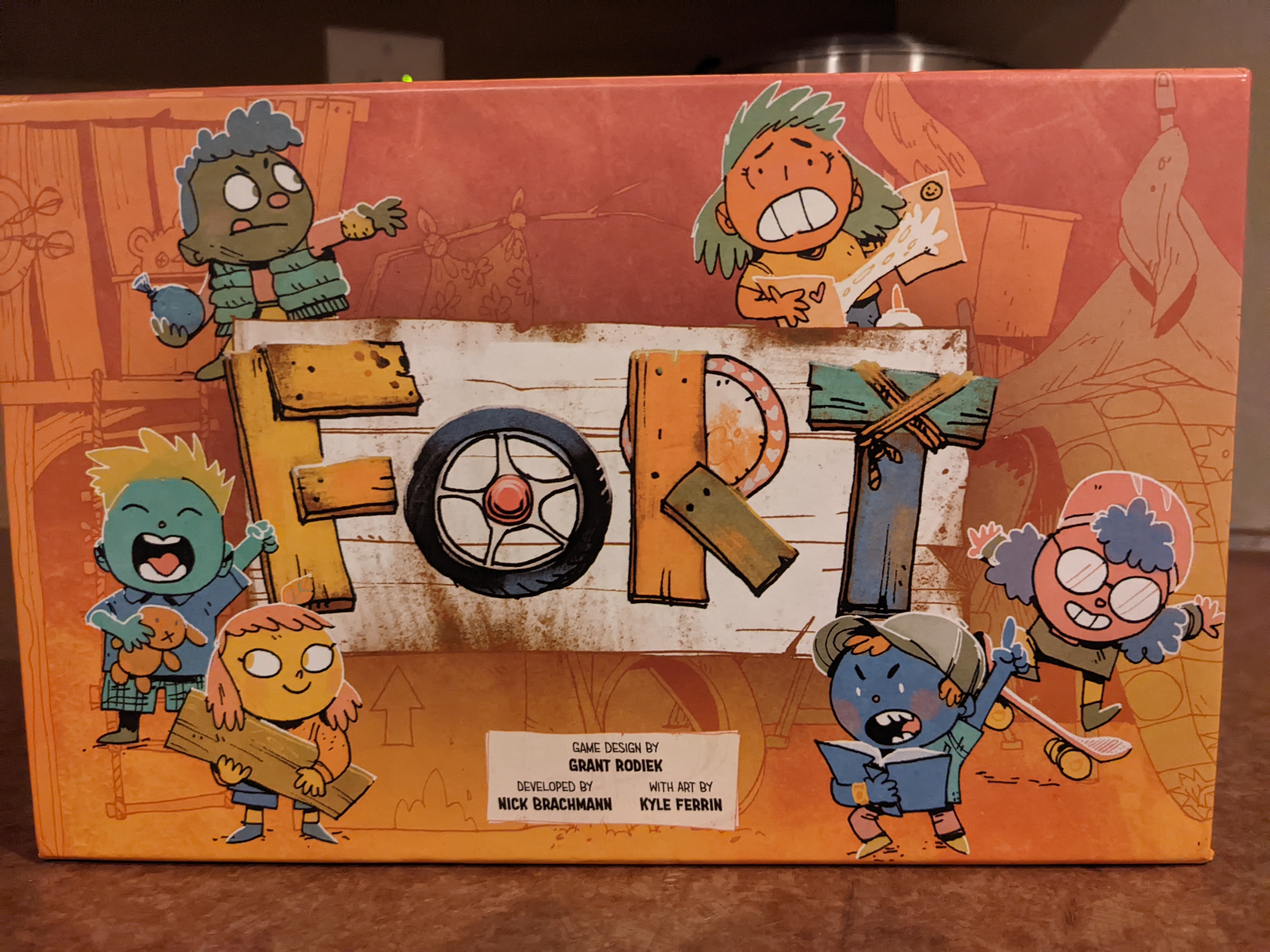
Fort – A Review

For those of you who follow this blog, you know that my wife and I travel a lot. Usually, I like to bring a smaller game with me, so during those down periods, we will have something to play. Usually this means a card game, and because my wife love the game so much, it usually means that we will be bringing Phase 10 with us. As far as card games go, I really do enjoy playing this one, but I have played it so many times, that I need to put aside for awhile. So when I started to prepare for a three week long Iceland trip, I started to look for a new game that I could take with me that would be refreshing, and a little more complicated. That is when I found one that might work from Leder Games, the king of board games with only four letters in their titles. I thought the theme, and the use of a simple resource management mechanic combined with deck building might make for the perfect game to bring on this trip.

THEME

You are a kid who likes to hang out with his friends, eat pizza, play with toys, and most importantly, build a fort in your backyard with this group of companions. Like any group of friends, there is a rival group of friends who want to outdo you by eating more pizza, playing with more toys, and making a better fort in their backyards. Of course, the friends that are collected are fickle. If you don’t play with them, they will run off and join some other group to help them build their fort, so it is important to make sure that they get some use. You can always make sure that they remain your friends forever by giving them a prestigious position in the lookout, but if you do that then they loose their special abilities, and can only help out by helping with which resources they bring to the mix. Of course, your best friends will never run off, and will always be by your side, and they will also help you come up with your own special rules to help you make the best fort possible.

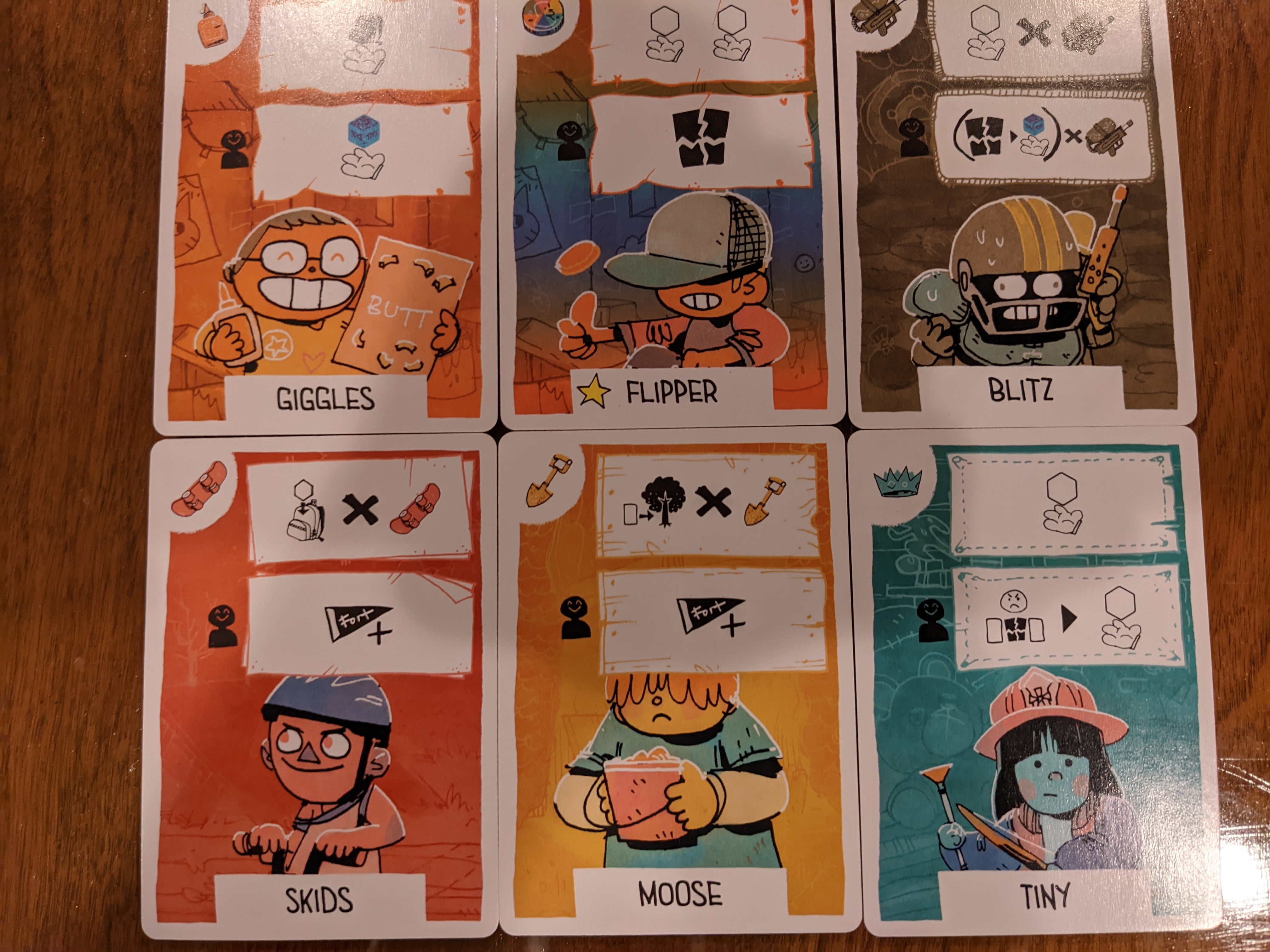
I absolutely love this theme, and it works so well with the gameplay. The amount of characters that are represented in this game are numerous, and there are only a few repeats of cards. The fact that you bribe these kids with pizza and toys just adds to the overall theme, and there are moments when you want certain kids to play with you, so you are always looking at the ones that did not get used by your rivals. Certain kids get passed around all over the place, making the most popular kids in the game. Despite this, it is not as immersive as some of the other games I have played, though it does work well with the story that it is telling.

Rating – 8

GAMEPLAY

Leder Games is known for its complicated games that take multiple plays to become comfortable with the system that they have built. This has been a turn off with my wife who like medium level games where she can wrap her mind around the system rather quickly. Out of all of the Leder Games that I have played, this is the one that is the least complicated, and can be learned in fifteen minutes. Even though this is the case, it does take a couple of games before you can start to develop of strategy with the game.

At its heart, Fort is a deck building game. Each player has a player mat where they will pay attention to the resources they collect, and the level of their fort. They will also have a collection of ten cards to start off with, five of which will always be in their hand. Each card will have two actions that a player can take if they play that card. The top action is a shared action that if the other players meet the requirements of that action, they can do the same thing. The bottom action is a private action, and can only be used by the person playing the card. These actions allow you to do certain things like gain resources such as pizza and toys, build up your fort, or move a friend of yours into the lookout. A combination of these things set allow each player to reach a winning condition that will being about the end of the game.

Each card also has a suit with it that can trigger certain things from taking place if enough of the same suit is played. This means that if a player plays his or her cards right, they can use all of the cards in their hand at their turn. This is important because any cards that are not played go into the player’s yard unless it is one of their best friends which instantly go into their discard pile.

The last action that a player takes on their turn is to add a new friend to their deck. This is where the game can get a little brutal, and shows you what kind of friend you really are. The selection comes from three cards that are always shown from the unused deck of cards, or the cards that are out in other players’ yards. This means that the card that you did not use and were hoping to use at a later date could be stolen by another person and end up helping them instead.

The gameplay is not that complicated, even though there are a lot of actions that a person can perform. The design of the game was smart enough to give every person a cheat sheet that explains what each of these actions are and how you can use them. It does take one play-through to start to formulate a strategy that might work for you, but a game does not take long enough that you feel like you can’t collect everything up again and play another round after you have figured out how everything works together. Of course, the first play takes a little longer than following games, but when you get into the groove, a game plays around thirty minutes.

The gameplay also represents the theme well, and it creates a fun experience. Like most Leder Games, it has a learning curve that might discourage certain players, but if they can get over that hump, I believe they will eventually come to enjoy the game.

Rating – 8

ARTWORK

I may be a little biased, but I love Kyle Ferrin’s artwork. It is one of the things that always draws me to Leder Games. His cartoony figures add as much to the game as does the gameplay. Fort may be the game where his artwork fits in with the theme the best. Playing the game, and seeing all of these children sketched as cartoon characters, it makes me feel as if I am a part of some Saturday morning cartoon that never actually got produced. Each of the characters are completely different, and there personality seems to jump off of each card.

The design is not only based upon the drawings either. The resources that you gather are nice chunks that have a toy box or pizza painted on one end. They fit in nicely into each player board. The player boards themselves are these chunky pieces of cardboard that has indents in them that allows for fun manipulation of all the piece that you collect throughout the course of a game. And on the back of each board is the background of each player’s best friends which though not necessary, is a still a nice detail that adds to the overall enjoyment of the game.

Basically, I don’t think that there is any game that Kyle Ferrin could not do the artwork for that I would not be drawn to, and is one of the main reasons that I like to bring this game to the table. It is a little deceiving though. These characters that look like they could have been drawn by Charles Schultz make the game appear like it could be enjoyed by a much younger age. But this just adds to the nostalgic feeling that I get when playing this game.

Rating – 10

INTERACTIVITY

The game is fun to play because of your always changing deck. This deck changes not always because of the cards that you pick up from the big deck, but because of the cards that you take from other players’ yards. It makes this fun interaction take place during the game. This gives you the ability to manipulate other people’s hands, and at times, it hurts when a friend that used to be yours shows up in somebody else’s hand, especially if that kid has a power that you desperately need.

This interaction does add a little bit of fun to a two player game, but because only one kid from your yard can be taken each turn, your hand does not change that much throughout the course of a game. In a game with more players, this interaction becomes more important. Players can gang up on another player if they see that this person is getting closer to one of the win conditions. One player could lose a lot of their cards making their hands less powerful and they would need to build up their group of friends again. It adds for some fun moments and the kids that get traded around start to get their own personalities that add to the overall story you are creating as well.

Players are also interested in what other people are doing during their turn. The shared action on the cards allow the other players to do something even when it is not their turn. It also forces you to think about which card you are going to play because there are times when other players cannot do something with that shared action, and you will want to think about whether or not this is a good time to play that kid. It just means that you are constantly thinking about what other people are doing while planning out your strategy as well.

The design of the game was put together so the various players around the table are interacting with each other, but that interaction works better on higher player counts than it does with only two players. It is still fun with two players, but I find myself wanting to play with at least three.

Rating – 9

EXPANSIONS

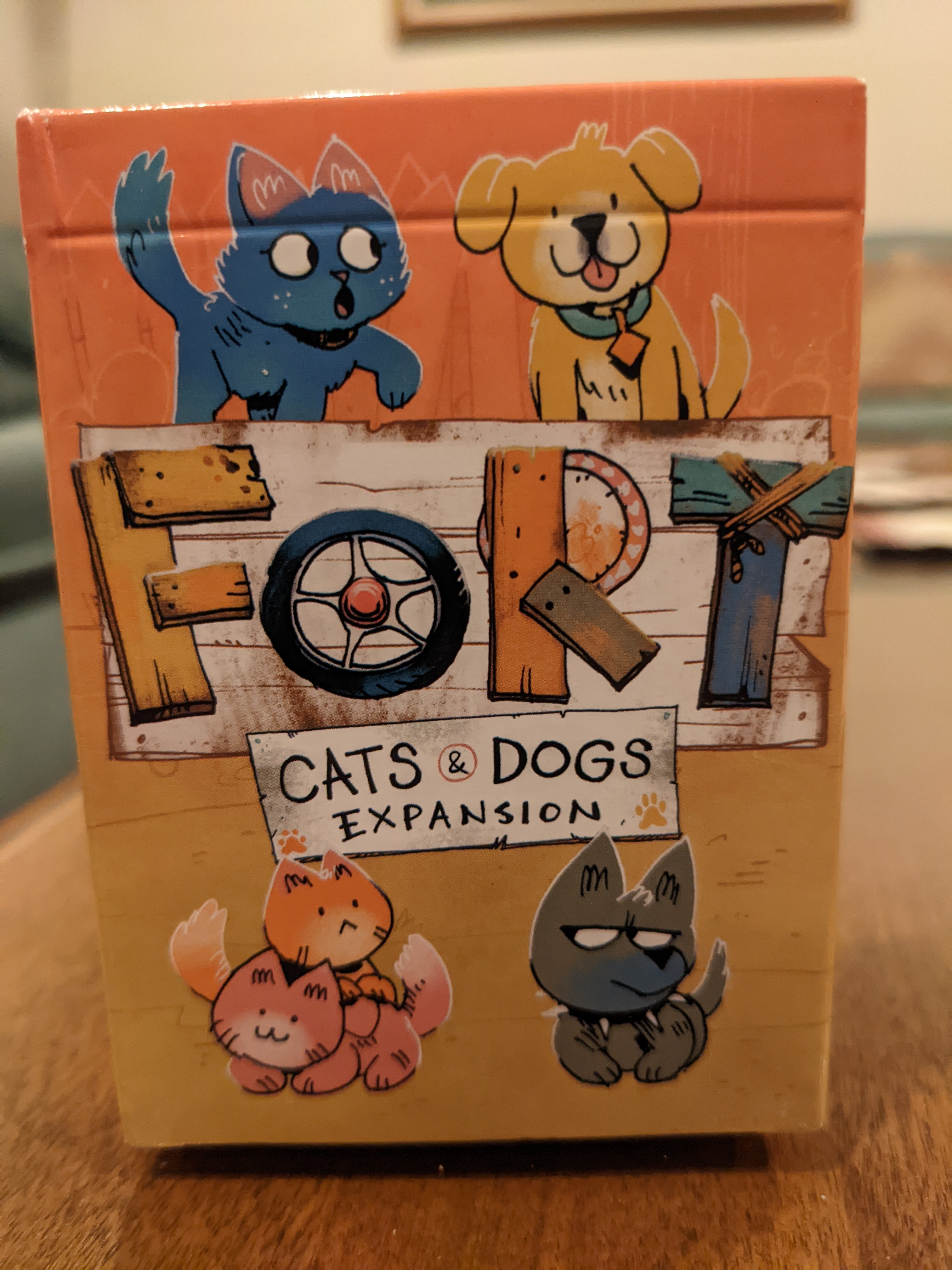
Leder Games is known for their expansions to their games. They know that some games can lose their edge if you play them over and over again because it feels as if you are playing a round that you have already experienced. When they design their expansions, they do it in such a way that does not just add new cards to the game, but also adds new rule sets, so the game feels just as fresh as it did the first time that you played it. I have the feeling that Leder Games has these expansions already in mind when they release their games because the original boxes seem to have spots for these expansion already in them. The game, Fort, is no exception. They have just recently released the Cats and Dogs expansion that is packaged in a nice card box that slides in nicely next to the original deck of cards.

The cards add three new ways to enjoy the game. You can play with the dogs who will always be loyal to the player who can lure them into their doghouse, or the cats who are fickle and will jump around the table to different players sometimes granting them special things, sometimes hinderances, or both at the same time. They do add some victory points for the players at the end of the game, so it is important to pay attention to them while playing the game, but the dogs have the potential of becoming a distraction for the players; whereas, the cats can sometimes be forgotten if you get to involved with what you are doing with your fort.

Still they are both fun, but if you decide to add them to your game of Fort you will want to make sure that you are first very comfortable with the game. They do throw a big enough monkey wrench into the gameplay that it can make the game unbearable if you play with them before you are ready. When you do start to add them, I would recommend playing one at a time before adding them together. I would suggest starting off with the dogs because they are more apart of the gameplay; whereas, the cats can become an afterthought, and you might forget to hand off one to another player. But once you become comfortable with them, they become the only way to play the game.

Rating – 8

OVERALL

I love playing this game, and always look for a way to bring it to the table. The theme is great enough that it will attract others to it, and the explanation of how to play is not that hard that you can teach it relatively quickly. But this is not a game for everybody. Like most of Leder Games, the learning curve of this game to make it feel like you know what you are doing takes a little time, and it might discourage some people from playing again. Still, it is the most accessible of all the games I’ve played from Leder Games, and a great gateway game to get those other games of theirs to the table more often. If you are a fan of Oath or Root, you will love this game as well. It also plays a lot quicker than those other games, making it more of a casual game to play.

Overall Rating – 4.3 stars out of 5

Santorini – Oia, Greece

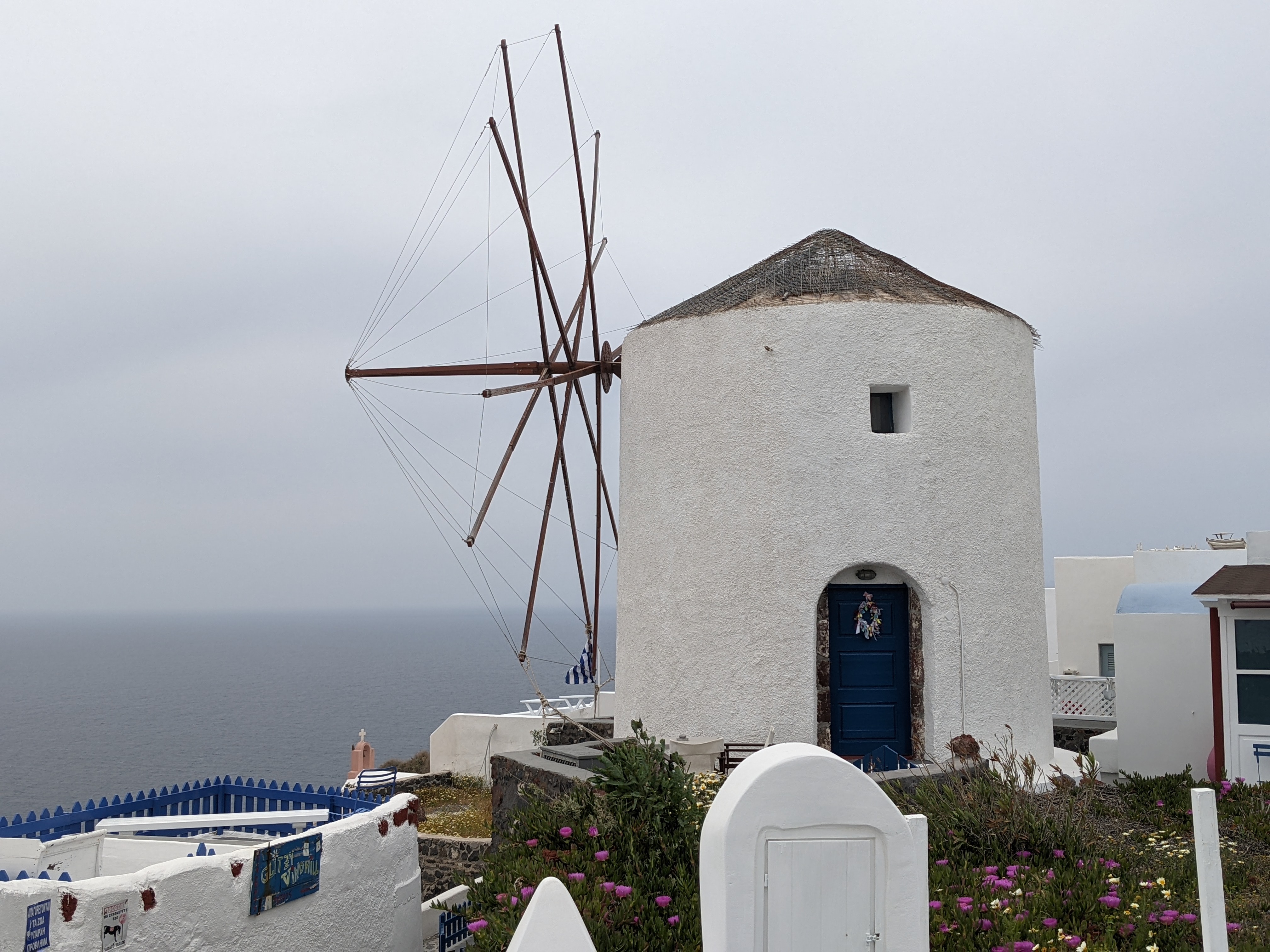
I’ll admit that the only really thing that I knew about the small Greek island of Santorini I learned from the board game by the same name. I never played the game, but it looked really pretty with all of its white buildings with blue domes. It wasn’t until I saw a picture of the island that I learned where the inspiration for this game came from and I knew in an instant that I would have to make my way there someday.

Santorini was a volcano at one time that had a massive explosion that left the island as a caldera looking out over the sea. A couple of the cities on the island were destroyed and there are a couple of place where you can go look at these ruins that outdate Pompeii, and have the same eerie feeling as it.

But it is the recent cities that have been built on top of the cliffs that are the real treat of this island. The buildings all have a similar feeling to them, and they are painted white with blue highlights. It isn’t just the city of Oia on the northern edge of the island either. It is every place where people have settled, whether it is on the caldera side or the seaside. It gives the city a utopian feel that is fun to stroll through and just marvel at the beauty of it.

I know it all started with a board game review that I saw on YouTube, and looking at the little city that white an blue pieces of plastic could make, but I am glad that I came across that video because it has led me to an amazing island out in the middle of the Aegean Sea where I can experience that Greek lifestyle.

Oath: Chronicles of Empire & Exile – A Review

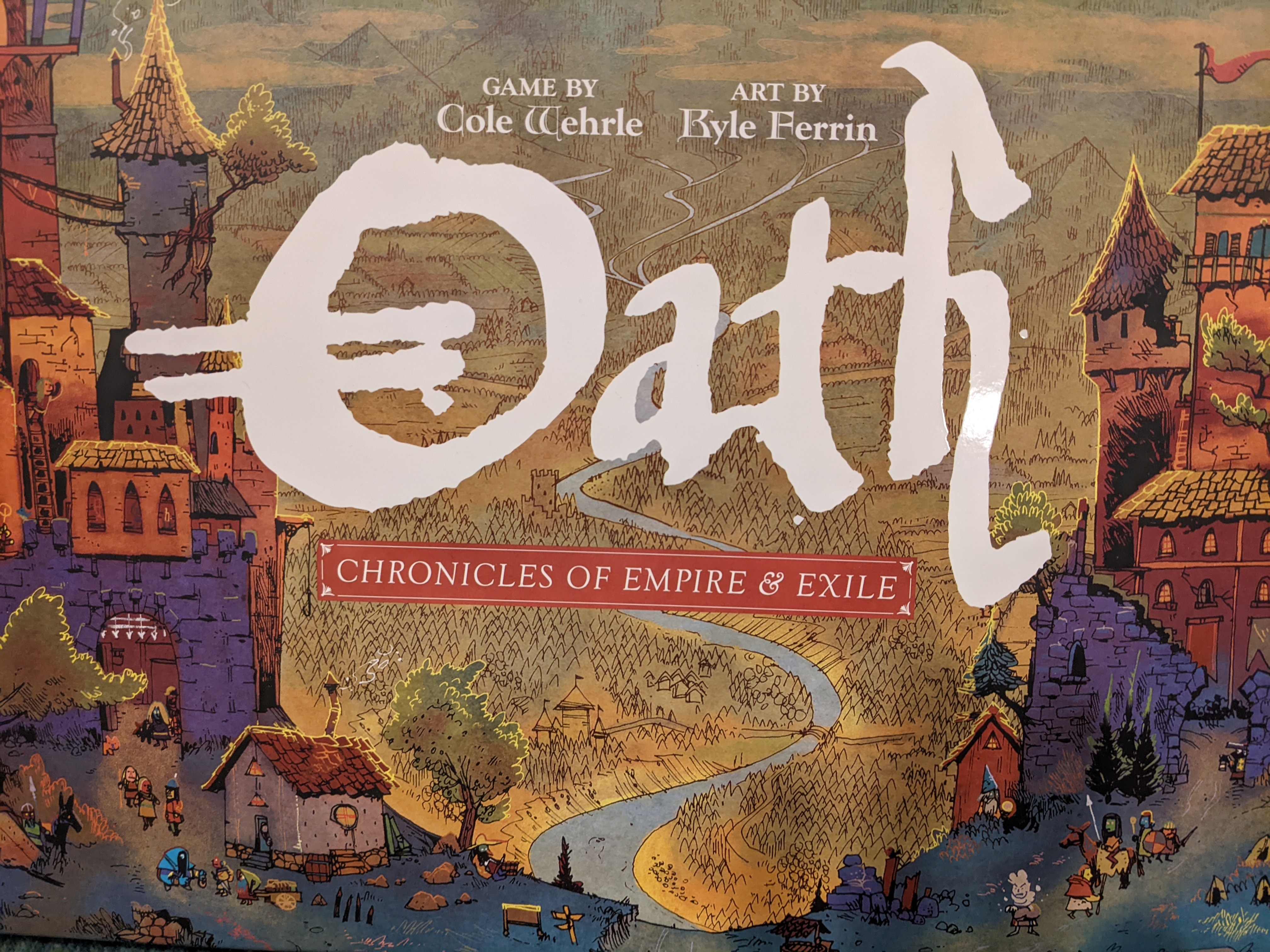
Hints of Oath: Chronicles of Empire & Exile started to surface at the beginning of the year, and there was something about it that instantly made me want to not just play it, but to own a copy of the game. All games have a central idea around it, and they usually focus on things such as dungeon crawl, cooperative, abstract, economic, area control, or role playing. Recently, some game have added a new aspect to it to add a campaign experience to the gameplay called legacy, and I have always been intrigued by these games because it would create a storytelling element to it that would make the experience of playing it unforgettable. The only problem I had with games like this is that after you have completed the cycle of the legacy, it could not be played again. This is a lot of money to spend on a game for only a limited amount of game time. Leder Games saw this problem and designed a game around legacy games’ central appeal, a sense of history.

Think about it. What if you had a game board that created its own history? Every game presented its own set of characters that played out their stories in various landscapes with their own objectives that created a new direction that the world would turn. Then take that world at the end of each game, let the winner write down this history of what happened, and then set up the game for a completely new experience the next time around with a new cast of characters playing their stories out in new landscapes with different directions.

And unlike all other legacy games, Leder Games have set up a system where, like history, the story never ends. This was too exciting of a concept for me to ignore this game, and now that I have played it, I am excited to share my thoughts on its unique and yet familiar style of play.

THEME

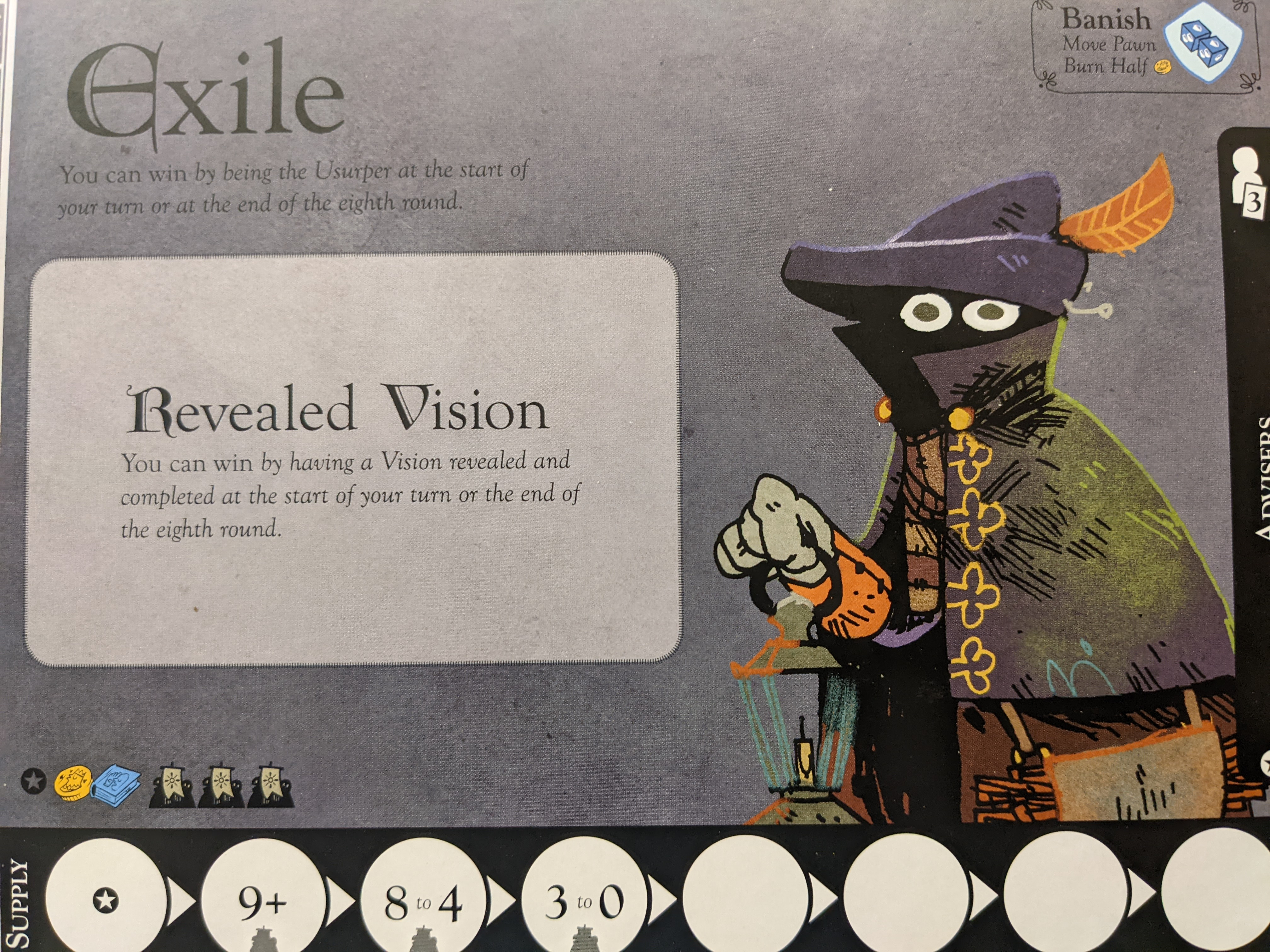
Three areas of the kingdom, the Cradle, the Provinces, and the Hinterlands, is tentatively held together by the rule of the Chancellor. This fledgling government has deployed war bands on some of the lands that it rules of over to keep control over other sights overrun with bandits, and even worse, the scheming exiles who are looking to take over the kingdom for themselves. In the first game, the Chancellor will try to keep control over his land by sheer force of his army, but this is not the only way that the exiles can overthrow this dictator. These other ways come in the form of Visions.

One of the exiles might find in the middle of the night that they have obtained a dream that they can interpret different ways. Maybe if they could collect the secrets of the court and use them to their advantage to make their way up through the ranks. Or they might become the most popular person in all of the land and get the favor of the people. Or they might search the lands for the hidden treasures that have been left behind for a time long forgotten. These powerful artifacts could help them in their rise to power.

The Chancellor still has another trick up his sleeve. He has collected a few of these powerful artifacts and has placed them in his treasury. At any time, he can offer one of these powerful artifacts to one of the exiles, and offer them citizenship into his kingdom. With citizenship comes certain privileges, and new paths to taking over the kingdom as a successor.

All of this takes place in a closed economy where favor is passed off to different factions within the kingdom who use that favor to unleash their special influence over the land. But one faction may gain too much favor which causes the economy fall into the control of the ones who may have advisors who are friends with those factions, making it harder for the other players.

Overall the story sounds like a complicated game of courts and politics that has enough variety to it to allow a different story to unfold every time the game is played. Add into the unique legacy aspect of the game that creates history for each individual game box and you are left with a fun and exciting story that will have you begging to play a new game as soon as you finish one.

Rating – 10

GAMEPLAY

A game with this complicated of a story line might scare away some people away because the gameplay must be as complicated to support it. It might scare others away because there is no way that a designer could take on such an ambitious endeavor without it all falling apart. It would take quite the balancing act to make this work out properly.

But this is where the genius of Cole Wehrle comes into play. He has already made his mark with other four-lettered games such as Root and Fort, and each of those games has its own unique twist on gameplay that makes it unique, but Oath is by far his most ambitious. There is enough asynchronous game play going on this game that you have to pay attention to what other people are doing, or before you know it, they will have taken over control of the kingdom. The nice thing about this gameplay is that, except for the Chancellor whose role is to react to what is going on, the rest of the players have the opportunity to choose their own paths to victory. All of this come in a set of choices that when stripped down are not as complicated as it would seem to be in a game like this. There are elements of randomness, but it is adds more to the story rather than being frustrating when a person looses due to some unlucky role of the dice.

Despite all of these different ways of going about pushing your influence out on to the game board, the gameplay is rather easy to pick up and figure out. There are only six different actions you can take per turn, and some minor actions that you can participate in as well, so it does not take long to figure out what you can and cannot do. Strategy takes a little longer to figure out because you are not always aware of all the new cards you will see during a game and how they will be able to help or hinder your gameplay. It is what makes the game exciting and fun each time you play this.

It is a little more crunchy than a typical game, and takes some time to figure out, but Leder Games added a walkthrough of the first round of the first game that you play. It talks you through what would be the best move for four players based on what they have in their hands and what cards they draw. It also talks about why this is an important move for each person to help wrap your mind around the strategy of the game. So even though, it may appear complicated and intimidating, they help ease you into the game.

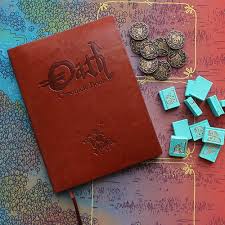
The best part of all of this is that the gameplay and the different cards that you get to see for advisors, artifacts, and locations with different win conditions not only playing out during each game, but for each player that each game is a unique experience. It also feeds directly into the theme and creates a unique story each time that you play. People who love this storytelling element in their games will obviously make the story come alive more as the game plays out, but do not think of the stories that this game tells is like one that plays out in role playing games. The strokes are more broad with the narrative and important moments in the history of your board are the ones that you will be talking about long after the game is finished. People who bought the Kickstarter version of the game even received a journal where they could write down the story after each play of the game and how that has expanded their overall history. It was one of the things I was really excited about, and was really disappointed that I did not get it with the version I bought through retail, but a quick trip to a local bookstore, and a purchase of a cheaper journal fixed this problem rather quickly. The one I got even looks like it might have originally been part of the game to begin with.

Rating – 10

ARTWORK

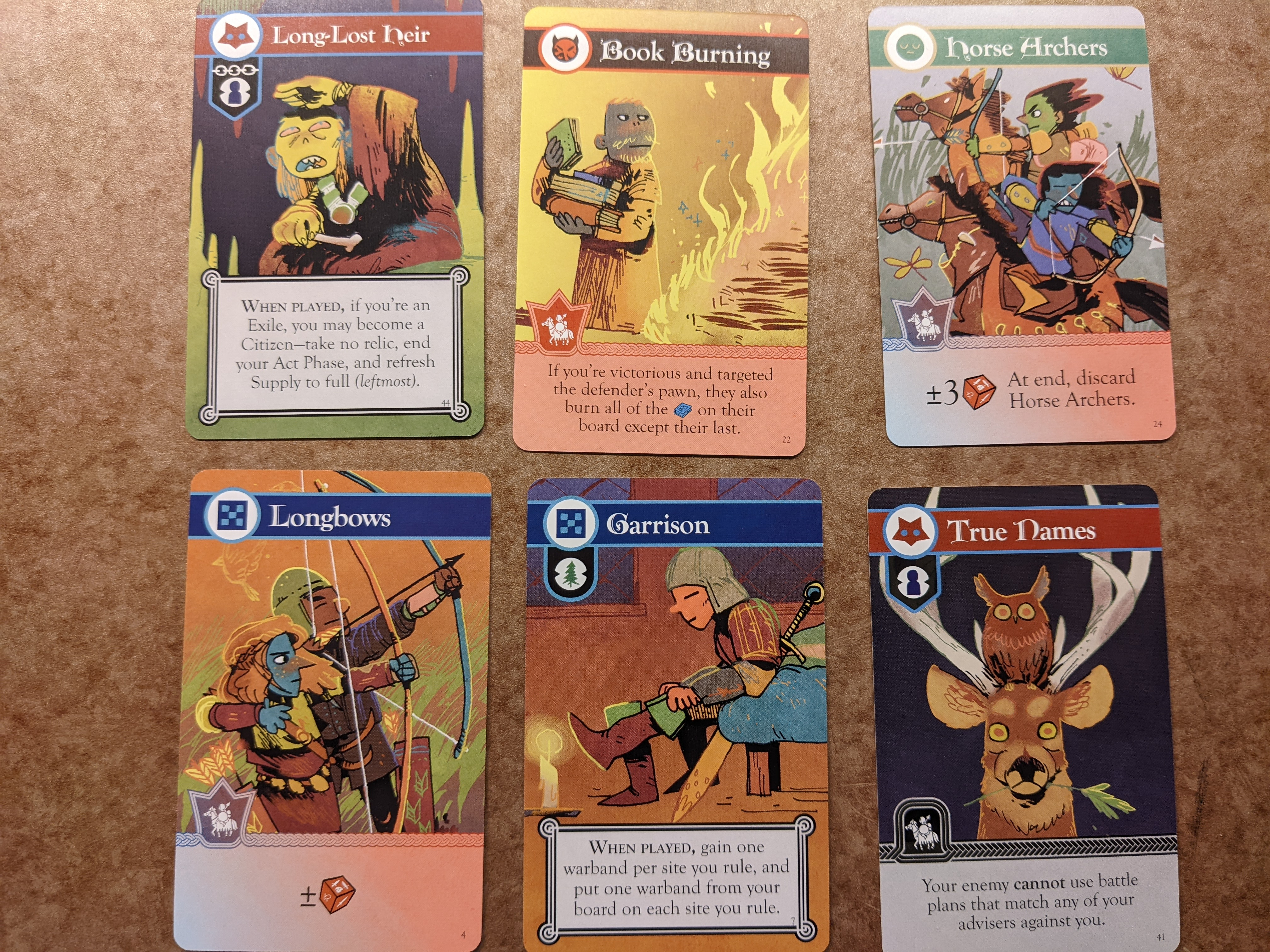
If you know anything about Leder Games, then you know that each one of their games has a certain look to it that adds to the overall enjoyment of the game. Kyle Ferrin has a certain art style that quickly recognizable and can be seen in their other two games, Root and Fort. He has taken great care with each of the cards, whether, it is one of the advisors, lands or artifacts. It is not only a great card to look at, but each cartoon character begs for its own story to tell that will add to the narrative that your group tells. It also adds a different kind of levity to the game. This is easily a game that could come across as being extremely dark as war, and court intrigue play out in every session, and if the artwork was designed to to reflect this darkness, then I feel like it would be a completely different game.

The game board also has a unique design. It is not a big piece of cardboard that you unfold and place on the table, or a collection of tiles that you have to piece together. It is a nice mat that you role out and place your pieces on. It does provide the basic knowledge that you need to have in order to play the game, but for the most part, until you add the other pieces, it does not add a lot to the overall gameplay.

Great care also went into creating the game pieces. Though the only difference between the war-bands that you use during battle is the color, the pieces that represent the various exiles and Chancellor reflect the personality of each of them. Of course, the Chancellor’s piece is taller that any of the other ones that just adds to the fragile nature of his character, as if he is taller somehow makes him better. The pieces also have the same feel as the cards that are played and once again help you to become a part of the world that you are playing in.

The game not only is a lot of fun to play, but it also has a great look to it that adds to the game play. The Kickstarter version of the game even went so far as to make the favor and secrets plastic which adds more to the overall experience, but they are nothing more than cardboard punch-outs if you buy the retail version of the game. It was a little disappointing when I opened the box, but it was quickly forgotten when I looked at all of the other artwork that game had to offer.

Rating – 9

INTERACTIVITY

As always, the main reason I enjoy to play games is because it allows me the opportunity to hang out with friends and enjoy an experience unlike any other. Some games have low levels of interactivity where the players are over in the corner doing their own thing, and it isn’t until the end of the game and everybody counts up their points that the interactive aspect of the game begins. Oath is not this kind of game. The game forces you to interact with other people and either work together to stop the bigger threat, or fight against your greatest enemy. Some people are trying to be sneaky, while others are using all of their force to win the game. You will be spend a lot of the time playing this game interacting with each other. When I played, as soon as the game got going, there was not one of us that were sitting down. We were so excited about what was going on that we were walking around the table, looking at different points of attack and strategizing about how we could pull off a win. Nobody was ever completely out of the game, and at any moment, a simple turn could change the tide of the game. I absolutely loved the aspect of this game.

The battles also added a lot of dramatic tension that I had not seen since playing the old area control games, and it was not a long drawn-out tension like you might see in other area control games, such as Risk or Axis and Allies. Basically, it is one role of the dice for both the attacker and the defender. At first look, the attacker has the advantage because they have a handful of dice compared to the defenders couple of dice. But the dice that the defender uses are more powerful, and even though, the attacker won most of the time, the battle would leave both sides devastated. I believe this to be the most accurate depiction of war I have ever seen. Very rarely, does someone just come in and destroy the other side without taking any casualties. It just means that there has to be a good reason to attack, and you had better have a lot of war-bands mustered before you attempt it.

There is also a lot going on in the game, so you need to keep a close eye on everything happening, or someone might sneak in a win when you least expected it. The bottom line is I spent a lot of time interacting with the people I was playing with, and because of the legacy nature of the game, it would be best to try and find the same people to play with on a consistent basis, or they might lose what is going on with the history of the board. The set up for the next game took a long time to figure out, and people got bored while this was going on, but if the winner spends that time writing their history down and sharing it afterwards, it will add to the overall experience.

Rating – 10

EXPANSIONS

At the time of the writing of this review, there are no expansions to Oath. I have not even heard of hints or rumors about expansions coming later, but considering the game is less than a year old, it does not surprise me. If it is anything like Leder Games other big hit, Root, there will be extra packs of cards added to the game, and new complications to keep people interested in playing the game for years to come. Right now, the only thing that you can buy to add to the experience is the leather bound journal to keep track of your board’s history, but I am still a little annoyed that this does not come with the game. I do believe it is the main draw of the game and it is the one thing that really make this game more unique than any other I have ever played. As of right now, this is not one of the strong points of the game, but there is enough going on in the game to keep you engaged, and you will not replay a game any time soon.

Rating – 5

OVERALL

I have loved my experience with the game so far, and I am constantly thinking about the next time I will get to enjoy it again. I love the history aspect of the game, and how each play is completely different, but somehow still familiar. Its gameplay is simple enough that I feel confident in what I am doing, but complex enough that I still feel like there is a lot I have to learn about the game to get really good at it. I do hope that they have plans to make expansions for this game, so that it stays fresh and exciting for each game play and allows me to continue to add on to the history of my board. With this in mind, this is not a game for everyone. Though the rule book is short, there are enough of them to keep certain people away from this game. It is also rather expensive, so before buying, you might want to make sure that you have a group of friends that will be excited about playing it over and over again. If you do have that group of friends, it could easily become that group’s favorite game, and I could see it being pulled out time and time again.

Overall Rating – 4.4 Stars out of 5

The Best Posts of 2021

2021 was another rollercoaster of a year, and though Covid continued to make life difficult, things loosened up enough to allow me the opportunity to travel a little more this year than the previous one. It is always fun for me to look back at the posts from the previous, and it shows me how great the last year has been. I hope you feel the same way as you take a trip back through the year of 2021.

#10 – Hindsight

This is the perfect post to start off this list for the year 2021 considering how difficult a year 2020 was. Based on how little we learning this year and how it feels like we are in the same place this year where we were last year, it might be an important poem to start the 2022 year. This post is also one of three poems that appear on this list which is the most that has ever appeared on any of the end of the year lists I have ever created.

#9 – The Dead Sea, Jordan

I moved to Jordan at the beginning of August, but did not have the chance to explore it much until October. There are many places that I want to visit, but I got a gift card for a night’s stay at the Kempinski Hotel at the Dead Sea, so this was the first place I voyaged off to. It was a great experience, and floating in the salt water really surprised me by how easy it is to do. I am hoping to post many more travelogues from places I visit in Jordan and other close-by countries in the coming year.

#8 – Rain on a Work Day

I do enjoy sharing the poetry I write while traveling with you, but only a select few people really get into it. This is why I love it when one of my poems pops up on the top ten list for the year. This one was written during a rainy afternoon in March when I was visiting Khao Sok, a reservoir in southern Thailand. I had taken off work to take this trip, and I enjoyed the way the rain forced me to take things easy on a day that I should have been working.

#7 – A Desert Feast – Wadi Rum, Jordan

Thanksgiving has always been one of my favorite holidays. It is not about spending more or giving gifts. It is all about sharing time with family and friends. Since I have moved overseas, this holiday has meant something a little different for me, but this year I was able to have an experience that will make it one of my favorite memories of this day of celebration. I was able to head down to Wadi Rum with new members of my school and spend some time with the Bedouins that live there. The meal was not a traditional Thanksgiving feast, but it was the best one I have ever had for a meal that was cooked underground. You seemed to be intrigued by this process as well to make it one of the bigger posts of the year even though I posted it so late.

#6 – Walking Street – Koh Lipe, Thailand

I did get to travel to a lot of different places in Thailand during the pandemic, and I feel lucky to have had that experience. Out of all of them that I went to see, Koh Lipe will always hold a special place in my heart. Not only was it a beautiful place to relax during my Spring Break right before the country went back to lockdown. It was also my last hurrah while living in Thailand. Though there were many parts of this island paradise that I wrote about, it was this feature that resinated the most with my followers. I hope the information I gave will give those that eventually travel there the hints to enjoy this place as much as I did.

#5 – Elephants in the Morning Mist – Khao Sok, Thailand

One of the many stops I was supposed to go on my road trip through Thailand last Winter Break was to the reservoir at Khao Sok, but we had to cut that portion of the trip out when the country started to close down. Luckily, the people at the resort let us rebook for a time in March. It create a moment in my life that I will never forget, wild elephants eating breakfast while I was kayaking nearby. This was even more remarkable considering that these elephants rarely come out to be viewed. I was told that because of the recent decline of tourism, they are more willing to come to the shore, and I was happy to be able to share this moment with those who cold not travel there and see it for themselves.

#4 – Problems and Possibilities

Late in 2020, I received an offer for a new job opportunity in Amman, Jordan, and I spent a lot of my time early this year preparing for the move. Part of that preparation meant signing on to a new email account at my new school as I started to transfer things over. The head of the school sent out an email describing the difference between problems and possibilities to inspire his staff who had been struggling with the pain of online teaching. It was the inspiration for this poem which seemed to connect with other people. It also makes me happy when one of my poems connects with people in this way.

#3 – Elk in the Backyard – Black Butte Ranch, Oregon

I have written a lot about Black Butte Ranch in central Oregon because I am lucky enough to get to spend a couple of weeks there every summer. It is also a place close to my heart because it is where I got married. The place is a beautiful collection of cabin-like houses underneath the shadow of Black Butte that is off the beaten path of the busy tourist towns and cities of central Oregon. Because of this quiet atmosphere, the wildlife likes to hand out in the forests. Most of the time this is squirrels, deer and coyotes, but I had never seen a herd of elk, so when they came wandering around the house I was staying at, it was reason to pull out the camera and take some pictures. Apparently, other people enjoy seeing these pictures as well because they kept of visiting this post long after its first publication.

#2 – The Bat Cave – Railay, Thailand

One of the nice things about Covid was it forced me to explore Thailand than I would have normally explored it. I spent the whole of the last Winter Break traveling through the southern portion of the country, and the city of Railay was one of my favorite spots. It was a small isolated town that can only be reached by boat where people go rock climbing, kayaking, and lounging on the beach. One of the most prominent features is a cave off of the Princess Beach that people hike up to all the time. My wife and I made this trek one day, and the story of how to get there has now helped a bunch of other people make the same hike.

#1 – Wingspan versus Everdell

Board games have become quite the hobby for me during the pandemic. They have been a great way to get together with friends, and continue to be social. The first one I bought to bring me back to this hobby was Everdell, but I had spent a lot of time researching whether this one of Wingspan was the one for me. I ultimately chose to build a woodland village, but I did have a chance to play Wingspan over the summer and compare the two. I have given my thoughts on both games in this post, and which one I thought was the better buy. The post did so well that I have considered doing more board game reviews in the future.

Honorable Mentions

Though there were many posts from the last year that were worthy to see, here is the lists of posts that continue to do well even though the were written in previous years.

The Mythology of Thailand – Chiang Mai, Thailand

Never Forget Dachau – Germany

A Toast to the End of the Semester

Being Indiana Jones – Hua Hin, Thailand

Lessons from Angkor Wat

Bend Sucks! Move Somewhere Else – Around the World Day 39

NerdFest 2021 – The Allure of the Game

While I was growing up, one of my favorite things to do was to play board and table top games. I spent a lot of time with my friends playing Dungeons and Dragons, Monopoly, Axis and Allies, and any new game that we could get our hands on. Most of the games had not been updated for years, and it caused us to think of ways that we could create our own games to see what other worlds we could create or how we could adapt the games we already loved to make them more exciting. Some of them got a little too complicated while others were a little too simple, but every once in awhile we hit that sweet spot and created a game that we all really loved, and it became our new favorite.

As years went by, my friends moved to other parts of the country or got to busy to play a game. Soon all of these games got put away into a closet and collected dust. I am actually not quite sure what happened to all of them after I moved away to college because my parents eventually moved into a new house and I don’t know if the games made the move or not. At the time, I didn’t care much because the idea of playing a game seemed childish and I was too busy with my life.

When I moved overseas, I was looking for that way to connect with people again. There was always the option of heading out to the bars, and that can be fun for awhile, but after working in bars for so long, I knew that this could get old after a little while. I was lucky enough to get hooked up with a Dungeons and Dragons group in Korea, and it got me interested in the game again. A lot about it had changed since my days of hacking and slashing my way through dungeons in search of riches. The Wizards of the Coast had bought the rights to the game, and added to the story aspect of the game. It changed how the game was played, made it simpler and yet more of a sandbox that allowed creative minds to play off of each other to create wonderful story moments. Being an English teacher and a writer, I instantly got sucked back into this world of table top games.

Then Covid happened.

I know that there are a lot of people out there that here that statement and divide their lives to before this event and after it. The pandemic has changed many people’s lives and the way that they look at the world. Many people can look at this in a bad way, and there are times where I fall into this category. But not everything that has happened during this world wide event has been all bad. I went on the search for things that my wife and I could do while being confined in our house that would not drive us crazy, and this brought me back to a love that I had in my childhood with board games. I also did not realize how much the hobby had changed over the years and how much it is now directed towards an adult audience. There are so many games out there with amazing puzzles to unlock your imagination, and tickle your strategic ingenuity. It was hard to decide which games I should get into first because there were so many out there, but I did some research, and with the help of my new favorite YouTube channel, Shut Up and Sit Down, I was able to find a couple that I would love as well as my wife.

It helped us get through that tough time this year, and we still pull out a couple of these games from time to time to play. But there was another benefit to them that I did not expect as much.

It introduced me to a whole new group of people who shared the same interest. These board games have not only become a way to challenge myself intellectually, but also to visit and hang out with people on a regular basis. It is a trend that I hope continues because I am loving the games that I am playing, whether it is a simple card game or a complex role playing game. They all tell stories and I get to be a part of those stories that are being told. And most importantly I get to also create stories with other people as well.

Until the next NerdFest, thanks for coming along.

Games are Important – The Holidays Day 16

Last night I gathered around the dining room table with my parents, and My sister’s family to play a game of Codenames. It is one of the newer games that has helped bring about the resurgence of the popularity of board games, and I can see why because it is a smart game that with endless possibilities that will never let the game get old. It would almost impossible with all of the way the cards can be laid out that you would never experience the same type of mental connections that make this game interesting in all of the amounts of times that you get together to play the game. Its gameplay is also unique, and I have never experienced another game like it. Getting together with my family on a Friday night to play a board game might sound like a boring way to spend the start of a weekend, but I tend to disagree, and I think it is part of the reason why board games are becoming big business again.

These games are important. First of all, they are a social event. This is something that you cannot get from television or video games as well as you can from a board game. Television used to be a social event with people gathering around to experience the same story at the same time, but people still remained quiet so as not to disturb the action on the screen and didn’t really interact with each other. In recent years, it has gotten even worse. People rarely watch television in real time. Instead, they grab their tablet or phone, find a quiet corner of their house and experience the show on their own. The same can be said for video games. Yes, there are a couple of games like Madden, Smash Brothers, and Mario Kart that lend themselves to people getting together to play, and they have even set up on-line communities that allow people to interact over headsets, but the speed of the game takes over and the opportunity to talk gets taken away, and people become more interested in their reaction times rather than talking to each other.

Board games like Codenames are actually designed for people to interact with each other. There is enough downtime during the game to allow people to talk about their days and what is going on in their lives, and when the action is going on there is collaboration that is happening that once again forces people to interact with each other. It might not be as slick as a video game or cost as much to produce as a television show, but for some reason, this interaction with other people ends up more satisfying then getting together around a screen. I feel that after I play a game that I have made a stronger connection with the people I played with rather than when I sit down and watch something on the screen.

As a teacher, I also think that board games are important. On Fridays in my Creative Writing class, we always play a game of some kind such as Gloom, Balderdash, Magnetic Poetry, Exquisite Corpse, or Line-by-line Story. My students love these days the best and not just because it allows for some downtime in their hectic schedules, but because they get something out of the experience as well. The games are designed to spark creativity, and help my students with their writing whether it is with their voice, word play, or putting together a tighter plot. They are learning while having fun. In fact, I believe that when you are having fun is when real learning is taking place. This is when true engagement is taking place. This is part of the reason that I always try to make my classroom a fun place to be.

Codenames is a great example of how a game can be fun and at the same time a learning tool. It requires that the Spy Master makes connections to various words spread out on the table, and communicate that connection with the use of only one word. It requires that people start to see the connections in words. It also forces players to see that words can have multiple meanings. There is a lot going on in this game through some mental challenges. And it wasn’t like we were all sitting at the table staring at the matrix we created with intense concentration. We were laughing, talking, and having a good time.

This is why games are important. I am happy for this resurgence of games, and I am amazed at the different ways that people have come up with to challenge us while still being entertaining. It is the reason why when I have the opportunity to play a game, I always take it up.