My favorite part of traveling around the world is falling into those unexpected experiences that treat me to a new way of looking at something that we take as commonplace. It is not uncommon for me to stand in a checkout line at the grocery store when I get a quick hankering for chocolate, so I scan the offering right in front of me, and quickly grab one of my favorites to throw on the pile. I don’t think about the process it took to get to this place in the grocery store; I just think about how I can get into my stomach. But I recently got to experience the process that it took to make chocolate in the first place, and not from the perspective of a huge corporation making the treat, but from the way it was prepared for centuries beforehand.
In a hut in the middle of the Amazon rain forest, I stood before a bowl of cocoa beans that had been roasted in the sun. These beans come from a podlike fruit that can be found on trees in this part of the world. The pod is a distinct yellow when it is ready to harvest, and when the pod is opened up, the beans are white in a milky substance. It is the roasting process that turns them into the darker color that we know chocolate to eventually be.
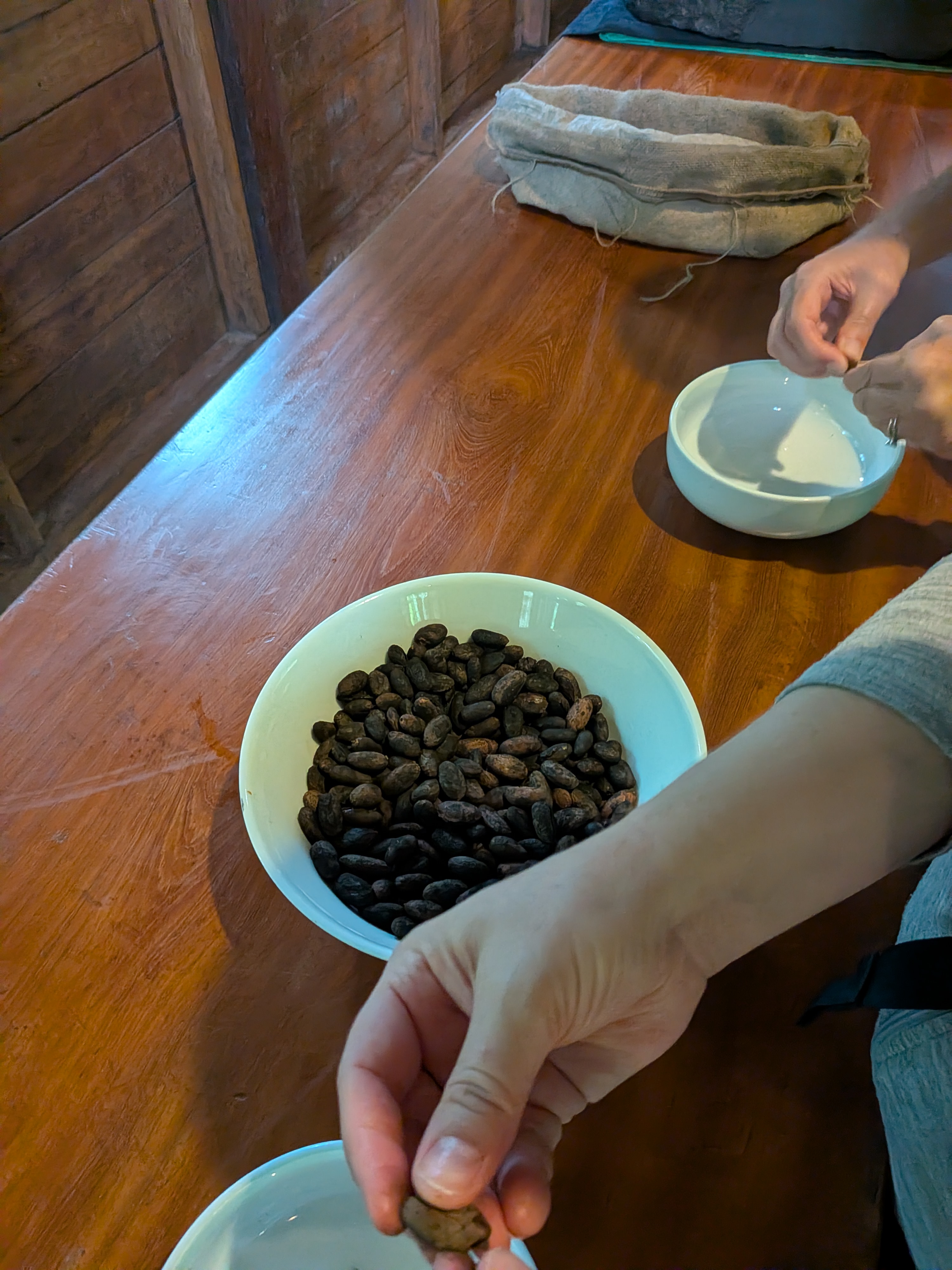
The first process is taking off the husk from each of the beans. It is easier than I thought it would be, and there was only a couple of times when the bean turned into a powdery substance that would be used in making cocoa. It also left the tips of my fingers with a fine powdery substance that when licked made me feel like I was eating the cereal Cocoa Puffs.
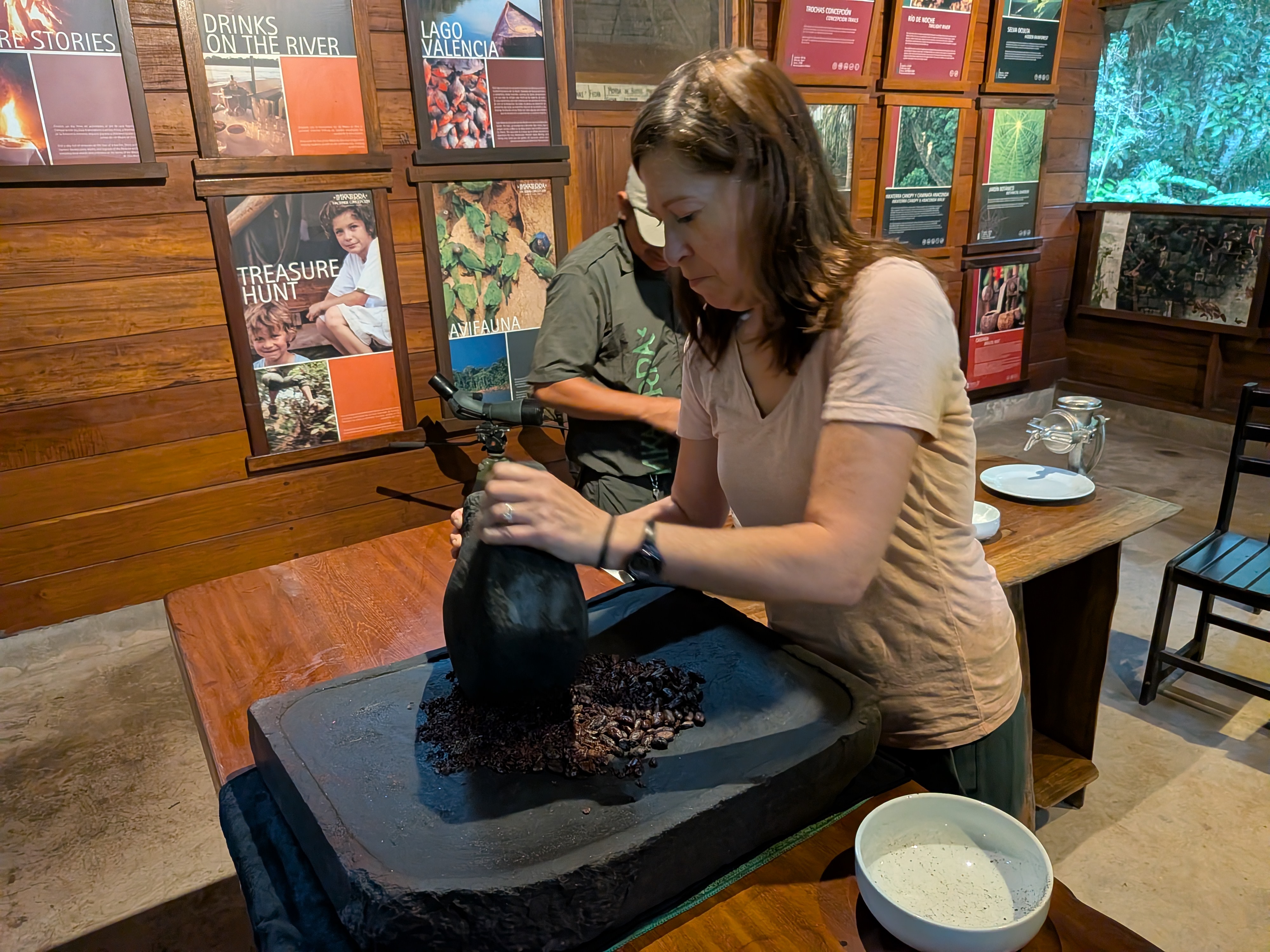
When all of the beans’ shells had been removed, we moved what was left over to a large flat stone, and used a larger rounded stone to grind the beans into a nice powder. It was a good start for what needed to happen, but the stone did not get the cocoa into a fine enough powder, so this is when we moved over to the next step.
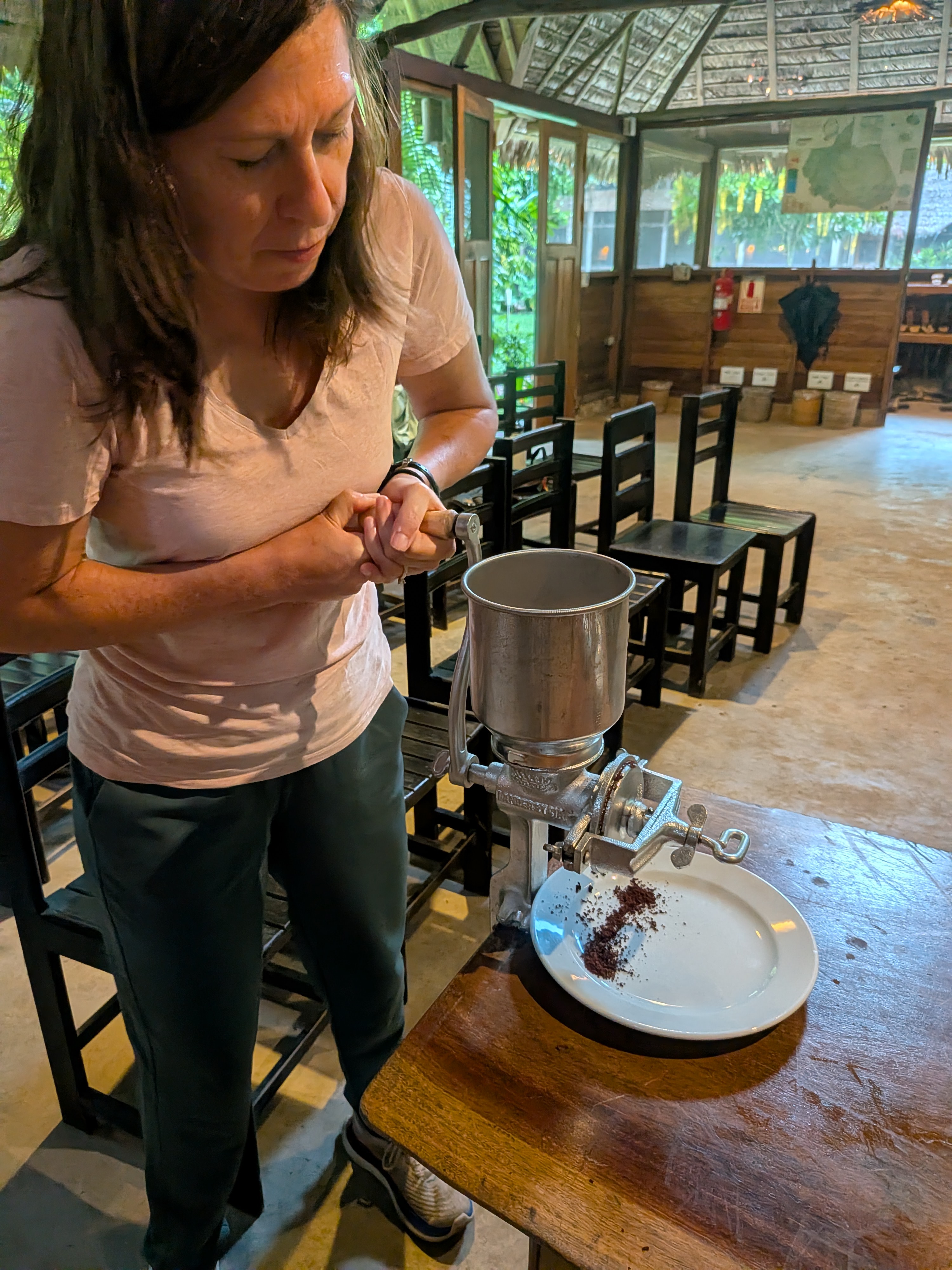
We moved all the powder to a more powerful grinder. This one was harder to use as some the bigger chunks left over from the stone would get stuck in the grinder. Still, with a little bit of leverage, we were able to run all the powder through and turn it into a very fine substance. Still was not ready for consumption.
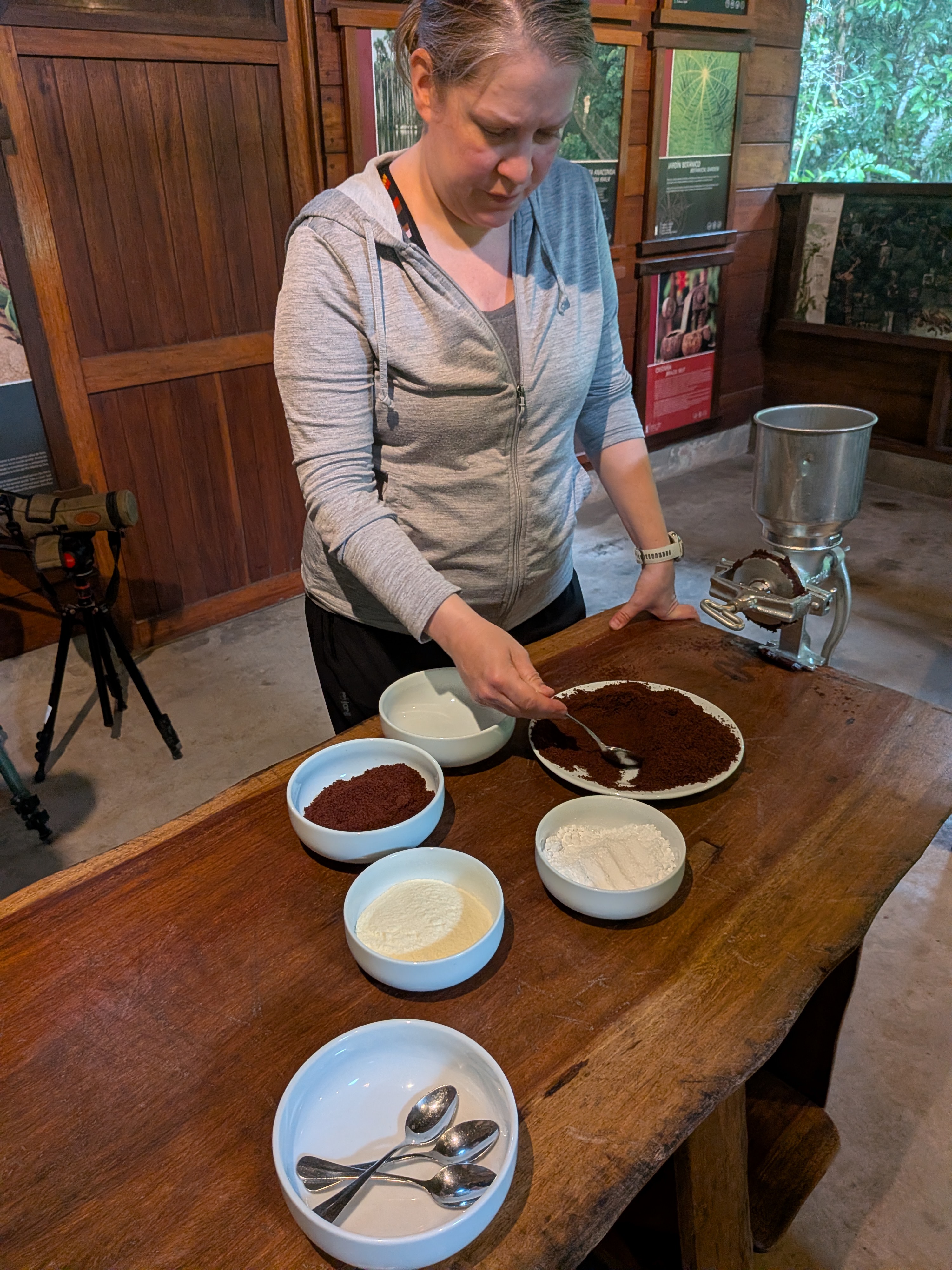
This is when you start adding the sugar and condensed milk to prepare it to the way you like it. I always wondered how certain chocolates had a spiciness or unique flavor and I am sure that this is the same time that other ingredients were added to achieve that desired effect. With the extra ingredients added, it went back to the fine grinder to get it back to that consistency needed for the final step.

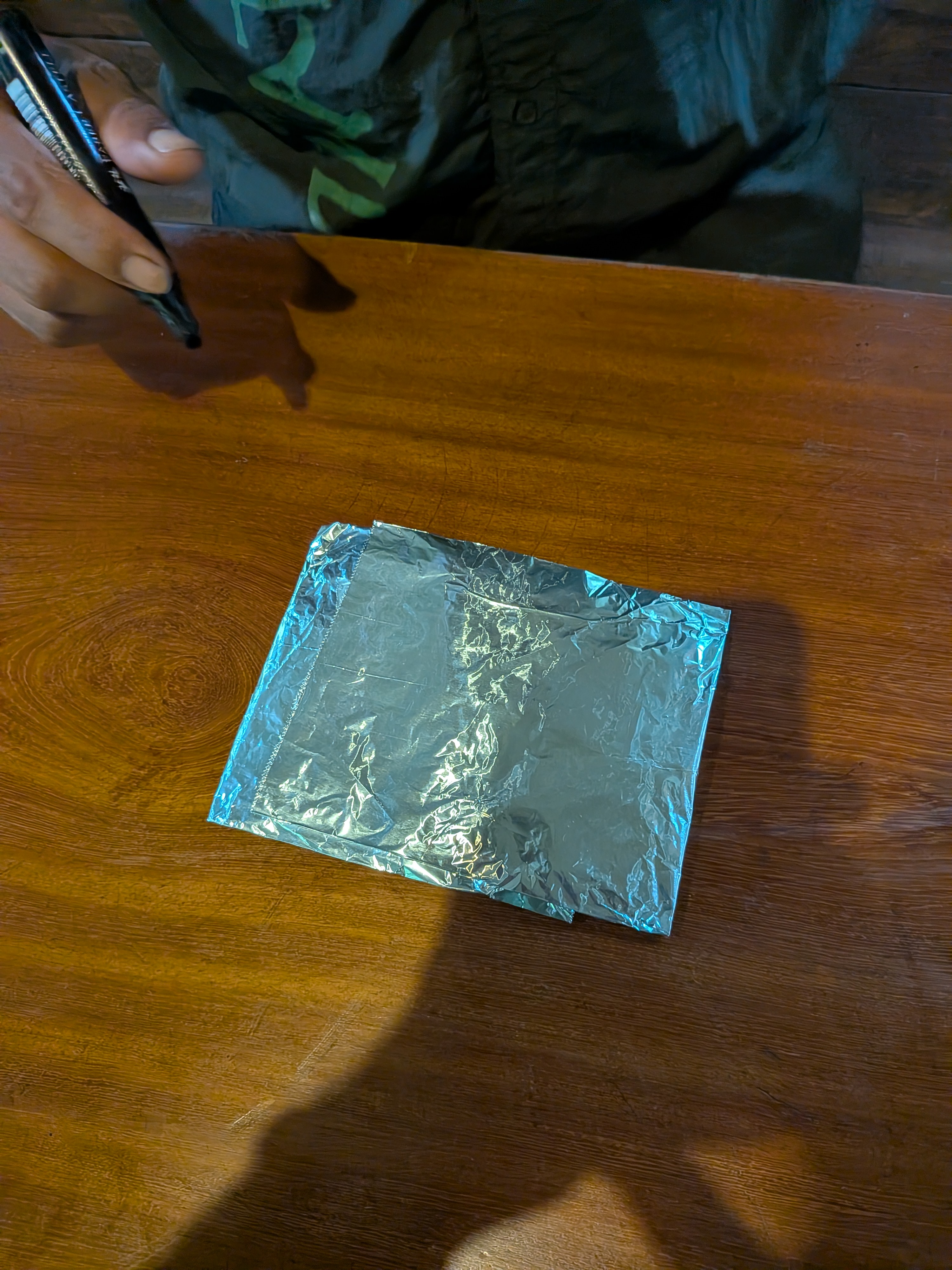
This is when the aluminum foil was brought out, and the ground cocoa was spread out into it, and then nicely folded over to be brought to the refrigerator. After about fifteen minutes in the chilled environment, it becomes the type of chocolate that you might in a grocery store, granted not the convenient one that you could find in a checkout aisle, but the more refined kind that can be found in the baking aisle of the store. The whole process helped me appreciate this worldwide delight even more, and I will never look at chocolate the same way again.
Until next time, look for those experiences that will help you see in the world in a new way.
 John Collings