Casa Bonita

I was watching an episode of South Park a few years ago with my wife. It was the episode where Cartman convinced Butters that he had travelled in time to a post-apocalyptic world just so he could take his spot to go to a birthday party at Casa Bonita. My wife could not believe how much I was laughing, and she could not understand what was so funny. I pointed at the screen, and told her that Casa Bonita was exactly like that. She looked at me and stated, “That place is real!”

Yes, Casa Bonita is a real place, and it holds a special place for many people who grew up in Denver. There have been many birthday parties that I went to at this place, and my memories of it are fond, even though the food was never any good. It had been a staple of Denver for many years, and the legend grew because of the South Park episode. Still, the old building started to fall apart, and fewer people came, and eventually they had to close down. It laid abandoned for many years.
This was until Trey Parker and Matt Stone, the creators of South Park, saw an opportunity to refurbish the building, and return Casa Bonita back to its glory days. They came in and put back together the crumbling infrastructure of the building. They added a real kitchen that could actually cook more than two items. They hired a chef to make the food worth the visit. And they kept the magic that made Casa Bonita the place it was, it is, and as it should be.

They obviously kept the arcade that was a part of all childhood memories of any location that we went to while children. They kept a few of the games that we loved so much. I was able to find Centipede, Ms. Pac Man, and Galaga. They have also updated many of the games, and there are some more modern ones to appeal to the younger generation. And if you are into useless crap, you can still try your hand at Skeeball to get a bunch of tickets to buy that crap.

Of course, they could not get rid of Moco, the gorilla that walks around with its handler where you can your picture with it. It is odd to see when you first witness it walking around, but in a place as strange as Casa Bonita, it somehow seems to fit.
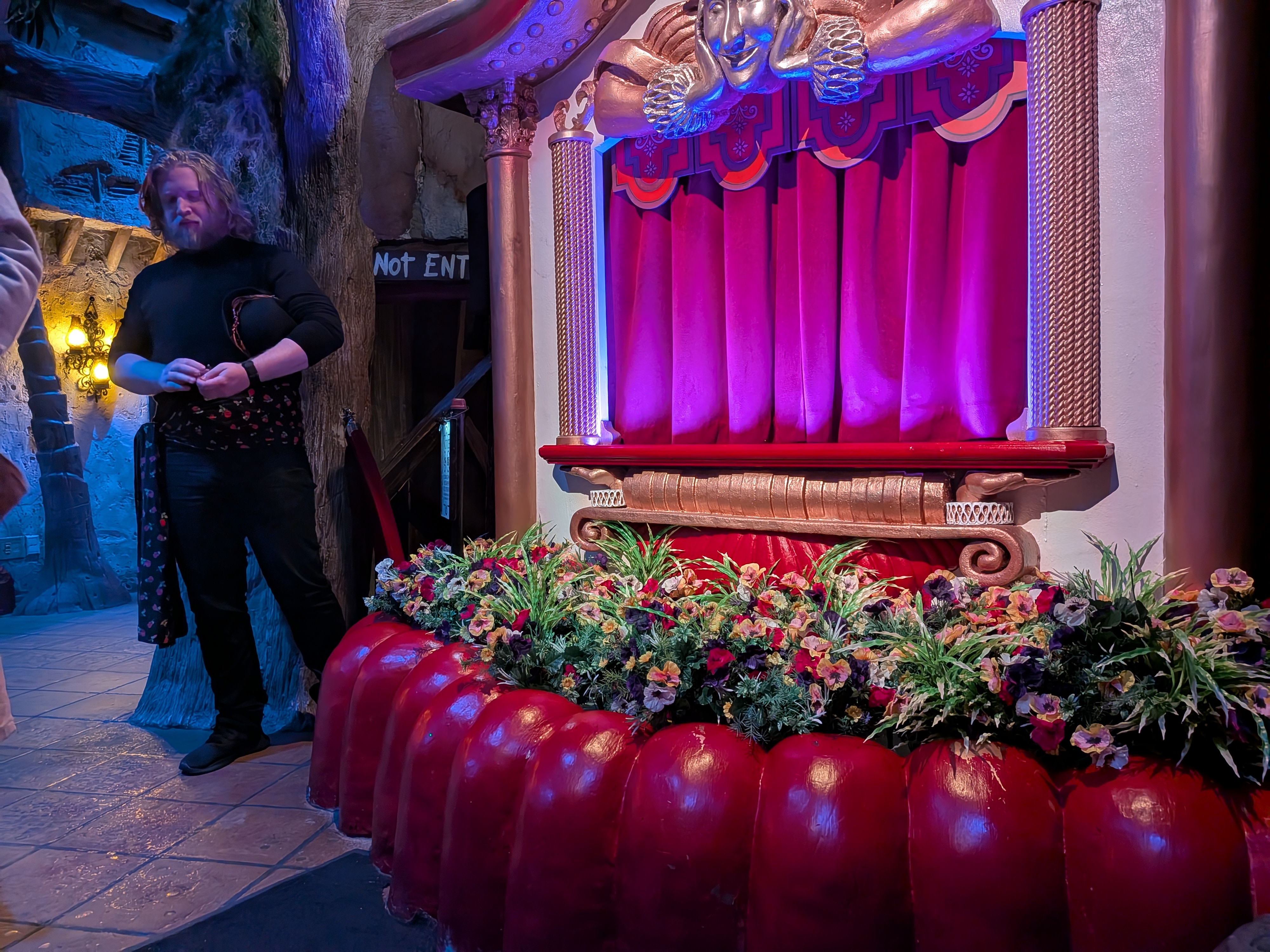
There are also many other forms of entertainment to keep you in the building and enjoying yourself. You can sit through one of the puppet shows where a talking taco will make you laugh with all the food pun jokes that it can come up with. If that is not your cup of tea, you can get your fortune read, watch an illusionists, or watch a mariachi band. It is all a little schticky but if you lean into the schtick, it makes it a lot of fun and you no longer notice the schtick.

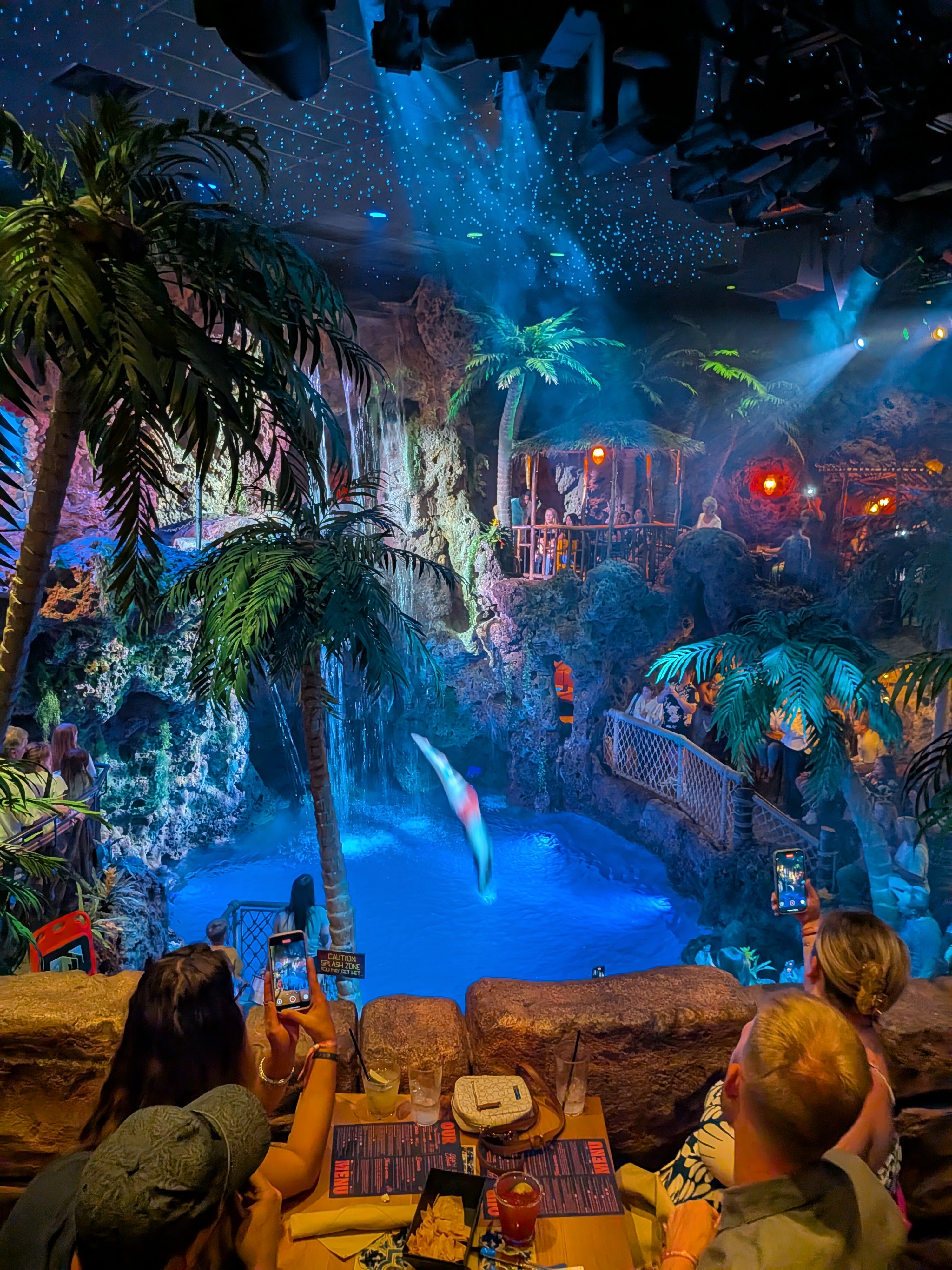
And of course, they kept the thing that made Casa Bonita the legend that it is in Denver, the cliff divers. Of course they have not kept the original cliff divers, but the replacements they have found are still skilled in the abilities to dive and entertain. Parker and Stone have also made the diving safer for those entertaining the crowds. Rumor has it that the old place where the divers came out of the pool was the electrical room for the restaurant. The new place is free from accidents happening that would cause quite the stir in the newspapers if they happened.

Casa Bonita has returned back to its glory days, and has become a tourist destination in Denver. If you are thinking about going while visiting the city, keep in mind that at this time, it is hard to get a reservation. I had to get mine four months in advance, and it happened because the person that made the reservation had special status with the restaurant. It is a little pricey now, but it is a lot of fun and worth the visit. I’m just glad to know that the pink building in Lakewood is not sitting there empty, and laughter and joy still ring out from its halls. It might be another thirty years before I go back again, but I am glad that I was able to sneak in this one time while visiting home.

Thanks for reading.
The Blue Mosque – Istanbul, Turkey

When visiting Europe, many tourists go to the cathedrals, and marvel at their beauty. When in Southeast Asia, they folk to the watts to check out what they have to offer. So it only makes sense that when you are in the Middle East region, you will head off to the mosques and see how they represent the spiritual guidance of the people in this region of the world. Over the last couple of years, I have visited a few of the more important mosques that the world has to offer, but it wasn’t until I traveled to Turkey that I got to see one of the oldest mosques, the Blue Mosque.

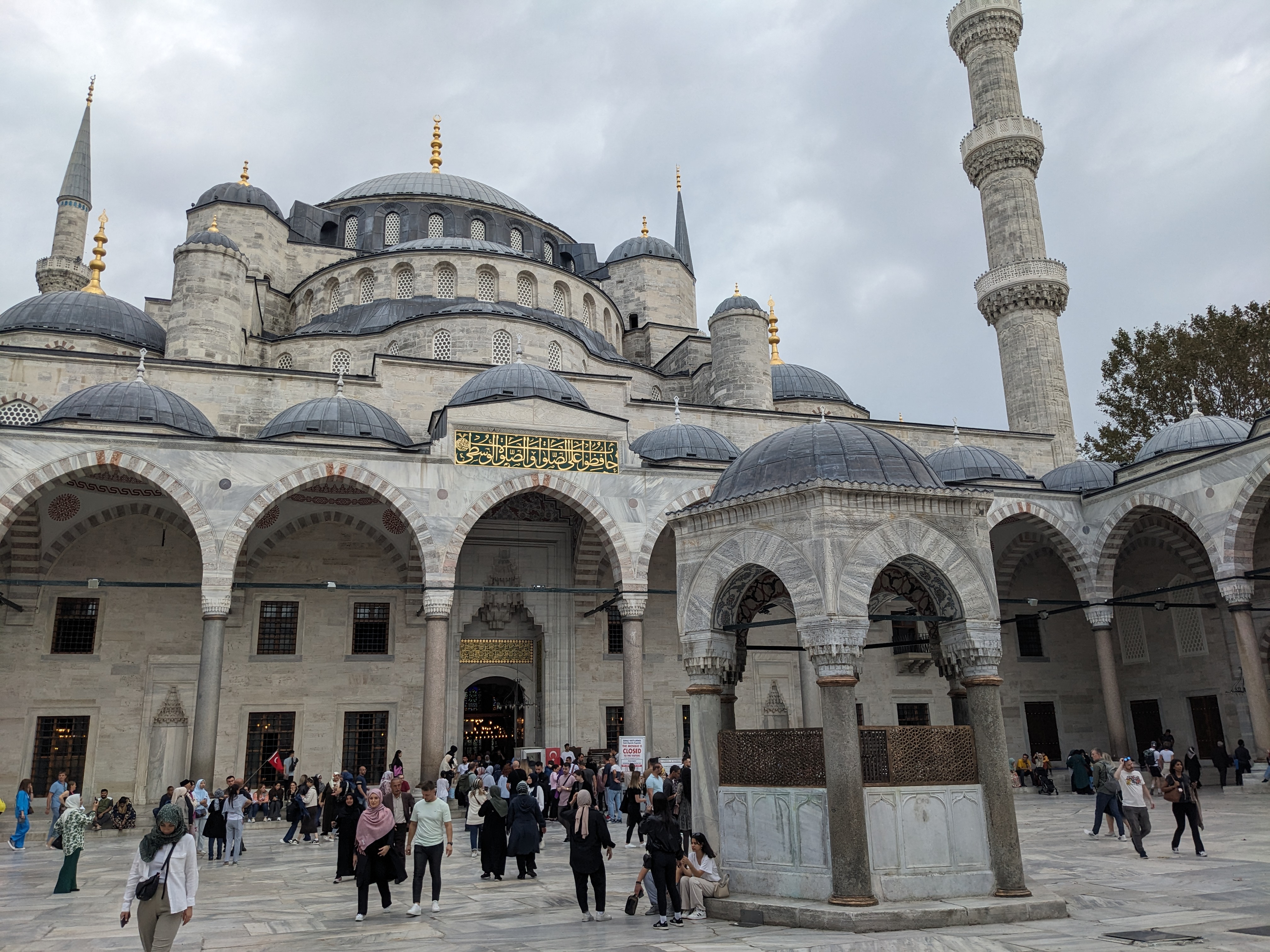
The Blue Mosque had finished its construction in the early years of the seventeenth century, and ever since, it has been an imposing figure over the city of Istanbul. It sits in the old part of the European side of the city, and it is easy to find, not only because of its blue dome, but also the six minarets that surround its grounds. The mosque itself is an important piece of architecture because it was the first time ever that a dome was successfully attached to a square building. Despite this feat, it is still a great place to visit for many other reasons.

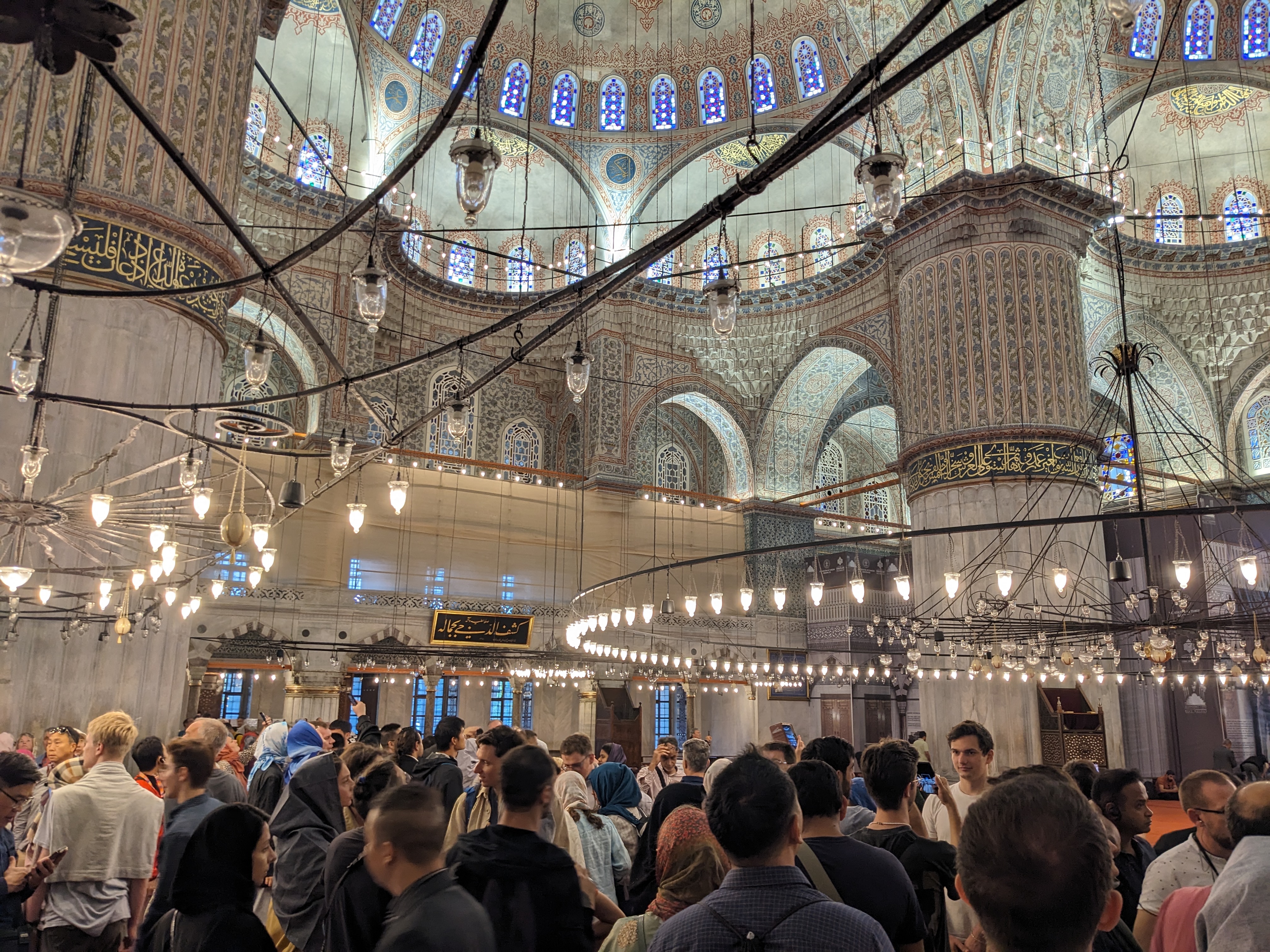
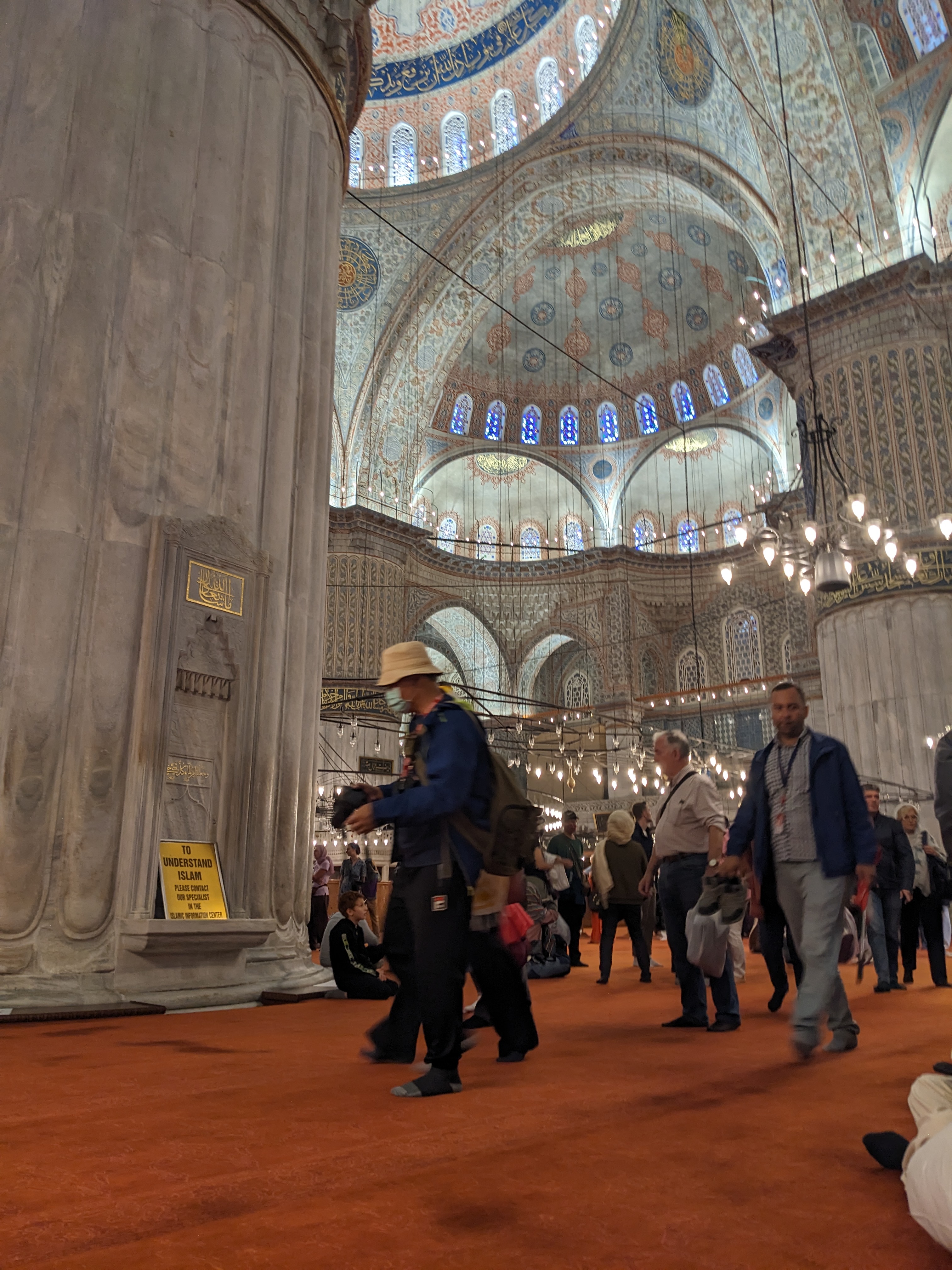
From the inside, the building becomes even more impressive. The Blue Mosque’s dome looks even more intricate from this perspective. The artwork that adorns the ceiling is original and has had been protected ever since the mosque was built. The designs come from over 21,000 tiles that were places there even though it is hard to distinguish one of the tiles from another. Still, it has created one of the most intricate pieces of art that I have ever witnessed, and much time could be spent looking at the patterns that are created above.

The Blue Mosque is not as big as some of the more elaborate mosques that can be found in Oman and the United Arab Emirates, but that does not stop tourists from coming to see this sight for themselves. It does not hold a chandelier that has a spiral staircase inside of it so it can be cleaned, or a carpet that was hand-sown and covers every corner of the floor, but you can feel the same sense of reverence when you enter. The biggest difference I felt came from the focus of each mosque. Some of the mosques I have visited seemed more interested in make monetary gain from the people who showed up to look at the place; whereas, the focus of the Blue Mosque seemed to be geared towards spreading the knowledge of Islam to the people who visited. There is a corner inside of the mosque dedicated to pushing this passion on to other people, and it makes it feel more authentic when you arrive.

If you are in Istanbul, the Blue Mosque is a must see, especially considering there is no entrance fee to go and see its beauty, and feel its history. Just know that like many other holy sites, there are some dress codes that you must abide by. Conservative dress is suggested with women being asked to cover their hair when they enter, and men cannot wear shorts or hats. It is nothing that is too uncomfortable, and it is a small price to pay to see this place. Also know that, the Blue Mosque is not opened to visitors during the hour around the call to prayer. It gets packed as soon as it opens up again, so it helps to hold off for a bit to enter, if you find yourself here during that time. Still, there was not enough people in the place to make it too uncomfortable. All in all, it is a great place to visit while in Istanbul.

So until next time, get out there and see what the world has to offer.

The Vatican has a lot of money – Rome, Italy

It is the smallest country on Earth, supporting only 825 people, and settled in the heart of Rome. It is also the seat of power for the Roman Catholic Church, and brings in millions of visitors, and pilgrims every year. Most of them tour the Vatican Museum so they can have an opportunity to view Michelangelo’s famous painting of the Sistine Chapel. But before they are able to make it to this piece of art, they have to make their way through their vast collection of art and antiquities collected from Roman excavations and the surrounding areas. And what a collection it is. For instance, you could ignore the ancient Roman marble statues that are hanging around the room, or the ornate mosaic floor that is over 2000 years old, and just focus on the large bowl in the center of the room. This was a bathtub used by the emperor Nero, and is made of one single piece of a rare red stone called, porphyry. This is not to mention the architectural dome that hangs over this artifact, and is a masterpiece in its own right. All of this combined adds up to a large chunk of change that could be used to create its own museum.

But it is only one of many rooms that hold masterpieces not only from Ancient Rome, and some of the greatest works of art from the Renaissance period as well. This is a depiction of one of the many frescos that are painted on the walls by the master painter, Raphael. There are others as well from Michelangelo that include some of his sculptures, and of course, the Sistine Chapel. I think I even saw a couple of paintings from Dali and Picasso hiding in the corners of the labyrinth of art.

The collection does not only contain priceless pieces of art from Europe. There is also a substantial amount of Egyptian art that was collected during the early expansion of the Roman empire. At first they seem a little out of place among the classical Greek and Roman features, but then thinking about the history of this area, the pieces seem like they should belong with all of the rest of the collection. It demonstrates the spread of the Roman influence and how open they were when bringing in other cultures as long as they accepted their gods as well as their own.

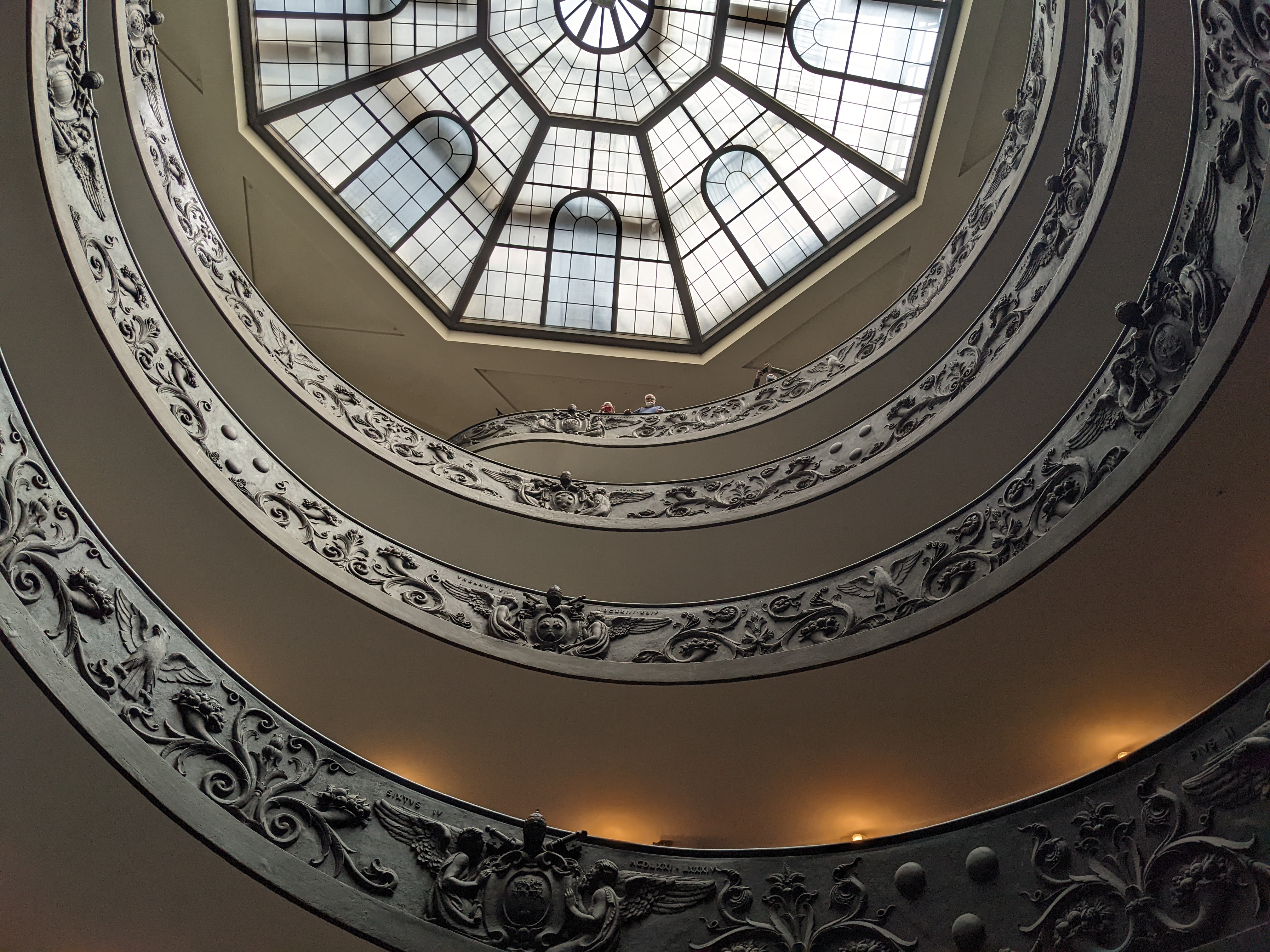
The vast collection of art is not the only thing that will turn your head if you visit this sight. The building itself is one of the few that are featured in the Vatican. It has architectural wonders that date all the way back to the Renaissance. The Church hired the best from this area to create the museum, and one of its greatest features is the dual staircase that leads to the exit of the museum. It sit below a dome and after a three hour tour of magnificent piece of art, it will have people stopping to marvel at it. It is one of the more modern sights in the building, but feels right in place among all of the other classical pieces of art.

I have been to a lot of impressive museums in my lifetime, and I have seen some amazing pieces of art, but nothing like the collection that is held in the Vatican’s museum. I have also toured some of the world’s greatest houses that have gathered a vast amount of wealth, but once again, nothing like the collection that is housed in the Vatican’s museum. It is a jaw-dropping experience, and almost distracts you from the fact that you are standing in front of a great work on art from centuries ago that has long withstood the decaying of time. It is a place that would require a few visits to really let your mind wrap around what it is your seeing. I believe that the best way to think about it during your first visit is to not think about the wealth that is housed here and appreciate the art instead. It will give you a different perspective at what you are looking at.

The Forum – Rome, Italy

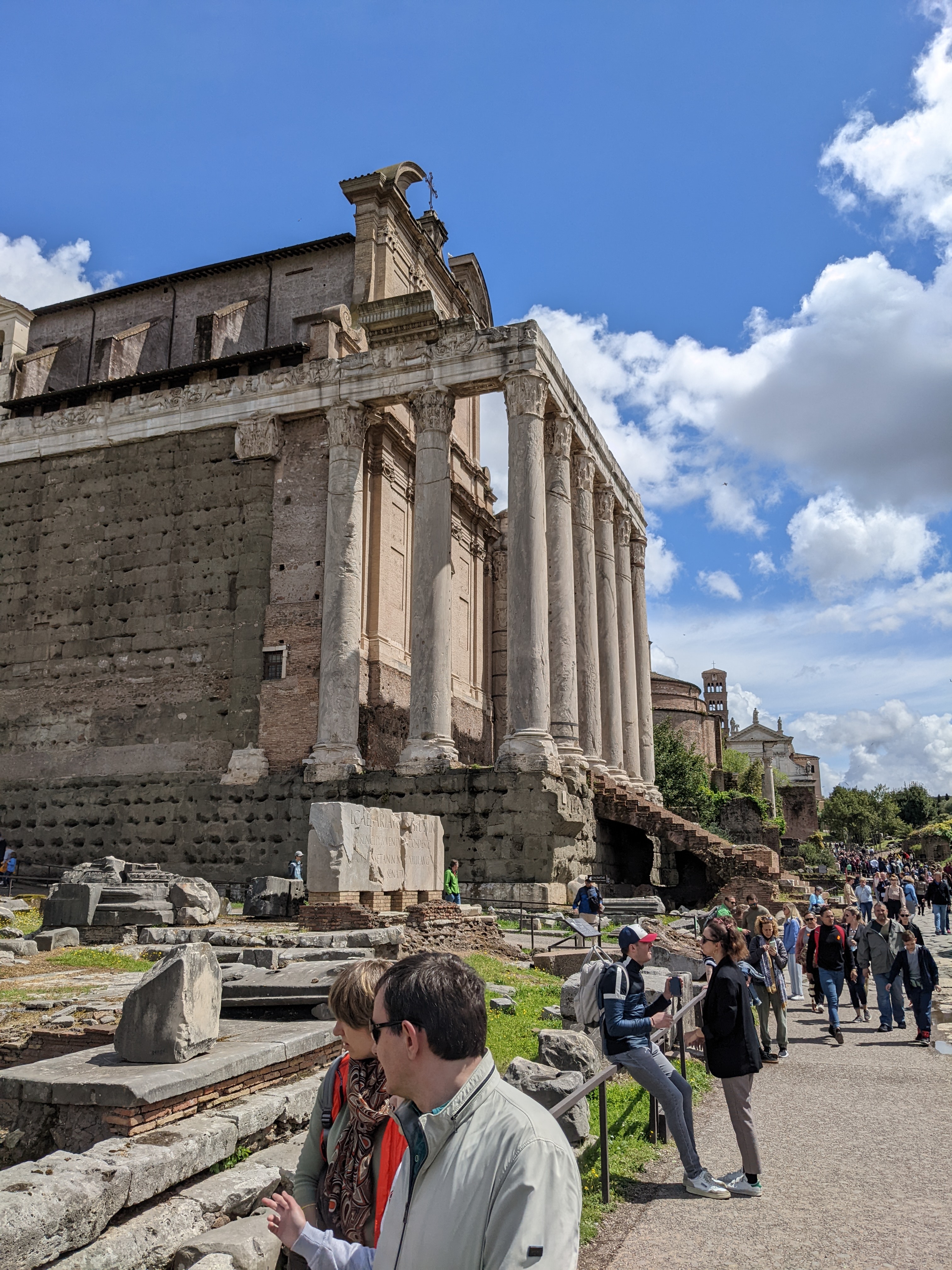
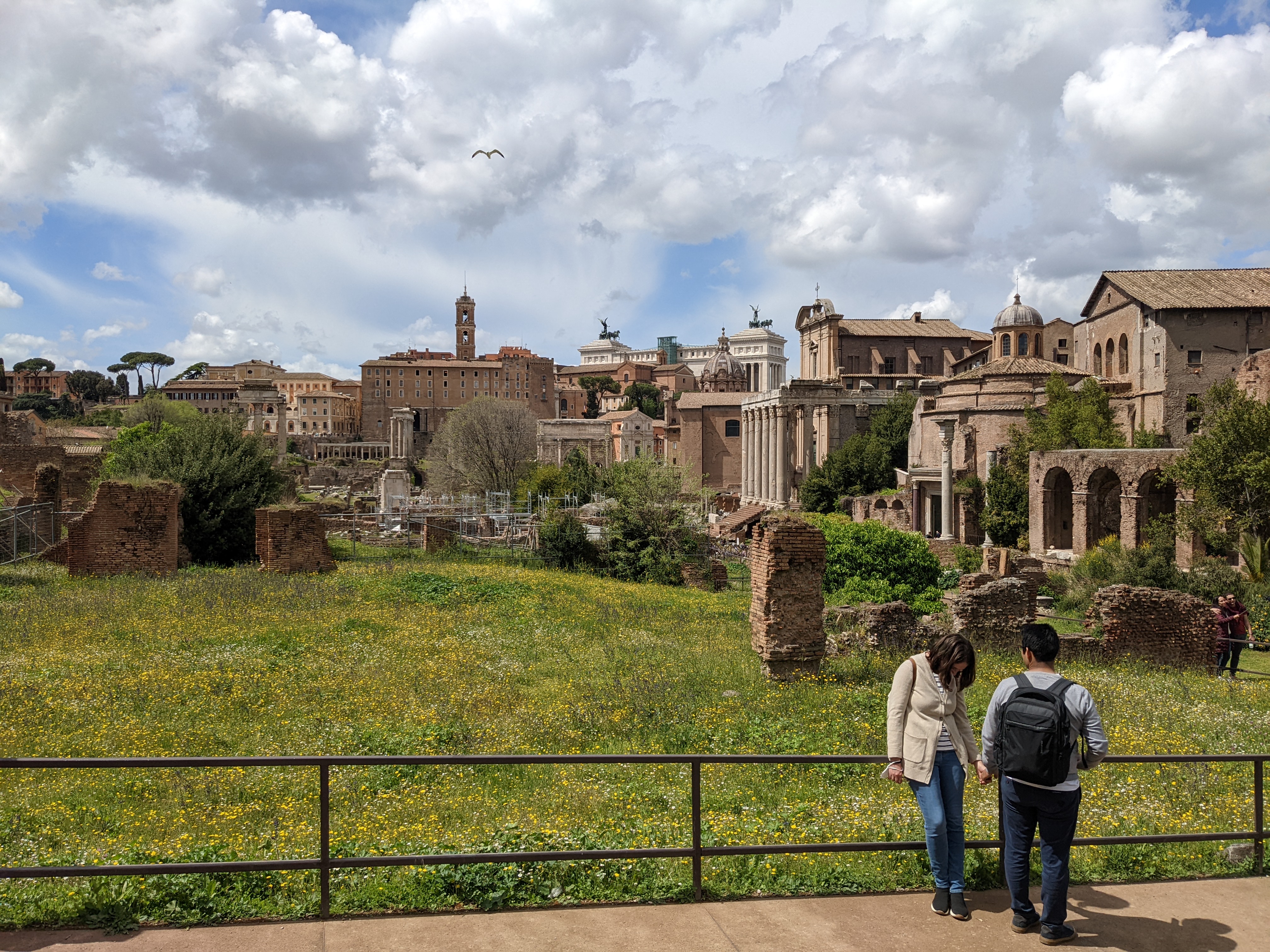
I have been experiencing the far reaching extent of the Roman empire all year long. Every place I have ended up traveling to the school year has led me to ruins that this culture left behind. Some of them have been well preserved, and some of them have been just piles of rocks that are still being excavated so the world can enjoy them again. But I found that if I really wanted to see the best of what these ruins have to offer, I should go to the source, so I packed up for a quick weekend, took a short three hour flight from Amman, Jordan and touched down in the first of Western Civilization’s empires. I was instantly transported to a land of Roman ruins and some of the most famous are among the landscape of Rome.

I did not have a lot of time in the city, so I had to be selective about the places that I would visit. High on my list was the Forum. I had heard about this location as being a great place to highlight what this ancient civilization had to offer. Despite the fact that I knew that it was the original square of Rome, I did not have much more knowledge about this place. This is why when I finally made it through the gates, I was blown away by what I witnessed.

A lot of Ancient Rome has been preserved, allowing people to walk through the old streets, and look at the places where temples were built, and rulers were murdered. The glory of Rome is brought to life here, all the way down to the architecture, and statues that decorated this place. Time has worn them down a bit, but with a good guide, the stories of Ancient Rome can be brought back to life.

My favorite was the home of the vestal virgins. I have heard of these women spoken about in the past, but I had never heard about how they were forced to live. They were young women that held on to their virtue for the pride of their families. It was a great honor to have a vestal virgin among your children and at least one daughter would alway be asked to take on this task. Our tour guide asked if anybody knew what happened to the vestal virgins who did not live up to their promises, and there was a fourteen year old girl there with her family who knew the answer to this. Apparently, if the virgin did not hold on to their virtue, they were buried alive because it was against tradition to shed the blood of any of these women.

It made me laugh that the young lady was able to answer this question in front of her father. I had to think about what kind of conversations they had at dinner which allowed her to answer this question so quickly, and if her dad would ever let her date before the age of thirty-six.

Rome is obviously filled with a bunch of amazing sights, so it could be very easy to skip over one of them, especially if you are there for a limited time. If there is one place that you should make sure you see though, it is the Forum. This sprawling expanse of Roman ruins is filled with amazing stories and incredible architecture that have stood up over the millennia. It will probably still be around 1,000 years from now, but it is worth seeing the first opportunity that you can.

The Sagrada Familia – Around the World Day 4

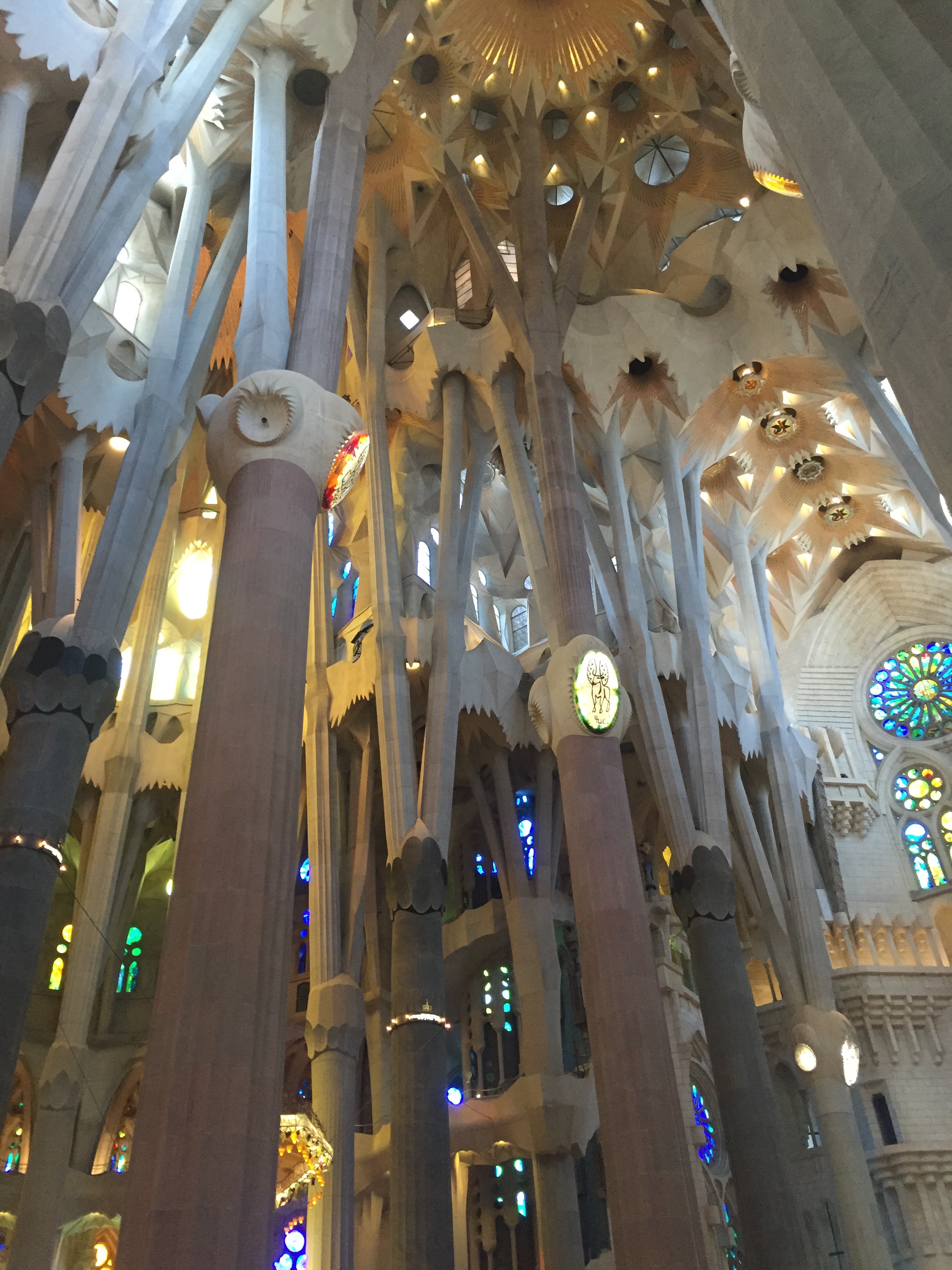
I feel lucky that I have been able to come back to Barcelona after I visited it eleven years earlier, and not because it is an amazing city with wonderful and spectacular history, but because it means that I have been able to tour the Sagrada Familia twice. Now, I know that this is a cathedral, and anybody who has been to Europe knows that there are so many cathedrals that they start to blend into one another, but there is something special about this cathedral. It was originally supposed to be another gothic cathedral in the heart of Barcelona, but then Antonio Gaudi was given the privilege to design it, and what was created has turned into something that is unlike anything else that has been built. It is a tribute to architecture, and in my humble opinion, the most beautiful thing that man has ever created.

The design starts with the pillars inside of the cathedral. Gaudi was inspired by nature, and wanted the inside of the cathedral to reflect this connection. Instead of having the pillars reach to the ceiling and connect in four spots to hold up the mighty structure, he designed them so they would continually branch out like trees. It give the space inside the cathedral a more airy and open feeling as if you were walking through a forest. He added to this motif by designing stain glass windows to let in light that reflects the time of day, cooler colors on the east side for the morning, and warmer colors on the west for the sunset. The stone that is used for each pillar is different and the carving on the side is specific to different trees to give his forest an eclectic variety of tress. With all of this, the brilliance comes with the fact that structurally this is more sound than the designs of gothic cathedrals, and more pleasing to look at.

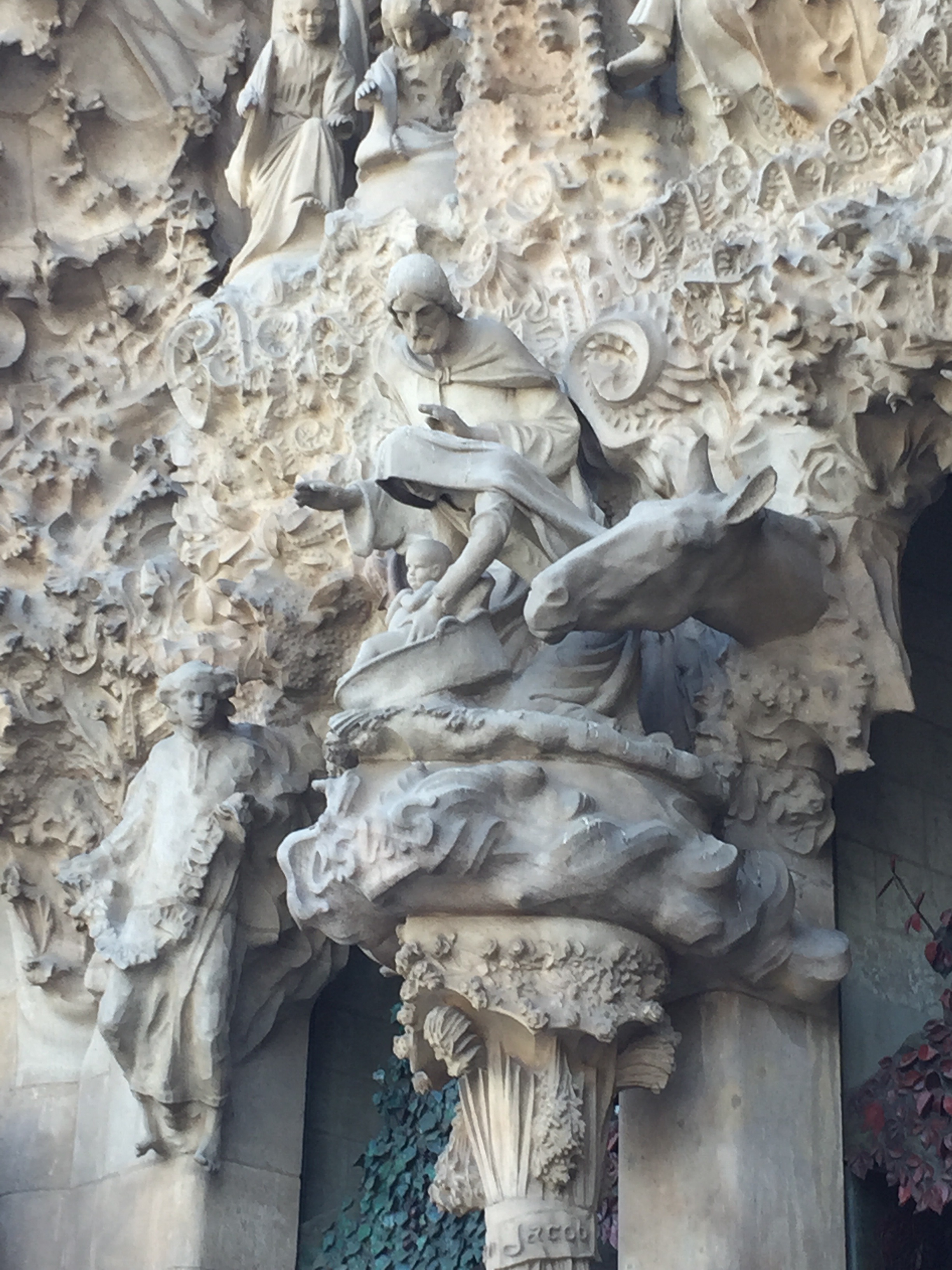
He also removed a lot of the clutter that can be found inside gothic cathedrals and instead placed the statues outside so everybody can enjoy the impact that these points of Bible stories might have on the general public. So far two of the sides reflect two of the more important points in Jesus’s life, the nativity and the passion. The nativity side faces east towards the rising sun, and the intricate carving were designed to give the feeling of the explosion of nature as if life is just beginning for the first time. The whole side of the cathedral has moments from Jesus’s earlier part of life such as the arrival of the the shepherds, and the three wise men, the exile from Bethlehem, and Jesus working on a project with his father, Joseph. I spent some time on this side marveling at the intricacies put into the design, making walking through its doors a spiritual moment.

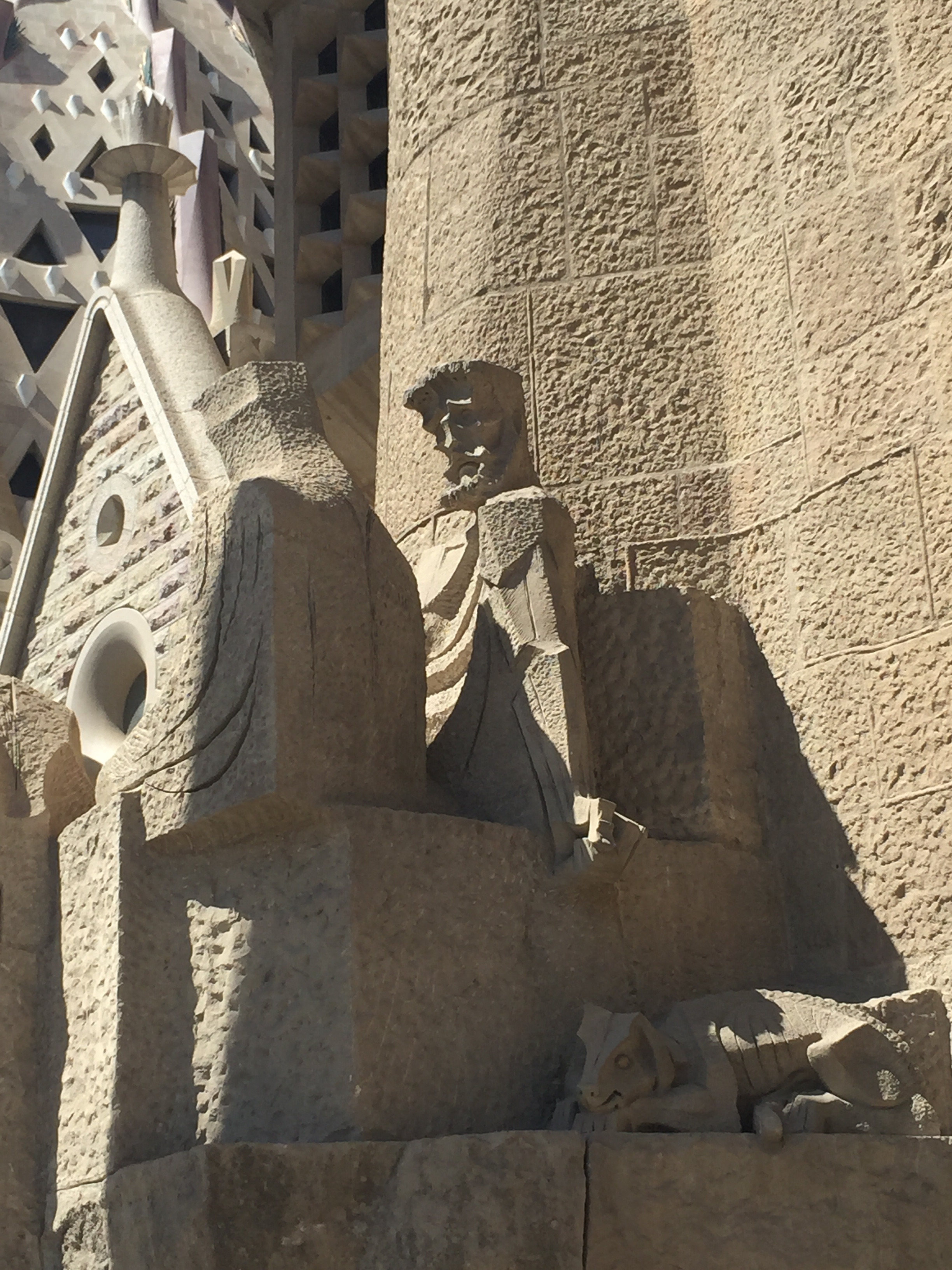
But this is in stark contrast to the opposite side of the building with its angular statues, and harsh motifs. This side depict many moments of Jesus’s death, and Gaudi wanted to remind people that this was a brutal moment in history. Even the pillars that hold up this side of the building remind me of taut muscles and stiff bones. But this side captivates me more than the nativity side. Gaudi dies before its completion, so he was never able to see it as he intended, but the artist that took over the construction made sure to give enough hints to its creator to make it even more interesting to look at. There is a magic square in which the numbers always add up to 33, how old Jesus was when he dies. There are also Roman soldiers wearing helmets that are actually chimney rooftops from another Gaudi structure in town, and the face of the architect is on one of the disciples of the left side of the relief.

It is a great building that is filled with surprises at every turn that highlights Gaudi’s love of nature, God, and the city that he lived in. It is still being built and they hope to finish its construction by 2026, one hundred years after the death of its designer. And I am lucky to have seen it at two different points during its construction, and I hope to come back again some day to see it again when it is complete.