Finding yourself in-between continents Can pull your identity different ways. One side yells at the other which prevents Us getting together as the shelf frays, Creating an ever growing divide. Should it matter that my brother stood still, Clenching his fist while on the Eastern side, While I was charmed by the West’s tempting thrill? We still belong to the same family Though we are separated by a strait. Does it change the understanding we can see When this short distance no longer relates? Or maybe we can start a new order That is not subjected to a border.
There a some songs out there that are ear worms. Once you hear the song, the melody digs a hole through your eardrum to burrow itself some place deep in your subconscious. They are the songs that you find yourself singing all day long even though you keep on telling yourself that you need to quit singing it. Some of those songs don’t even need to be heard in order for them to emerge again. All it takes is the mention of something that reminds you of the song, and all of a sudden allusions to the song pop up all over the place. If you do not believe, start telling your friends that you are planning to visit Istanbul soon, and see what they say. Will they start telling you that even old New York was once New Amsterdam? Will they ask if you are sure that you are going to Istanbul, and not Constantinople? Will they ask you if you have a date waiting in Constantinople? Will you respond that it is nobody’s business but the Turks?
If you want to hear that ear-worm play in your head even more, actually take that trip to Istanbul, and the whole time you are there, you will be singing along. Or at least that was what I was afraid I would be doing, but let’s be honest, how often do you mention the name of the town that you find yourself in. Despite this fact, my mind kept wandering back to this song while I was there, and not just because of its jaunty beat, and memorable lyrics. There is something behind those lyrics that give meaning to this world famous city, and the identities it has carried over its history.
Istanbul is a city centered around duality. It sits on edge of two continents, and it is one of the places in the world where you can travel easily between Europe and Asia. The Bosphorus Strait splits the city right down the center, and there are many places where you can peer across it to see the other continent. It also sits in the middle of the trade routes for both the continents, and the varying ways of looking at the world. There are many times when you wonder if the city has more of an Asian feel to it or if it is in fact part of the European ethos. The strange thing that you will realize when being out here is that it is actually both, and they can live together in harmony rather easily.
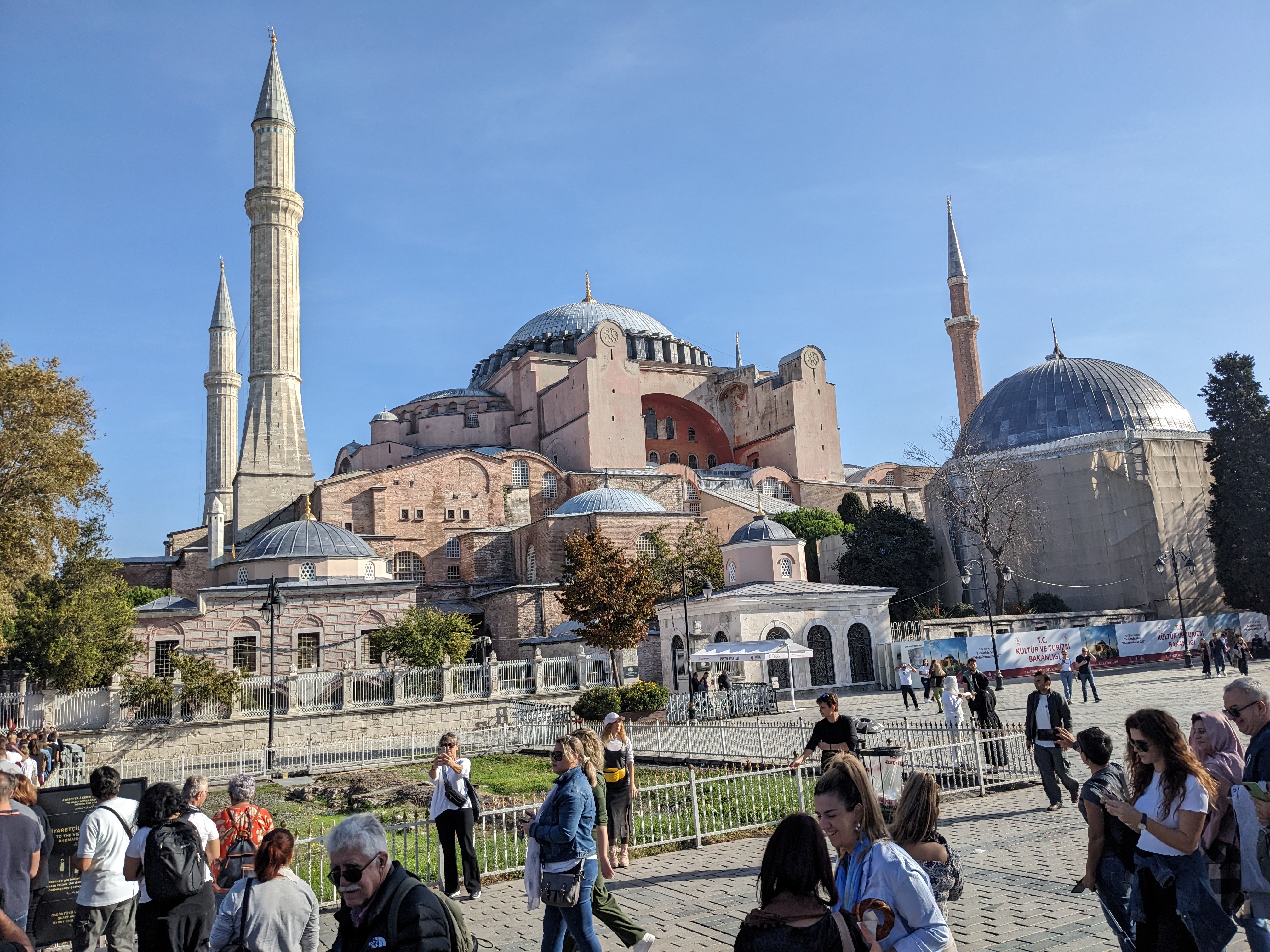
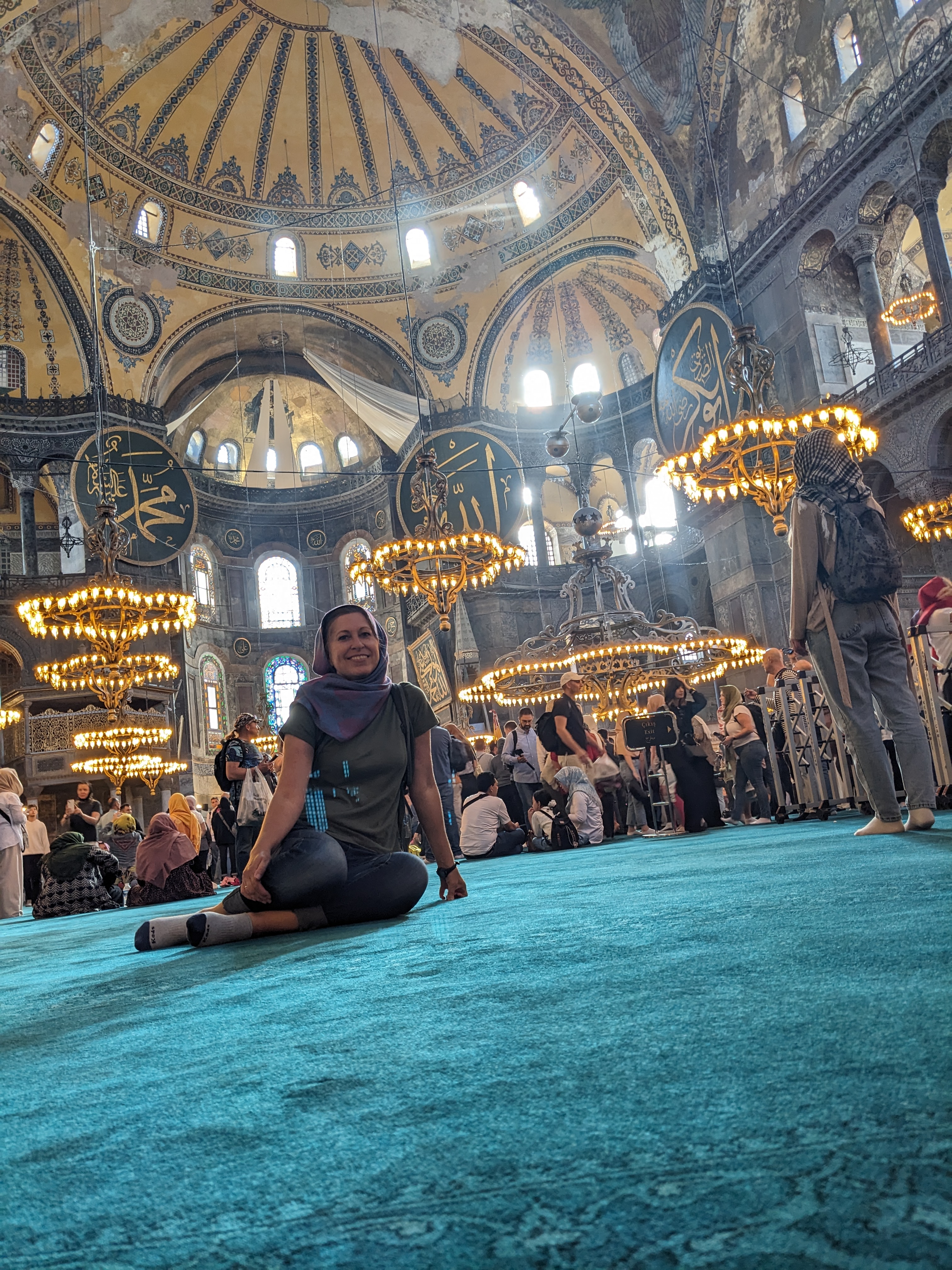
The people of Istanbul will claim that their spiritual nature is definitively in tune with the Middle East and its values, but this is not necessarily accurate either. Though there are many mosques and the call to prayer can be heard at the usual times of the day, there are not the restrictions on alcohol and other vices that are prevalent in other countries in the region. If you look hard enough beyond the Roman ruins that can be seen all over the place, you will find the Catholic, and Greek Orthodox churches that you would find in a typical European city. Even the city’s most historic monument, the Hagia Sofia, demonstrates this duality within the culture. It was at one time the greatest cathedral on earth, but was turned into a mosque, then a museum, and back to a mosque. Though it supports the current Muslim culture, it is hard not to walk through it, and not see the remnants of the original plan still all over the place.
This duality creeps its way into all aspects of the culture, giving the city of Istanbul its own unique flavor. It feeds into its food, its landscape, and its people. It gives context to the novelty song from the 1950s, so it is no longer an ear worm that will stick in your head from the moment your hear it, but instead will guide you through this amazing town supplying it with meaning.
Until next time, I hope to see you in Istanbul, not Constantinople.
Today is the day we turn one-hundred, A monument that not many can claim. Many thought we would have ended up dead, And would have never reached our current fame. We endured in order to prove them wrong, And built up something mighty upon this site. In a world where they think we don’t belong, We will continue to put up the fight. Today we’ll sing of our national pride, Lining our streets with our Turkish colors. We will celebrate our historic ride, Giving us reason for our hearts to stir. We’ll meet again in the next century In honor of this day’s great memory.
I never plan for it to happen. I just want to go on vacation, get away from my life for a little bit, and see a part of the world that I have never seen before. Every once in awhile though, I find myself in a part of the world during a time of great celebration. These have always been some of my favorite travel experiences, and my trip to Istanbul supplied me with another one of the these experiences.
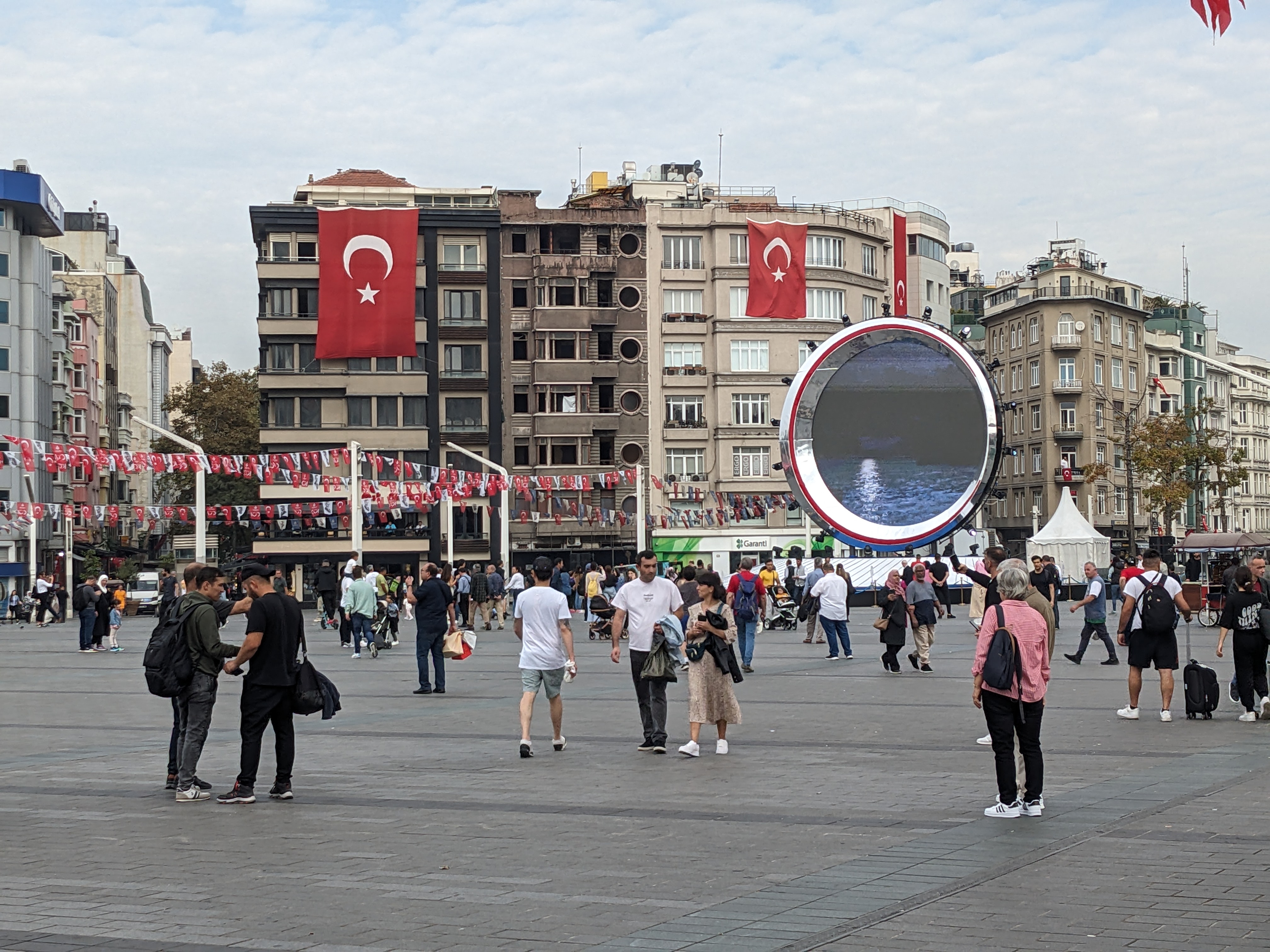
Sunday marked the 100th anniversary of the modern republic of Turkey. It was on this date that Mustafa Ataturk raised the country up from the rubble of the Ottoman Empire and turned it into a secular republic. The busier parts of the city were draped in Turkey flags, and people came out to show their support for the momentous part of their history.
It was not the craziest of celebrations that I have found myself in. People were quietly enjoying the day off by wandering the streets of town and waving their flags. There were some fireworks at night, and a small display of the country’ navy, but beyond that, it was not the party that it cold have been. Still, the day was filled with joyous people, showing their appreciation for their country.
It reminded me a little bit of my youth when I celebrated the bi-centennial of the United States. There was a moment of nationalistic pride in being able to mark this occasion. Some of the celebrations seemed to be appropriate to what was happening; whereas, others used the moment to push their agenda with simple displays of propaganda. Every business went full out to show their support with even McDonald’s creating a special menu board for the day. It makes sense and will allow the moment to stick in the minds of the youth that witnessed it longer because they will remember how the whole country went overboard to celebrate.
As for me, there was only one thing that I could do, join in the celebration. Why would I do anything differently? I was already here, and a moment like this would not come again for another hundred years. You have to enjoy these moments when they come whether you planned to be a part of them or not.
Until next time, keep going out and finding those celebrations, and make sure you get the most out of them when you find them.
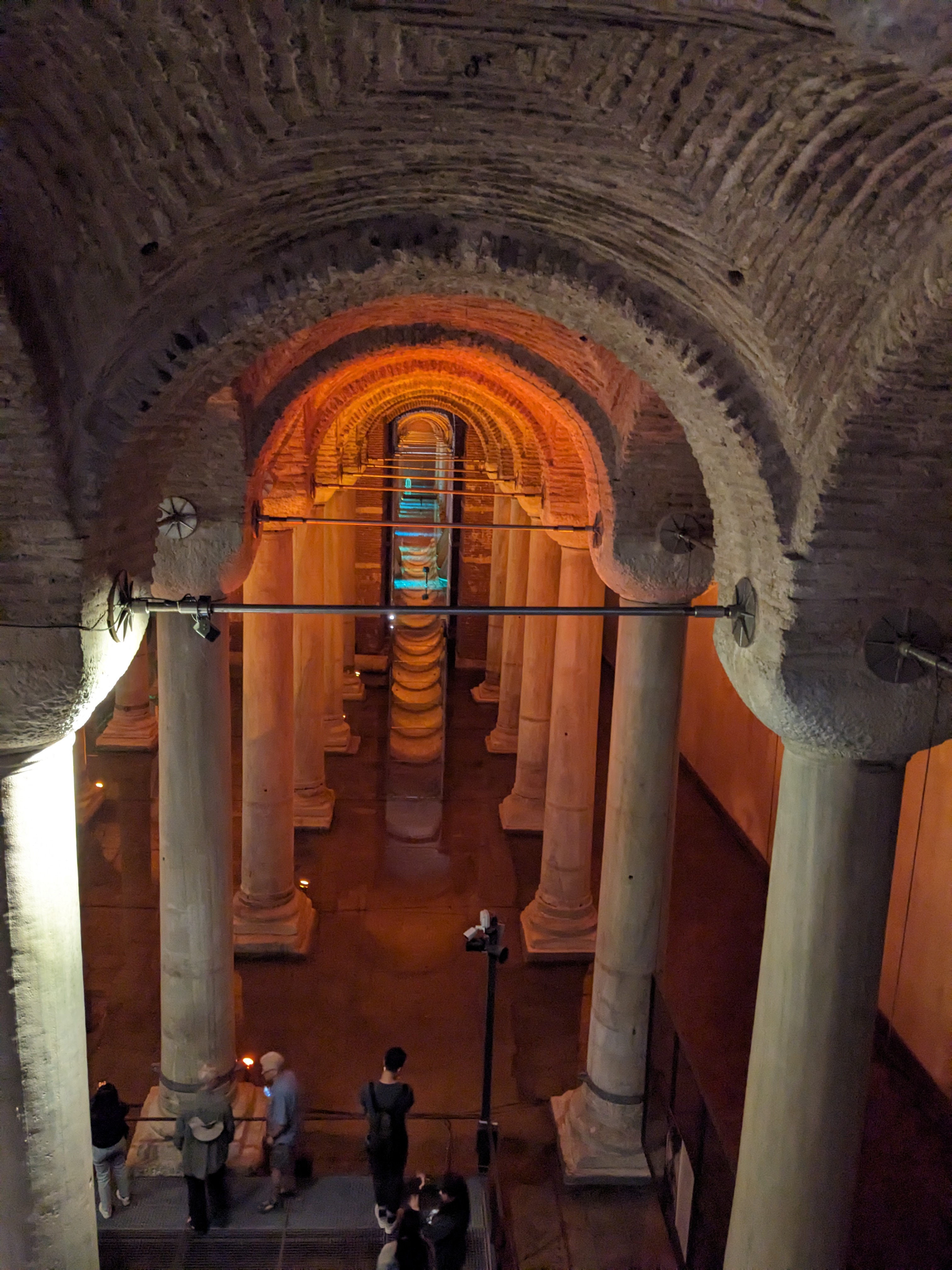
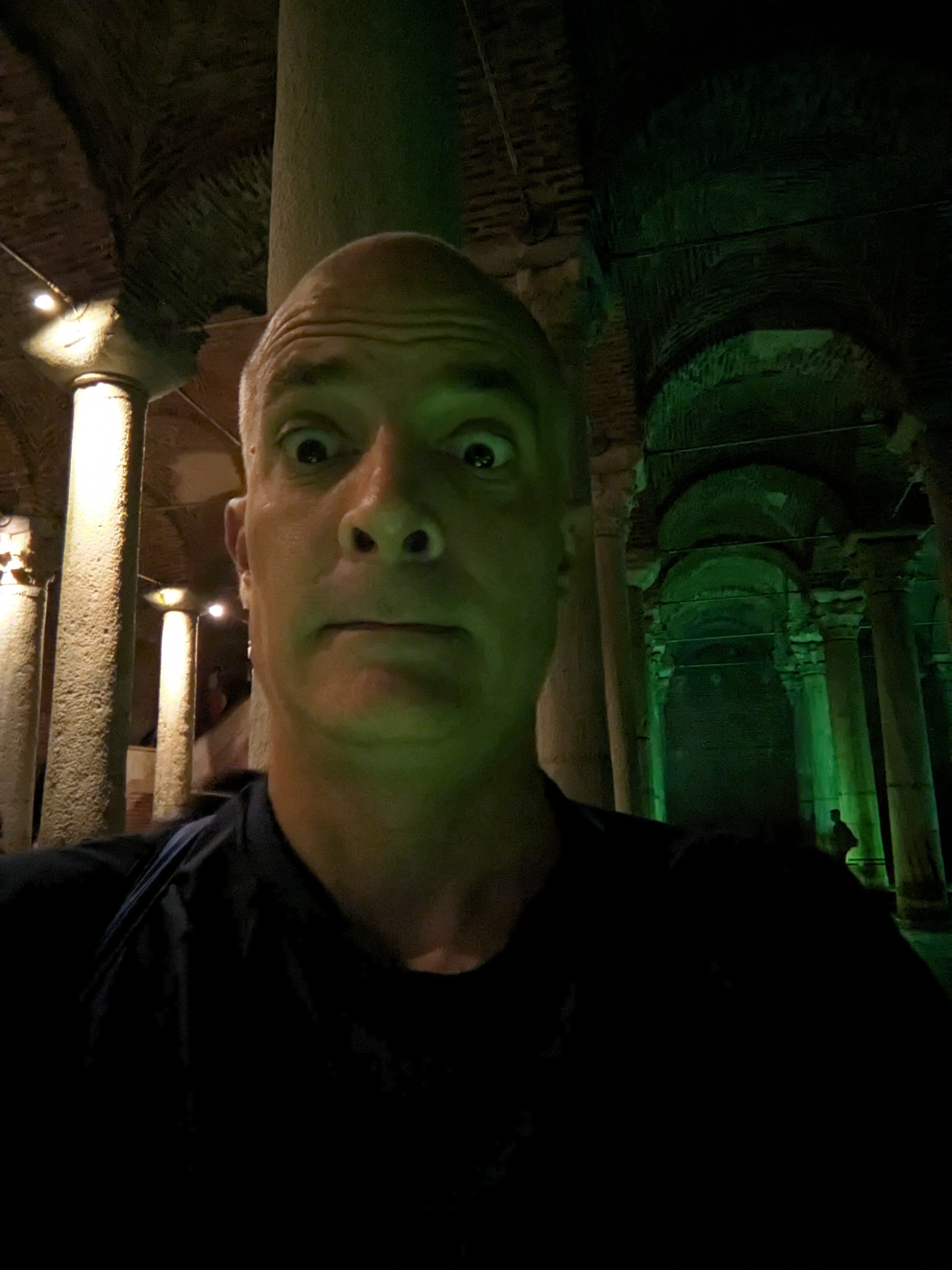
Istanbul has a lot of treasures above the ground that bring people to the city, but they also have one hidden gem that sits underneath its busiest part. If you look around the opposite side of the street that holds the parks and greatest monuments, you will see a line to a modern looking building that could not possibly hold the crowds that are gathered in the line. It has to be something though, if so many people are lined up to see it, and it would be worth your time if you joined the group to see what it was all about. If you did, you would be taken down to an underground cistern that at one time collected the drinking water for the city of Constantinople, but has sense been drained so people can wander around it and check out the structural marvel that the Emperor Constantine had made back during his rule in the fourth century.
The place is massive. It covers almost 10,000 square meters, and during its heyday, it could supply enough water for 100,000 people for one day. The design has arched ceilings and a variety of columns to keep all of this water safe. The people who constructed it did not spend a lot of time making sure all of the columns matched each other. They knew that they would be covered in water and nobody would be able to see them anyways, so when they built it, they grabbed columns from old buildings and used them to build this cistern. This made it so the columns have their own charm depending on what part of the cistern you find yourself in.
This leads to some interesting design choices in certain parts of the building. In the far corner, in the place they thought nobody would ever come, they had found some shorter columns used to keep the ceiling up, so in order to make up for this problem, they cut off the head of a couple of Medusa statues and placed them underneath the columns to make them tall enough. This makes this the busiest corner of the cistern, and it it fun to check out the faces that they deemed perfect to make the structure sound.
Since they have drained the structure, they have added a bunch of art work in the shallow water that makes the place even more exciting to visit. Some of them are simple designs of leaves or jellyfish, but there are plenty of half completed statues of men and women some of which are pretty creepy. The Medusa is the most terrifying of them all, and they have her hidden in the corner of the Cistern. Others are not as creepy, but a lot of it depends on the color of the light they are showing at the time you find yourself next to one of these statues.
The lighting definitely changes the mood of the place, and at time makes it appear really creepy. No matter the lighting, it is still a must visit place if you are in Istanbul. I have been to a lot of places all over the world, and I can not think of another place like this one. It has been the highlight of my trip out here so far, and I am glad that I was able to see the Basilica Cistern.
Until next time, keep searching for those hidden gems in your travels and make sure you share them with others so they are stay around for the next group.
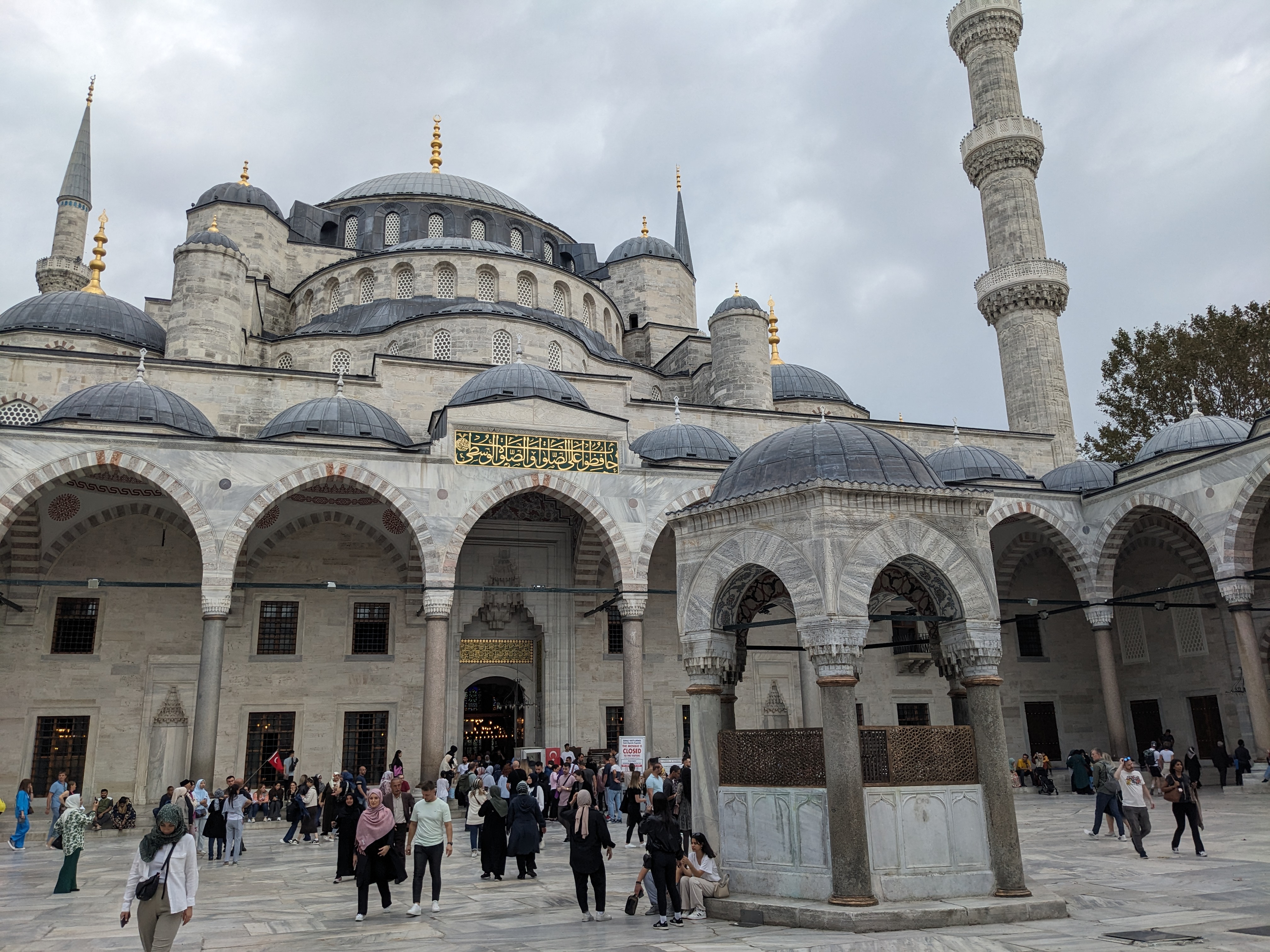
When visiting Europe, many tourists go to the cathedrals, and marvel at their beauty. When in Southeast Asia, they folk to the watts to check out what they have to offer. So it only makes sense that when you are in the Middle East region, you will head off to the mosques and see how they represent the spiritual guidance of the people in this region of the world. Over the last couple of years, I have visited a few of the more important mosques that the world has to offer, but it wasn’t until I traveled to Turkey that I got to see one of the oldest mosques, the Blue Mosque.
The Blue Mosque had finished its construction in the early years of the seventeenth century, and ever since, it has been an imposing figure over the city of Istanbul. It sits in the old part of the European side of the city, and it is easy to find, not only because of its blue dome, but also the six minarets that surround its grounds. The mosque itself is an important piece of architecture because it was the first time ever that a dome was successfully attached to a square building. Despite this feat, it is still a great place to visit for many other reasons.
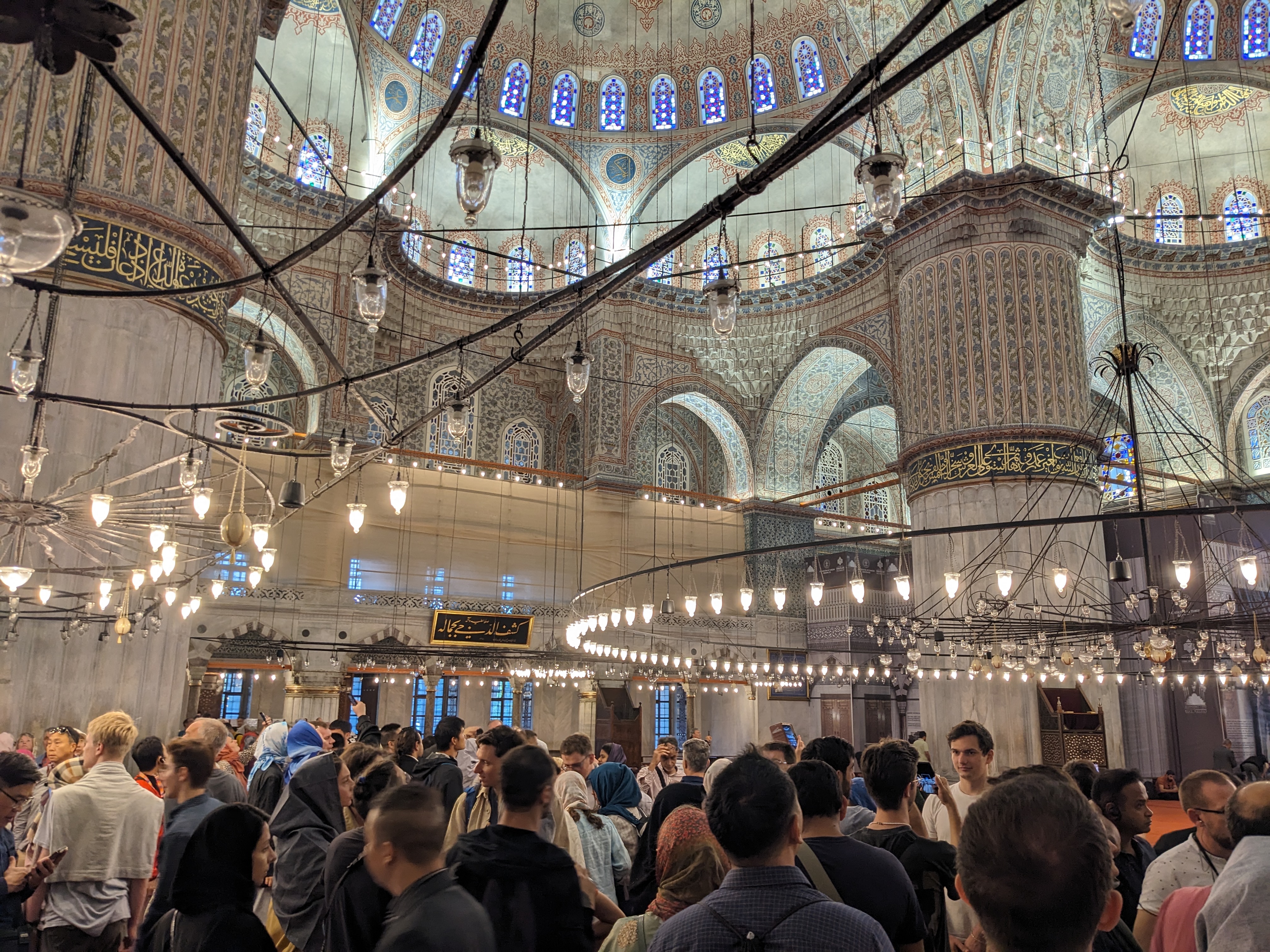
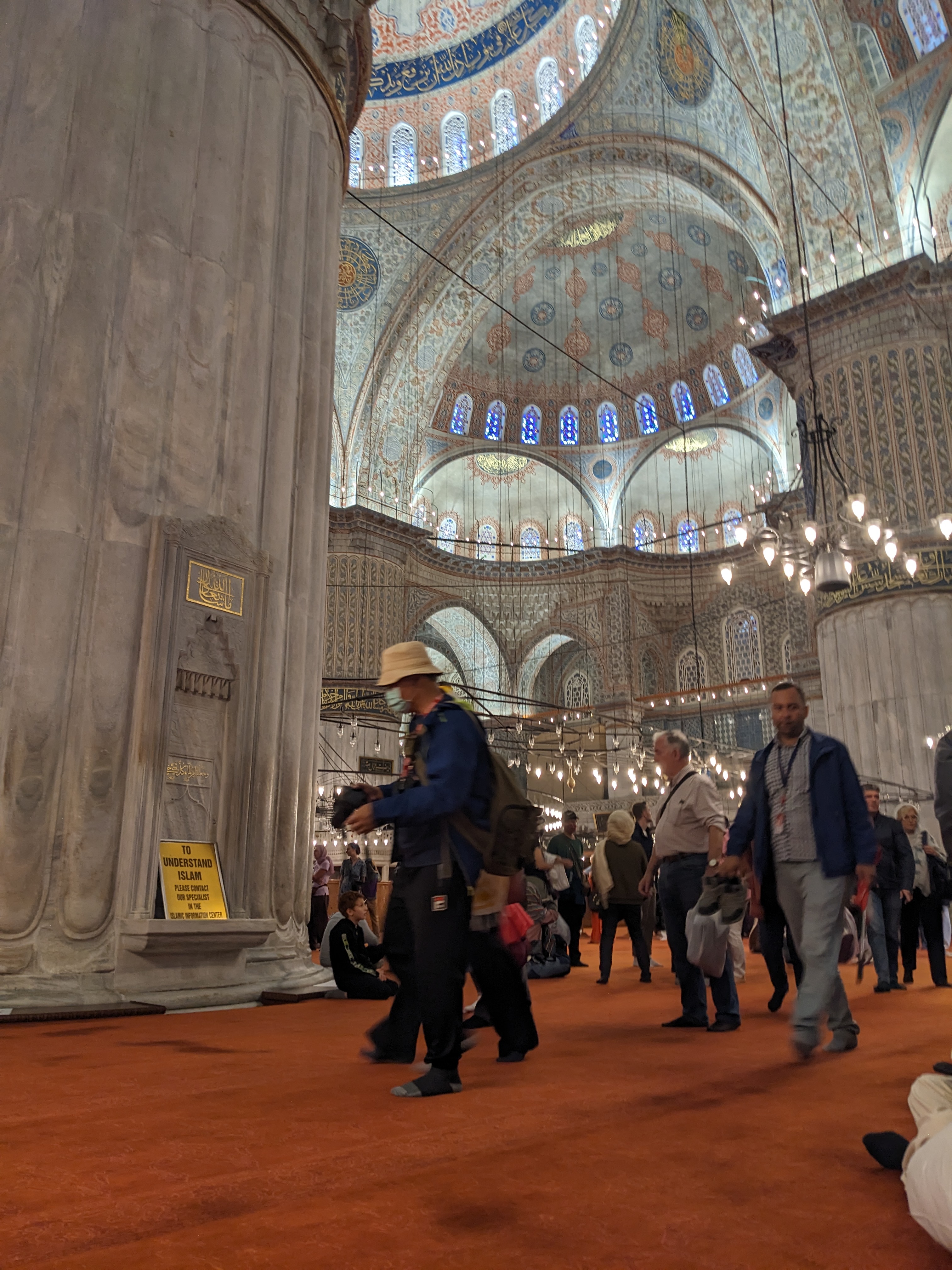
From the inside, the building becomes even more impressive. The Blue Mosque’s dome looks even more intricate from this perspective. The artwork that adorns the ceiling is original and has had been protected ever since the mosque was built. The designs come from over 21,000 tiles that were places there even though it is hard to distinguish one of the tiles from another. Still, it has created one of the most intricate pieces of art that I have ever witnessed, and much time could be spent looking at the patterns that are created above.
The Blue Mosque is not as big as some of the more elaborate mosques that can be found in Oman and the United Arab Emirates, but that does not stop tourists from coming to see this sight for themselves. It does not hold a chandelier that has a spiral staircase inside of it so it can be cleaned, or a carpet that was hand-sown and covers every corner of the floor, but you can feel the same sense of reverence when you enter. The biggest difference I felt came from the focus of each mosque. Some of the mosques I have visited seemed more interested in make monetary gain from the people who showed up to look at the place; whereas, the focus of the Blue Mosque seemed to be geared towards spreading the knowledge of Islam to the people who visited. There is a corner inside of the mosque dedicated to pushing this passion on to other people, and it makes it feel more authentic when you arrive.
If you are in Istanbul, the Blue Mosque is a must see, especially considering there is no entrance fee to go and see its beauty, and feel its history. Just know that like many other holy sites, there are some dress codes that you must abide by. Conservative dress is suggested with women being asked to cover their hair when they enter, and men cannot wear shorts or hats. It is nothing that is too uncomfortable, and it is a small price to pay to see this place. Also know that, the Blue Mosque is not opened to visitors during the hour around the call to prayer. It gets packed as soon as it opens up again, so it helps to hold off for a bit to enter, if you find yourself here during that time. Still, there was not enough people in the place to make it too uncomfortable. All in all, it is a great place to visit while in Istanbul.
So until next time, get out there and see what the world has to offer.










 John Collings