Arkham Horror, The Card Game – A Review

The ancient gods have laid dormant for thousands of years, and have almost fallen away to mythology. This has not stopped cultists, and depraved individuals from finding ways to bring them back. Because of this blind ambition, strange things have been happening around the small New England town of Arkham, and it is your job as an investigator to get to the bottom of the mystery. During your journey, you will be subjected to terrors long regulated to the darkest nightmares while battling ghouls, ghosts, and acolytes. It is a story that can only be told by the likes of H.P. Lovecraft, and Fantasy Flight’s living card game, Arkham Horror, The Card Game.

Fantasy Flight has made a few living card games, but this has been one of the more popular ones since its release in 2016. You will need to core set to play the game, and it does come with a campaign of three scenarios, but there are plenty of other scenarios available to play with the most recent one scheduled to drop in May of 2024. Does this marketing tool allow for the game to never get old? Does the Lovecraftian theme shine through? Is it a great game to play with a group of people? Does it tell a great story?

These questions are the same ones that I asked myself before I took the dive into this game, and I am here to tell you what I found out when I took that plunge.

THEME

This game drips with atmosphere. When you play, you feel completely immersed into the world of H.P. Lovecraft. It tells an amazing story full of twists and turns that will have you guessing the whole time, and overcoming the strangest encounter that only the genius of horror could have concocted. It will leave you on the edge of the mythos, not giving you all of the details, but just enough to make you wonder more about what is going on. The stories are pretty linear, especially in the core set, that only allow you one path through. Still, like all great stories, they are ones that you want to revisit to see if you can be more successful the second or third time around. Also, if you find it a little too easy, there are ways to make the experience more difficult, thereby making the story just a little darker. When I play I like to turn the lights down low and add a couple of candles to add a little extra punch to the experience. It absolutely the strength of the game, and it is the reason I keep coming back to it.

Rating – 10

GAMEPLAY

I should have been worried when I opened up the box, and saw two rule books and a campaign book. Based on other Fantasy Flight games that I have played, I should have known that there would be an intricate dance to be played with the rules of this game. Considering it is a card game, I thought that the rules would be intuitive and I would be able to easily pick them up by reading what was on the cards. This was not the case. The first game I played was spent a lot of the time combing through both of the game books to figure out what I was supposed to do. It took away from the experience of the story that I was playing through, and made the game a little frustrating to play.

With that in mind, I am glad I stuck with it. Though the rules can be a little fiddly, once I was able to figure them out, it added even more to the experience of playing this game. There is a little bit of a deck building aspect to the game, and each character that you can chose to go through the story has different attributes to help you either go through it. Some of the cards are really powerful, and each player has weaknesses that add the problems that are encountered throughout the story. Dice are also not used, but there is a bag with a variety of chips in it that can change the difficulty of the game, depending on how much of a horror experience you would like to have. I also love the make-shift game board that is created by cards, and the little book that is created by the story cards. It makes for the perfect Lovecraft experience.

However, like a good Lovecraft story, do not expect things to go well for your characters. This game is hard to win any of the scenarios that come in the core box. There is an easy challenge to the game if you need to win, but even on the regular setting, it is a challenge. This just adds to the atmosphere of the game, and there are rules presented by the game that takes into account that you characters will either die or go insane. Still, it is set up to make for a great gameplay when you eventually get into the flow of the game.

Rating – 8

ARTWORK

Like all Fantasy Flight games, great care has been taken to create atmosphere through the artwork. There is an overall consistency that comes with the artwork that is presented on the cards. It allows you to immerse yourself into the 1920s and the fictional town of Arkham. Granted, none of these pieces that you find on the various cards and books would be something that I would like to frame and hang on a wall, but I can still see that time and thought went into each painting. It comes from a place of love not just for the game, but for the source material as well.Though I do not appreciate that the beasts, and monsters that are encountered during a session of the game are drawn out, not leaving much to the imagination, it still adds a lot to the game. This would not have been the way that H.P. Lovecraft would have presented these creatures of ancient lore. Instead, he would have hinted at their presence and would have let you come up with the idea that would terrify you the most. As soon as you see the creature, it is no longer frightening. I know that does not work the same for a game as it does for literature, still the creators of this game left just enough mystery in the story to allow the feeling of reading one of his stories to seep through the experience that you get to have with the game.

Rating – 9

INTERACTIVITY
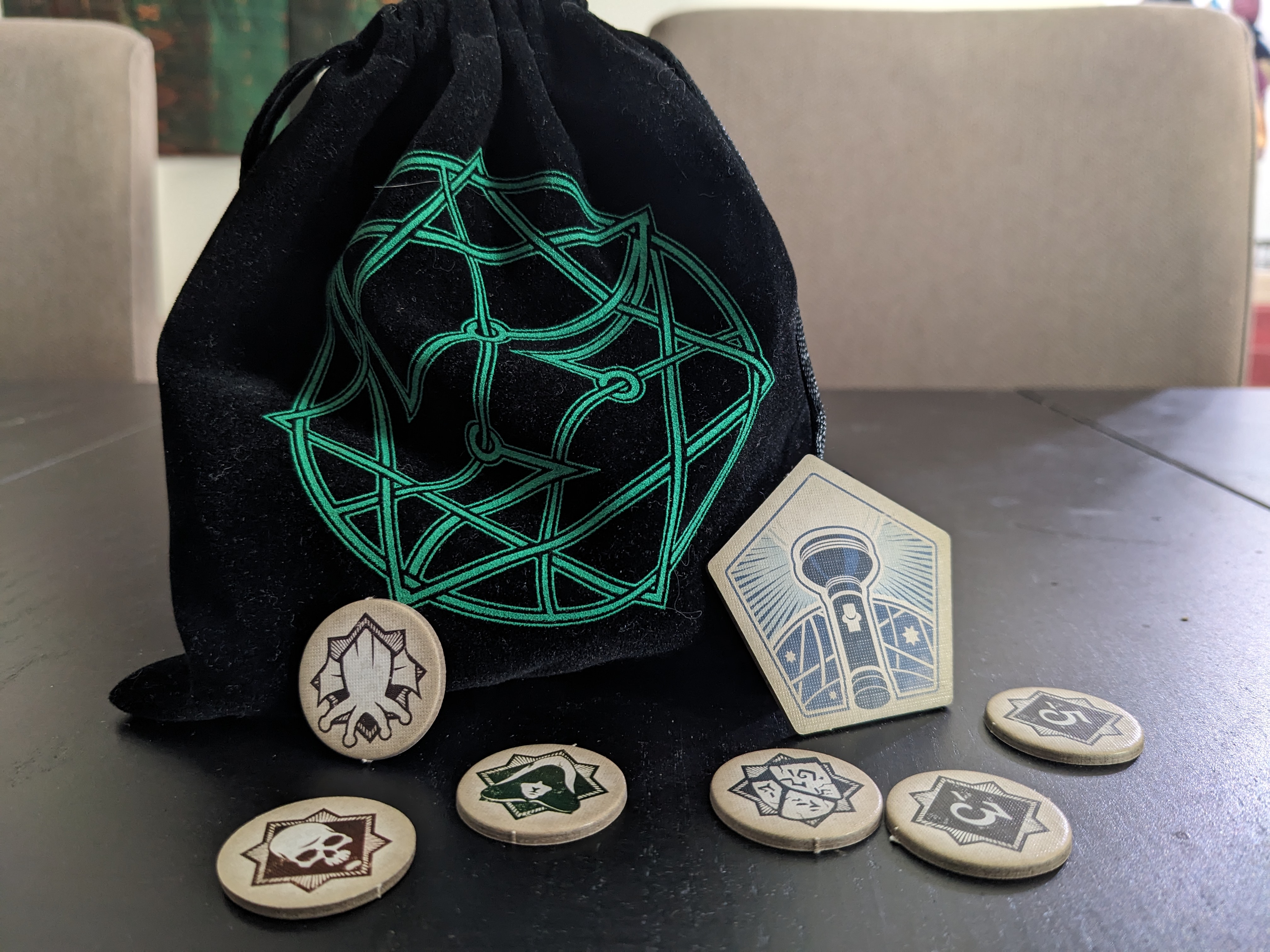
Most of the time, I like to play games because it is a way to connect with people and create a shared experience. That is not why I bought this game. I knew that there was going to be a time when I would be by myself at my home, and I was looking for something that would scratch that board game itch while also still allowing me to play myself. After doing a lot of research, I found out that this was always mentioned as one of the best solo board games out there. I thought that this would be the perfect one to pick up for myself. After playing it a few times by myself, I was starting to understand why people thought this way. It is like nestling up with a good horror story and watching it unfold in front of you while still having some choice in the overall ending of the story.

Still, the game is marketed as a game of one to four players. I was able to pull it out a couple of times to see how it plays with these higher player counts, and the problems with the rules start to surface even though I tried to explain all of the rules before we got started. There is a lot of different rules in this game, and the struggle I had during my first couple of plays was also there when I played with friends. We spent more time combing through the rule book rather than enjoying the story that was playing out in front of us. Still, after we got a hang of the game, the fun I was having while playing solo was able to be achieved with a group. It add a little bit more mystery to the game because I did not know what the other players were going to do when it was their turn, and the surprise of seeing cards being played that I had never seen before. The small decks that each player makes for the perfect environment for cooperative play. We were really able to talk through things to come up with the best course of action, and nobody ever ended up quarterbacking the game.

Still, like most cooperative games, I do think this game plays better solo even though this is one of the better cooperative games that I have come across.

Rating – 8

EXPANSIONS

As of the writing of this article, there are nine campaigns out there to expand this game as well as many stand alone scenarios. Each campaign opens up a new story with dark twists and turns, and new game mechanics designed for each terrifying tale. Some of the campaigns come with new investigators that you can add to the mix with older campaigns to add some twists to stories you might already be familiar with. They can cost just as much as the base set, and it is required to have the base set in order to play these other campaigns. At first, you had to be each scenario separately, but Fantasy Flight has since gathered up the stories that work together and put them in a single box, making it easier to collect a complete campaign.

Even with the ease that Fantasy Flight has made to experience another story in the realm of H.P. Lovecraft, there are two complaints that I believe I need to address at this time. The first being the cost. Each expansion is like going out and repurchasing the game. Though some of the expansions have great re-playability, it is sometimes hard to justify buying another expansion just so I can play the game again.

The other problem I have with the expansions is the packaging. I do believe that Fantasy Flight is in the process of fixing this problem by putting the expansions in smaller boxes, but there are some boxes out there that only a third of the space is used for the expansion. This seems like a little bit of overkill.

Despite these two flaws, the expansions are still a lot of fun to play. They always breathe new life into the game, and make it worth playing again.

Rating – 9

OVERALL

Arkham Horror, the Card Game is a great atmospheric game especially for those who enjoy the stories created by H.P. Lovecraft. It places you right in the middle of his universe, and you get to feel all of the horror and confusion that his tales created. The artwork helps to add to the atmosphere, and each scenario is fun to return to. I prefer playing by myself, but it is still fun with a group of people. Despite the rules being hard to understand the first time around, once you are able to figure them out, it makes for an enjoyable game experience. This is easily one of my favorite games, and I hope they continue to add content to it so I can find new ways to enjoy it.

Rating – 4.4 Stars out of 5

Betrayal at House on the Hill – A Review

It is the classic Halloween story, a group of misfits find themselves outside of a haunted house, and for some odd reason they want to investigate. Like all great Halloween stories, there is a twist in this one. While they are investigating, one of them turns on all of the others, and it turns into a crazy attempt to escape from the clutches of the haunted house. Will this band of misfits make it to safety, or will the betrayer have his or her way with the group and bring them into the lonely confines of the house on the hill?

This is the premise that players will find themselves in when they pull Avalon Hill’s Betrayal at House on the Hill from the shelf and play a round of the game designed by Bruce Glassco with help in development by Rob Daviau, Bill McQuillan, Mike Selinker, and Teeuwynn Woodruff.

THEME

Betrayal at House on the Hill is the perfect game to play during the month of October. One session that lasts anywhere between one and two hours will tell a horror story that will make you one of the characters of that tale. It has a little bit of a Scooby Doo feel during the first part of the game where you explore the haunted house. Each tile flipped over adds more to the house, and creates more of a mystery. It also forces the players to make the biggest mistake that a group of explorers can make in any horror movie, go off on their own to discover what they can find. The game also comes with set of cards that have flavor text to them that when added to the various characters creates a great horror story full of all of the tropes that you would hope that a game like this would have. After a few game plays, the flavor text becomes predicable and it is hard to make a different story with it. On the other hand, if there is enough time between game sessions, the flavor text gets forgotten and you are able to create your own story.

The real adventure begins with the second part of the game when the betrayer is revealed. This is when the real horror story starts. There are fifty different scenarios that comes with the base game, and each one introduces different game play as the players try to solve the mystery of escape the house. It is also a mystery as to which scenario will be played as there is a great system in place to make sure that the mystery is unknown until a certain thing happens and unlocks the game play from that moment on. Some of the scenarios are more fun than other ones, but if you hit on one of the fun ones, the theme really shines and you feel like you are a part of a horror movie. All of the flavor text that you discovered before combined with the final events play out in a way that tells a complete story that will have you wrapping yourself in the moment of the game.

On the other hand, when it does not work, the story becomes a slog to work through, and you are trying to figure out a way to make it end. I have had this happen a couple of times, and I no longer cared about winning the game. I only cared about the way to make the story end as fast as I possibly could.

Rating – 7

GAMEPLAY

The game is broken up into two phases. The first phase is the exploration stage. During this phase, the characters start in the entry way of a haunted house. Each character is unique in their abilities. Some are faster and stronger; whereas, others are smarter and have a stronger resolve. Each of these abilities can grow stronger as the characters explore the house. On each of their turns, they flip over a tile to add to the map and then follow whatever is triggered by the room they enter. Sometimes this is a trap that will have them fall down to another level, or a mysterious room that will transport them to another part of the house. Most of the time involves finding an item, encountering an event, or experiencing an omen. The omen and event cards cause the character to try out their luck against the situation by looking at their abilities on their cards and rolling the amount of six sided dice that is indicated by their number. The dice only have zeroes, ones, and twos on them. After they roll, they add up the points, reference the card with the amount they rolled, and see what happens.

If an omen is revealed, the character has to roll again with six dice, and based on how many omens have been revealed, if they roll lower than that, the second part of the game is set in motion, the betrayal. They players look at which room and which omen triggered the betrayal. Then, they look in a book that came with the game, and based on the matrix, it will describe which scenario they will play, and who will be the betrayer. The betrayer takes control of the real threat of the haunted house, whether that is zombies, vampires, or deadly clown, and the two opposing sides have certain win conditions that they have to meet in order for the story to be complete.

The game is surprisingly easy to teach. There are intricacies to the game which can be brought up while the game is being played, but for the most part, I usually just go over the key rules, and hop into the game. When one of the rules needs to be discussed, I will bring it up, but that is a rare occurrence, and most of the time, I go right to having fun.

The game also works better with larger numbers as it fun to put all the individual stories together to create one overall narrative, but a lot hinges on the ability of the betrayer to guide everybody through the story. Considering that nobody knows who the betrayer is going to be at the start of the game, it means that anybody will have to be willing to take on this role and do it justice. Inevitably what happens is someone who is not great at running a game is the one who becomes the betrayer, and the second part of the game does not work the way that it is supposed to. This game works best with people who play role-playing games and are capable of taking on the Game Master role which means that this game is not for everybody. When everybody invests into the absurdity of the situation and helps tell the story, it becomes a blast to play. When more people who are not willing to help the story plays the game, the whole matrix falls apart and the game is not as fun. This makes it hard to get this game to the table. In other words, it is a hit or miss kind of game. When it is on, there is no game that is better. When it is off, it is painful trying to get through a whole game.

Rating – 6

ARTWORK

The artwork in essential to bringing to life any role-playing game. It helps to immerse players into the story. A real good game will consider not only the characters that are being used while playing, as well as the environment. The team of Justine Mara Anderson, Christopher Moeller, and Peter Whitley put all of this into consideration when putting together the feel of the third edition of the game.

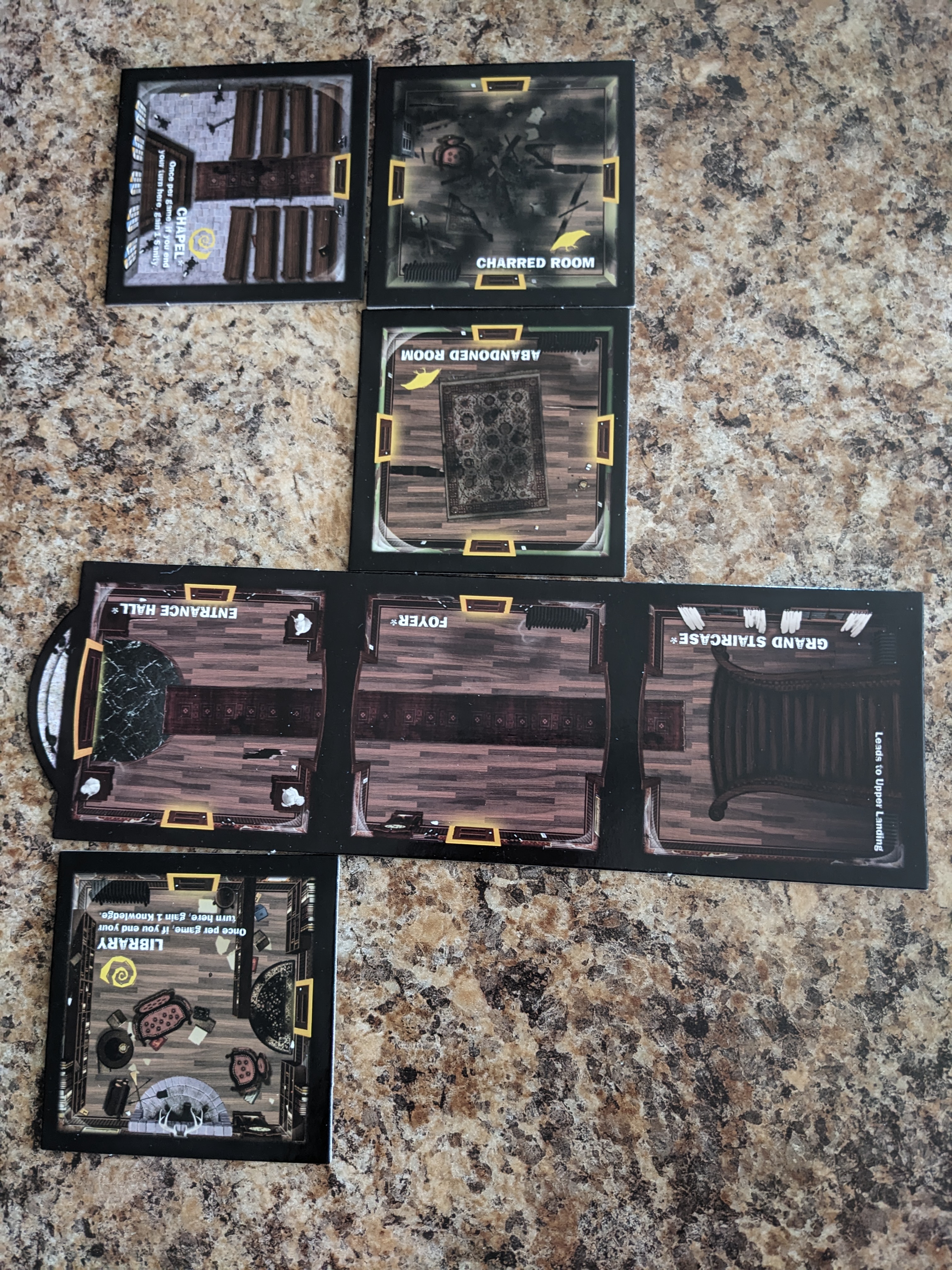
The house that is created throughout the course of a game is created by tiles that give the perfect bird’s eye view of what each room would look like. It helps to feel like you are in a haunted house while you play the game.

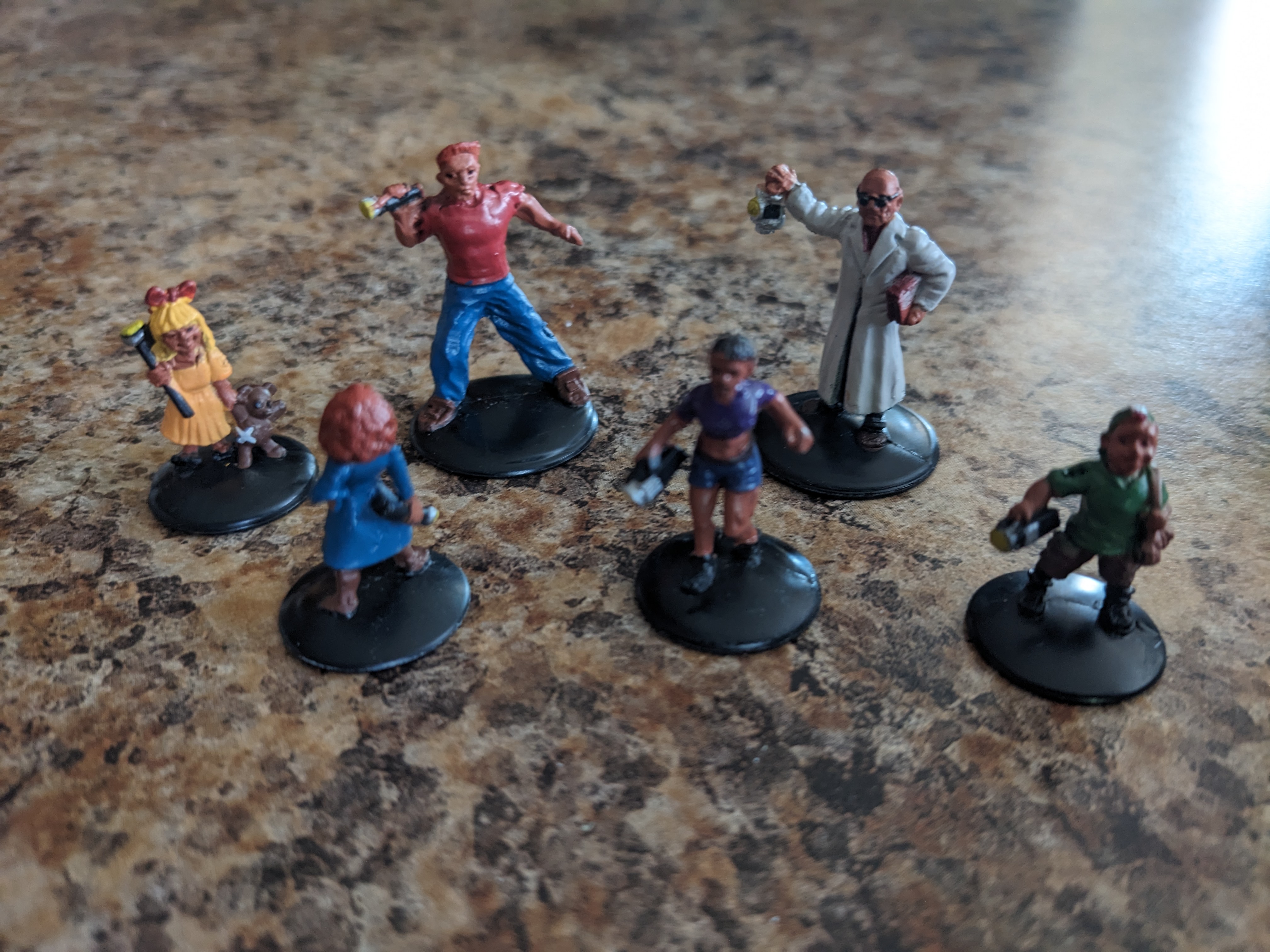
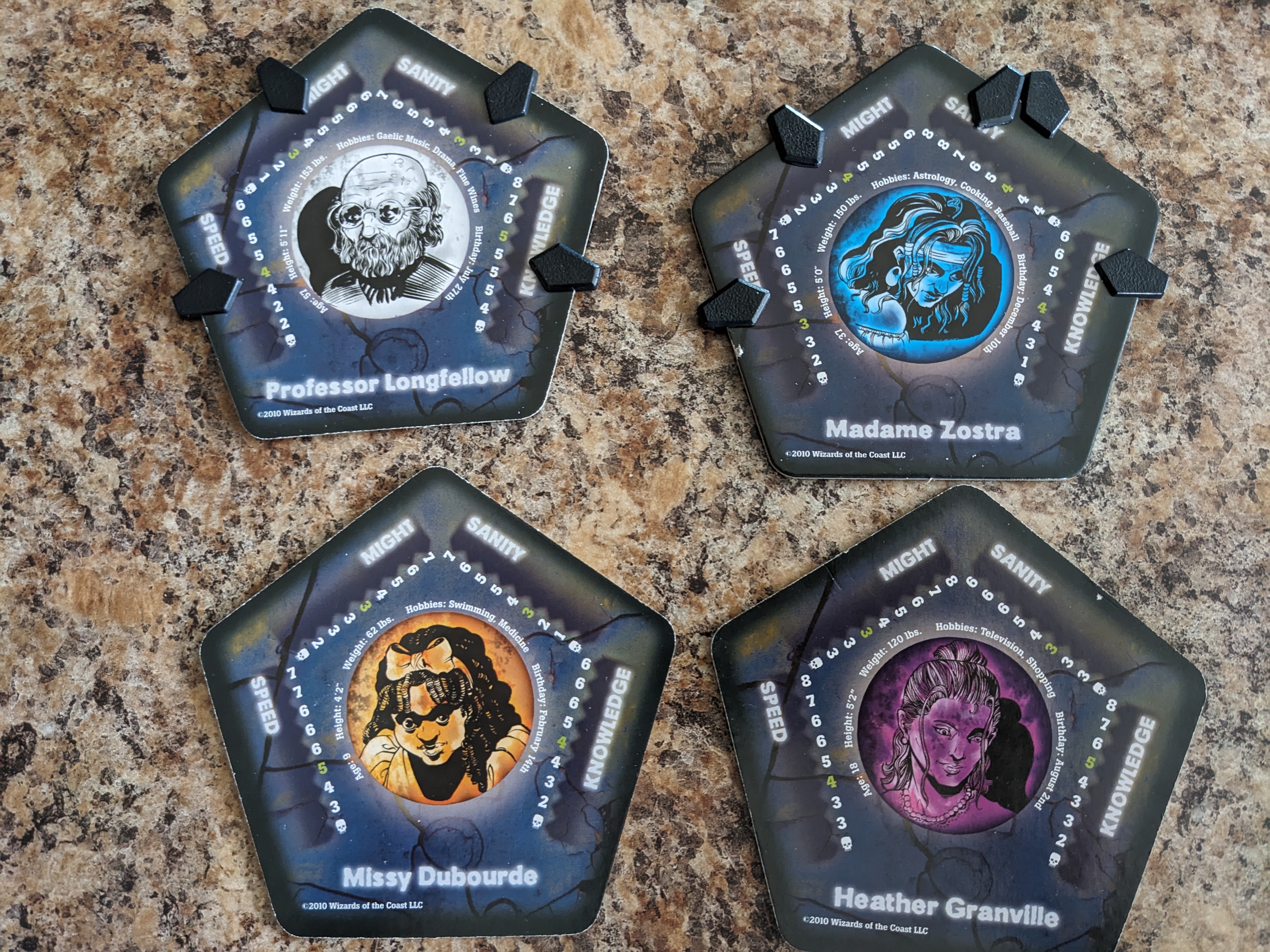
The minis that are created are great if you are one of the characters. They look pretty good, but with the intricacies that are found with minis today, they are not as detailed compared with other games coming out today. They did a good job of giving them different solid colors so that can easily be found on the board and associated with character boards. Each character board is double sided with two different characters giving the game twelve different characters that you can play. Each character is given their own little quirks that helps players find a way to become a part of the role.

After the betrayal, there are a series of monsters than appear on the board. There are a lot of different creatures that can come into the story, and the designers understood that if they made a mini for each one, it would make the box massive, and the price of the game would have gone up. To combat this, they made little cardboard tokens. It does help with the space and what they can keep in the box, but the monsters are tiny pictures and do not help with the immersion of the game.

Some of the components do not work the way that they are intended. There are little tabs to keep track of the different stats of each character. They are hard to attach to the character boards, and they do not move once they are on there even though that is what they are designed to do. Considering this is an important part of the gameplay, it is annoying that they do not work well. They do sell other character cards that have dials for each of the stats that would work better, but why not put them in the game in the first place instead of supplying the game with a poor design. The game is not that expensive to begin with, and raising the price just a little bit to have better components would not take away from people buying the game.

Rating – 6

INTERACTIVITY

The first phase of the game has the potential for being a great moment for people to interact with each other, but once again, it depends on the people playing the game. It all comes down to how much the group wants to tell a story together. The flavor text that comes with each card that is flipped over, combined with the different characters, the rooms, and the imagination of all present, it can create an original story every time you play. The horror tropes might be the same, but the way that they are tweaked for each retelling will allow the story to unfold in fun ways. It requires the players to add those missing holes to make the story really come alive when you play the game.

On the other hand, if the players just flip over the cards, read the flavor text, and expect the story to be told through just that alone, the story will never come together. It requires that extra interactivity to make the game work on all cylinders, but it also takes players who feel comfortable with this kind of storytelling experience.

The second phase works better forcing people to interact with each other, and the story unfolds more naturally. Both the betrayer, and the party that is left behind are given clear goals to achieve. The party is actually given some time to discuss what they want to do with that goal, and can look over the map that they have created in order to make a plan of attack. The betrayer will not have an opportunity to interact with the group during this planning stage, but they will be the one in charge of the game and will have plenty of opportunity to interact as the game continues. However, the same problem occurs in the second phase of the game that exists in the first phase, the people playing the game have to feel comfortable playing this kind of game to really have it work the way it is supposed to. This becomes more important when the decision of who is the betrayer comes into play. If the person who is the betrayer is not comfortable in this role, then the whole game falls apart. They need to be that extrovert that will help the game come alive, allowing everybody else to find that extroverted side of themselves, and allow the story to play out with all of the little details that were collected in the first phase of the game.

Overall, the game allows for many opportunities for interactivity, and can create a memorable night for those willing to stretch themselves to make the game really come alive.

Rating – 6

EXPANSIONS

There are a couple of different versions of the game that are basically a re-skinning of the original version that is designed for different audiences. One, Betrayal at Baldur’s Gate, is designed for people who would like a Dungeons and Dragons experience with the same kind of mechanics. It would be the perfect edition for a group of role players that find a night of adventuring falling apart, but they still have enough of the group together to still play a game. The other is Betrayal at Mystery Mansion that plays the game with the Scooby Doo characters. This is the perfect setting for this game because even in the original version of the game, it feels as if you are a part of a Scooby Doo story.

There is also a legacy version of the game that takes place over decades. Players don’t just play one character, but they play families instead depending on whether a certain character survived or not. I have not played this legacy version of this game, but it appears to play with the same mechanics as the base game, and extend the story. I would consider it like your favorite horror franchise with each game being a new installment.

All of these are stand alone games, and there is really only one expansion out at this time, The Widow’s Walk. The base game is needed in order to add this expansion, and it adds another floor to the adventure, the roof. It also comes with fifty more encounters, new monsters, and new items. Though it does add more elements to an already full game, it is mainly for those that have played the game so many times that they are starting to repeat some of the scenarios. It helps to breathe life into a game that some love so much that they need that little extra.

Rating – 7

OVERALL

I will start this overview by saying that the best experience I have had playing board games over the last couple of years has come from playing this game. We were so immersed in the story and all the pieces fit together so well that I still talk about it with the people I played it with. On the other hand, one of the worst experiences I have had playing games has been playing this game. The people I was playing with were not into the story, and we even had to switch the betrayer because they were struggling with running the game. It through these experiences that I realized that this is not a game for everyone. If you like your Euro games, and puzzles that have a theme but that is not central to the game play, then this is not a game for you. If you like your storytelling games and love the opportunity to help guide the storytelling, then you will love this game. You will just need to make sure that the people you play it with feel the same way; otherwise, it will not play out the way that you would hope everytime.

Overall Rating – 3.2 out of 5 stars